English
 Français
 Deutsch
 Español
 Italiano
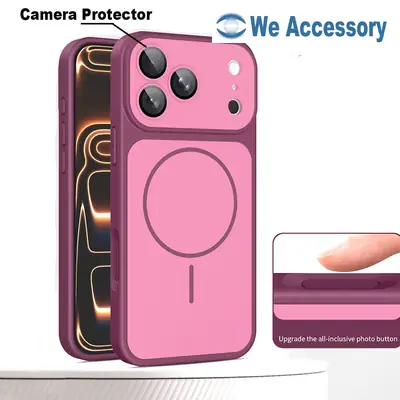
iPhone 18 Pro Max Skin-feeling magsafe case Matte case with build-in camera protection

Recommend Products
-
-
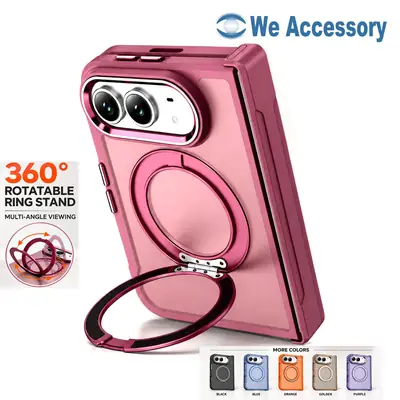 iPhone Duo 360° rotating ring holder case N52 2300 Gauss strong magentic stand case
-
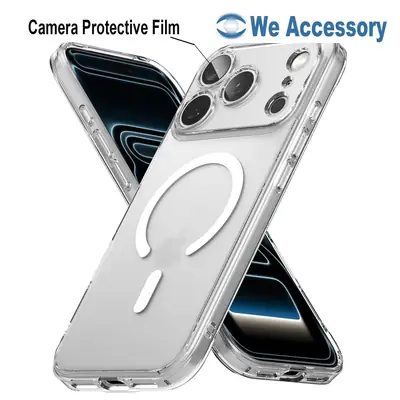 iPhone 18 Pro Clear Magsafe Case build-in camera protector transparent magnetic case
-
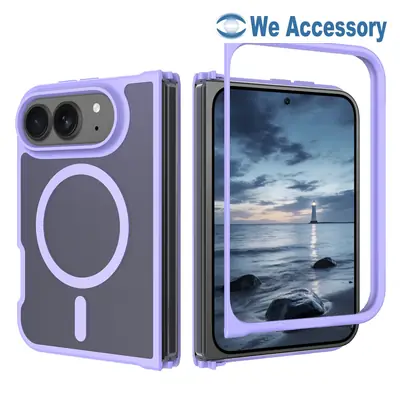 iPhone Duo Matte Magsafe Case Skin-Feeling N52 Strong Magnetic 2in1 Foldable Case
-
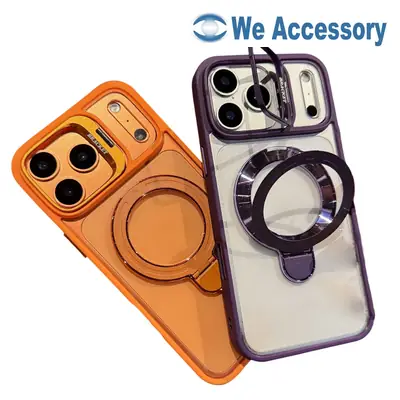 iPhone 18 accessories iPhone 18 Pro 3in1 magnetic holder case camera holder ring holder case
-
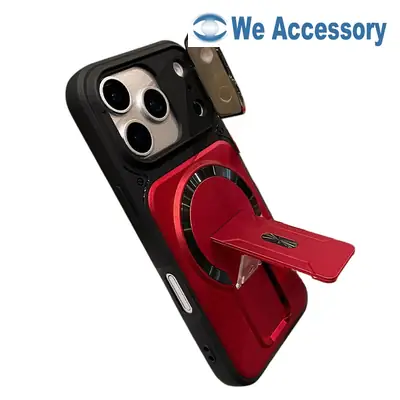 iPhone 18 Pro magsafe holder case glass camera protection and foldable holder case
-
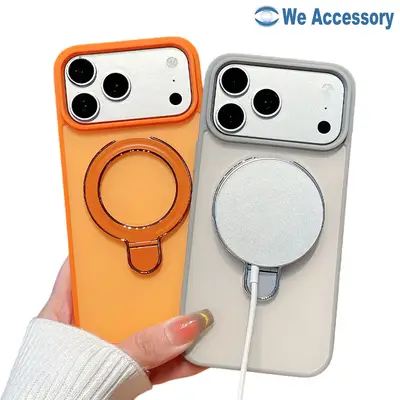 New trend iPhone 18 Pro matte skin-feeling magsafe case ring holder phone holder case
-
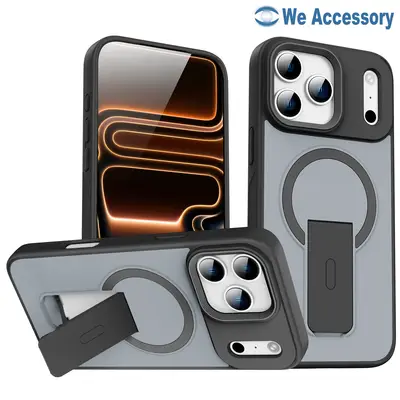 Hot phone accessories iPhone 18 Pro magnetic stand phone case foldable phone holder case
-
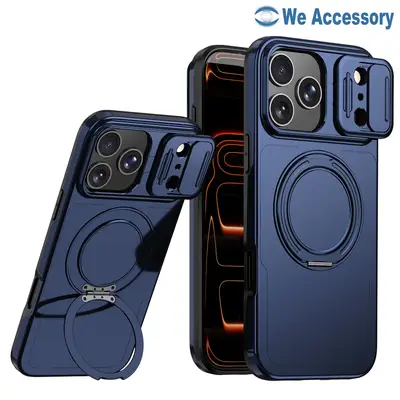 New iPhone 18 Accessories iPhone 18 Pro Ring Holder Case Camera protection Magsafe Case
-
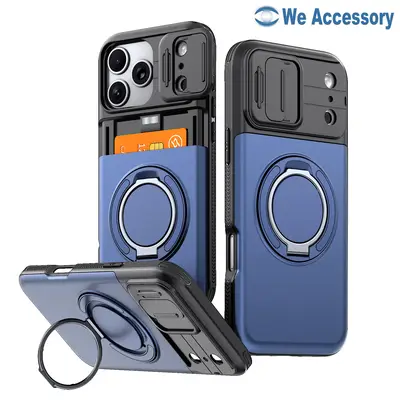 iPhone 18 Pro Max Card Holder Case Magsafe Holder Case Slide Window Camera Protection
-
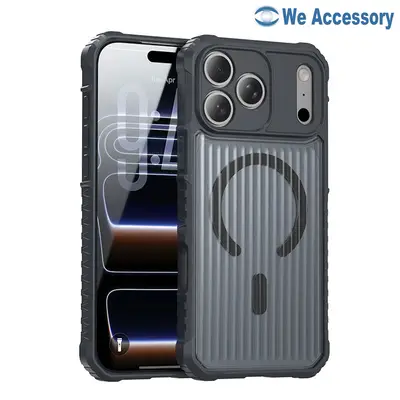 New design iPhone 18 Pro TPU+PC Hybrid Suitcase-Style MagSafe Shatterproof Case
-
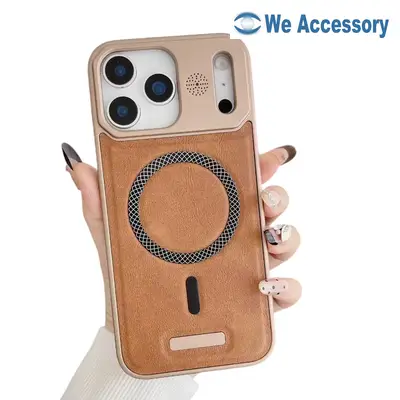 Business demeanor iPhone 18 Pro magsafe leather case 2in1 iphone cover luxury iphone case
-
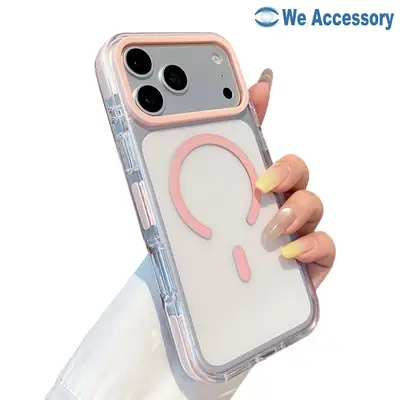 New iPhone Accessories iPhone 18 Pro Clear Magsafe Case double color 2in1 shatterproof case
-
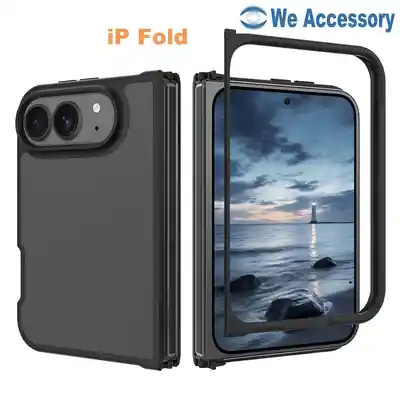 iPhone Case Distributor Newest iPhone Fold Case TPU+PC 2in1 Full Protective iPhone Case
-
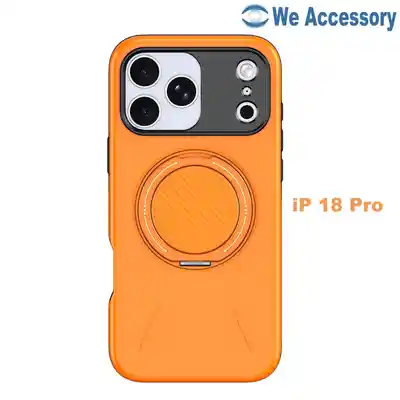 Phone Accessories Company New iPhone 18 Pro Case Magsafe Case with Phone Holder
-
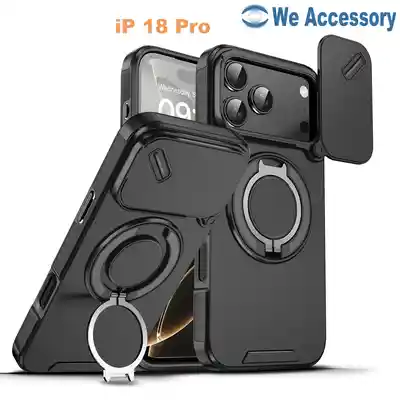 Phone Case Manufacturer New iPhone 18 Pro Max Armor Case Camera Protection and Holer
-
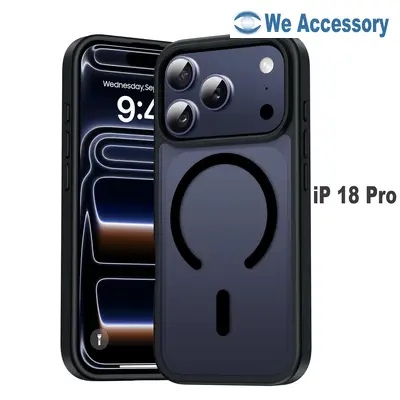 iPhone 18 Accessories Supplier Newest iPhone 18 Pro Case Wholesale Matte magsafe case
-
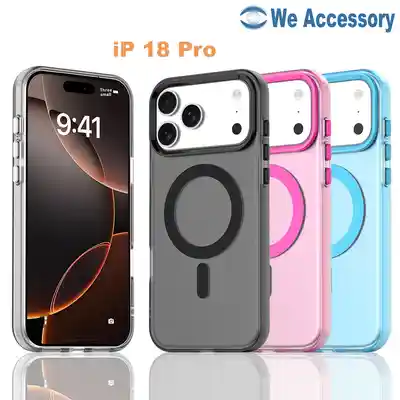 iPhone 18 Pro Case Wholesale Colorful Transparent Magsafe Case New iPhone 18 Pro Case
-
 Wholesale iPhone 17 Jelly 2 in 1 Magsafe Case colorful silicone iphone case
-
 Apple iPhone Case Supplier Colorful iPhone 17 electroplated case so cool case
Product Tags
iPhone Case Manufacturer, Why Some Case Feels Cheap in the Hand
October 27, 2026
The review that says nothing useful
Ines runs a distribution business out of Lisbon. Repair shops, two phone shops in shopping centres, a small Amazon storefront. Back in June she sent me a screenshot of a review left on her listing, three stars, one sentence: "Feels cheap."
That was all of it. No mention of fit, no complaint about the camera, nothing about yellowing. The customer had paid €11.90, held the thing for maybe four seconds, and formed a judgement complete enough to write down and publish to strangers. Ines wanted to know what to do with it. Could she reply? Could she argue? Could she send a replacement and ask them to change the rating? All of which are reasonable questions, and all of which miss the point, because "feels cheap" is not an opinion about price. It's a report from the hand. And hands are extremely good instruments. They can read a 0.05 mm step, they notice when a button needs 3.4 N instead of 2.2 N, they feel the difference between an edge that was cut and an edge that was polished. A customer who says "feels cheap" is telling you something precise in imprecise language.
Here's my claim, and it's the reason I'm writing this down: in a matte black hybrid phone case selling between sixty cents and a euro thirty at the factory gate, almost nothing about whether it feels cheap is decided by the plastic. It's decided by five contact points and the tolerances on them — the buttons, the cutout edges, the parting line, the screen lip, and the back surface. All five are cheap to fix and expensive to ignore, and all five are the responsibility of the iPhone case manufacturer, not the trader in between. If your supplier is a trader with a catalogue, nobody in the chain is measuring them.
I'll go through each one with numbers you can check on your own bench, then show what the fixes actually cost per piece and what the returns from not fixing them cost instead. Where my arithmetic stops explaining something, I'll say so, because I've been quoted plenty of confident nonsense about "premium feel" over the years and I don't want to add to it.
The five points a customer reads in four seconds are all set in the tool, long before the phone case reaches a warehouse.
What the hand is actually reading
Take a phone case in your left hand and do what a customer does. Open the box, lift it out, turn it over once, press the side button with a thumb, run a thumb along the bottom edge where the charging port is, then put the phone in and press the buttons again.
That's four seconds of contact and it samples roughly nothing of the product's engineering. The drop protection, the material grade, the optical clarity, the UV package — the things suppliers put on the spec sheet — go completely unread. What gets read instead:
- How much force the volume button needs before the phone's own dome clicks
- Whether the cutout edge around the port feels blunt or like a blade
- Whether the seam between the hard back and the soft frame catches a fingernail
- Whether the lip in front of the screen sits flat under a thumb
- Whether the back feels like dry silk, wet plastic, or nothing at all
Five measurements. Two of them in newtons, two in fractions of a millimetre, one in gloss units. Every one of them is a mould and material decision the iPhone case manufacturer made months before the phone case reached Ines' warehouse, and every one of them can be written into a purchase order in a single line.
I've watched buyers spend three weeks negotiating four cents on a phone case and then accept a button that requires twice the force of the last order, because nobody put the awkward question to the factory: at what force does your button actuate, and how do you check it? It's the cheapest question in this trade. It's also the one that decides your star rating.
The button, part one: where the click actually comes from
Most buyers believe the phone case makes the click. It doesn't. The click is a metal dome inside the phone, and the case only has to transmit a thumb's force to it. The case's job is to do that transmission consistently, with a predictable force, without adding mush and without pressing the button on its own.
There are three ways a factory builds that button, and they cost different money.
A moulded-in rib. The frame's TPU includes a thin tongue of the same material over each button. Cheapest option, zero assembly. The force depends entirely on wall thickness and material hardness, the travel is short, and the feel is usually described as "spongy". What buyers don't realise is that with regrind in the mix the hardness drifts batch to batch, so the same moulded rib can feel different six months later.
A separate pad, inserted by hand. A small TPU or silicone pad of controlled hardness sits in a pocket behind a separate button piece. Two parts, one assembly step, roughly €0.03 to €0.06 per piece depending on volume and whether the button is a separate PC insert. This is where consistent feel comes from. The pad's Shore A hardness is a number the factory buys, not a number it hopes for.
A PC insert with a TPU overmould. The button is a hard plastic piece, often a different colour or finish, bonded into the frame. It looks like the premium option because it usually is one, and the tactile result is crisp. It's also the version where the pocket depth has to be right, which brings me to the arithmetic that catches most suppliers out.
The button, part two: 0.07 mm that decides whether Siri keeps waking up
A button that presses itself is a warranty claim, and it happens far more often than suppliers admit. The mechanism is simple tolerance stacking, and I want to show it because it's the clearest example I know of a case problem that looks like a quality problem and is really an arithmetic problem.
The stack has three elements: how far the phone's own side button stands proud of the frame, how deep the pocket inside the case's button is, and the two mould tolerances that sit on either side of that gap.
Take a nominal design with 0.07 mm of air between the inside of the case button and the phone's button. That's a typical number and it looks safe. Then add what the moulds actually deliver. A well-run case tool on a 180-tonne machine holds ±0.05 mm on a feature like this at the start of its life; a tool that's been run for 300,000 shots and refurbished twice is doing well to hold ±0.08 mm.
Worst case: 0.07 + 0.05 + 0.05 = 0.17 mm of gap. The button feels vague, needs a deep press, sometimes doesn't register at all because the pad never reaches the dome.
Best case: 0.07 − 0.05 − 0.05 = −0.03 mm. That's interference. The case is holding the button down. On an iPhone with a side button that also wakes the screen, you get phantom wakes, screenshots taken by themselves, Siri triggering in a pocket. Customers describe this as "the case is cursed", and it's a 0.03 mm mistake.
Root-sum-square the two tolerances and you get about 0.071 mm, so a statistical view argues 0.07 mm nominal is fine. It isn't, and this is the part I'd like every buyer to take away: RSS describes a population, and your customer experiences a single unit. The one unit in two hundred that has both moulds on the tight side is the one that leaves the one-star review. Design the nominal so the worst case still works — 0.12 mm to 0.15 mm of nominal gap on a ±0.05 mm process — and accept that the button then needs a slightly softer pad to keep the force down. That's the trade, and it's a trade somebody has to make on purpose.
How much force should it take? A number you can check with a kitchen scale: put the case button-down on a digital scale, press until the phone's dome clicks, read the grams. A 0.1 g resolution kitchen scale is a good enough instrument for this. Healthy is roughly 250 g to 350 g on the scale, which is 2.5 N to 3.4 N. Below 200 g the button feels like it isn't there and presses when you don't want it. Above 400 g, the thumb knows, and "stiff buttons" is the second most common phrase in a cheap phone case review after "feels cheap".
I'll admit the obvious hole in that method: it measures the case plus your thumb's angle, not the pad in isolation, and pressing at an angle inflates the reading. You're not building a lab. You're building a comparison between the sample the supplier sent you and the carton that arrived, and for that, one cheap scale and the same thumb on the same day is completely adequate.
Now the part where I have to be honest about the maths. The textbook estimate for a pad of 38 mm² at 1.2 mm thick in TPU of Shore A 60, using a secant modulus around 6 MPa, gives a stiffness of about 190 N/mm and an actuation force somewhere north of 60,000 N. Which is absurd — it's roughly the force of a small car. Elastic theory is the wrong model because the pad doesn't compress in pure compression; it buckles, it shears at the walls, and the contact area grows as it deflects. Real pads add something in the range of half a newton to a newton and a half on top of the dome. So button feel is tuned by sample and by hand, not by formula, and any supplier who hands you a calculation instead of five sample cases is telling you they haven't done it either.

Button pads, parting lines and lip radii are mould decisions. A trader can reorder a model; only the factory can change the steel.
The cutout edge, and why draft angle is a finger problem
Look at the charging port opening on a cheap phone case and then on a good one, side by side, under a lamp. The difference is not the size of the hole. It's the wall.
Every cutout in an injection-moulded case has draft, because the steel has to come out. Standard draft on a cutout wall of 1 mm depth is 1° to 1.5°. That doesn't sound like much, and per side it isn't: 1.0 mm × tan(1.5°) = 0.026 mm, so the opening is 0.052 mm wider at the outside surface than at the inside. Nothing.
The problem is what happens at the edge where that drafted wall meets the outer face. Tools wear. Wire EDM leaves a fine recast layer that has to be polished out by hand, and when a factory is running behind, it isn't. What you get is a rim that is 0.05 mm to 0.15 mm wide and effectively square, and a square plastic rim on a 1.2 mm wall, pressed against a thumb, feels sharp. Not cut-your-finger sharp — the phone case equivalent of a paper edge. It's the thing customers can't name and don't forgive.
Two fixes. A 0.2 mm to 0.3 mm radius on the tool steel, which costs a tooling edit and no cycle time. Or a tumbling and deburring pass over the finished parts, which is a few thousandths of a euro per piece but adds handling, and handling is where yield goes.
While you're at the bottom edge, check the other two things nobody puts in a spec sheet. The speaker and microphone holes: on a well-made phone case they're round or oval, cleanly punched, aligned with the holes in the phone's frame, and the wall is thin enough that sound isn't muffled. On a cheap tool they're slots, and slots change how the phone sounds on a call. And the strap or lanyard opening, if there is one, is the thinnest section of the whole part and the first place a phone case splits.
The parting line: the seam your thumbnail finds
A two-plate mould leaves a line wherever the two halves meet, and on a phone case that line runs somewhere around the perimeter — often right along the edge your fingers wrap around.
Flash is the material that squeezes into the gap between those two plates. Good tooling holds the seam at 0.03 mm to 0.05 mm. That's a hair. Run a thumbnail along it and you'll feel it; run it along a 0.15 mm seam and your nail catches, which your brain reads as "cheap" instantly, without any conscious analysis.
Three things push an iPhone case manufacturer toward visible flash: tool wear on the parting surface, insufficient clamp tonnage for the projected area, and running the machine fast to hit a delivery date. The last one is worth knowing about because it's seasonal. A mould that produces clean parts at a 42-second cycle can produce flash at 38 seconds, and the person deciding that cycle time is not the person who will ever hear from your customer.
The back: gloss units, texture grades and the soft-touch trap
Backs come in three broad finishes and buyers mix them up constantly.
Gloss reads as 70 to 90 gloss units at a 60° geometry. It shows every fingerprint, scratches visibly within weeks, and looks expensive for about four days. On a transparent case it's the only option, and it's the finish that reviews worst after two months of use.
Matte, etched into the tool. A chemical etch or a laser texture on the cavity steel, measured as a surface roughness around Ra 0.8 µm to 1.6 µm, gives 3 to 8 gloss units. It hides fingerprints, doesn't show micro-scratches, and feels dry. This is what most of the "premium matte" cases on the shelf are, and the important commercial fact is that the texture lives in the steel: once the mould is etched, every part from that cavity has it, at no per-piece cost beyond a cycle a second or two longer. That's why a matte finish on a well-organised order costs you almost nothing and on a badly organised one costs a tooling charge you weren't expecting.
Soft-touch coating. A sprayed polyurethane lacquer over the shell, 20 µm to 40 µm, giving that velvety feel. It's genuinely lovely in a shop and it's the finish with the highest failure rate in the field, because it wears at the corners, picks up hand oils, and in hot humid climates goes tacky. I've seen a Greek distributor return an entire 3,000-piece run because the coating went sticky in a warehouse at 34 °C. If a supplier quotes soft-touch, the only question worth asking is which lacquer, and whether they can name a customer who's had it in a hot warehouse for a year.
One useful side effect of the arithmetic: the per-piece machine cost of a 2-second-longer cycle on an 8-cavity tool is not the thing that makes matte expensive. Run the numbers. An 8-cavity tool at 42 seconds produces about 686 pieces an hour; add 2 seconds and it's 655. At an hourly machine rate around $15, that's 2.19 cents a piece against 2.29 cents. A tenth of a cent. Anyone quoting you three cents a piece for "matte tooling" is charging for the etch, the yield and the sorting, not for the seconds — which is fine, as long as they say so.
The screen lip, and the four-tenths of a millimetre your thumb can feel
The lip in front of the glass protects the screen when the phone lands face-down. It needs to be tall enough to matter — 0.3 mm to 0.5 mm above the glass on a phone case without a screen protector, closer to 0.2 mm if your customers use full-coverage glass and you don't want the edge of the protector catching on the lip.
Height is a spec. Feel is a different spec. A 0.4 mm lip with a 0.1 mm radius feels like a wall. The same 0.4 mm lip with a 0.3 mm chamfer leading into it feels like nothing at all, and the customer's thumb slides past it a hundred times a day without noticing. The difference is two lines of tool geometry and a polishing step, and it is the single most common reason a phone case that is objectively protective gets described as uncomfortable.
Watch the corner where the lip meets the side. On a cheap tool, the radius transitions abruptly and there's a soft bump you can feel. On a good one, the chamfer runs continuously around the perimeter and the corner is a single sweep. This is the sort of detail that only shows up if somebody at the factory cared, and it is exactly what a trader cannot give you, because a trader is buying finished cartons from whoever was cheapest that month.
Weight is not quality, but it is a signal
An empty-feeling phone case is a specific engineering choice: wall thickness, and it is the first thing an iPhone case manufacturer decides. Take a 6.9-inch phone's back panel at about 112 cm² and run the numbers on polycarbonate at 1.20 g/cm³.
| Back panel thickness | Back panel weight |
|---|---|
| 0.55 mm | 7.4 g |
| 0.80 mm | 10.8 g |
| 1.00 mm | 13.4 g |
| 1.20 mm | 16.1 g |
Total phone case weight with a TPU frame usually lands 24 g to 34 g at the middle two thicknesses, and 40 g to 55 g for a genuinely rugged two-layer build. The perception question is not "heavier is better". It's whether the weight matches what the phone case looks like. A thin, hard, glossy black case that weighs 21 g reads as a shell, which is honest. A case with a chunky camera plateau, a reinforced corner and a rugged marketing image that still weighs 23 g reads as hollow, and the hand notices the mismatch before the eye does. Tapping the back with a fingernail tells you the same thing in one second — a thin panel rings, a thick one thuds.
My contrarian note: buyers who chase weight as a proxy for protection get sold ballast. I've seen a case with a metal plate behind the back for the magnet that weighed 44 g and protected worse than a 26 g hybrid, because the extra mass was in the wrong place and the corners had no air gap. Weight is a signal. It's not a measurement of anything you want.
What the five fixes cost, and what they don't
Here's the part most suppliers never put in writing, so I will. These are per-piece costs at a 20,000-piece order of a hybrid phone case, and they are what an iPhone case manufacturer with its own tool room is actually quoting, on the assumption that the tool is already close to the design and only needs small edits:
| Fix | One-off tooling | Cost per piece |
|---|---|---|
| Separate PC button insert, three keys, hand-assembled | €320 assembly jig | €0.045 |
| 0.25 mm radius on the inner screen lip plus polish | €140 tool edit | €0.004 |
| Matte etch on the back cavity | €180 per finish | €0.001 |
| Button pad hardness upgrade, Shore A 65 to 50 | none | €0.008 |
| Deburr and tumble pass | none | €0.005 |
| Gloss-band sorting on the finishing line | none | €0.003 |
Add the piece costs: 0.045 + 0.004 + 0.001 + 0.008 + 0.005 + 0.003 = €0.066 per case. Add the tooling: 640 euro, which is another 0.107 per piece if you only order 6,000, or 0.032 per piece at 20,000.
So on a 6,000-piece first order the whole "feels expensive" package costs you 0.066 + 0.107 = €0.173 a case, or about twenty-one per cent on a €0.83 price. On a 20,000-piece reorder it's 0.066 + 0.032 = €0.098, about twelve per cent. On the third order the tooling has been paid and it's six and a half cents.
That's the honest shape of this: the first order is where it feels expensive, and the tooling is why. Which leads directly to the question every buyer should ask instead of asking for a discount — is the tool mine, and can I amortise it over the next three orders rather than this one?
The other side of the ledger, priced
Now put the same numbers against the cost of not fixing it. Ines' listing, real figures, five months of selling:
- 6,000 pieces sold at €12.90 retail on a marketplace
- 3.8 per cent came back tagged as fit, button or edge complaints — 228 units
- Each return: €12.90 refunded, €3.40 inbound shipping, €1.10 handling, and the case itself is unsellable at €0.83
That's €18.23 a return, €4,156 across the five months. Against revenue of €77,400 it's 5.4 per cent. Against gross profit — revenue minus marketplace fees around €11,610 and goods at €4,980, so €60,810 — it's 6.8 per cent. Put differently: the returns consumed nearly a fifth of the money the whole listing made after fees, because at €0.83 cost the goods are the cheap part of the transaction and everything else is expensive.
Now spend the fix. €396 of piece cost on the next 6,000 and €640 of tooling once. Assume the fixes cut those tagged returns by 60 per cent, which is conservative if the buttons and the lip were the complaint drivers: that's €2,494 of returns avoided. Payback multiple on the piece cost is 6.3×, and the tooling is repaid inside the first order.
I'd rather be precise about what I can't prove here. The 60 per cent is a judgement, not a measurement; it came from comparing six months of review text before and after a spec change across a handful of our buyers, and the samples are small and the marketplaces differ. What isn't a judgement is the direction. Complaint-tagged return rates move when button force and edge radius move, and they don't move when you change the box.
There's a second effect that doesn't show in the return line at all, and it's bigger. On a marketplace, a listing's conversion depends on rating and review count, and a listing sitting at 4.2 stars loses sales to one at 4.6 in the same search result — not five per cent fewer, more like a third. That effect is invisible in any single month's P&L and it's the reason "feels cheap" is worth four thousand euro of attention. I can't give you a formula for it, and I'm suspicious of anyone who offers one.
How a €0.62 quote is built
I keep a small teardown of the cheapest credible phone case I've been shown in the last two years. €0.62 FOB, matte black, MagSafe ring, looked fine in photos. Where the money went:
- 0.55 mm PC back instead of 1.0 mm — saves about 0.9 g of polycarbonate, roughly €0.012
- 25 to 30 per cent regrind in the TPU frame, hardness drifting — saves €0.009
- Moulded-in button rib with no pad, no separate insert — saves €0.045 and one assembly step
- Square-edged cutouts straight off the wire EDM, no polish — saves €0.006
- Gloss tool with no etch, sold as "piano black" — saves the etch and the sorting, about €0.004
- 38-second cycle instead of 42 on a 12-cavity tool — saves a couple of tenths of a cent in machine time, and adds flash
- Carton of 200 with no divider, single poly bag — saves €0.004 in packing, adds transit scuffing
Total: a bit over seven cents of savings. The rest of the €0.21 gap between that phone case and a €0.83 phone case is not a secret; it's the frame material grade, the magnet, the QC labour, and margin.
Seven cents. That's what "cheap" is made of — and notice how much of it lands on the list of five. That's not a coincidence. When a factory needs to hit a price and the customer has only asked about price, the only place to take money out is the details nobody specified.
Writing it into a purchase order
None of this helps unless it survives contact with a purchase order, because a spec sheet that says "premium hand feel" is a wish. Here are the lines I'd put in a PO, in the order I'd put them.
Buttons. Actuation force 2.5 N to 3.4 N measured on the assembled case with the reference phone, front third of the button, ten samples per colour per batch. No self-actuation in a 24-hour pocket test — that's the crude test where you put the assembled phone in a pocket-sized pouch and shake it, and check the screen hasn't woken.
Button pocket depth. Nominal gap between the case's inner button face and the phone's button face 0.12 mm to 0.15 mm, tool tolerance declared in writing, and a note that the tool is expected to hold it at 200,000 shots or be refurbished.
Cutout edges. External edge radius 0.2 mm minimum on all openings; no visible recast or burr under 10× magnification; parting line flash 0.05 mm maximum, measured with a feeler gauge at four points on the perimeter.
Screen lip. Height above the glass as specified per model, with a continuous 0.25 mm to 0.3 mm chamfer around the front opening, no step at the corners.
Surface. For matte: 3 to 8 gloss units at 60°, no polishing marks, texture from the tool and not from a coating. For soft-touch: name the lacquer, declare the cured film thickness, and state the service temperature the supplier will stand behind.
Pad material. Shore A hardness declared, virgin material only, no regrind in the button pad or in any part under 0.8 mm wall.
Colour. ΔE of 1.5 or less against the approved master plaque, under D65, measured on the finished part and not on a colour chip. If a colour is going to be repeated across seasons, ask for a physical standard plaque and keep it — a photograph will not save you in eighteen months.
Sampling. Ten assembled units per colour per batch, retained for twelve months, plus a golden sample signed by both sides.
Two of those lines — the button force and the parting line — are the ones that will get you a phone call from the factory saying they can't hold it at the old price. That phone call is the whole exercise working correctly. It means someone has finally been told which details are not negotiable, and it's cheaper to hear it before the carton ships than after four hundred customers have held the case.
Twenty cases, one afternoon, no lab
You don't need a metrology room to check the next delivery. You need a scale that reads to 0.1 g, a digital caliper, a desk lamp, and a printed checklist. Here's the routine I use when I'm checking a competitor's case or a shipment that arrived looking wrong.
Lay out ten assembled cases and number them. Put the reference phone in the first one.
Press each of the three buttons with the case lying on the scale, reading the peak grams before the phone's dome clicks. Write the number. If the spread across ten units is more than 80 g, the tool or the pad material is inconsistent, and you have a batch problem rather than a design problem — different diagnosis, different fix.
Run a thumbnail around the entire perimeter, slowly, feeling for the seam. Note where it catches. Then check the port opening with the caliper across the wall: if the outer edge is more than 0.1 mm wider than the inner, the draft is doing something; if it's less than 0.03 mm, ask whether the cutout was actually cut or just polished.
Hold the front face up under the lamp at a shallow angle. A lip that's meant to be 0.4 mm and reads 0.25 mm under a straightedge is a spec failure, not a feel problem. Run the thumb around the front opening; if you can find the corner transition without looking, the chamfer isn't continuous.
Turn it over. Look at the back at 45 degrees under the lamp: fingerprints on the surface you just handled, visible immediately, mean gloss, no matter what the box said. Press a fingernail against the back and tap — thin rings, thick thuds.
Put the phone in, buttons in, and press each one with bare skin rather than through a sleeve. Then put it in a pocket for ten minutes and take it out: if the screen has woken, the tolerance stack is wrong.
Twenty minutes for twenty cases. It won't tell you whether the phone case will survive a two-metre drop, and it won't tell you about yellowing, but it will tell you something no supplier's spec sheet has ever told me: whether the person who made this cared, and whether the carton you're about to accept matches the sample you approved.
The uncomfortable part: what a trader cannot do for you
Everything above is a mould and material decision. That's why it's worth being blunt about the difference between buying from an iPhone case manufacturer and buying from someone who buys cartons.
A trader can give you a good price on a model that already exists, hold stock, consolidate your order with other products, and be fast. Those are real advantages and I'm not pretending otherwise. What a trader cannot do is change the button pocket depth, because that's a tool they don't own and a mould they didn't build. When your customers complain about stiff buttons, the trader's options are limited to a different model, and the different model may come from a different factory with a different unmeasured tolerance.
A manufacturer that owns its tools can do four specific things. It can edit the steel, which is hours rather than weeks. It can hold the tolerance, because it controls the machine and the maintenance on that tool. It can buy the pad material by hardness rather than accept what the sub-supplier had in stock. And it can tell you the truth about which of your five touch points is expensive on this particular design — which is usually not the one you assume.
That's not a sales pitch for buying direct, and the reason I'm writing it is not that traders are bad. It's that the five contact points are the part of the deal where the chain matters. If your supplier can't tell you their button actuation force in newtons, you're not buying a specification, you're buying a photograph. That's fine for a test order. It's expensive for a listing.
One thing I'll say against my own argument, because it's true and buyers deserve to hear it. There is such a thing as over-specifying feel. I've seen a German buyer demand a 0.03 mm parting line across 40,000 pieces on a tool that had already run half a million shots, and the honest answer was: refurbish the tool for €1,600 or accept 0.06 mm. They chose the refurbishment, which was correct, and then demanded the same on the next four tools and blew the delivery date. The number has to match the tool's condition and the order's size. A spec that ignores both is just an argument.
Where the money actually is
One last piece of arithmetic, because it settles the priority question. Suppose you're buying 20,000 cases a year, in four orders, and your average invoice is €0.85. You're spending €17,000 on goods.
Getting four cents off that price is worth €800. Fixing the five touch points, on the numbers above, is €0.098 a piece once tooling is amortised, or €1,960 a year — more than twice the discount — and it buys you a return rate you can forecast instead of one you discover in the review feed.
That's the whole argument in one line. In this trade the cheapest visible number is the price, and the most expensive invisible number is the cost of a case that feels cheap to four seconds of thumb. The second one is decidable before you place the order. Somebody at the factory just has to be asked, in millimetres and newtons, and the ask only lands if the person you're asking owns the mould.
If you want the checklist we use on the floor — the button force bands, the pocket depth stack, the gloss and ΔE targets per finish — write to me and I'll send it. It's one page and it's free, because I'd rather argue with a buyer about 0.12 mm than about four cents.
— William Shaw, Head of Sales at We Accessory
About We Accessory
We Accessory has been making and supplying phone cases and tempered glass since 2012. Our plant runs its own moulds, holds button-force and parting-line tolerances that we'll put in writing, and quotes carton dimensions, pieces per carton and volumetric weight alongside the price so the landed number doesn't surprise anyone. OEM and private label from a few hundred pieces, samples in three to five days.
- Tel: +86-755-36818832
- WhatsApp: +86-15919800304
- Email: [email protected]
- 2F, Block A2, Nanchang Industrial Area, Xixiang Town, Bao'an District, Shenzhen, China
- weaccessory.com
Share:


Why Choose We Accessory
12+
Years Experience
2000+
Product SKUs
50+
Countries Served
OEM
& ODM Service
2-4
Day Delivery
Professional Phone Accessories Wholesale Supplier
We Accessory is a trusted phone accessories wholesale supplier since 2012. We specialize in phone case, tempered glass screen protector, USB cable, charger and more mobile accessories wholesale, serving customers in 50+ countries worldwide.
Frequently Asked Questions
Where is We Accessory located?
We are located in Shenzhen
What products do you offer?
We offer phone cases, screen protectors, USB cables, chargers and more mobile accessories for all major brands.
Do you offer OEM/ODM services?
Yes, full OEM and ODM customization with your logo, packaging and designs.
What is your shipping time?
In-stock items ship in 2-4 business days via DHL/UPS/FedEx. Custom orders 5-7 days production plus shipping.
We Accessory (WeAccessory.com)
Address:2F, Block A2, Nanchang Industrial area, Xixiang Town,Bao'an District, Shenzhen
Tel: +86-755-36818832
Mobile/Whatsapp: +86-15919800304
Email: [email protected]
Microsoft Teams: william.shaw186
Product Tags
Contact us Now!
Please send us your Email address if you'd like some products



Copyright © 2012-2026 Shenzhen Western Electronic Co., Ltd All Rights Reserved. Sitemap | Best Phone Case Wholesale, Tempered Glass Screen Protector, USB Charger, Cable, other Mobile Accessories Wholesale