English
 Français
 Deutsch
 Español
 Italiano
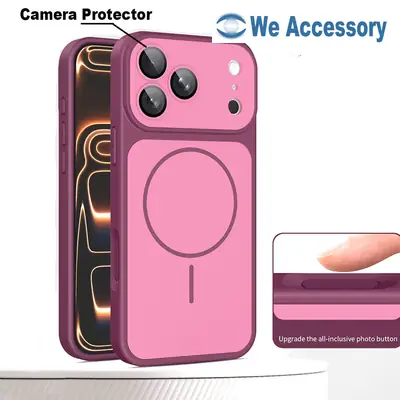
iPhone 18 Pro Max Skin-feeling magsafe case Matte case with build-in camera protection

Recommend Products
-
-
 iPhone Duo 360° rotating ring holder case N52 2300 Gauss strong magentic stand case
 -
 iPhone 18 Pro Clear Magsafe Case build-in camera protector transparent magnetic case
 -
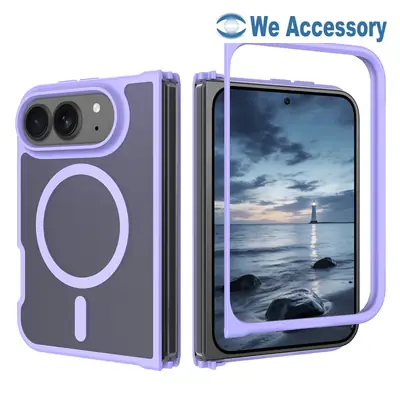 iPhone Duo Matte Magsafe Case Skin-Feeling N52 Strong Magnetic 2in1 Foldable Case
-
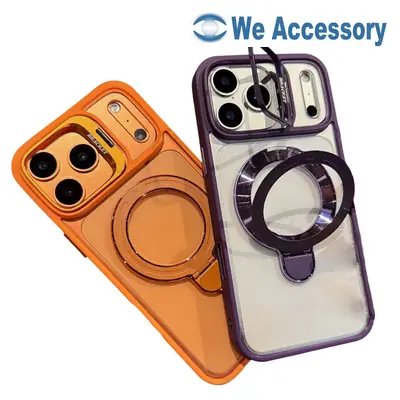 iPhone 18 accessories iPhone 18 Pro 3in1 magnetic holder case camera holder ring holder case
 -
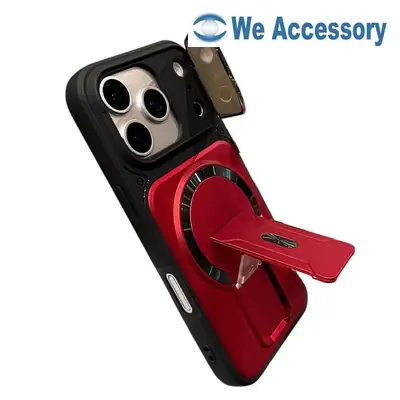 iPhone 18 Pro magsafe holder case glass camera protection and foldable holder case
 -
 New trend iPhone 18 Pro matte skin-feeling magsafe case ring holder phone holder case
 -
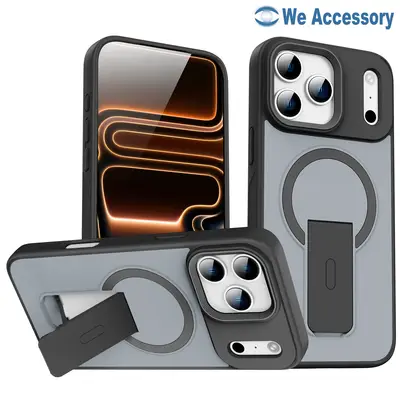 Hot phone accessories iPhone 18 Pro magnetic stand phone case foldable phone holder case
-
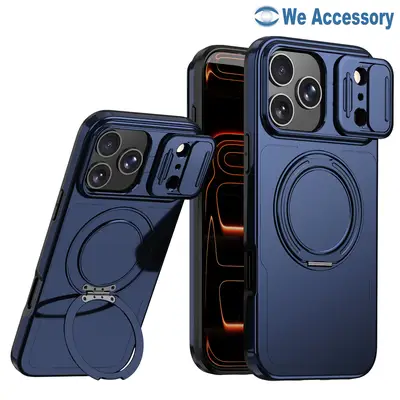 New iPhone 18 Accessories iPhone 18 Pro Ring Holder Case Camera protection Magsafe Case
 -
 iPhone 18 Pro Max Card Holder Case Magsafe Holder Case Slide Window Camera Protection
 -
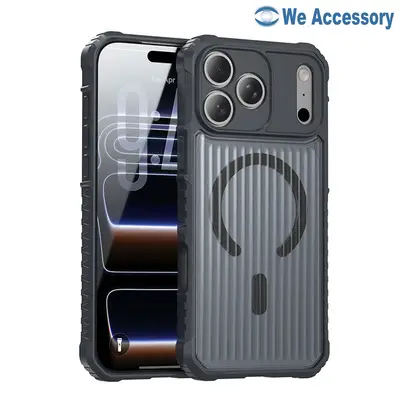 New design iPhone 18 Pro TPU+PC Hybrid Suitcase-Style MagSafe Shatterproof Case
 -
 Business demeanor iPhone 18 Pro magsafe leather case 2in1 iphone cover luxury iphone case
-
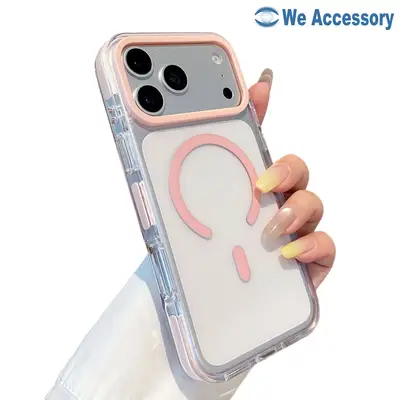 New iPhone Accessories iPhone 18 Pro Clear Magsafe Case double color 2in1 shatterproof case
 -
 iPhone Case Distributor Newest iPhone Fold Case TPU+PC 2in1 Full Protective iPhone Case
 -
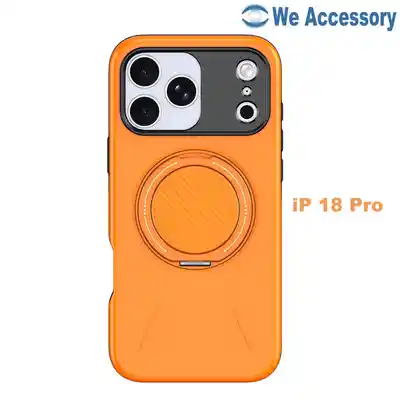 Phone Accessories Company New iPhone 18 Pro Case Magsafe Case with Phone Holder
 -
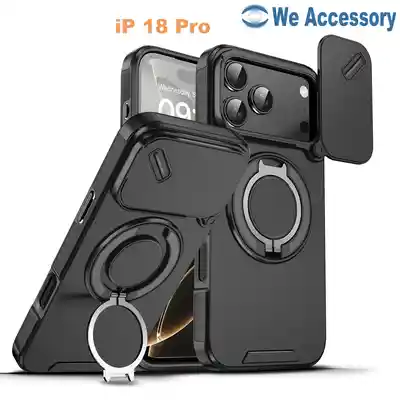 Phone Case Manufacturer New iPhone 18 Pro Max Armor Case Camera Protection and Holer
-
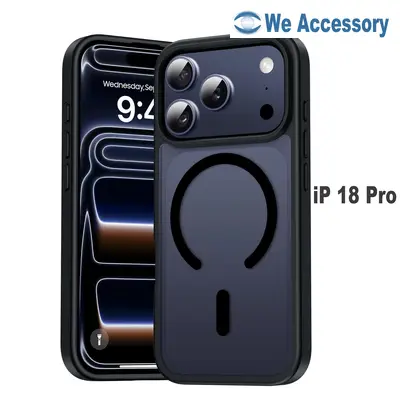 iPhone 18 Accessories Supplier Newest iPhone 18 Pro Case Wholesale Matte magsafe case
 -
 iPhone 18 Pro Case Wholesale Colorful Transparent Magsafe Case New iPhone 18 Pro Case
 -
 Wholesale iPhone 17 Jelly 2 in 1 Magsafe Case colorful silicone iphone case
 -
 Apple iPhone Case Supplier Colorful iPhone 17 electroplated case so cool case
Product Tags
Why the same screen protector costs more for an old phone than a new one
October 15, 2026
A purchasing manager at a Nordic distributor — I'll call her Mette, because she'd rather her competitors didn't read her cost she
et either — sent me a two-line email last month that I've been chewing on since.
"Your price for the new flagship tempered glass is 1.00. For an old 4.7-inch model you quoted 1.42. Same thickness, same 9H claim, same clear glass. Is the old phone made of gold, or are you just charging me more because you can?"
Fair question. Rude, but fair. And the honest answer took me three attempts to write, because the short version sounds like an excuse: it's the setup, not the glass. Everybody says that. Nobody believes it. So instead of an excuse, this article is the arithmetic. Sheet by sheet, basket by basket, screen by screen. By the end you'll be able to look at any per-model quote from any tempered glass screen protector supplier — ours included — and see whether the number comes out of a machine or out of a sales meeting.
And here's the part that surprised me when I actually ran the numbers for this article: the glass itself is not what makes a rare model expensive. Across a 6.9-inch part, a 6.1-inch part and a 4.7-inch part, the material cost differs by about seven cents. The quote differs by forty. That forty cents lives somewhere else, and once you know where, you can argue it down — or, better, make it disappear before you place the order.
Start here: where the money for one protector actually goes
Take a plain clear 9H protector for a 6.1-inch phone, ordered at 500 pieces per model, high-alumina glass, 2-hour chemical tempering, 180AB glue. This is the cost structure we run on, in US dollars per piece:
| Cost line | Per piece | Share |
|---|---|---|
| Raw glass | $0.18 | 18% |
| CNC cutting + edge grinding | $0.08 | 8% |
| Chemical tempering | $0.10 | 10% |
| Oleophobic coating | $0.06 | 6% |
| AB glue (180AB) | $0.12 | 12% |
| Packaging + accessories | $0.12 | 12% |
| Labour + overhead | $0.15 | 15% |
| QC + testing | $0.05 | 5% |
| Supplier margin | $0.14 | 14% |
| Total | $1.00 | 100% |
Two things worth noticing before we go anywhere near a cutting machine.
First, only two of those nine lines move when the phone changes size: raw glass, and cutting (because the cutting head travels the outline, and a 6.9-inch outline is longer than a 4.7-inch outline). Tempering, coating, glue, packaging, labour, QC and margin are per-piece constants. A big screen does not need thicker glue, a longer bath, or a fancier box.
Second, at 500 pieces, one dollar. At 5,000 pieces, the same part lands nearer eighty-five cents, because the fixed work spread over ten times the volume. At 200 pieces it climbs past a dollar thirty. Nothing about the product changed. The order changed.
That gap — between "what the part is" and "what the order is" — is the whole subject of this article.
The sheet: your price starts as a 1000 × 1500 mm rectangle
Glass does not arrive as phone parts. It arrives as sheets, and the sheet is the real unit of production, the same way a printed newspaper is not made of paragraphs but of press sheets.
For the arithmetic below I'll use a 1000 × 1500 mm sheet of 0.33 mm high-alumina glass, which is the stock size most protector shops in Shenzhen and Dongguan cut from. If your supplier buys 1200 × 1800 or 1250 × 1650, the numbers shift a little. The shape of the problem doesn't.
Now the part. A protector for a 6.9-inch phone measures roughly 158 × 74 mm. A 6.1-inch part is around 143 × 68 mm. An older 4.7-inch model is about 132 × 60 mm. Nest them the way a cutting room actually does it — 10 mm of sheet margin on every side, 4 mm between parts so the scribe and the edge grinding have room — and count:
| Model class | Part size | Parts per sheet | Sheet area used | Sheet area per part | Outline length |
|---|---|---|---|---|---|
| 6.9-inch flagship | 158 × 74 mm | 114 | 88.9% | 13,158 mm² | 464 mm |
| 6.1-inch mainstream | 143 × 68 mm | 120 | 77.8% | 12,500 mm² | 422 mm |
| 4.7-inch legacy | 132 × 60 mm | 161 | 85.0% | 9,317 mm² | 384 mm |

Read that table twice, because the third column punishes the obvious assumption.
The 4.7-inch part gets 161 pieces from a sheet against the flagship's 114. That's the intuitive result: smaller part, more per sheet, less glass per piece — 9,317 mm² against 13,158 mm², or roughly 29% less material. At the glass price this implies, about $14.40 per square metre, a full sheet costs around $21.60, and the legacy model genuinely draws less of it.
Now the result nobody expects: the 6.1-inch mainstream part is the worst packed of the three. It leaves 77.8% of the sheet used, against 88.9% for the flagship. Six columns by twenty rows with a 147 mm pitch does something ugly at the sheet edge — the leftover strip is too narrow for another column, so it goes to the offcut rack. The bigger 158 mm part, six columns by nineteen rows, happens to close out at the edge with far less waste.
So "smaller phone, cheaper glass" is true, and "the popular model packs worst" is also true, and together they explain something buyers find maddening: the layout, not the area, decides the yield. Two models with nearly identical screen diagonals can sit on completely different sheet economics because one is 1.5 mm wider and the column count drops from seven to six.
The offcut rack
Walk the cutting room and you'll see it — a rack against the wall, strips and plates with model numbers scrawled in marker. That rack is money that has already been paid. Someone bought those square metres and didn't turn them into product.
You'd think the fix is obvious: cut the next model out of the leftovers. Sometimes you can. But a protector offcut is only reusable if three conditions line up — the same thickness (0.33 mm strip can't become a 0.5 mm part), the same tempering batch, and a layout that fits inside the strip's actual dimensions. An iPhone-sized strip is usually 40 to 60 mm wide at the edge, which is narrower than any modern protector. So in practice a lot of that rack becomes scrap, and scrap gets priced into every order that created it.
This is why "just add 50 pieces" is not a free request. Fifty extra pieces on an already-open sheet cost almost nothing. Fifty extra pieces after the sheet has been cut, tempered, laminated and packed is a new production slot — new layout, new basket, new lamination run — and those setups get charged to whatever quantity they run on.
The bath: chemical tempering runs in batches, not in pieces
Glass does not become "9H" by having a label printed on it. The part sits in a bath of molten potassium nitrate at 380–450°C, where potassium ions swap places with the smaller sodium ions in the surface layer. Swapping a small ion for a bigger one wedges the surface into compression. That compressed skin is what resists the scratch and holds the piece together when it does break. The process is called ion exchange, and it is a bath, which means it has a load, a duration, and a temperature — and you cannot run it for one part.
Duration is a menu, and it is the single most-cheaped-out step in this industry:
| Bath time | What it buys | Where you normally see it |
|---|---|---|
| 0.5 hour | Poor. Chips at the edge, shatters hard | Ultra-budget glass at $0.20–0.40 wholesale |
| 1 hour | Fair. Edge strength improves, still brittle | Entry level |
| 2 hours | Good. 3–5 waist-height drops | The minimum we'd call sellable |
| 4 hours | Excellent. Deepest compression layer | Premium lines |
The manufacturing cost difference between a half-hour part and a four-hour part is $0.15–0.30. On a $1.00 protector. That's the whole reason the cheap pallet exists, and it's also why two suppliers can quote "9H" forty cents apart without either one lying about the label.
Now the batch problem. Parts go into the bath in carriers, and a carrier holds a few hundred pieces — realistically somewhere between two hundred and four hundred, depending on the size of the part and the rack. You don't start a bath for ninety pieces. You either wait until the carrier is full, or you run it light and the bath's gas, time and supervision spread across fewer parts.
At the numbers we run: tempering is budgeted at $0.10 per piece on a 300-piece carrier load. Order 200 and the effective tempering cost per piece lands at $0.15 — a 50% inflation on that line, from nothing more exotic than a half-empty basket.
Then thickness. A 0.33 mm part and a 0.5 mm part need different bath times to reach comparable surface compression, and they cannot share a carrier. So a catalogue that wanders between thicknesses doesn't run one production line; it runs several, each with its own minimum load. Buyers who mix 0.33 and 0.5 in small quantities on the same order are, without meaning to, buying two small orders.
The plate: screens, programs and jigs get set up per model
Nearly every full-coverage protector carries a printed black border, because ink hides the adhesive edge and makes the part look factory-finished on a rounded screen. That border isn't printed by a printer that knows your phone. It's printed by a screen prepared for one model. One model, one screen.
Around that, a model needs:
a cutting program for its exact outline, including the camera cutout and any speaker slot;
an alignment jig, if the part ships with an install frame — and for heavily curved full-coverage parts it does;
a printing screen for the border, plus the registration setup to line it up;
a lamination setting on the glue line for that model's dimensions.
None of this is exotic, and none of it is expensive once it's amortised. All of it happens once per model per run, which means it is charged to the run no matter how small the run is. Budget the whole set at somewhere between $80 and $200 depending on the model and whether a new screen has to be burned; call it $120 in the middle for the arithmetic:
| Order quantity for one model | Setup per piece |
|---|---|
| 200 pcs | $0.600 |
| 300 pcs | $0.400 |
| 500 pcs | $0.240 |
| 1,000 pcs | $0.120 |
| 2,000 pcs | $0.060 |
| 5,000 pcs | $0.024 |

There it is. The same physical protector, the same bath, the same glue — and fifty-eight cents of difference per piece between a 200-piece run and a 5,000-piece run. That one number is bigger than the entire material cost of the product.
Which brings us back to Mette's 4.7-inch model. Her quote wasn't high because the phone is old, or because anyone was punishing her. It was high because that model sat at the end of a monthly run with 300 pieces on it, and 300 pieces carry the same screen, the same cutting program and the same jig as a flagship run of 5,000.
The glue line: one grade per run, and 380AB is a different animal
The last batch constraint sits at the lamination station. The AB glue that bonds the glass to the screen comes in grades, and the grade is chosen by how curved the target screen is:
| Grade | Best for | White-edge risk |
|---|---|---|
| 110AB | Perfectly flat screens | High |
| 120AB | Most flat screens | Moderate |
| 180AB | iPhone-class flat screens — our standard | Low |
| 280AB | Curved screens (Galaxy-class) | Very low |
| 380AB | Full-coverage curved protectors | None — but installation gets fussy |
Every one of those is a different lamination setup: different adhesive roll, different pressure and speed, different cure check. Changing grade mid-run means stopping the line, and a line stop has a cost floor — so a factory would much rather run 400 pieces of one grade than 200 pieces of two.
This is also where a lot of "why is this model more expensive" questions actually die. A 380AB full-coverage part for a heavily curved screen genuinely costs more to make: the glue is a step or two up the scale, the part usually needs an alignment frame in the box, and the reject rate during lamination is higher because a curved part is harder to press flat without trapping air. That's not margin. That's physics with a bad attitude. And it's a good test of your supplier, incidentally — anyone who tells you a flat-screen 180AB part and a curved 380AB part should cost the same is either not running a lamination line or not telling you something.
Putting the three constraints together
Let me run Mette's actual comparison properly. Two 6.1-inch-class parts, identical in every physical way — same thickness, same 2-hour tempering, same 180AB, same box:
Part A, current flagship: 5,000 pieces. Material $0.18, cutting $0.08, everything else as per the table, setup $0.024 per piece. Lands at $1.02.
Part B, the legacy model, 300 pieces. Same material and cutting. Same bath, same coating, same glue, same box. Setup $0.400 per piece, tempering effectively $0.10 (the run just fills a carrier). Lands at $1.40.
Forty cents. Thirty-nine percent. For a protector that is, physically, the same object in a different outline. Nothing suspicious happened. A cutting program, a printing screen and a jig got divided by 300 instead of by 5,000.
And now the honest caveat, because I'd want it from a supplier: 39% is what physics plus small volume explains. If you are quoted two and a half times a mainstream model's price for an older handset at a reasonable quantity, the setup story is over and you're looking at margin, a distributor markup sneaking in, or a trading company that has to buy the part from someone else before it can sell it to you. The arithmetic in this article has a ceiling. Ask for the layout and you'll find out fast where that ceiling is.
The maths of a real quarterly order
Mette's problem wasn't one model. It was six legacy models at 300 pieces each, spread across a quarter — 1,800 pieces in total. There are two ways to place that order, and the difference is worth walking through, because it's where most distributors quietly lose money:
Six separate orders, one per model, sent over six weeks, on six shipments. One consolidated order, six models, one shipping window, one pallet.
| Line | Six separate orders | One consolidated order |
|---|---|---|
| Per-model setup (screen, program, jig) | $720 | $720 |
| Production sessions (scheduling, line changeover, QC batch) | $300 | $50 |
| Freight to Europe | $780 | $260 |
| Total | $1,800 | $1,030 |
| Per piece | $1.00 | $0.57 |
Two things this table says, and one thing it refuses to say.
It says the per-model setup does not disappear. Six models need six printing screens, six cutting programs and six jigs, and the $0.40 per piece that represents is identical in both columns. That is the real price of catalogue breadth, and no amount of clever ordering removes it — the only way to reduce it is to carry fewer models, deeper.
It says the rest more than halves: $0.43 per piece, $770 on the quarter, the difference between a long tail that pays for itself and a long tail you quietly stop stocking. Notice where the money sits — freight, not the factory. Six small express cartons cost roughly three times one consolidated pallet, and that lands in your landed cost, not on the invoice you compare quotes with.
What it refuses to say is that consolidation makes the glass cheaper. It doesn't. If a supplier promises that combining orders halves your unit cost, they've counted the setups twice or they're about to put the difference back somewhere you won't look for six months.
One last piece of the sheet arithmetic, for scale. Remember the mainstream 6.1-inch layout only uses 77.8% of its sheet. That 22.2% is 0.33 square metres of glass per sheet — about $4.80 at the material price we've been using. Over a 1,800-piece order that's fifteen sheets, roughly $72, or four cents a piece. Which means scrap is a factory-level annoyance, not a lever you can pull. It also explains why a factory cares how you mix models: your six models in one order may waste a little less glass than your six models in six orders, but the reason we push consolidation is the sessions and the freight, and I'd rather you knew that than believed a prettier number.
Launch month is the most expensive month
There's one more situation where per-model cost spikes, and if you buy around phone launches, you've felt it without being able to name it: the first four to six weeks of a new handset.
A brand-new model needs its tooling before anyone has volume to amortise it across. The cutting program has to be built from panel drawings that arrive late, the printing screen has to be burned in the right border dimensions for a phone nobody has held yet, and an alignment jig has to be produced for a shape that is still being confirmed. That happens on speculation: the factory pays for all of it while the only quantity available to spread it over is whatever the launch order turns out to be.
And then the launch run itself is harder than the steady-state run. New outlines reject more, especially full-coverage curved parts, where the first lamination settings are found by trial. A 3% reject rate turns a $1.20 part into $1.24. An 8% reject rate — normal during tuning — turns it into $1.30. Nobody is marking anything up; the line is simply learning a phone.
Practical consequences, three of them. First, if you sell around launches, book your slot before the phone is announced rather than after the first unboxing videos, because the shops that book early ride the tuning cost down while the shops that order late pay for a line that's already warm but has run out of room in the week. Second, order the new model with its family — the same thickness, the same tempering duration, the same glue grade as the models you already run — so it fills carriers and lamination sessions you were paying for anyway instead of creating a special run of 200 pieces. Third, don't panic-tool a dead model in launch month; new tooling competes with launch tooling for the same fixtures and screens, and that queue is exactly where lead times go to die.
How to buy with the sheet in mind
Everything above turns into eight habits. None of them requires your supplier to be generous; they just stop you from paying for setups you didn't need.
1. Order by family, not by model. The single biggest lever. Models that share a thickness, a tempering duration and a glue grade can fill one carrier, one bath slot and one lamination run. If your iPhone 18 order also carries the 17 and the 16 family, and they're all 0.33 mm / 2 hours / 180AB, the basket fills itself and every model on that order inherits the large-run setup share. Most buyers send three separate small orders over three weeks and pay three times for the same work.
2. One thickness per order. Don't sneak 0.5 mm parts into a 0.33 mm order to hit a total. You haven't combined anything; you've created a second run and hidden it inside the first shipment.
3. One glue grade per order. Same logic, different station. 180AB for your iPhone line and 280AB for your Galaxy line belong in two orders — or one order your supplier can schedule as two clean runs, which is fine if you both know that's what's happening.
4. Give the long tail its own slot. Instead of drip-feeding old models at 100 pieces each month, collect them. A quarterly "legacy run" of 1,200 pieces across nine dead models carries nine setups, yes — but one scheduling window, one bath day and one lamination session. Done monthly, that same volume pays twelve times for the coordination. This is exactly how a lean catalogue stays lean without abandoning the models that pay the rent.
5. Fill the sheet, not the basket. If your supplier shows you that a 6.1-inch part yields 120 per sheet and a 4.7-inch yields 161, you now know which models are cheap to add and which ones shove the layout off a cliff. A 1.5 mm width difference can cost you a whole column. When you're choosing which old model to stock one last time, ask which ones share a layout family with your volume SKUs.
6. Ask for the layout. A cutting room that runs a real production line can show you the nesting diagram for your model. It takes them two minutes and it ends the argument. A supplier who can't produce one is reselling, and you should price that in.
7. Time your order to a run, not to your stock level. Ask when the next run of that thickness and grade is scheduled. If your supplier runs 180AB flat glass every Tuesday, a Tuesday order joins a full carrier and a Wednesday order waits for the next one. This is the same lead-time logic behind our September note on why ordering calendars slip, and it applies all year.
8. Let your MOQ be a mixed number. A per-model minimum is the wrong shape for this business. What you want is a per-order minimum — say 300 pieces — that you're free to split across models, colours and tiers, with the understanding that splitting has consequences you've now seen the arithmetic for. Ask for the mixed version and judge the price per model against the run logic, not against a flat list price.
How to tell a real MOQ from a convenient one
MOQ is a physics number about half the time and a sales tool the other half. Here's how I'd interrogate a new supplier, and what I'd expect to hear back if they're straight with me.
Ask for the nesting layout of your model. Straight answer: a diagram within a day, with the column count visible. Weak answer: "we always do 500 minimum for that size."
Ask what tempering duration is standard. Straight answer: a number of hours, usually two, sometimes four for a premium line — and they'll say which. Weak answer: "9H, of course." Hardness on a phone protector is mostly marketing shorthand; the bath duration is the thing that shows up in a drop test.
Ask which AB glue grade goes on the part. Straight answer: 110, 120, 180, 280 or 380, matched to the screen's curvature. Weak answer: "strong glue." If the answer is 110AB for a full-coverage iPhone part, you've found your white-edge complaint before it happened.
Measure twenty pieces from the same model. They should agree with each other to within about 0.1 mm. A batch that wanders half a millimetre is a batch cut on a worn fixture, and it will show up as installation complaints, not as a price problem.
Look at the edge under a light. A ground, polished edge reflects as a continuous line. A raw or chipped edge glitters. The edge is also where the tempering either held or didn't — edge chips during handling are the cheapest signal you'll ever get about a supplier's bath discipline.
Order one common model and one rare model at the same quantity. The price ratio should land near the sheet-share ratio plus a modest setup term. If a rare model at the same quantity costs 2.5× a common one, you've left manufacturing and entered negotiation.
Ask what happens to the offcut. Not a gotcha question — the honest version is "some of it gets reused inside the same thickness family, most of it gets scrapped, and the scrap is why the strip models cost what they cost." A supplier who's never thought about it doesn't own a cutting machine.
One more, and it's the one I'd hold onto: ask what would make the price go down. Good suppliers answer with quantities and groupings — "if you take these three models together", "if you move to two runs a quarter". Poor suppliers answer with vague promises about loyalty. In this industry the discount is almost always sitting in the schedule, waiting for someone to rearrange an order around it.
What a 30% cheaper quote is usually made of
All of this reasoning assumes two quotes are describing the same product. Often they aren't, and the buyer only finds out when returns arrive. When a quote comes in a third below everyone else, the difference has to live somewhere, and in this industry it usually lives in six places:
Thickness. 0.33 mm is the standard; 0.26 mm and 0.3 mm both exist and both cut material cost. Put a caliper on twenty pieces from any batch you're considering. If the number wanders or sits below spec, you're buying something other than what the quote said.
Bath time. Half an hour versus two hours is $0.15–0.30 of manufacturing cost on a $1.00 part, and it changes how the protector behaves the first time it hits a tiled floor. Ask the duration in hours. "9H" is not an answer to that question, because it's a marketing shorthand, not a process setting.
Glue grade. 110AB on a flat iPhone screen is a legitimate cost-down, and it's also the most common cause of white edges we see in returned stock. On a curved screen it's a mistake, whatever the price. Ask for the grade by number.
Coating. A cheap oleophobic layer feels fine in the shop and turns into a smeared fingerprint magnet by month three, which is exactly the point at which your retail customer stops believing your brand means anything.
Kit contents. The alignment frame, the dust-removal sticker, the wipe — small items, big effect on installation complaints. A protector that arrives without a frame gets installed crooked and blamed on the product.
Packaging and QC. Thinner cartons break in transit and breakage is a refund with freight attached. A lower sample rate pushes rejects downstream to the person least equipped to handle them: your customer.
None of this means the cheap quote is wrong. If your market retails glass at €1.50 and the end customer changes phones every eight months, a 0.5-hour bath and 110AB may be precisely the right product for that shelf — as long as you chose it deliberately, and as long as your retail customer understands why their €1.50 purchase behaves like a €1.50 purchase. What you cannot do is buy the cheap spec and sell it with premium promises. That trade fails at the returns desk, every time, and it costs more than the 30% you saved.
So when quotes diverge badly, don't negotiate price first. Get six numbers from each supplier — thickness, bath duration, glue grade, coating, kit contents, sample rate — order twenty pieces from both, install them on the same day on the same phone, and compare. The quote that survives that comparison is the one worth arguing about.
What this looks like on the retail shelf
The same arithmetic shows up on the other end of the chain, and it explains an argument your retail customers have every week.
A shop that stocks glass for twelve current models and eight legacy models has roughly twenty small runs' worth of setup baked into its cost, even if it never sees that number written down. That's why the protector for a five-year-old handset costs the shop more per piece than the one for this year's flagship, and why it looks like gouging when an end customer with an old phone compares prices. It isn't gouging. It's a small order behind a small order.
Two practical consequences for anyone selling to shops:
Sell a coverage range, not a model menu. The shops that make money on glass don't stock two pieces of everything. They stock a deep block of the models that walk in the door — roughly the top fifteen handsets in their own market — plus a thin long tail of legacy models priced with the setup cost understood. Coverage beats completeness, and it's the same lesson the case side of the business learned this month.
Bundle the low-volume models with a case. A niche-model protector sold on its own carries the whole setup cost on one item. Sold with the matching case, the same shelf space carries two items and the customer leaves with a working combination rather than a loose sheet of glass. Our bundle playbook covers the mechanics if you want the version with the margin tables.
Watch what you're actually discounting. If a retail account demands 20% off a legacy-model protector, you may be giving away the entire setup share on a 300-unit order — which is fine if you've decided to pay it as a service cost, and ruinous if you haven't. Know which line the discount is coming out of. Now you can name it.
What we do with the sheet
We've been cutting, tempering and packing glass since 2012, and the reason our quoting looks the way it does is exactly the arithmetic in this article.
Per-order MOQ starts at 300 pieces, and it's a per-order number, not a per-model one — split it across models, colours and tiers however your market needs, and we'll tell you honestly which split keeps the run efficient and how the price moves if you push it. Where several buyers are running the same legacy models, we group them into shared runs so each of them pays a large-run setup share for a small-run quantity; that's the single most useful thing a wholesale supplier can do for a distributor's long tail, and it's why we ask what else is on your list rather than quoting the one model in your email.
Every part we ship is high-alumina glass, 18–22% Al₂O₃ — 60–70% waist-height drop survival against 30–40% for medium-alumina glass, and we'll send the aluminium oxide spec rather than the word "9H". Tempering runs at two hours minimum, four for premium lines. AB glue is matched to your screen's curvature: 180AB as the iPhone standard, 280AB for curved Galaxy-class screens, 380AB for full-coverage curved parts with an alignment frame in the box.
If you'd like a quote you can take apart — with the layout, the bath time and the glue grade attached — send over the model list you're actually trying to sell, including the awkward ones. Those are the interesting ones.
We Accessory — phone cases and tempered glass wholesale since 2012. Shenzhen, 2F, Block A2, Nanchang Industrial Area, Xixiang Town, Bao'an District. WhatsApp +86-15919800304 · [email protected] · weaccessory.com
Related products
iPhone 18 Pro 360° privacy tempered glass — 4-way anti-peep, full coverage
iPhone 18 Pro full-cover 9H tempered glass — the everyday line, 180AB
iPhone 18 Pro anti-blue-light tempered glass — the Nordics' first pick
300C large-arc 3D edge-less tempered glass — full-coverage curved, 380AB
Tempered glass screen protector wholesale — the full range
Keep reading
Why your tempered glass gets white edges: the AB glue thickness question
Tempered glass wholesale: who buys it by the thousand, and why they're rarely retailers
The coating nobody sees: why a screen protector feels different after three months
The €0.60 phone case and the €1.80 phone case: where the difference actually goes
Share:


Why Choose We Accessory
12+
Years Experience
2000+
Product SKUs
50+
Countries Served
OEM
& ODM Service
2-4
Day Delivery
Professional Phone Accessories Wholesale Supplier
We Accessory is a trusted phone accessories wholesale supplier since 2012. We specialize in phone case, tempered glass screen protector, USB cable, charger and more mobile accessories wholesale, serving customers in 50+ countries worldwide.
Frequently Asked Questions
Where is We Accessory located?
We are located in Shenzhen
What products do you offer?
We offer phone cases, screen protectors, USB cables, chargers and more mobile accessories for all major brands.
Do you offer OEM/ODM services?
Yes, full OEM and ODM customization with your logo, packaging and designs.
What is your shipping time?
In-stock items ship in 2-4 business days via DHL/UPS/FedEx. Custom orders 5-7 days production plus shipping.
We Accessory (WeAccessory.com)
Address:2F, Block A2, Nanchang Industrial area, Xixiang Town,Bao'an District, Shenzhen
Tel: +86-755-36818832
Mobile/Whatsapp: +86-15919800304
Email: [email protected]
Microsoft Teams: william.shaw186
Product Tags
Contact us Now!
Please send us your Email address if you'd like some products



Copyright © 2012-2026 Shenzhen Western Electronic Co., Ltd All Rights Reserved. Sitemap | Best Phone Case Wholesale, Tempered Glass Screen Protector, USB Charger, Cable, other Mobile Accessories Wholesale