English
 Français
 Deutsch
 Español
 Italiano
iPhone 18 accessories iPhone 18 Pro 3in1 magnetic holder case camera holder ring holder case

Recommend Products
-
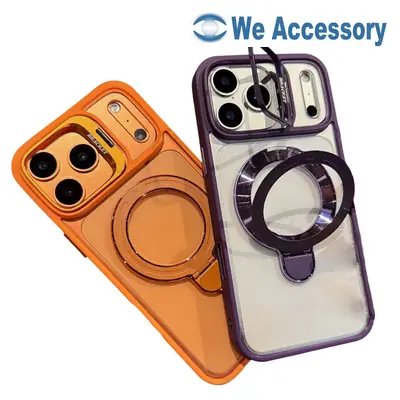
-
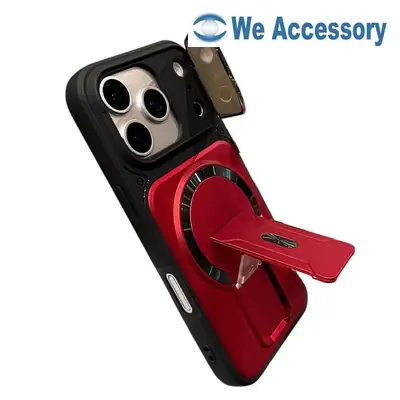 iPhone 18 Pro magsafe holder case glass camera protection and foldable holder case
 -
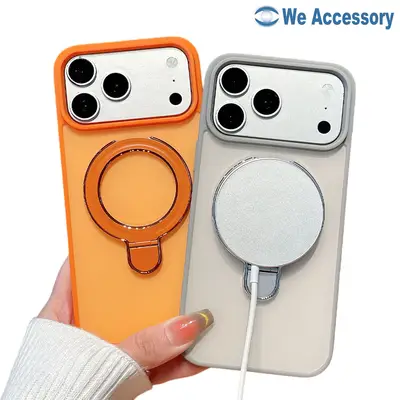 New trend iPhone 18 Pro matte skin-feeling magsafe case ring holder phone holder case
 -
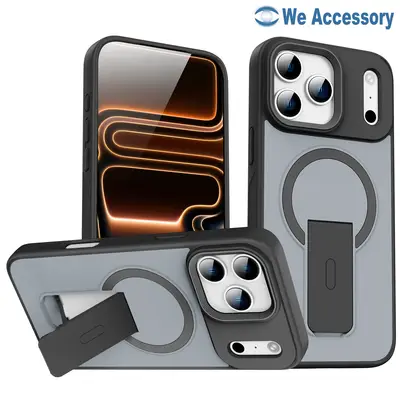 Hot phone accessories iPhone 18 Pro magnetic stand phone case foldable phone holder case
-
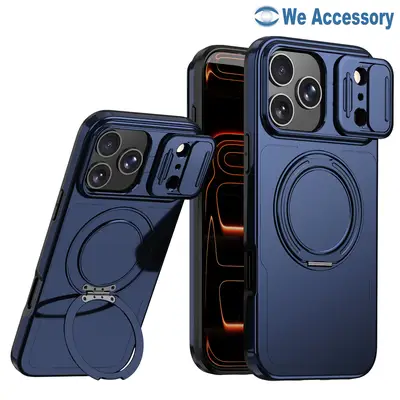 New iPhone 18 Accessories iPhone 18 Pro Ring Holder Case Camera protection Magsafe Case
 -
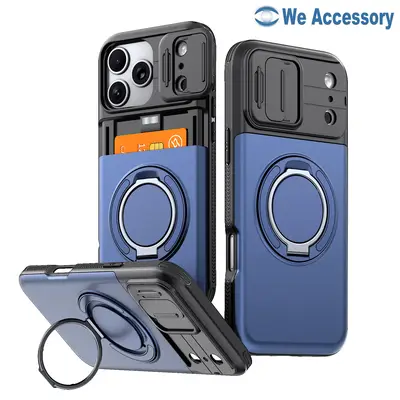 iPhone 18 Pro Max Card Holder Case Magsafe Holder Case Slide Window Camera Protection
 -
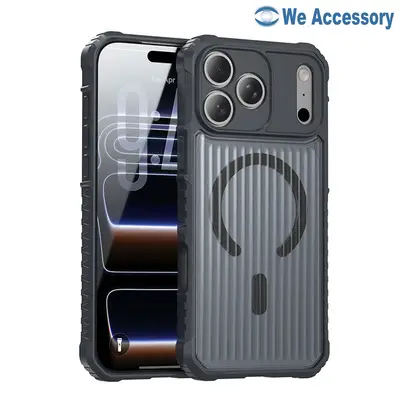 New design iPhone 18 Pro TPU+PC Hybrid Suitcase-Style MagSafe Shatterproof Case
 -
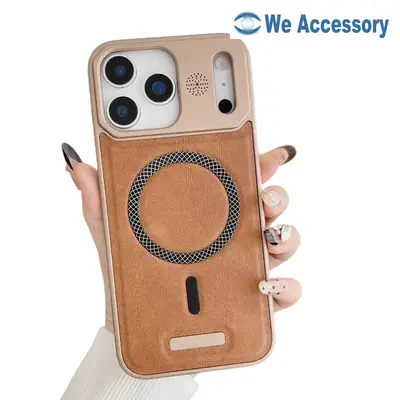 Business demeanor iPhone 18 Pro magsafe leather case 2in1 iphone cover luxury iphone case
-
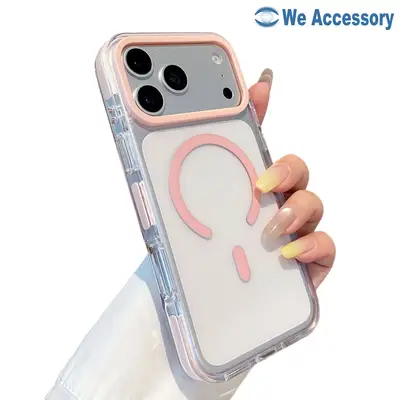 New iPhone Accessories iPhone 18 Pro Clear Magsafe Case double color 2in1 shatterproof case
 -
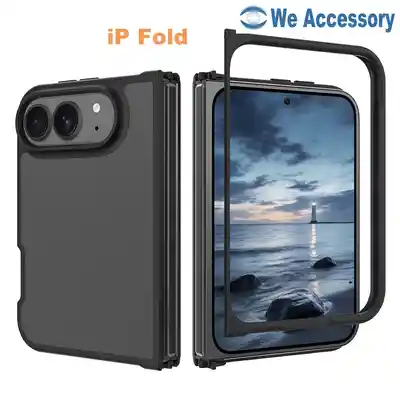 iPhone Case Distributor Newest iPhone Fold Case TPU+PC 2in1 Full Protective iPhone Case
 -
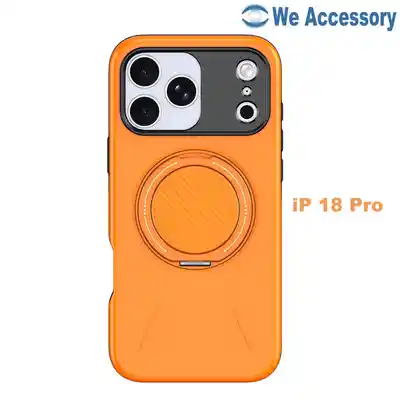 Phone Accessories Company New iPhone 18 Pro Case Magsafe Case with Phone Holder
 -
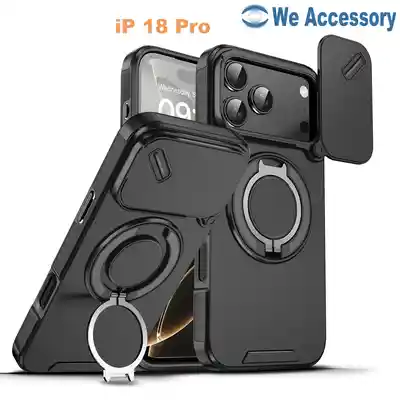 Phone Case Manufacturer New iPhone 18 Pro Max Armor Case Camera Protection and Holer
-
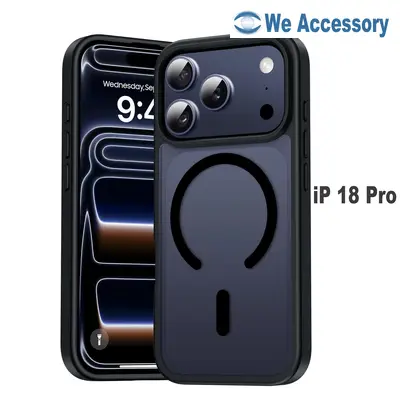 iPhone 18 Accessories Supplier Newest iPhone 18 Pro Case Wholesale Matte magsafe case
 -
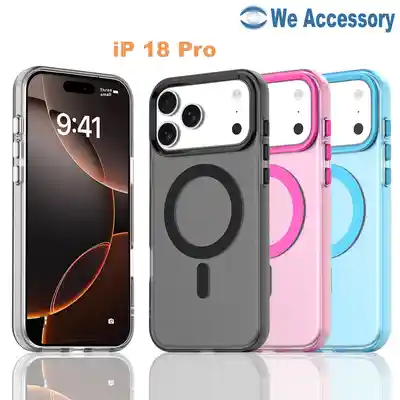 iPhone 18 Pro Case Wholesale Colorful Transparent Magsafe Case New iPhone 18 Pro Case
 -
 Wholesale iPhone 17 Jelly 2 in 1 Magsafe Case colorful silicone iphone case
 -
 Apple iPhone Case Supplier Colorful iPhone 17 electroplated case so cool case
-
 Apple accessories supplier iPhone 17 biodegradable case wheat straw phone case
 -
 Wholesale mobile accessories Samsung S26 Ultra case with magnetic phone holder
 -
 Wholesale mobile phone accessories iPhone 17 colorful silicone case matte case
 -
 Cell phone accessories factory supply iPhone 17 Armor case with magnetic stand
Product Tags
Why Your Tempered Glass Get White Edges? The AB Glue Thickness Question, Screen Protector Suppliers Never Let You Know
August 28, 2026
The email had three photos and a short message. A distributor we've been supplying screen protectors to for two years had a customer complaint he couldn't answer. The photos showed a phone with a brand-new tempered glass protector on it, and along the edges — all four sides — a thin white line, like the glass wasn't quite touching the screen. "Customer says it's been like this since day one," he wrote. "She wants a refund. I don't know what to tell her."
I knew what it was before I finished reading. So do most people in this industry, if they're honest about it. That white line is the most common quality complaint in the entire screen protector category, and it has almost nothing to do with the glass. It's a glue problem.
Let me say that clearly, because it's the whole point of this article: when a tempered glass screen protector shows white edges, the glass is almost always fine. The adhesive layer underneath is too thin.
The phone's screen isn't flat. It curves slightly at the edges — every modern phone does, even the ones that look flat. The glass protector is flat. Between the flat glass and the curved screen, there's a tiny wedge-shaped gap at the edges, and the only thing filling that gap is the adhesive. If the adhesive is thick enough to fill the wedge and grab the curve, the protector looks perfect. If it's not, the edge floats, air gets under it, and light refracts through that sliver of air into a white line that gets worse as dust works its way in.
In this article I'm going to walk through the adhesive layer that nobody talks about — the AB glue — what the grade numbers mean, why thin glue causes white edges, why some factories still use it, and what you should actually ask before you order a batch.
Three layers, and one of them is the reason you're reading this
A tempered glass screen protector is three layers, and you can only see two of them.
The top layer is the glass itself — in our case, around 0.33 mm of chemically and physically tempered glass, hardened to 9H, with a hydrophobic nano-coating that stops fingerprints from sticking. This is the layer the customer sees, the layer that cracks on impact instead of the screen, the layer every marketing photo is about. If you've ever dropped a phone with a protector on it and watched the protector shatter while the screen survived, you know what this layer does.
The middle layer is the part you can't see without peeling the protector off: the adhesive. In the industry it's called AB glue, because it's a double-sided optical adhesive — the A side bonds to the glass, the B side bonds to the screen. Between the two sides sits a thin release film that keeps the adhesive protected until the moment of installation. AB glue is an optically clear adhesive, or OCA for short. It has to be perfectly transparent, because it sits directly over the display. Any haze, any impurity, any air bubble in this layer is visible on a lit screen.
The bottom layer is the release liner — the plastic film you peel off before installation. It's not part of the installed product, but it matters more than you'd think, because the way it peels determines how cleanly the adhesive transfers to the glass. A cheap release liner can leave residue or micro-particles that show up as bright spots after installation.
Everything customers love or hate about a screen protector — the clarity, the touch feel, the ease of installation, and especially the white edges — is decided by that invisible middle layer. The glass gets the reviews. The glue gets the blame.
White edge is a geometry problem
Here's the part that surprises most people: the phone screen isn't flat, and no amount of quality glass can fix that mismatch.
Take any current flagship — the iPhone 18 Pro, a Samsung Galaxy, a Xiaomi flagship. The glass on these phones is subtly curved at the edges. It's called 2.5D treatment: the front surface is flat, but the edges are rounded and polished into a gentle slope. Some phones go further with actual 3D curved glass that bends around the sides. Either way, the display surface is not a plane. It's a plane with curved edges.
Now take a piece of tempered glass. It's flat. Really flat — glass manufacturers hold it to tolerances that are measured in microns. The protector is designed to sit flat on the flat center of the screen and cover the whole display.
The mismatch lives at the edges. Where the flat protector meets the curved edge of the screen, there's a gap that grows from nothing at the center to maybe a fraction of a millimeter at the very edge. It's tiny — you can't see it with your eyes, and you'd struggle to measure it with a ruler. But it's a physical wedge of air, and light behaves differently in air than in glass. When light hits that wedge, part of it reflects instead of passing through. The reflection is what you see as the white line.
The only thing that can fill that wedge is the adhesive. The adhesive has to be thick enough to span the gap, soft enough to conform to the curve, and sticky enough to hold itself there for the life of the protector. That's a lot to ask of a material that's supposed to be invisible.
When the adhesive does its job, the wedge is filled, there's no air, no reflection, no white line. When it doesn't — when the adhesive is too thin to span the gap, or too stiff to conform, or too weak to hold — you get a white edge. Not because the glass is bad. Because the geometry of the phone and the thickness of the glue never met in the middle.
The numbers: what 110, 130, 180, 280, 330 and 380 tell you
If you've ever looked at screen protector specifications from a factory, you've seen these numbers: 110A/B, 130A/B, 180A/B, 280A/B, 330A/B, 380A/B. They get thrown around in quotes and WeChat messages and trade-show small talk, and most buyers nod along without knowing what they mean.
They're glue grades. The number refers to the thickness of the AB adhesive layer, and because the glue's job is to fill gaps and grab surfaces, thickness and adhesion move together: the higher the number, the thicker the adhesive, and the stronger the bond. A 380 A/B glue is a substantially thicker, stronger adhesive layer than a 110 A/B glue. It's not a marketing difference or a naming convention — it's a physical difference you can measure, and more importantly, a difference you can see in how a protector behaves on a curved screen.
Why do grades exist instead of one "good" glue? Because different screens, different glass shapes, and different price points want different things. A flat screen protector on an old flat-screen phone doesn't need a thick adhesive — a thin one grabs the flat surface fine and costs less. A full-coverage protector on a curved-edge flagship needs all the thickness it can get. The grades are the industry's way of matching the adhesive to the job.
Which brings us to the uncomfortable truth at the heart of the white-edge problem: the cheapest protectors on the market use the thinnest glue grades, and the thinnest glue grades are the ones that produce white edges on curved screens. It's not that factories don't know. It's that thin glue is cheap glue, and the difference is invisible until the protector is on a phone.
Reading the grades, from thin to thick
Let's go through the grades one at a time, from the thinnest to the thickest, and be honest about what each one is good for and what it isn't.
110 A/B glue: the economy grade
110 is the thinnest AB glue you'll commonly see in production. It's a minimal adhesive layer, designed for one purpose: getting a protector onto a flat screen at the lowest possible material cost. On a genuinely flat display — an old iPhone SE, a budget Android with a flat panel — a 110 grade can work fine, because there's no edge wedge to fill. The adhesive just needs to hold the glass flat, and it does.
The problem is that 110 doesn't know which phone it's going to end up on. A distributor buys a mixed batch, and half of it goes on flat screens and half on curved-edge phones. The ones that land on curved screens develop white edges within days — sometimes within hours, as the adhesive relaxes and the edge lifts. The 110 grade is the single most common cause of the white-edge complaint in the market, because it's the cheapest, and cheap wins most auctions.
If a quote for full-coverage protectors is suspiciously low, check what glue grade is in the specification. If it says 110, you know what you're getting.
130 A/B glue: the step above economy
130 is a modest step up. It's still a thin adhesive, but it's thick enough to handle a slight edge radius on older curved phones — think iPhone 11 or 12 generation, where the curve is gentle. On those phones, a 130 grade holds the edge acceptably for most customers.
The line it walks is the same line as 110, just a step further back: on the sharper curves of modern flagships, 130 still floats at the edges. It's the grade you see in "value" lines of full-coverage protectors that are sold at a discount and return at a higher rate. If your business is volume at a low price point and your customers aren't picky about edges, 130 will ship. If your customers hold their phone up to the light, it won't.
180 A/B glue: the mainstream workhorse
180 is where the industry's center of gravity sits. It's the grade most mid-range full-coverage protectors use, and it's a reasonable balance: thick enough to handle the gentle curves of most mainstream phones, thin enough to keep costs in check.
Here's the thing about 180 that's worth understanding: it's the floor for acceptable white-edge performance on modern phones, not the ceiling. A 180 grade protector on a current flagship with a pronounced 2.5D curve will usually look fine out of the box, but it's working right at the edge of its capability. If the phone's curve is at the sharp end of the tolerance range, or the adhesive gets cold and stiff before installation, the white edge can appear even with 180.
When we spec our standard full-coverage line, 180 is the minimum we'll use for current models. It's the grade where the "good enough" conversation starts.
280 A/B glue: the curved-screen answer
280 is where the glue stops being a cost line item and starts being a performance feature. At this thickness, the adhesive can actually fill the wedge under a pronounced 2.5D curve and hold it there — which is why 280 is the grade we reach for on modern flagships with noticeable edge curvature.
The difference between 180 and 280 on a curved screen isn't subtle. With 180, the edge is holding on by its fingertips. With 280, the adhesive is thick enough to sit in the gap like a proper gasket, conforming to the curve, filling the wedge, killing the white line. It's the first grade where a customer who installs a protector and looks at the edges thinks "huh, that's clean," instead of squinting and hoping.
The cost is real but modest. 280 costs more per sheet than 180 — more material, more careful lamination — but it's not a premium tier. It's the sensible default for anyone selling full-coverage protectors for current phones and taking the white-edge complaint seriously.
330 A/B glue: the strong grab
330 pushes further into thick-adhesive territory. At this grade, the glue isn't just filling the edge wedge — it's grabbing the screen with real force. 330 handles aggressive curves, and it's also the grade you see in protectors that need to survive more than just installation: protectors that go through cases, protectors that get installed and removed, protectors that live on phones for a year or more.
There's a trade-off that shows up at 330 and gets more pronounced as you go up, and it's worth being upfront about: thick glue is harder to install. The adhesive grabs the screen the moment it touches, which means less time to slide the protector into position, less forgiveness for misalignment. A 330 protector installed by someone who's in a hurry can end up with a bubble in the middle that's much harder to push out than a thin-glue bubble. The white edges are gone, but installation becomes the new failure point.
380 A/B glue: the thickest grade
380 is the thickest AB glue grade in common use. It's the specialist's choice: protectors for deeply curved 3D glass, protectors designed for rough handling, protectors where the adhesive is expected to carry the entire protection story. A 380 glue will hug a curve that would leave a 110 grade floating, and it will stay stuck through temperature swings, case pressure, and general abuse.
But 380 is not a free win, and any factory that tells you otherwise is selling you something. At 380, the adhesive layer is thick enough that it can show its own imperfections — a slightly uneven lamination, a micro-bubble trapped during production, a dust particle that sits inside the glue rather than under it. And installation gets genuinely tricky: the grab is so strong that a misplaced protector is nearly impossible to lift and re-seat without leaving marks. 380 is the grade you choose when the phone demands it, not the grade you blanket-apply to everything.
Why factories reach for thin glue
If thick glue fixes white edges, why does thin glue exist at all? Why is the most common complaint in the category caused by the most common material choice?
Start with cost. Adhesive is a raw material, and raw materials are priced by volume. A 110 grade uses a fraction of the adhesive material of a 380 grade, and at the volumes a screen protector factory consumes — hundreds of thousands of sheets a month — the difference is real money. On a protectors wholesale order measured in pallets, switching from 380 to 110 can move the unit price by more than you'd think. In a market where buyers compare quotes down to the cent, the thin-glue protector wins the price comparison every time.
Then there's yield. Thick adhesive is harder to laminate cleanly. It's more likely to trap air during production, more likely to wrinkle during the glass-bonding step, more likely to show lamination marks. A factory running 110 glue might reject one sheet in fifty. The same factory running 380 might reject three. That's not a small difference when you're producing five thousand sheets a day.
And there's the tolerance story that nobody puts in the brochure: thin glue is more forgiving of glass flatness. The glass itself is never perfectly flat — it's flat within a tolerance — and a thin adhesive layer can conform to small glass variations without showing anything. A thick adhesive layer on slightly warped glass can produce visible optical distortion. Factories that struggle with glass flatness tend to drift toward thinner glue because it hides their problems.
None of this is a conspiracy. It's an incentive structure. The buyer who prioritizes price gets thin glue. The buyer who prioritizes returns gets thick glue. The factory will happily supply either — but only the buyer who specifies the grade gets what they actually want.
Thick glue is not a free win
Let me be the one to say it, because we've lived it: putting 380 glue on everything is not the answer.
We spent months in our own workshop learning this the hard way. When the white-edge complaints started showing up in our European channels, our first instinct was the simple one — make everything thicker. We laminated a test run of full-coverage protectors with the thickest grade we could source and sent them out. The white edges disappeared. Then the new complaints started.
Installation errors went up, because the strong grab left no room for misalignment. A few protectors came back with mid-screen bubbles that even careful rolling couldn't push out, because the thick adhesive had trapped air at lamination and released it on the customer's counter. And one batch — I still have the photos — showed faint visible lines in the adhesive itself, lamination marks that only appeared when the protector was on a bright screen at a low angle.
The lesson stuck: glue grade has to match the glass, the screen, and the market. A flat-screen budget line doesn't need 380, and slapping it on raises costs and installation complaints for zero edge benefit. A curved-screen flagship line that lives at 110 is a returns machine. The craft is matching the grade to the product — which is why the first question any serious buyer should ask is "what glue is in this protector?" followed by "why?"
What to ask before you order
You don't need to become an adhesive engineer to avoid the white-edge trap. You need four answers from your supplier.
What AB glue grade is in this protector? If the answer is a shrug, a "standard," or a price-only quote with no grade mentioned, that's a red flag. Any factory that knows its product can tell you the grade in seconds — and if they can't, the grade is probably the cheap one. What screens is this grade designed for? The right answer depends on your market's phones. If you're selling full-coverage protectors for current flagships, you want 280 or above. If your line is budget protectors for older flat-screen phones, 180 is defensible and 110 is asking for returns. The grade should be matched to the product's position in your catalog. What's your return rate on white edges? A factory that has never heard the question is a factory that isn't tracking it. A factory that gives you a number — even a number you don't love — is a factory that's paying attention. The honest ones will tell you the white-edge complaint is a category-wide problem driven by price pressure, and that they'll spec thicker glue for you if you want it. The dishonest ones will tell you white edges don't exist. Can I get a sample with the glue grade printed in the spec? Then install it yourself on a current flagship with a curved screen. Not on a flat test phone. The whole point of the exercise is the edge, and a flat screen won't show you anything. Look at the edges against a bright light before you commit to an order. That's the test that would have saved that distributor in Helsinki the headache of those three photos.A note about 3D and UV
One more corner of this topic, because it explains why some protectors never have white edges at all.
True 3D curved protectors — the ones that wrap around the phone's sides — don't use AB glue at all. They're installed with liquid UV adhesive: a transparent resin that's applied to the screen, the glass is laid over it, and a UV lamp cures the resin into a solid, perfectly conforming layer. The resin flows into every gap, which means there is no edge wedge to fill — the liquid fills it before it cures. That's why a well-installed 3D protector has no white edge, ever, regardless of the phone's curve.
UV installation is also why 3D protectors come with kits — the lamp, the alcohol wipe, the dust sticker — and why they're a different retail experience. The installation takes longer, the lamp is a real cost, and a botched UV install is worse than a botched AB install, because cured resin doesn't peel off cleanly. But for customers with curved screens who are willing to follow instructions, 3D + UV is the permanent solution to the white-edge problem.
The market split is worth understanding: AB glue protectors are the volume product — cheap, fast, installable by anyone. UV-cured 3D protectors are the specialist product — higher price, higher margin, higher installation skill. The white-edge complaint lives almost entirely in the AB volume world, which is exactly why the glue grade question matters there.
If UV glue is so good, why isn't everything UV? The answer is the same reason most markets stay messy: the lamp. A UV kit costs money, the install takes three times as long, and a customer who's never done it before will mess it up at least once. Repair shops can make UV work — they have the counter, the lamp, and the practice. A retail shelf can't. So the volume market stays on AB glue, and the AB glue market stays on grades, and the grades stay the battleground where the white edge is won or lost. That's the landscape. It's not going to change next season, and it's not going to change because of one factory's blog post.
The humidity nobody mentions
There's one environmental factor that quietly decides whether a glue grade performs as spec'd, and it never makes it into the brochure: humidity.
OCA adhesives are hygroscopic — they absorb moisture from the air. A protector laminated in a dry factory behaves differently from the same protector sitting in a humid warehouse for six months. The adhesive can take on moisture, and moisture changes how it conforms and how strongly it grabs. In our experience, the white-edge complaint spikes in the same regions and seasons where humidity is high — coastal markets in summer, warehouses without climate control.
This matters for a buyer in two ways. First, ask your supplier about their storage environment. A factory that stores finished protectors in a climate-controlled room is protecting the adhesive's performance; a factory that stores them in a hot, humid corner is not. Second, rotate your own stock. Old stock is weaker stock when it comes to adhesive. The protector that's been sitting in a damp warehouse for nine months will show edges that the same protector fresh from production wouldn't.
It's the kind of detail that feels minor until it becomes a return rate.
What a white edge does over time
The white edge you see on day one is rarely the white edge the customer complains about in week four. The problem gets worse, and understanding how it gets worse is worth a paragraph of your time.
Day one: the protector goes on, the edges look slightly lifted, but the screen is bright and the phone is new and the customer doesn't look that hard. Many of them don't even see it. This is the silent window — the white edge exists, but it hasn't cost anyone money yet.
Week one to three: the phone goes through normal life. Pockets, bags, temperature changes, the occasional knock. The thin adhesive at the edge is the weakest part of the whole system, and every thermal cycle — a cold morning walk, a warm car, a pocket next to a warm body — makes it relax a little more. The edge lifts further. What was a hairline becomes a visible line.
Month one and beyond: now dust gets in. This is the part that turns a cosmetic issue into a structural one. Once the edge has lifted even a fraction of a millimeter, dust particles start working their way under the glass, and dust doesn't go back out. Each speck lifts the edge a little more, letting in more dust. The white line spreads inward from the edge, and what started as a thin border becomes a cloudy frame around the entire protector. At this stage, the protector is a dust collector, and the customer is not asking for a replacement — they're telling everyone they know that tempered glass is a scam.
That progression matters for a wholesale buyer because of the timing. The return comes in at week four or week six, long after the invoice is paid, long after the stock has been reordered. The white edge isn't a factory-reject problem — it's a customer-retention problem that shows up on someone else's counter, and it lands on your doorstep as a chargeback or a lost account.
The real price of a return
Let's put a number on a white-edge return, because "returns are bad" is not a number, and without a number, the cheap-glue decision always wins.
Say a distributor sells a full-coverage protector for four euros wholesale and the shop retails it at fifteen. A white-edge return means the shop refunds the customer, and the shop's instinct is to pass that refund back up the chain — the distributor credits the shop, and the distributor either eats the loss or comes back to the factory. Somewhere in that chain, the unit gets replaced. But the unit price is not the cost.
The cost is the unit, plus the double shipping, plus the staff time to process the return, plus the bookkeeping, plus the stock that's now sitting on a shelf with a known problem, plus — and this is the one nobody prices — the customer who decides, based on this one experience, that cheap protectors are false economy and spends their next €40 on a premium brand. One white-edge return doesn't cost you €4. It costs you the customer's entire protector budget for the next couple of years, and it costs the shop owner's trust in your line.
This is why the factory-floor math and the market math disagree. On the factory floor, thick glue is an extra cost per unit and a yield hit, and it's very easy to justify saving that money. In the market, the thin-glue protector that returns at a higher rate costs more than the thick-glue one ever saved — it just takes six weeks for the bill to arrive, and by then the purchase order is already signed.
If you're a distributor, the question isn't "what's the cheapest protector I can buy." It's "what's my total cost per protector sold, counting the returns?" Every factory knows the first number. Ask them for the second one.
The installation paradox
There's an uncomfortable trade-off hiding in the thick-glue story, and pretending it doesn't exist would be dishonest.
Thick glue fixes white edges, but thick glue is harder to install. The adhesive grabs the screen the instant the glass touches it. There's no sliding, no repositioning, no second chances. A 380-grade protector demands a steady hand and a clean surface, and if the installer — a repair-shop employee on a busy Saturday, a customer in their kitchen — presses it down crooked, they get a protector that's stuck wrong and won't come off cleanly.
This is the paradox: the same feature that eliminates the white-edge complaint creates a new class of installation complaints. And installation complaints are worse, because they happen instantly, at the counter, in front of the customer, while the white edge happens weeks later, out of sight.
The way the industry actually resolves this isn't with a magic glue — it's with the installation frame. The plastic alignment frame that snaps over the phone, the one that costs a few cents and ships in the box, turns a hard installation into a foolproof one. The frame holds the protector in the exact right position, the installer presses the center, and the adhesive does the rest. With a frame, the grab-early behavior of thick glue stops being a problem, because there's nothing to align — the frame already did it.
That's why the glue-grade conversation and the installation-frame conversation belong together. Thick glue without a frame is a recipe for countertop disasters. Thick glue with a frame is the white-edge problem and the installation problem solved at the same time. When you're speccing a line with your supplier, ask for both — the grade and the frame — and test them together before you commit to the order.
The honest version
Here's where this ends up. The white edge is not a glass problem, it's not a phone problem, and it's not bad luck. It's a specification problem — the adhesive layer under the glass is too thin for the screen it's sitting on, and the reason it's too thin is that thin glue is cheap and the price pressure in this category is relentless.
The fix isn't complicated. Specify the glue grade. Match it to the screens your customers actually carry. Test samples on real curved screens, not test jigs. Ask the supplier the four questions above and listen to how they answer. And if your supplier can't tell you what grade of AB glue is in your protectors, that's the answer too.
Our full-coverage line ships with the glue grade matched to the screen — 280 and up on current flagships, where the edge wedge is real, and honest specs on everything else. It's not the cheapest spec sheet in the category. It's the one that doesn't come back. And a protector that doesn't come back is the cheapest protector of all, once you count the week-six phone calls it never generates.
— William Shaw, Head of Sales, We Accessory
We Accessory is a phone accessories wholesale supplier in Shenzhen, in business since 2012, supplying cases and screen protectors to distributors and repair shops in 50+ countries. Full-cover 9H protectors (0.33 mm, AB adhesive matched to screen curve, 90%+ light transmission), OEM and private label available. WhatsApp: +86-15919800304 · Email: [email protected] · weaccessory.com
Share:


Why Choose We Accessory
12+
Years Experience
2000+
Product SKUs
50+
Countries Served
OEM
& ODM Service
2-4
Day Delivery
Professional Phone Accessories Wholesale Supplier
We Accessory is a trusted phone accessories wholesale supplier since 2012. We specialize in phone case, tempered glass screen protector, USB cable, charger and more mobile accessories wholesale, serving customers in 50+ countries worldwide.
Frequently Asked Questions
Where is We Accessory located?
We are located in Shenzhen
What products do you offer?
We offer phone cases, screen protectors, USB cables, chargers and more mobile accessories for all major brands.
Do you offer OEM/ODM services?
Yes, full OEM and ODM customization with your logo, packaging and designs.
What is your shipping time?
In-stock items ship in 2-4 business days via DHL/UPS/FedEx. Custom orders 5-7 days production plus shipping.
We Accessory (WeAccessory.com)
Address:2F, Block A2, Nanchang Industrial area, Xixiang Town,Bao'an District, Shenzhen
Tel: +86-755-36818832
Mobile/Whatsapp: +86-15919800304
Email: [email protected]
Microsoft Teams: william.shaw186
Product Tags
Contact us Now!
Please send us your Email address if you'd like some products



Copyright © 2012-2026 Shenzhen Western Electronic Co., Ltd All Rights Reserved. Sitemap | Best Phone Case Wholesale, Tempered Glass Screen Protector, USB Charger, Cable, other Mobile Accessories Wholesale