English
 Français
 Deutsch
 Español
 Italiano
iPhone 18 accessories iPhone 18 Pro 3in1 magnetic holder case camera holder ring holder case

Recommend Products
-
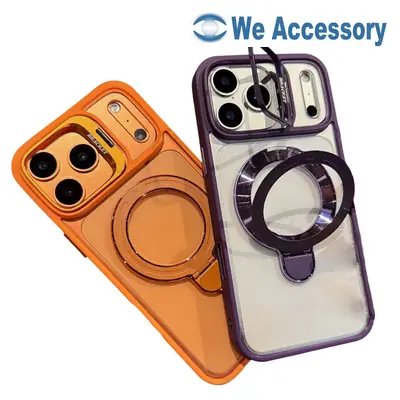
-
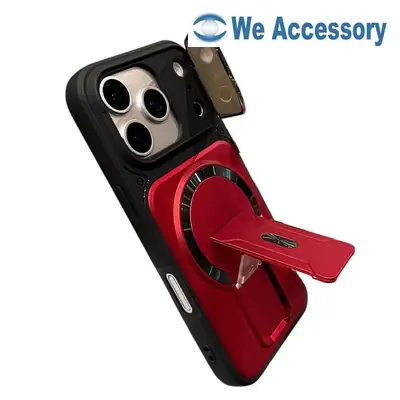 iPhone 18 Pro magsafe holder case glass camera protection and foldable holder case
 -
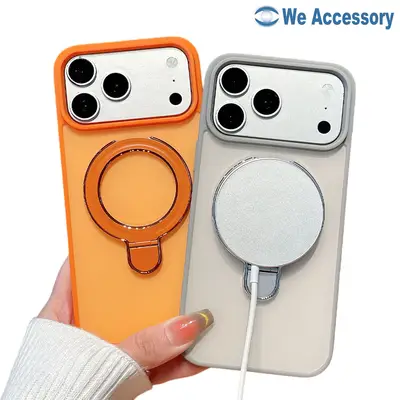 New trend iPhone 18 Pro matte skin-feeling magsafe case ring holder phone holder case
 -
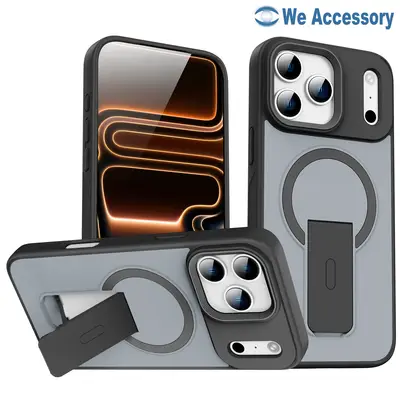 Hot phone accessories iPhone 18 Pro magnetic stand phone case foldable phone holder case
-
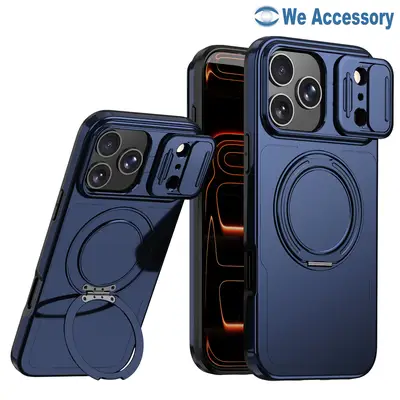 New iPhone 18 Accessories iPhone 18 Pro Ring Holder Case Camera protection Magsafe Case
 -
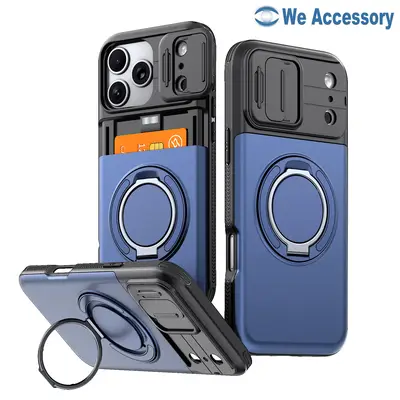 iPhone 18 Pro Max Card Holder Case Magsafe Holder Case Slide Window Camera Protection
 -
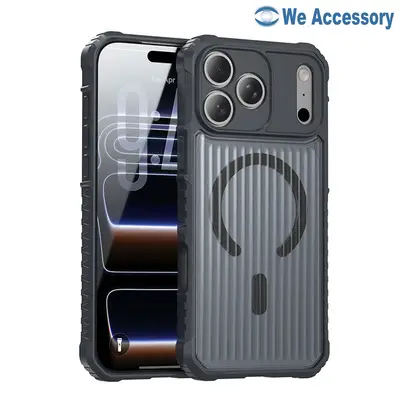 New design iPhone 18 Pro TPU+PC Hybrid Suitcase-Style MagSafe Shatterproof Case
 -
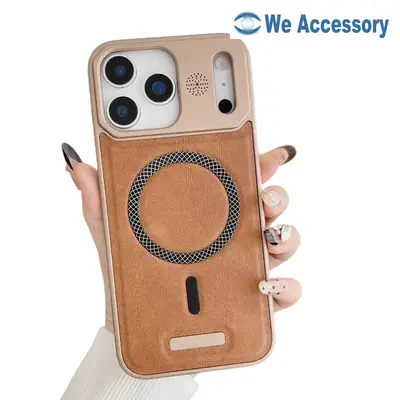 Business demeanor iPhone 18 Pro magsafe leather case 2in1 iphone cover luxury iphone case
-
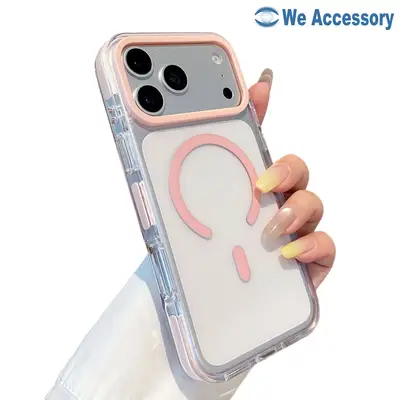 New iPhone Accessories iPhone 18 Pro Clear Magsafe Case double color 2in1 shatterproof case
 -
 iPhone Case Distributor Newest iPhone Fold Case TPU+PC 2in1 Full Protective iPhone Case
 -
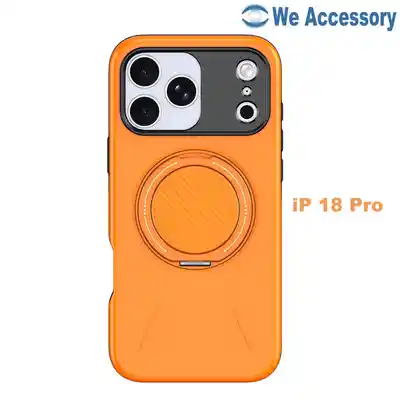 Phone Accessories Company New iPhone 18 Pro Case Magsafe Case with Phone Holder
 -
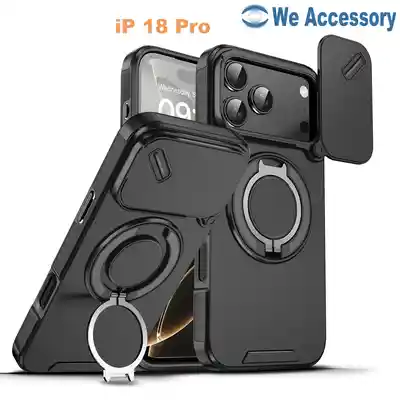 Phone Case Manufacturer New iPhone 18 Pro Max Armor Case Camera Protection and Holer
-
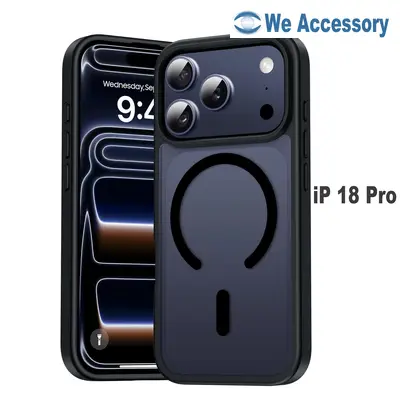 iPhone 18 Accessories Supplier Newest iPhone 18 Pro Case Wholesale Matte magsafe case
 -
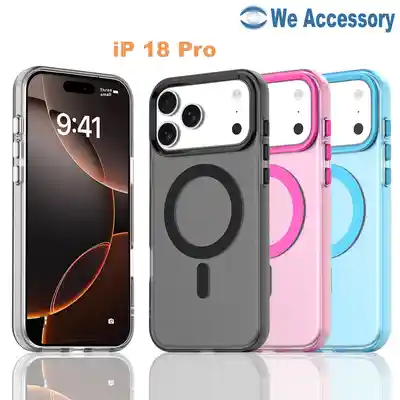 iPhone 18 Pro Case Wholesale Colorful Transparent Magsafe Case New iPhone 18 Pro Case
 -
 Wholesale iPhone 17 Jelly 2 in 1 Magsafe Case colorful silicone iphone case
 -
 Apple iPhone Case Supplier Colorful iPhone 17 electroplated case so cool case
-
 Apple accessories supplier iPhone 17 biodegradable case wheat straw phone case
 -
 Wholesale mobile accessories Samsung S26 Ultra case with magnetic phone holder
 -
 Wholesale mobile phone accessories iPhone 17 colorful silicone case matte case
 -
 Cell phone accessories factory supply iPhone 17 Armor case with magnetic stand
Product Tags
Why Hybrid Phone Cases Fall Apart, The Snap Lock Build That Ended Our Glue Problem
August 26, 2026
The photo arrived on a Tuesday, attached to a short email. A distributor we'd been shipping hybrid cases to for a year had taken a picture of one of our cases, sitting on his desk. The phone was out of it. The PC backplate and the TPU bumper were separated cleanly at the seam, like someone had pried them apart with a butter knife. "This is the third one this month," he wrote. "Same model. Customers are bringing them back."
He wasn't angry. That's the worst part. He was tired, the way you get tired when a product you recommended keeps letting people down.
Here's the thing nobody tells you when you start selling two-piece cases: the layers can come apart. Glue dries out, heat softens it, drops stress the seam, and one day the case that was supposed to protect a €1,000 phone turns into a two-piece toy. Every separated case is a warranty claim you pay for twice — once in the replacement unit, once in the customer you lose.
This article is about why that happens, what we did about it, and what a distributor should actually look for when a supplier tells them a hybrid case "won't separate." Because that claim gets thrown around a lot, and most of the time it's just glue talking.
The four ways a glued case dies
Almost every hybrid case on the market — the kind with a hard back and a soft bumper — is assembled the same way. The factory presses the two halves together over a layer of adhesive. Sometimes it's a pre-cut glue film, sometimes it's liquid adhesive applied by a nozzle, sometimes it's double-sided tape around the perimeter. It works great for the first month. Then the case starts dying, and it almost always dies one of four ways.
A separated case isn't a cosmetic issue. It's a safety issue, because a phone that slips out of a broken case is a phone that hits the ground. And it's a business issue, because the customer who brings back a case that fell apart doesn't just want a refund — they're now suspicious of every accessory you sell.
Glue had a good run
It's worth saying this fairly: glue isn't stupid. Glue is why hybrid cases exist at all. The whole idea of a two-layer case — hard outer shell, soft inner bumper — only works if the two layers stay married, and for twenty years adhesive was the only practical way to marry them.
When we started making two-piece cases, back when the iPhone 6 was the hot phone, we glued them like everyone else. Glue film on the backplate, heat press, done. It was fast. It was cheap. It let a factory turn out thousands of cases a day with a machine that costs less than a used car. The failure rate was maybe two or three percent in the first year — low enough that nobody felt urgent about it.
Here's what changed. Phones got bigger, heavier, and a lot more expensive. The iPhone 18 Pro costs more than a mid-range laptop. A case that falls apart after six months on a €1,200 phone isn't a small annoyance anymore — it's a customer-relations disaster. Meanwhile, wireless charging became standard, which means cases now bake at glue-melting temperatures every single day. The old math — glue is cheap, failures are rare — quietly stopped adding up. The failures were never rare. They were just spread out enough that no single shop noticed.
We noticed, because we see the returns. Every batch of glued cases that comes back, we pull the seam apart in the workshop and look at the adhesive. The honest answer is that most of the time it did its job as long as it could. The job was just too hard.
Snap-lock is not a new idea. It's a rediscovered one.
Somewhere around 2024, we started asking a different question. Not "what's a better adhesive?" but "do we need adhesive at all?"
The answer was already sitting in our own product line. For years we'd been making one-piece silicone cases, and one-piece cases don't separate because there's nothing to separate — the material is one continuous piece. The problem is that a one-piece case can't give you the hard back that shatterproof protection needs. You can't injection-mold a single piece that's rigid on the outside and soft on the inside. Physics doesn't allow it.
The trick is to stop thinking of the two layers as parts to be glued and start thinking of them as parts to be locked. Snap-lock assembly — a mechanical interlock between the PC shell and the TPU bumper — has been around in industrial design for decades. Snap-fit joints hold together everything from car dashboards to children's toys. The reason it took so long to reach phone cases is that a phone case seam is tiny, the tolerances are brutal, and the Chinese factory ecosystem was built around glue machines, not precision tooling.
Our first snap-lock attempts were embarrassing. The first prototype — I still have it in a drawer — snapped together fine, but the seam rattled. Put it on a phone and shake it and you could hear the two layers click against each other. A case that rattles feels cheap even if it protects perfectly. The second prototype fixed the rattle but the bumper popped off when you twisted the case hard, which is exactly the kind of stress a pocket puts on a case fifty times a day. We went through seven iterations before the design held together through a full week of abuse in the workshop, and then we broke it again on purpose to see where it would fail.
The geometry that finally worked comes down to three things. First, the PC backplate has an undercut lip all the way around the edge — not a flat edge like a glued case, but a slight hook that the TPU bumper wraps around and clicks into. Second, the TPU bumper has a matching ridge on its inner wall that seats into that lip. Third — and this is the part that took us longest — the tolerances have to be tight enough that the joint is snug but not so tight that the TPU can't stretch over the lip during assembly. We're talking about tolerances in the hundredths of a millimeter. If the tooling is off by a hair, the case either won't assemble at all or it assembles with a gap you can feel with a fingernail.
The payoff is that the joint doesn't degrade. There's no adhesive to dry out, soften, or age. The bond is mechanical — the TPU bumper is physically trapped around the PC shell. A snap-lock case can separate only if the TPU itself tears or the PC shell cracks, and both of those are material failures you'd have to work hard to cause. We've had snap-lock cases in the workshop being twisted, dropped, and heat-cycled for over a year now, and the seam is as tight as the day they were assembled.
What the drop tower actually told us
People throw the phrase "drop tested" around so loosely that it's almost meaningless. A case can be "drop tested" at forty centimeters onto carpet and the factory will put it on the box. So when we say our Journey Series cases went through 10,000 drops, let me be specific about what that means, because the details are what separate a real test from a marketing sticker.
The drop test rig is a tower about two meters tall. A phone in a case is dropped from set heights onto set surfaces — concrete, tile, asphalt — at set angles. The standard sequence is chest height onto concrete, which is the drop that actually kills phones. We run the same test across multiple units, because one unit tells you nothing; five units tell you a pattern. And we test the case empty and with a phone in it, because the results are different. An empty case flexes differently. A loaded case transfers shock to the seam.
The 10,000 figure in our marketing materials is cumulative — that's the total number of drops across the test program for this design, including the prototypes that failed. The failures are the important part. In the early iterations, the drop tower found the exact weak points I described earlier: the seam near the camera cutout, and the corner where the bumper meets the backplate. We fixed those, and the fixes are what you see in the final product. If you ever visit our workshop in Shenzhen, the test tower is the first thing I'll show you, because it's the most honest machine we own. It has no opinion. It doesn't care about marketing budgets. It just drops things until they break, and then we go fix them.
What the tower told us about snap-lock versus glue: a glued case, dropped chest-height onto concrete, will often survive the drop and then fail weeks later, because the impact cracked the adhesive and the crack spread slowly. A snap-lock case either survives the drop visibly intact or fails immediately in a way you can see — the bumper pops off, the shell cracks. There's no hidden damage. That's a huge deal for a distributor, because hidden damage is what turns into warranty claims three months after the sale. Visible failure gets caught at your counter, before the customer walks out.
What changes for your shelf
Let's talk about what a snap-lock hybrid case actually does for the person selling it, because that's the part that matters to a wholesale buyer.
First, returns. If you're selling hybrid cases in any volume, a few percent of them are coming back with separated seams. That's just the math of glued cases. Each return costs you the replacement unit, the shipping, and the staff time to process it — plus the customer's goodwill, which is the line item nobody budgets for. A case that doesn't separate kills that whole category of loss. In our own numbers, the return rate on the snap-lock line is a small fraction of what the glued line ran, and the difference is entirely the seam.
Second, trust. This is harder to measure and worth more. A repair shop or retailer that gets burned by a cheap case becomes a skeptic — and skeptics don't reorder, they test. When you put a snap-lock case in front of a shop owner who's been burned before, the first thing they do is twist it. Every one of them twists it. And when it doesn't give, when the seam holds under the exact test that failed on their old stock, you can see the change in their face. That moment is worth more than any brochure.
Third — and this surprised us — the seam is now a selling point instead of a liability. A glued case's seam is a secret; you hope the customer doesn't find out what's underneath. A snap-lock case's seam is a feature you can demonstrate. Twist it in front of a customer, hand it to them, let them try to pull it apart. It's the rare accessory feature you can prove in ten seconds without any equipment. Retail staff love products they can demonstrate, because demonstrations close sales.
The €15 question
A repair shop in Gothenburg — I'll call the owner Stefan, because that's his name and he doesn't mind — sells phone cases from a glass counter next to the register. For years he carried the usual mix: silicone cases at €9.99, a couple of clear cases at €12, one shelf of "premium" cases at €15–22 that mostly collected dust. He told me once that the premium shelf was for people who'd already broken a screen, which was his way of saying the markup felt like a trap you could see coming.
Then he started demoing the snap-lock case. Not the usual "it's drop tested" line — he actually hands the case to the customer and says "try to pull it apart." People try. They can't. They laugh, they show their friend, they buy it. Stefan moved the snap-lock cases from the dust shelf to the counter, next to the register where people wait for their repair, and the €15–22 price point became his best-margin accessory line. A case that costs him a couple of euros wholesale selling at €18 retail is the kind of margin a repair shop lives on. And here's the part I like: it's an honest upsell. The customer who buys it is getting genuinely better protection than the €10 option, and Stefan's repair shop reputation benefits every time one of those cases takes a real drop and the phone survives.
That's the step-up logic of the repair channel. A repair shop sees broken phones all day. When someone walks in with a cracked screen, the shop can sell them a case that prevents the next crack — at a price that reflects the phone's actual value. The customer just paid €200 to fix a screen. Telling them the €18 case is "the expensive one" doesn't land. Telling them this is the one that stops it happening again, and handing them proof — that lands.
If you're a distributor deciding whether to add a snap-lock hybrid case to your catalog, the repair channel is where this product earns its keep. Not the discount shelf. The counter next to the register.
Thirty seconds. That's all the inspection you need.
You can't test glue in a warehouse. You can test a snap-lock joint in thirty seconds, with nothing but your hands. Here's the routine we give buyers, and it's worth doing on every sample before you place a bulk order.
Twist it. Hold the case by the top and bottom edges and twist in opposite directions, like you're wringing out a cloth. A glued case will show the seam opening on the side under tension — sometimes just a hairline, sometimes a visible gap. A snap-lock case will hold solid. This is the test that exposes ninety percent of bad hybrids.
Pull the bumper away from the backplate at the corners. Not with brute force — just a firm tug at each of the four corners. A properly locked bumper will flex and snap back. A glued one will sometimes lift, and if it lifts, it's a return waiting to happen.
Run your fingernail along the seam. You're checking for a consistent line with no gaps and no stepping. A case whose seam you can feel as a ridge is a case whose joint wasn't machined properly — and if the joint is off, the locking geometry is off with it.
And then the one test you can't do in the warehouse: ask how it's assembled. If the answer is "glue," you know what you're getting. If the answer is "snap-lock," ask about the tooling tolerances and the drop-test program — a supplier who can answer those questions concretely is a supplier who actually built the thing, not someone reselling a generic shell with a logo stamped on it.
None of this is hard. It just takes thirty seconds, and it will save you from ordering a thousand cases that die in month three.
Colors, models, and the boring logistics
The Journey Series snap-lock case comes in five colors out of the box — black, white, green, blue, and red — and covers the full iPhone range from the 12 up through the 18 Pro Max, so you can build one line across every phone your customers actually carry. The backplate carries the suitcase-style groove texture that started this whole design; it's not just a look, it's grip — the texture gives you friction even with sweaty hands, and it doesn't collect fingerprints the way a glossy backplate does. The MagSafe ring is a real magnetic ring, not a printed sticker, so the case snaps onto chargers and car mounts with the alignment that wireless charging actually needs.
On the wholesale side: the case runs $1.14–1.19 per unit, the minimum order is 50 pieces, and our current production capacity is about 5,000 pieces a week. If you're testing the market, that MOQ is low enough to try a small batch in one or two colors. If you're building a full line, we can do the boring but important things — custom colorways, your logo on the backplate, retail packaging with your branding, barcode stickers, whatever your market needs. The OEM process for the snap-lock line is the same as our other cases: you tell us what your market needs, we make the tooling work around it.
One logistics note worth saying plainly: snap-lock tooling costs more than glue tooling, and that cost shows up in the unit price. The $1.14–1.19 price is a little higher than the bottom-of-the-barrel glued hybrid you'll find on the platforms. That gap is the price of the seam not failing. For the repair-shop channel we talked about above, it's a rounding error against the margin. For a discount-focused buyer, it might be a dealbreaker — and that's fine. This isn't the case for every shelf. It's the case for shelves where returns and reputation matter.
If you're still deciding, take the 50-piece minimum at face value and use it as a field test. Order one color, put it on your counter next to the glued stock, and let your customers vote with their fingers — hand them both and watch which one they twist. In our experience the demo sells the case better than any price list does, and a fifty-piece test order is a cheap way to find out whether your market feels the same way.
The glue era is over. Good.
I don't want to oversell this. Snap-lock isn't magic, and it's not the only thing that makes a case good — the TPU formulation, the PC thickness, the camera cutout geometry, the magnet strength all matter just as much. A badly made snap-lock case is still a bad case. We know, because we made some bad ones before we made good ones.
But the fundamental weakness of the hybrid design — the seam that dies — has a mechanical answer now, and it's an answer you can hold in your hand and test in thirty seconds. That's rare in this industry. Most accessory improvements are claims you have to take on faith, marketing language you can't verify until it's too late. This one you can verify at the counter, before you buy.
If you're a distributor or shop owner who's been burned by separating cases — and if you've been selling hybrids for more than a year, you have been — the fix is simple. Get a sample. Twist it. Try to pull it apart. If it holds, put it on your counter and watch what happens.
The temperature test we don't put on the box
There's one test we run that never makes it onto the marketing sheet, because the results are too boring to advertise. It's the one I'd rather you knew about anyway.
We call it the oven-and-freezer run. A case goes into a chamber at minus twenty degrees for two hours, then straight into a chamber at sixty degrees for two hours, and we repeat that cycle fifty times. Then we twist the case, check the seam, and do it all again. Sixty degrees is a phone left on a car dashboard in southern Spain in July, or on a wireless charger under a stack of books. Minus twenty is a pocket in Helsinki in January, or a delivery van parked overnight in northern Norway. A phone case lives in both of those worlds, sometimes in the same week, because people take their phones everywhere and their phones are always in their cases.
A glued case fails this test slowly. The temperature swings make the adhesive expand and contract at a different rate than the plastic around it, and over fifty cycles the bond fatigues. The case doesn't fail at cycle fifty — it fails at month five, when the customer is in a shop in winter and the seam opens. What the oven-and-freezer run does is compress a year of weather into four days, so we can see the death coming before it ships.
The snap-lock cases come out of the chamber unchanged. Not because the design is cleverer, but because there's no adhesive to fatigue. The TPU bumper and the PC shell expand and contract together, and the mechanical lock just holds. The first time we ran the full fifty cycles on the final design, the QC supervisor — a man who has been gluing cases for fifteen years and was openly skeptical of the whole project — picked up a case out of the freezer, twisted it, and said, in Chinese, something that translates roughly to "okay, this one's not going to come back." Coming from him, that was a five-paragraph endorsement.
I'm telling you about this test because it's the difference between a case that's good in a showroom and a case that's good in the world. Showrooms are twenty-two degrees all year. The world is not. If you're buying cases for a market with real winters or real summers — and if you're reading this in Europe, that's you — ask your supplier what their temperature testing looks like. If they don't have an answer, you have your answer.
What the workshop looks like now
The assembly line for the snap-lock cases is the quietest line in our workshop, which sounds like a small thing and isn't.
The glued line, when we ran it, was a machine symphony: the glue dispenser hissing, the heat press thumping, the smell of warmed adhesive hanging in the air all day. It was fast — a good operator could finish a case every few seconds — and it was never really quiet, because the machine was always doing something. You could walk past the line and hear the factory working.
The snap-lock line is three people at benches, pressing the TPU bumper over the PC shell by hand, listening for the click. That's the whole process. No glue, no heat, no smell. The click is the sound of the locking lip seating into the ridge, and the operators have learned to hear the difference between a good click and a bad one — a bad one has a duller note, and it goes back to the tooling bench. When I walk the floor, I still stop and watch them for a minute. It's the most undramatic manufacturing process I've ever seen, and it produces the most consistent cases we make.
The hand-assembly is a feature, not a limitation. A press can glue a thousand cases an hour; a person can snap together maybe three hundred. But the glued case needs its heat and its curing time and its quality sampling, because glue fails invisibly. The snap-lock case is verified at the moment of assembly — the click either happens or it doesn't. You can't half-assemble a mechanical lock. So the slower line ends up shipping a higher percentage of good cases, and the trade-off works in our favor.
There's one more difference worth mentioning, because it tells you something about how much we trust the design. The glued line had a final inspection step where an operator twisted every hundredth case to check the seam. The snap-lock line doesn't have that step. We dropped it after the first month, because in a full month of production, not one case came off the line with a seam failure. The inspectors got reassigned to the camera-cutout check, which is where the real quality variance lives now. That's what a design improvement looks like in a factory: not a fancier product, but a checkpoint you can delete because the problem it existed for is gone.
The magnet and the seam
There's a second place in a MagSafe case where glue traditionally dies, and it's worth talking about because it's the same disease wearing different clothes.
The magnetic ring inside a MagSafe case has to sit between the phone and the backplate, in exactly the right position. In a cheap case, the magnet is glued to the inside of the PC shell — a round sticker with adhesive on one side, essentially. It works for a while, and then the same enemies show up: heat from the charger, the constant pull of the mount, the daily yanking of a magnetic wallet. We've seen magnets shift out of position, and we've seen them detach entirely, taking a chunk of the inner coating with them. A case whose magnet has drifted is a case that stops charging reliably — and a customer who can't charge their phone through the case you sold them is not a happy customer.
On the snap-lock line, the magnet ring is trapped rather than glued. The PC shell is molded with a recess that matches the ring's exact diameter, the ring seats into it, and then the TPU bumper — the same locking lip that holds the case together — presses over it from behind. Nothing is bonded. The magnet is held by geometry. It can't drift, because there's nowhere to drift to; it can't peel, because nothing is glued to peel. The first production batch we built this way, the QC team tested magnet pull strength on every sample and the numbers came back identical, unit after unit. With the old glued rings, the pull strength varied noticeably from case to case, because glue application was never perfectly even. The trapped ring is the same idea as the snap-lock seam: stop fighting the environment with adhesive, and let the parts hold themselves.
I bring this up because when a distributor asks "does your MagSafe case hold," they're usually thinking about the phone side — will it stick to the charger. They should also be asking about the case side — will the magnet stay put inside the case for the life of the product. That's the question that separates a case engineered as a system from a case that's a shell with a sticker in it.
What to do with the glued cases you already have
If you're a distributor reading this and thinking about the stock you already bought, let me give you the honest answer instead of the salesperson's answer.
Don't panic. Don't pull your existing hybrid cases off the shelf and write them off. The glue failure rate is real, but it's a percentage, not a certainty — most glued cases will serve most customers fine for a year or more, and a lot of them will outlive the customer's interest in the case itself. The problem with glue isn't that every case fails. It's that you can't tell which ones will, and the failures cluster in month three to month six, which is exactly when the customer has stopped thinking about the case and started blaming the phone.
What you should do is change how you sell the stock you have. Keep the glued cases for the price-driven customer who changes cases every few months and will never see the seam open. Route the customers who keep phones for years — the repair-shop walk-ins, the people who buy a case at the same time as a screen repair — toward the snap-lock option, and let the shop demonstrate the seam. And when you reorder, weight the mix toward the mechanical build. You don't need to switch overnight. You need to switch at the margin, one reorder at a time, in the direction of fewer returns.
That's the honest version. The salesperson's version is that you should buy a thousand snap-lock cases tomorrow. The honest version is better for both of us, because a distributor who burns his old stock in a panic is a distributor who's going to be cautious about the new product too, and neither of us wants that.
— William Shaw, Head of Sales, We Accessory
Share:


Why Choose We Accessory
12+
Years Experience
2000+
Product SKUs
50+
Countries Served
OEM
& ODM Service
2-4
Day Delivery
Professional Phone Accessories Wholesale Supplier
We Accessory is a trusted phone accessories wholesale supplier since 2012. We specialize in phone case, tempered glass screen protector, USB cable, charger and more mobile accessories wholesale, serving customers in 50+ countries worldwide.
Frequently Asked Questions
Where is We Accessory located?
We are located in Shenzhen
What products do you offer?
We offer phone cases, screen protectors, USB cables, chargers and more mobile accessories for all major brands.
Do you offer OEM/ODM services?
Yes, full OEM and ODM customization with your logo, packaging and designs.
What is your shipping time?
In-stock items ship in 2-4 business days via DHL/UPS/FedEx. Custom orders 5-7 days production plus shipping.
We Accessory (WeAccessory.com)
Address:2F, Block A2, Nanchang Industrial area, Xixiang Town,Bao'an District, Shenzhen
Tel: +86-755-36818832
Mobile/Whatsapp: +86-15919800304
Email: [email protected]
Microsoft Teams: william.shaw186
Product Tags
Contact us Now!
Please send us your Email address if you'd like some products



Copyright © 2012-2026 Shenzhen Western Electronic Co., Ltd All Rights Reserved. Sitemap | Best Phone Case Wholesale, Tempered Glass Screen Protector, USB Charger, Cable, other Mobile Accessories Wholesale