English
 Français
 Deutsch
 Español
 Italiano
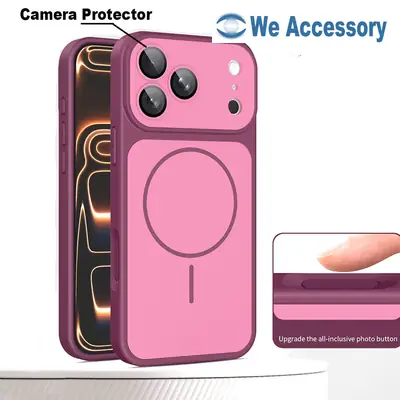
iPhone 18 Pro Max Skin-feeling magsafe case Matte case with build-in camera protection

Recommend Products
-
-
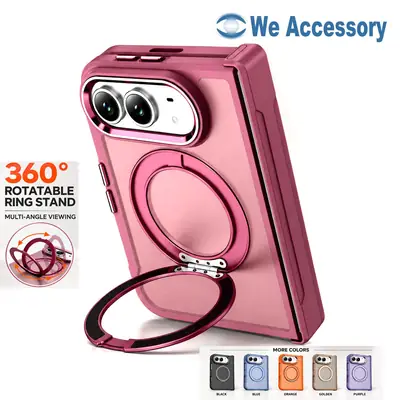 iPhone Duo 360° rotating ring holder case N52 2300 Gauss strong magentic stand case
 -
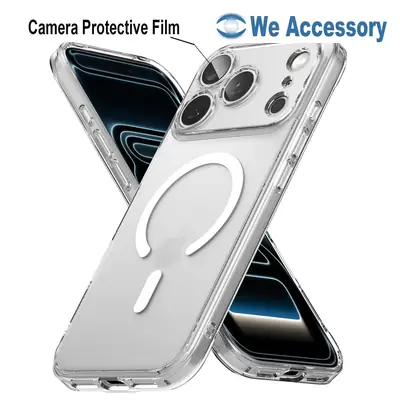 iPhone 18 Pro Clear Magsafe Case build-in camera protector transparent magnetic case
 -
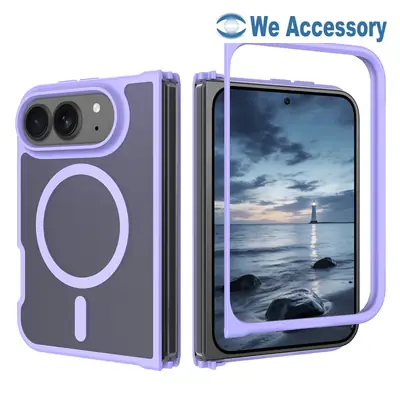 iPhone Duo Matte Magsafe Case Skin-Feeling N52 Strong Magnetic 2in1 Foldable Case
-
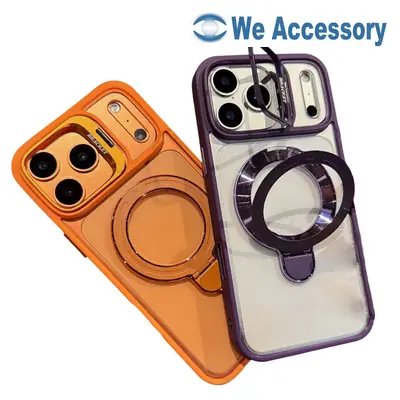 iPhone 18 accessories iPhone 18 Pro 3in1 magnetic holder case camera holder ring holder case
 -
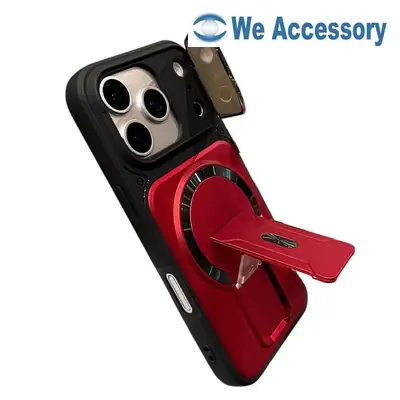 iPhone 18 Pro magsafe holder case glass camera protection and foldable holder case
 -
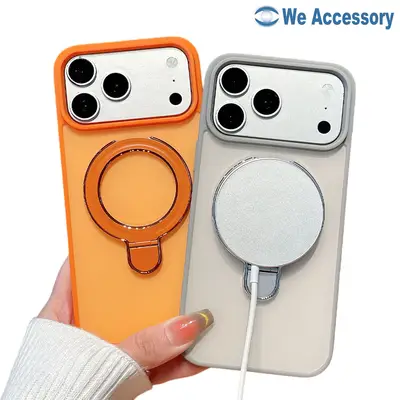 New trend iPhone 18 Pro matte skin-feeling magsafe case ring holder phone holder case
 -
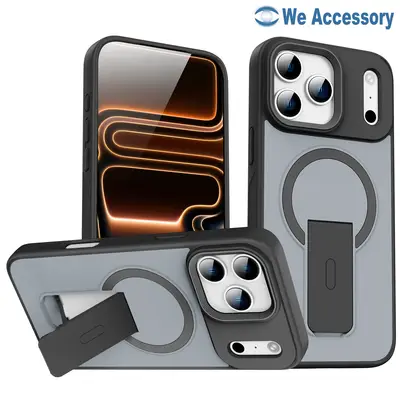 Hot phone accessories iPhone 18 Pro magnetic stand phone case foldable phone holder case
-
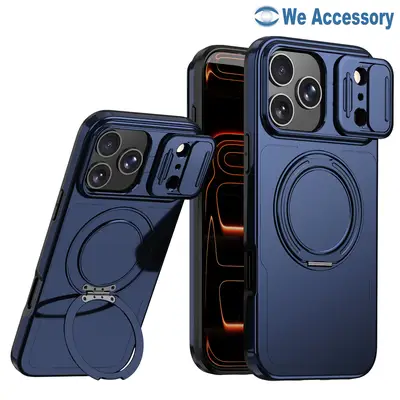 New iPhone 18 Accessories iPhone 18 Pro Ring Holder Case Camera protection Magsafe Case
 -
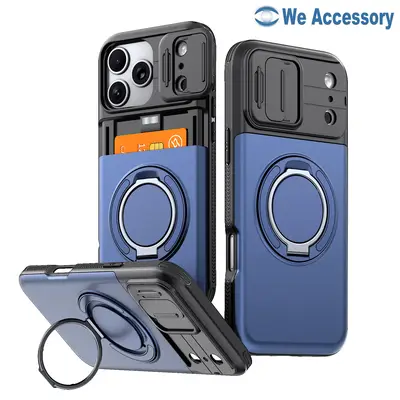 iPhone 18 Pro Max Card Holder Case Magsafe Holder Case Slide Window Camera Protection
 -
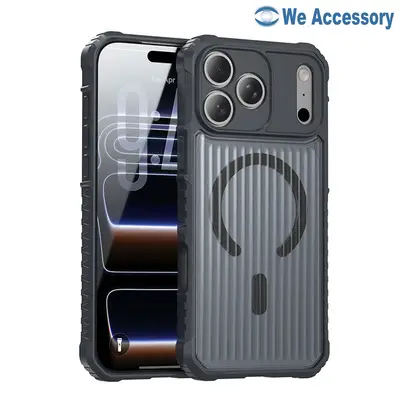 New design iPhone 18 Pro TPU+PC Hybrid Suitcase-Style MagSafe Shatterproof Case
 -
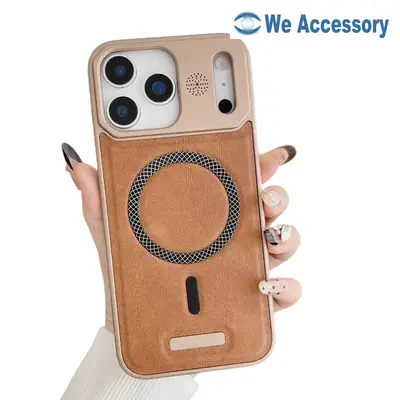 Business demeanor iPhone 18 Pro magsafe leather case 2in1 iphone cover luxury iphone case
-
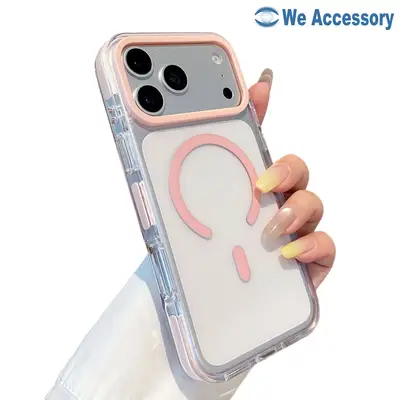 New iPhone Accessories iPhone 18 Pro Clear Magsafe Case double color 2in1 shatterproof case
 -
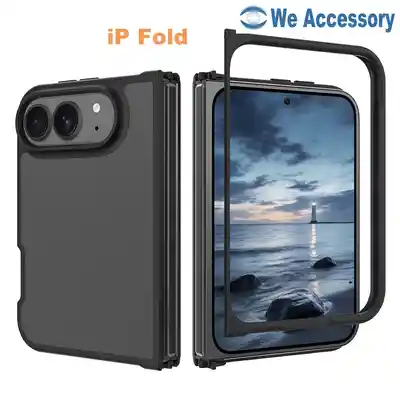 iPhone Case Distributor Newest iPhone Fold Case TPU+PC 2in1 Full Protective iPhone Case
 -
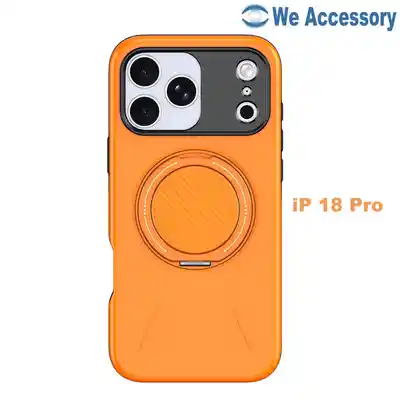 Phone Accessories Company New iPhone 18 Pro Case Magsafe Case with Phone Holder
 -
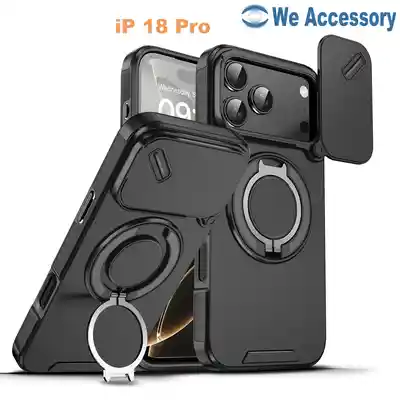 Phone Case Manufacturer New iPhone 18 Pro Max Armor Case Camera Protection and Holer
-
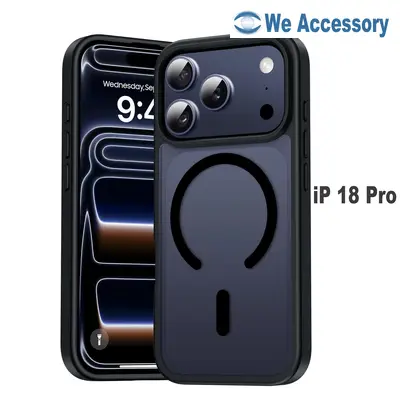 iPhone 18 Accessories Supplier Newest iPhone 18 Pro Case Wholesale Matte magsafe case
 -
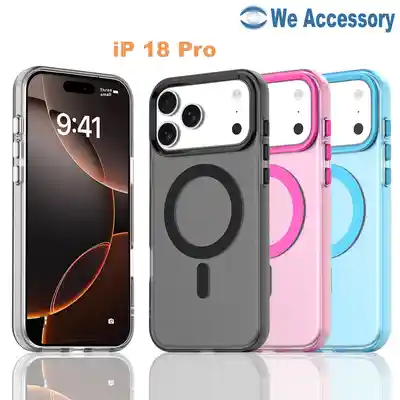 iPhone 18 Pro Case Wholesale Colorful Transparent Magsafe Case New iPhone 18 Pro Case
 -
 Wholesale iPhone 17 Jelly 2 in 1 Magsafe Case colorful silicone iphone case
 -
 Apple iPhone Case Supplier Colorful iPhone 17 electroplated case so cool case
Product Tags
The New Trend for Tempered Glass Screen Protector Wholesale Guide
July 31, 2026
A few years back, if you asked a factory what made their screen protector good, they'd say "9H hardness" and leave it at that. Most buyers accepted the answer. Most customers never tested it.
That's changing in 2026. Buyers are asking better questions. They want to know what glass is used, how long it's tempered, what glue holds it together. And the ones who ask those questions are the ones getting products that don't come back as returns.
This article covers the screen protector types actually selling right now and the three things that determine whether a glass protector is worth stocking or not.
Five Screen Protector Types You'll See in 2026
Not all tempered glass protectors are the same. Here's what's currently on the market, what each one does, and who buys them.
Clear Tempered Glass
This is the baseline. Clear glass, 9H hardness rating, oleophobic coating to resist fingerprints. It covers about 70% of the screen protector market and it's what most customers imagine when they think "screen protector."
The clear glass market is split into two tiers now:
Budget tier ($0.30-$0.60 wholesale): Thin glass (0.15-0.20mm), basic coating, medium-alumina material. These scratch more easily and the coating wears off in a few weeks. They sell because they're cheap, but return rates are higher.Premium tier ($0.80-$1.80 wholesale): Thicker glass (0.33mm), high-alumina material, premium oleophobic coating rated for 10,000+ rub cycles, longer tempering time. These feel better, last longer, and generate fewer complaints.
Most wholesale buyers who start with budget clear glass eventually switch to premium. The price difference is small at the wholesale level — maybe $0.50-0.80 per unit — but the difference in customer satisfaction is huge.
Privacy Tempered Glass
Privacy glass uses micro-louver technology — tiny vertical blinds embedded in the glass — to narrow the viewing angle to about 28 degrees. Someone sitting next to the phone user sees a dark screen instead of the content.
These have been around for a while, but demand is growing. More people work from coffee shops, co-working spaces, and airports. They don't want strangers reading their screen.
What to know before stocking: Privacy glass reduces screen brightness by 20-30%. Some customers complain about this, especially if they use their phone outdoors. Also, the micro-louver layer can interfere with under-display fingerprint sensors on certain phone models. Test with your specific phone before ordering large volumes.
Wholesale price range: $1.50-$3.00 per unit depending on model and quality.
Anti-Glare (Matte) Tempered Glass
Instead of a smooth, glossy surface, anti-glare glass has an etched surface that diffuses reflected light. The result: much better outdoor readability, especially in direct sunlight.
The trade-off is visible. The etched surface makes the screen look slightly grainy — like a very fine matte finish. Some people don't notice it. Others hate it. It's a personal preference thing.
Who buys it: Outdoor workers (delivery drivers, construction, field technicians), photographers who need to see their screen in bright conditions, and people who use their phones in their cars a lot.
Anti-glare glass also resists fingerprints better than clear glass because the etched surface doesn't show oils as easily.
Wholesale price range: $1.00-$2.20 per unit.
Anti-Blue Light Tempered Glass
Blue light filtering glass blocks a portion of high-energy visible blue light (400-480nm wavelength). The idea is to reduce eye strain and potentially improve sleep quality for people who use their phones before bed.
The challenge with this category is quality variation. Some anti-blue light protectors are legit — they filter 20-40% of blue light at specific wavelengths and have test reports to prove it. Others are just regular clear glass with a yellow tint and no meaningful filtration.
How to tell the difference: Ask for an SGS or Intertek test report showing filtration percentages at specific wavelengths (420nm, 450nm, 480nm). If the supplier can't provide one, the product probably doesn't do what it claims.
For European markets, German TÜV certification is increasingly expected for anti-blue light claims. Wholesale price range: $1.20-$2.80 per unit.
Privacy + Anti-Glare Combo Glass
This is the newest category and it's worth watching.
These protectors combine the micro-louver privacy technology with an etched anti-glare surface. They block side viewing AND reduce screen reflection. It sounds like the best of both worlds, and for certain customers it genuinely is.
The catch is that each feature degrades the other slightly. The privacy layer already reduces brightness by 20-30%. Adding the anti-glare etch diffuses the remaining light further. The result is a screen that's noticeably dimmer than a standard clear protector. You'd want to see it in person before ordering.
Who buys it: Corporate buyers purchasing for employees who work in open-plan offices with lots of overhead lighting. The combination of privacy and glare reduction makes sense in that specific environment.
Demand is still small — maybe 3-5% of the screen protector market — but it's growing at about 25% year over year. Worth testing a small quantity if you have corporate or enterprise clients.
Wholesale price range: $2.50-$4.00 per unit.
What Actually Determines Whether a Screen Protector Is Any Good
Here's where most wholesale buyers get confused. The spec sheet says "9H hardness" — but two different protectors with the same 9H rating can perform completely differently in real use. Why?
Because the 9H pencil hardness test only measures one thing: scratch resistance against graphite. It doesn't tell you anything about shatter resistance, flexibility, or how well the glass will hold up after a drop.
The three factors that actually matter are things most spec sheets don't mention.
Factor 1: What Glass Material Is Used
This is the biggest differentiator and the one most buyers overlook.
There are two common types of glass used for screen protectors:
High-alumina glass (高铝玻璃). This glass contains a higher percentage of aluminum oxide (Al₂O₃), typically 18-22%. The aluminum oxide makes the glass structure denser and harder. High-alumina glass has better flexural strength — it can bend slightly before breaking. When it does break, it tends to shatter into smaller, less sharp fragments (safer for the user). It's also more resistant to scratches from sand and quartz, which is what you'll find in pockets and bags.Medium-alumina glass (中铝玻璃). This glass has a lower aluminum oxide content, typically 10-14%. It's cheaper to produce but more brittle. Medium-alumina glass has lower impact resistance — a drop from a lower height can cause it to crack. The edge strength is also weaker, which means it's more likely to chip during installation or normal use.The practical difference: if you drop a phone with a high-alumina protector from waist height onto tile, the protector has maybe a 60-70% chance of surviving. With medium-alumina glass, that drops to 30-40%.
How to tell which one you're getting: Ask the supplier for the aluminum oxide content specification. If they don't know it, or they won't share it, they're likely using medium-alumina glass. High-alumina glass costs about 20-35% more at the raw material level, so the price difference shows up in the final product.
We Accessory uses high-alumina glass (Al₂O₃ ≥ 20%) in all our premium screen protectors. Our standard line uses a blend that still exceeds minimum quality thresholds.
Factor 2: How Long the Glass Is Tempered
Tempering is the chemical process that makes glass strong. The glass is submerged in a molten potassium nitrate (KNO₃) bath at around 380-450°C. Potassium ions from the salt bath replace smaller sodium ions in the glass surface. When the glass cools, the larger potassium ions create compressive stress on the surface — that's what gives tempered glass its strength.
The key variable is time.
The difference between 0.5-hour and 4-hour tempering is about $0.15-0.30 in manufacturing cost per unit. At the wholesale level, the price difference is bigger because the better glass material also costs more.
How to check: Ask the supplier for their tempering cycle specification. If they can't tell you the tempering time, they're likely using the minimum cycle. A manufacturer using 2-hour or 4-hour tempering will know the number and will usually volunteer it.
Factor 3: A/B Glue Thickness
The glue layer is what bonds the glass to your phone screen. It's not just adhesive — it also determines how well the protector fits curved screens and how likely it is to develop white edges (the air gaps that appear along the perimeter of the protector).
The glue comes in two parts (A and B) that are mixed before application. The "AB glue thickness" number — 110, 120, 180, 280, 380 — refers to the thickness of the glue layer in microns.
Here's what each thickness means in practice:
110AB glue: Thin layer. Good for perfectly flat screens. Not enough adhesive volume to fill gaps on curved screens. High risk of white edges on iPhone 18 Pro and similar models with slightly curved displays.120AB glue: Slightly thicker. Works for most flat screens. Still risky for curved displays. This is the minimum we'd recommend for standard iPhone models.180AB glue: This is the sweet spot for most phones. Thick enough to fill slight curves and prevent white edges. Not so thick that the glass feels elevated or catches on case edges. We use 180AB glue as standard across our main product line.280AB glue: Extra thick. Designed specifically for phones with more pronounced screen curves. Provides very strong adhesion. The protector feels slightly thicker when you press on it, but most users don't notice. Good for Samsung Galaxy models with curved edges.380AB glue: Maximum thickness. Used for full-coverage curved glass protectors that wrap around the edges of the screen. The thick glue fills the curve completely, eliminating white edges entirely. The trade-off is that installation is more demanding — you need to apply it carefully to avoid trapping bubbles in the thick adhesive layer.The relationship between glue thickness and white edges is straightforward: thicker glue = less white edge risk. But thicker glue also means:
Higher material cost (about $0.05-0.10 more per unit per step up in thickness)
Slightly more difficult installation (the glue needs more time to settle)
The protector feels slightly thicker on the phone
For most wholesale buyers, 180AB glue is the right choice for iPhones, and 280AB is better for Samsung Galaxy models. Going thinner to save $0.05-0.10 per unit isn't worth it if your customers complain about white edges.
Putting It All Together: What to Look for When Evaluating Samples
When you receive samples from a potential supplier, here's a quick checklist based on what we've covered:
1. Check the glass material.Ask for the alumina content. If it's below 18%, the glass will be more brittle. If they won't say, assume it's medium-alumina.
2. Ask about tempering time.Anything under 2 hours is budget quality. 2-4 hours is what you want. 4 hours is premium.
3. Check the glue thickness.180AB for iPhone. 280AB for Samsung Galaxy curved screens. Below 180AB, expect white edge complaints.
4. Run the scratch test.Take a steel wool pad (#0000 grade) and rub it across the protector surface with moderate pressure for 10-20 seconds. A quality protector with good oleophobic coating should show no visible scratches. A budget protector will show fine scratches.
5. Test MagSafe charging.If the protector has a MagSafe-compatible cutout or design, test it with an actual charger. Some thick protectors (especially with 380AB glue) can reduce charging speed.
6. Check the fingerprint resistance.Apply a thumbprint, then wipe it off with a microfiber cloth. Quality oleophobic coating should clean off with one or two swipes. Poor coating leaves a smear.
A Note on Certifications
Different markets require different certifications. Here's what you actually need:
| Market | Required | Nice to Have |
|---|---|---|
| European Union | CE, RoHS | TÜV (for anti-blue light) |
| United States | FCC | — |
| UK | UKCA | — |
| Japan | PSE (for electronic accessories) | — |
| Australia/NZ | RCM | — |
| Middle East | — | SASO (Saudi Arabia), ESMA (UAE) |
Most reputable Chinese manufacturers, including We Accessory, provide CE and RoHS documentation with standard orders. If you need additional certifications for specific markets, mention it when requesting a quote — they may take extra time and cost.
A Quick Real-World Example
Let's say you're comparing two screen protectors for the iPhone 18 Pro.
Protector A — $0.55 wholesaleGlass: Medium-alumina (Al₂O₃ ~12%)
Tempering: 0.5 hour
Glue: 110AB
Coating: Standard oleophobic
Glass: High-alumina (Al₂O₃ ≥ 20%)
Tempering: 2 hours
Glue: 180AB
Coating: Premium oleophobic (10,000+ rub cycles)
The $0.85 difference per unit is real. But here's what happens:
With Protector A, you'll see about 8-12% return rate — scratches within weeks, white edges on slightly curved screens, coating wearing off. Your net cost after returns and customer service is effectively $0.70-0.75 per unit.
With Protector B, your return rate drops to 2-3%. Your net cost stays close to $1.40. Your customers are happier. They leave better reviews. They reorder.
Most wholesale buyers who've been in this category for more than a year have learned this lesson the hard way. The cheap glass costs more in the long run.
What We Stock at We Accessory
Since people ask, here's our current screen protector lineup:
| Type | Glass | Tempering | Glue | Wholesale Price (500+ units) |
|---|---|---|---|---|
| Clear tempered (standard) | High-alumina | 2hr | 180AB | $0.90-$1.20 |
| Clear tempered (premium) | High-alumina | 4hr | 280AB | $1.40-$1.80 |
| Privacy tempered | High-alumina | 2hr | 180AB | $2.00-$2.80 |
| Anti-glare matte | High-alumina | 2hr | 180AB | $1.50-$2.20 |
| Anti-blue light | High-alumina | 2hr | 180AB | $1.60-$2.40 |
| Privacy + anti-glare combo | High-alumina | 2hr | 280AB | $2.80-$3.80 |
All models available for iPhone 18 Pro, iPhone 18 Pro Max, and Samsung Galaxy S26 Ultra. Other models available on request.
Minimum first order: 200 units per SKU. Sample orders (5-10 units) shipped within 5 days.
If you want to test a few types side by side before ordering, that's a smart way to start. Request a sample pack with the types you're interested in, compare them yourself, and order based on what you see.
Quick Answers to Questions We Get
Q: What's the difference between 9H and Mohs hardness?A: They're different scales. 9H is pencil hardness (ASTM D3363). Mohs is mineral hardness. A 9H glass typically corresponds to about Mohs 6-7. Neither scale is wrong — they measure different things.
Q: Can you combine privacy and anti-glare in one protector?A: Yes, but the screen will be noticeably dimmer because both features reduce light transmission. Worth testing before ordering in volume.
Q: Do you offer custom shapes for non-standard phone models?A: Yes, for orders of 1,000+ units. We can create custom CNC cutting programs for any phone model. Setup fee is $150-$300.
Q: What packaging options do you offer?A: Polybag (standard), retail box, or custom packaging with your branding. Retail box adds $0.10-0.25 per unit.
Q: How long do samples take to arrive?A: 3-5 days for production, then 3-5 days via DHL/FedEx.
Q: Do you test every protector before shipping?A: We do 100% visual inspection. For hardness and adhesion, we use AQL sampling at 2.5 standard.
Email [email protected] or WhatsApp +86-15919800304 to discuss your screen protector requirements.
— From the team at We AccessoryWhy the Cheap Glass Problem Isn't Going Away
You'd think by 2026, the market would have sorted itself out — bad screen protectors wouldn't sell, good ones would. But that's not how it works.
The problem is that screen protectors are a "you get what you pay for" category, except the customer doesn't know what they're paying for until weeks after purchase. A $0.50 protector and a $1.50 protector look almost identical in the box. The difference only shows up after a month of use.
This creates a market where cheap glass keeps selling because:
1. First-time buyers don't know the difference
2. Amazon and eBay algorithms favor low price
3. Bad reviews take months to accumulate
But for wholesale buyers who want repeat customers — retailers, repair shops, distributors — cheap glass is a liability. Every returned protector, every bad review, every customer who swears off screen protectors entirely because "they all scratch anyway" — that's your business losing value.
The good news is that the market is slowly shifting. More buyers are asking the right questions. More suppliers are differentiating on quality rather than price. If you're reading this article, you're already ahead of the curve.
How We Accessory Makes Screen Protectors (So You Know What You're Getting)
I'll walk through our process so you have a benchmark to compare other suppliers against.
Step 1: Raw glass cutting.We source high-alumina glass (Al₂O₃ ≥ 20%) from two suppliers — one in China's Henan province and one in Japan. The glass arrives in large sheets, which are CNC-cut into phone-specific shapes. Cutting tolerance is ±0.05mm.
Step 2: Edge grinding and polishing.Raw-cut glass has sharp edges. We run each piece through a 2.5D edge grinding machine that rounds the perimeter. Quality check: every piece is run through a finger-touch test. If any edge feels sharp, it's rejected.
Step 3: Chemical tempering.The glass pieces are cleaned, dried, and submerged in a 400°C potassium nitrate bath. Standard line: 2 hours. Premium line: 4 hours. The bath chemistry is tested daily to maintain consistent ion exchange rates.
Step 4: Coating application.Oleophobic coating is applied via vacuum deposition. Coating thickness is monitored and tested on sample pieces from each batch. We target 10,000+ rub cycles for standard coatings and 20,000+ for premium.
Step 5: AB glue lamination.The AB glue layer is applied to the adhesive side of the glass. Glue thickness is calibrated by model — 180AB for iPhone models, 280AB for Samsung Galaxy curved models. The glue is UV-cured to create a uniform adhesive layer.
Step 6: Quality inspection.Every single piece goes through visual inspection under bright LED lighting. We check for:
Scratches on the glass surface
Uneven coating
Adhesive defects (bubbles, dust trapped in glue)
Edge quality (chips, rough spots)
Estimated reject rate: 2-4%. Rejected pieces are scrapped, not reworked.
Step 7: Packaging.Protectors are packed in clean-room conditions to minimize dust during packaging. Each protector goes into a polybag with cleaning wipe, dry wipe, dust removal sticker, and installation instructions.
Step 8: AQL sampling.Before shipping, a random sample from each batch is tested for:
Pencil hardness (9H verification)
Drop impact (waist-height onto tile, 3 tests minimum)
Oleophobic coating rub test
MagSafe charging compatibility
The entire process takes 5-8 working days for standard orders.
What Screen Protectors Actually Cost to Make (and What That Means for Pricing)
Understanding the cost breakdown helps when you're comparing quotes from different suppliers.
Cost Breakdown — Standard Clear 9H Protector (500-unit order)
| Component | Cost per Unit | % of Total |
|---|---|---|
| Raw glass (high-alumina) | $0.18 | 18% |
| CNC cutting + edge grinding | $0.08 | 8% |
| Chemical tempering (2hr) | $0.10 | 10% |
| Oleophobic coating | $0.06 | 6% |
| AB glue (180AB) | $0.12 | 12% |
| Packaging + accessories | $0.12 | 12% |
| Labor + overhead | $0.15 | 15% |
| QC + testing | $0.05 | 5% |
| Supplier margin | $0.14 | 14% |
| Total | $1.00 | 100% |
Cost Breakdown — Premium Clear 9H (500-unit order)
| Component | Cost per Unit |
|---|---|
| Same as above but: | |
| Glass: premium high-alumina | +$0.05 |
| Tempering: 4hr instead of 2hr | +$0.10 |
| Glue: 280AB instead of 180AB | +$0.05 |
| Coating: premium 20K rub | +$0.05 |
| Packaging: retail box | +$0.12 |
| Total premium | ~$1.40-1.60 |
Cost Breakdown — Privacy Glass (500-unit order)
| Extra Components | Extra Cost |
|---|---|
| Micro-louver film layer | +$0.30-0.50 |
| Additional lamination step | +$0.08 |
| Lower yield rate (more rejects) | +$0.05-0.10 |
| Total privacy | ~$1.50-2.20 |
What This Means for Your Pricing
If a supplier quotes you significantly below these cost breakdowns, something is being cut. Likely candidates: cheaper medium-alumina glass, shorter tempering time, thinner AB glue, or lower QC standards. There's no magic way to make a quality screen protector for $0.30.
At the wholesale level, a reasonable markup is 1.5-2.5x manufacturing cost. At retail, screen protectors typically sell at 4-6x wholesale cost. That means:
A $1.00 wholesale protector retails for $4.99-9.99
A $2.00 wholesale protector retails for $9.99-14.99
A $3.00 wholesale privacy protector retails for $14.99-24.99
These margins are healthy enough that there's no need to chase the lowest wholesale price. A slightly more expensive protector that generates fewer returns is almost always more profitable in the long run.
Common Screen Protector Problems (and Which Factor Causes Each)
| Problem | Most Likely Cause | Solution |
|---|---|---|
| Scratches appear within weeks | Low-alumina glass or short tempering time | Switch to high-alumina glass with 2hr+ tempering |
| White edges on the screen | AB glue too thin for the screen curvature | Use 280AB+ for curved screens |
| Glass cracks during normal use | Medium-alumina glass, too brittle | Upgrade to high-alumina glass |
| Coating wears off quickly | Low-grade oleophobic coating | Request coating rub cycle data (aim for 10K+) |
| Fingerprints hard to clean | Coating quality or thickness | Premium coating costs $0.05-0.10 more — worth it |
| Micro-bubbles after installation | Dust trapped in AB glue layer | Better clean-room packaging during manufacturing |
| Protector doesn't stick at edges | AB glue too thin or expired | 180AB minimum, check manufacturing date |
| Rainbow effect on display | Air gap between glass and screen | Better adhesive — thicker AB glue usually fixes this |
| Privacy glass dims screen too much | Inherent to privacy design | Inform customers before purchase; test with your phone first |
Most of these problems are preventable at the manufacturing stage. That's why evaluating the three factors — glass material, tempering time, and glue thickness — matters more than comparing 9H claims on a spec sheet.
How the iPhone 18 Series Changes Things
The iPhone 18 Pro, launching September 2026, has a slightly different screen curve than the iPhone 17 Pro. It's subtle — about 0.2mm more curvature at the edges — but it's enough to cause problems with protectors designed for the previous generation.
What this means for your inventory:iPhone 17 Pro protectors will NOT fit iPhone 18 Pro perfectly — expect white edges
You need new molds for iPhone 18 models
The AB glue requirement for iPhone 18 Pro is 180AB minimum, 280AB recommended for full edge coverage
If you're planning to stock iPhone 18 Pro protectors, we recommend placing pre-production orders by early August to ensure September launch availability. The factories get busy during iPhone season and lead times stretch from 5-8 days to 12-18 days.
Screen Protectors by Market — What Sells Where
Different markets have different preferences. Here's what we see in actual order data:
| Market | Top Seller | Second Seller | Premium Pick |
|---|---|---|---|
| United States | Clear tempered 2hr | Privacy tempered | Anti-blue light |
| Europe (Nordics) | Anti-blue light | Clear tempered 2hr | Privacy tempered |
| Germany, UK | Clear tempered 2hr | Anti-blue light | Privacy tempered |
| France, Italy | Clear tempered | Anti-glare matte | Privacy tempered |
| Middle East | Privacy tempered 2hr+ | Clear tempered | Anti-blue light |
| Southeast Asia | Clear tempered (budget) | Anti-glare matte | Privacy tempered |
| South America | Clear tempered (budget) | Clear tempered 2hr | — |
| Africa | Clear tempered (budget) | Anti-glare matte | — |
Nordic markets are the strongest for anti-blue light, which makes sense given the long winter months and high screen time. The Middle East buys more privacy glass than any other region — we think it's related to the large number of people working in open-plan offices and co-working spaces.
Anti-glare matte glass performs best in markets with high sunlight exposure — Australia, Middle East, parts of Southeast Asia and Africa.
Quick Questions, Straight Answers
Q: Can I order mixed types in one shipment?A: Yes. Mix clear, privacy, anti-glare, and anti-blue light in one order. Minimum 200 units per type per model.
Q: What's your defect replacement policy?A: If you find defects in more than 3% of a shipment, we replace the defective units at no cost. Claims must be made within 15 days of receipt with photo evidence.
Q: Do you offer custom logo printing on the glass?A: For orders of 1,000+ units, we can apply silkscreen logo printing on the glass edge (near the home button area or top notch). Setup fee is $100-200.
Q: Can you customize the packaging with my brand?A: Yes. Custom retail boxes, card inserts, and polybag printing available from 500 units per design.
Q: What's the best way to start?A: Request a sample pack with 3-5 types you're interested in. Test them. Compare them. Then place a trial order of 200-500 units of the type that performed best.
Email [email protected] or WhatsApp +86-15919800304.
Installing Screen Protectors — Why It Matters More Than You Think
Here's a truth that doesn't show up on any spec sheet: a perfectly good screen protector can look terrible if installation goes wrong.
Bubbles, dust trapped under the glass, crooked alignment — these are the most common customer complaints, and they're almost always installation issues, not product defects.
What Good Installation Looks Like
A proper screen protector installation kit should include:
Alcohol wipe — to remove oils from the screen
Dry microfiber cloth — to dry and polish after cleaning
Dust removal sticker — the blue sticky tape that picks up dust particles
Alignment frame — a plastic guide that positions the protector perfectly before you press it down
Instruction card — step-by-step with diagrams
The alignment frame is the most important piece. Products that include a frame have significantly fewer installation complaints than those that don't. The frame costs the manufacturer about $0.03-0.05 to include, but it reduces installation-related returns by roughly 60%.
We include alignment frames with all our iPhone 18 Pro and Pro Max protectors by default. For Samsung Galaxy models, the frame design is more complex due to the curved screen, but we include those too.
Quick Installation Tips for Your Customers
If your customers are installing protectors themselves, these tips can save everyone time:
1. Install in a steamy bathroom. Turn on the shower for a few minutes to let steam settle airborne dust. The steamy environment dramatically reduces floating dust particles.
2. Align before removing the backing. Hold the protector over the phone with the backing still on. Line it up with the speaker grille and home button (or side buttons). Once it's aligned, peel the backing and drop it into place.
3. If a bubble appears, lift and re-press. Don't try to push bubbles to the edge — this often makes them worse. Lift the nearest corner of the protector just enough to let the bubble escape, then press it back down.
4. Wait 24 hours before putting on a case. The AB glue needs time to fully bond. Putting a case on too early can lift the edges of the protector.
These tips reduce installation failures significantly. If you're selling to retail customers, consider including a QR code to an installation video. We've seen return rates drop by about 35% when customers watch a 60-second installation video before applying the protector.
The Budget vs. Premium Decision
Let's be practical. Not every customer needs a premium screen protector. And not every wholesale buyer should stock only premium products.
Here's a framework for deciding what to stock based on your customer base:
Stock Budget Glass ($0.30-0.60 wholesale) When:
Your customers are price-sensitive and replace phones frequently
You're selling in bulk to discount retailers or dollar stores
The protectors are giveaways or promotional items
Your market is Southeast Asia, South America, or Africa (price-first markets)
Stock Standard Quality ($0.80-1.40 wholesale) When:
Most of your customers fall into this category
You're selling to general retailers and repair shops
You want decent margins with reasonable return rates
Your market is North America or Europe (balance of price and quality)
Stock Premium Quality ($1.50-3.80 wholesale) When:
Your customers are premium retailers or brand-conscious buyers
You're selling privacy, anti-blue light, or combo protectors
You want the lowest possible return rate
Your market is Nordics, Germany, or Middle East (quality-first markets)
Most successful wholesale buyers carry two tiers: a standard option and a premium option. This covers the broadest range of customers without overcomplicating inventory.
What Happens When You Skip Quality Checks
I'll end with a real story.
A distributor in Poland ordered 5,000 privacy screen protectors from a new supplier. The price was good — $1.20 per unit, well below the market average. He skipped the sample step because the supplier had good reviews on Alibaba.
The shipment arrived. The protectors looked fine in the box. He distributed them to 15 retail clients.
Within three weeks, complaints started. The privacy angle was inconsistent — some protectors had a 28° viewing angle, others had nearly 60°. Customers could see each other's screens. The protectors scratched after a week in a pocket. The AB glue was thin (110AB, as it turned out) and white edges appeared on about 40% of installed units.
The distributor ended up refunding his retail clients for the entire batch. Total loss: about $9,000, including the cost of the protectors, shipping, and refund overhead.
He ordered samples from us three months later. The first thing he said was "I should have ordered samples first."
That's the lesson. Samples cost $30-50 and take a week to arrive. A bad bulk order costs thousands and takes months to unwind. It's an easy decision.
The Bottom Line
Tempered glass screen protectors in 2026 come in five main types: clear, privacy, anti-glare, anti-blue light, and privacy+anti-glare combo. Each has a specific use case and customer base.
The quality of any screen protector comes down to three factors:
1. Glass material — high-alumina is stronger, medium-alumina is more brittle
2. Tempering time — 2 hours minimum, 4 hours for premium
3. AB glue thickness — 180AB for iPhone, 280AB for curved screens
Everything else — 9H claims, packaging, brand — matters less than these three specs. If you evaluate suppliers on these factors instead of price alone, you'll end up with products that actually perform.
We Accessory makes screen protectors using high-alumina glass, 2-4 hour tempering cycles, and calibrated AB glue. If you want to see samples, compare quality, or talk through your specific requirements, send a message to [email protected] or WhatsApp +86-15919800304.
— From the team at We Accessory
Share:


Why Choose We Accessory
12+
Years Experience
2000+
Product SKUs
50+
Countries Served
OEM
& ODM Service
2-4
Day Delivery
Professional Phone Accessories Wholesale Supplier
We Accessory is a trusted phone accessories wholesale supplier since 2012. We specialize in phone case, tempered glass screen protector, USB cable, charger and more mobile accessories wholesale, serving customers in 50+ countries worldwide.
Frequently Asked Questions
Where is We Accessory located?
We are located in Shenzhen
What products do you offer?
We offer phone cases, screen protectors, USB cables, chargers and more mobile accessories for all major brands.
Do you offer OEM/ODM services?
Yes, full OEM and ODM customization with your logo, packaging and designs.
What is your shipping time?
In-stock items ship in 2-4 business days via DHL/UPS/FedEx. Custom orders 5-7 days production plus shipping.
We Accessory (WeAccessory.com)
Address:2F, Block A2, Nanchang Industrial area, Xixiang Town,Bao'an District, Shenzhen
Tel: +86-755-36818832
Mobile/Whatsapp: +86-15919800304
Email: [email protected]
Microsoft Teams: william.shaw186
Product Tags
Contact us Now!
Please send us your Email address if you'd like some products



Copyright © 2012-2026 Shenzhen Western Electronic Co., Ltd All Rights Reserved. Sitemap | Best Phone Case Wholesale, Tempered Glass Screen Protector, USB Charger, Cable, other Mobile Accessories Wholesale