English
 Français
 Deutsch
 Español
 Italiano
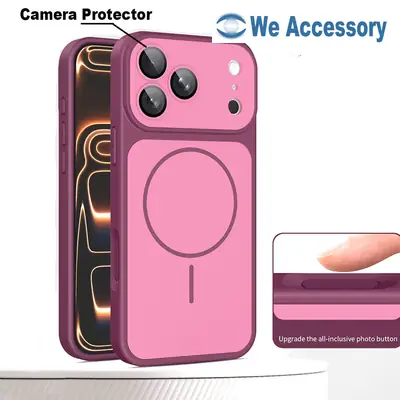
iPhone 18 Pro Max Skin-feeling magsafe case Matte case with build-in camera protection

Recommend Products
-
-
 iPhone Duo 360° rotating ring holder case N52 2300 Gauss strong magentic stand case
 -
 iPhone 18 Pro Clear Magsafe Case build-in camera protector transparent magnetic case
 -
 iPhone Duo Matte Magsafe Case Skin-Feeling N52 Strong Magnetic 2in1 Foldable Case
-
 iPhone 18 accessories iPhone 18 Pro 3in1 magnetic holder case camera holder ring holder case
 -
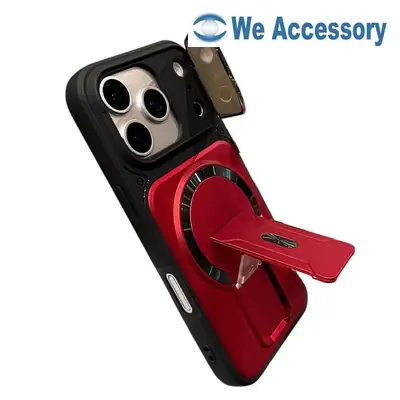 iPhone 18 Pro magsafe holder case glass camera protection and foldable holder case
 -
 New trend iPhone 18 Pro matte skin-feeling magsafe case ring holder phone holder case
 -
 Hot phone accessories iPhone 18 Pro magnetic stand phone case foldable phone holder case
-
 New iPhone 18 Accessories iPhone 18 Pro Ring Holder Case Camera protection Magsafe Case
 -
 iPhone 18 Pro Max Card Holder Case Magsafe Holder Case Slide Window Camera Protection
 -
 New design iPhone 18 Pro TPU+PC Hybrid Suitcase-Style MagSafe Shatterproof Case
 -
 Business demeanor iPhone 18 Pro magsafe leather case 2in1 iphone cover luxury iphone case
-
 New iPhone Accessories iPhone 18 Pro Clear Magsafe Case double color 2in1 shatterproof case
 -
 iPhone Case Distributor Newest iPhone Fold Case TPU+PC 2in1 Full Protective iPhone Case
 -
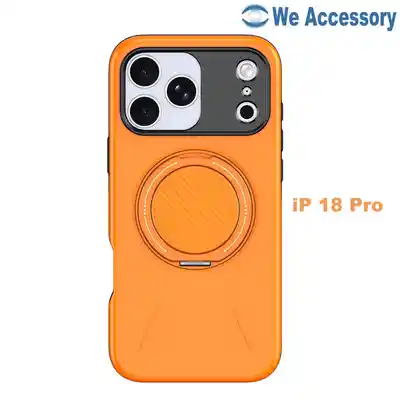 Phone Accessories Company New iPhone 18 Pro Case Magsafe Case with Phone Holder
 -
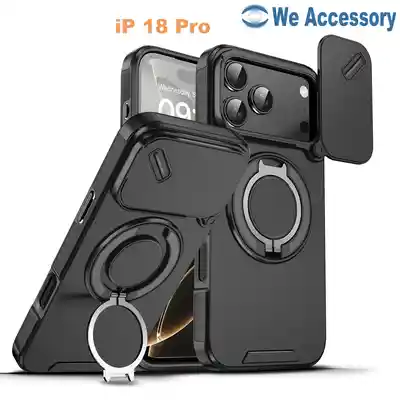 Phone Case Manufacturer New iPhone 18 Pro Max Armor Case Camera Protection and Holer
-
 iPhone 18 Accessories Supplier Newest iPhone 18 Pro Case Wholesale Matte magsafe case
 -
 iPhone 18 Pro Case Wholesale Colorful Transparent Magsafe Case New iPhone 18 Pro Case
 -
 Wholesale iPhone 17 Jelly 2 in 1 Magsafe Case colorful silicone iphone case
 -
 Apple iPhone Case Supplier Colorful iPhone 17 electroplated case so cool case
Product Tags
The 60 cents USD Phone Case and the 2USD Phone Case, Where the Difference Actually Goes
September 23, 2026
Put two phone cases on a table side by side, both clear TPU for the same model, and most buyers can't tell them apart. Not on the table, not in the hand, and usually not even in a photo. Then look at the quotes: one factory says sixty cents, another says a dollar eighty. Same product. Three times the price.
The first reaction of almost every buyer is the same. Someone is ripping me off. Either the cheap one is fine and the expensive factory is greedy, or the expensive one is fine and the cheap one is hiding something. In fifteen years of quoting phone cases, we've learned that the second answer is right far more often — but never in the way buyers assume. The difference isn't a secret markup. It's a dozen small decisions made across a supply chain, each invisible in a photograph, that add up to a case that returns at two percent instead of twelve.
This article takes that sixty-cent case and that dollar-eighty case and opens both of them up, layer by layer, to show where the money actually goes. Not to argue that expensive is always better — it isn't, and overpaying for a case is its own kind of mistake. But to give buyers the map: the seven cost layers that decide what a case really costs to make, what each one buys you, and where a suspiciously cheap quote has almost certainly saved money that you will pay back later in returns, reviews, and reorders.
Layer One: The Material, and Why "TPU" Isn't a Material
Every cheap quote starts with the same sentence: "It's TPU." That sentence means almost nothing, because TPU is a family of materials rather than a single one, and the spread inside that family is where the first big cost difference hides.
A phone case's flexible body can be made from virgin TPU, from regrind (factory scraps melted back down and reused), or from blends that mix the two in undocumented proportions. Virgin material with the right hardness and UV package costs a multiple of what regrind costs, and the visual difference at the sample stage is often zero — the difference shows up six months later, when the phone case has yellowed unevenly because the recycled content oxidised at a different rate than the virgin material around it. That's one of the reasons two "clear TPU" cases can age so differently: they're not the same plastic, they just printed the same words on the spec sheet.
Hardness is the second hidden variable. The same TPU grade at 85A and at 95A behaves completely differently — one feels soft and grippy, the other feels firm and board-like, and each suits a different case design. Under-specify the hardness and you get a case that's floppy at the edges, doesn't grip the phone, and shows white stress marks at the corners after a few weeks in a pocket. It also costs less, which is exactly why it appears in quotes.
Then come the additives nobody talks about: the UV stabiliser package that slows yellowing, the anti-blocking agent that stops phone cases sticking together in the bag, the colour masterbatch that keeps a black case consistently black across a production run. A full additive package adds cents per unit — real money at volume — and removing it is the single easiest way for a factory to shave a quote without changing anything a buyer can see in a sample photo. The case looks identical on day one. It stops looking identical by month four.
And that's just the flexible part. A case with a rigid back adds polycarbonate or acrylic into the equation, each with its own grades and price spread, each with the option to blend in recycled content. A two-material case has twice the material layers where cost can be quietly removed — and the quote that looks too good is usually the one where several of them were.
Layer Two: The Mould, and the Money That Lives in a Tenth of a Millimetre
The second layer isn't in the case at all — it's in the steel that made it. And this is where the difference between a sixty-cent case and a dollar-eighty case starts to become visible to anyone who knows where to look.
A phone case is injection-moulded, which means a precision-machined steel mould produces every unit. That mould costs real money — thousands of dollars for a simple design, more for a complex one — and its quality decides three things buyers care about more than they admit: how precisely the phone case fits, how consistent the units are across a production run, and how long the mould lasts before the tooling wears to the point where parts start coming out out-of-tolerance.
A factory cutting costs here does it in ways that don't show up until production. It runs the mould past its designed life so the parts start drifting. It machines to a looser tolerance — a tenth of a millimetre here, two-tenths there — which sounds like nothing until you feel a case that fits with a wobble instead of a click, or a camera cutout that's visibly off-centre against the lens module. It runs fewer cavities per mould, which raises the per-unit cost, or more cavities than the machine can fill evenly, which produces warped parts that get sold anyway. And it skimps on the polishing of the mould surfaces, which is why cheap clear cases often have a faintly frosted, less transparent look: the mould wasn't polished finely enough to transfer a truly clear surface to the plastic.
Here's the part buyers underestimate: a bad mould isn't a one-time loss, it's a permanent tax. Every unit that comes out of a worn or sloppy mould carries the defect, and the factory can't sort its way out of a problem that affects thirty percent of output. The phone case that doesn't quite fit gets sold at a discount to someone, and eventually it lands in a customer's hands, and eventually it comes back. The expensive quote in your inbox is often the one where somebody checked the mould instead of the price.
Layer Three: The Process, Where Cheap Phone Cases Get Their Shortcuts
The third layer is how the phone case is actually made, and it's where a factory has the most room to shave costs without changing the material list at all.
Start with the moulding cycle itself. Injection moulding is priced in seconds: a case that takes twenty seconds per cycle costs less per unit than one that takes thirty-five, because machine time is money. But cycle time isn't free to compress — a shorter cycle means less cooling time, and less cooling time means parts that shrink unevenly, warp slightly, or come out of the mould with internal stress that shows up later as cracks at the corners. The factory that runs the fast cycle isn't cheating on the material; it's trading dimensional accuracy for throughput, and the buyer pays for it in fit complaints two months later.
Then the surface. A phone case's texture — glossy, matte, soft-touch, patterned — can be made two ways, and they cost very differently. It can be moulded in: the texture is cut into the steel, so every part comes out of the mould already finished. That's the expensive way to build a mould and the cheap way to produce cases, because there's no extra step per unit. Or it can be sprayed on: the case comes out smooth and a coating is applied afterwards. Sprayed finishes cost less to set up and more per unit, and they have a failure mode the moulded ones don't — the coating can wear, peel, or go sticky over months of pocket friction, especially on the cheap formulations. Two matte cases on a shelf, identical to the eye, can be one moulded texture and one spray job, and only one of them will still look the same at month eight.
Printing is the third process decision, and it's the most visible place where quality and cost diverge. A simple one-colour logo printed by pad printing costs almost nothing per unit. A full-colour design applied by heat transfer costs more, and a durable full-colour design — the kind that wraps the edges and survives a year — costs more again, because the film, the ink formulation, and the pressing process all have to be engineered rather than just executed. UV printing is cheaper per unit but flat, prone to scratching, and rarely survives well on a curved surface. IMD — in-mould decoration, where the graphic is placed inside the mould and the plastic forms around it — produces the most durable printed case and carries the highest tooling cost. Those are four price points for "a printed case," and the difference between the cheapest and the most durable is several times the unit cost.
Assembly is the last piece of this layer, and it's the one buyers forget because it looks like nothing. A simple one-piece phone case needs no assembly. A two-piece case needs its layers joined, and the method matters: glued layers are faster and cheaper and eventually separate, mechanically interlocked layers (the snap-lock construction) take longer to assemble and don't. Every component beyond the shell — a stand, a ring, a magnet array, a camera shutter, buttons — adds an assembly step, a component cost, and a new potential failure point. A case with a kickstand isn't a case with a kickstand; it's a case plus a mechanism, and mechanisms are where cheap products go to die.
Layer Four: Quality Control, the Line Item That's Always Missing From the Cheap Quote
Ask a factory what its QC process looks like and you'll get one of two answers. The good ones describe it in detail: incoming material checks, in-process inspection at the moulding machine, a defined sampling plan on finished goods, a documented defect log, and a procedure for what happens when a batch fails. The cheap ones say "we check every piece," which sounds better and means nothing, because "checking" a phone case by glancing at it in the tray catches gross defects and nothing else.
What QC actually costs is the difference between a case that fails before it ships and a case that fails in a customer's hand, and the arithmetic is unforgiving. Consider a production run where eight percent of units have a meaningful defect — a fit issue, a visible sink mark, a magnet ring out of position. Without inspection, all eight percent ship. Some customers notice immediately and return the case; others notice in month three and blame the shop; most say nothing and simply never buy from that shop again. The factory saved the cost of inspection; the buyer paid for it in returns and lost customers — at a return cost of several times the case's value, as anyone who has ever processed an accessory refund knows.
A real QC regime costs money in two places. The first is the inspection labor itself — people, time, and the equipment to check a magnet's strength or a phone case's fit against a reference phone. The second, less obvious cost is the scrap: every unit rejected at the factory is a unit that was already made, and the factory has to eat that loss or absorb it into the price. That's why factories with honest QC quote higher. Their price includes the units they threw away so that yours wouldn't come back.
There's a third cost hiding here, and it's the one that separates serious factories from traders: traceability. When a problem shows up in a shipment six weeks after delivery, a factory with batch records can tell you which mould, which material lot, and which shift produced the defective units — and fix the cause. A factory without records can only apologize and offer a discount. For a wholesale buyer holding inventory across a season, that difference in recoverability is worth real money, and it never appears on a quote sheet.
Layer Five: Packaging, Which Is Cheaper Than You Think and More Expensive Than You Expect
Packaging looks like the easiest place to save money — a poly bag costs almost nothing, a printed retail box costs several times more — and that's exactly why so many buyers get it wrong.
Here's what a poly bag actually costs you. A phone case shipped loose in a bag arrives with scuffed backs and, in a clear case, fine scratches that customers read as "used." A retail customer who opens a bag and finds a scuffed case either returns it or discounts it mentally; a shop that displays bagged cases can't hang them on a peg, can't price-label them properly, and can't sell them at full price. The packaging decision isn't just a cost line — it decides which channel the product can sell through. A case in a poly bag is a case for a market stall or an online-only listing. A case in a printed box with a hang tab is a case for a retail shelf, which is where the money is.
On the cost side, the honest numbers look like this. A plain poly bag is close to free. A simple printed box adds a meaningful percentage to the unit cost. A rigid retail package with a window or a card backing sits at the top of the range, and for a gift-oriented line — the December market, where a case is bought as a present — it's not optional, because a gift that arrives without packaging doesn't feel like a gift. That's a market decision disguised as a cost decision, and the buyers who make it deliberately sell in channels the bag-and-box crowd can't reach.
There's also a physical-cost angle that buyers consistently miss: packaging determines shipping volume. Boxes stack; bags slump. A carton of well-packed boxed phone cases fills its space efficiently and protects what's inside; a carton of loose bags wastes volume and arrives with the contents crushed at the bottom. At sea freight rates, wasted volume is wasted money, and damaged goods are a write-off. Packaging that looks like an unnecessary cost on the quote is often the cheapest insurance in the shipment.
Layer Six: Compliance, the Quietest Cost Line in the Whole Quote
This is the layer that has changed the most in the last few years, and the one most buyers still don't ask about — which is why it deserves its own section rather than a footnote.
Start with the product. Phone cases sold into the European Union have to meet chemical and material rules — the REACH regulation on restricted substances, RoHS for electronics-adjacent components like magnet assemblies, and packaging material restrictions in several member states. A factory that supplies the European market properly tests and documents this; a factory that supplies whoever pays fastest may not test at all. The cost difference is real but modest per unit — testing and documentation is a fixed cost spread across a production run — and its absence is invisible until a customs check, a marketplace compliance audit, or a customer complaint flags the product.
Then the part that surprises buyers: packaging regulation is now a real obligation for the retailer, and it flows back up the supply chain to the importer and the wholesaler. Under the EU's extended producer responsibility rules, whoever places packaged goods on the market in a member state typically has to register with that country's packaging scheme and pay fees based on the packaging they put into circulation. Germany's system, France's, and others each have their own registration and marking requirements — France, for instance, requires the Triman marking on packaging sold to French consumers, and Germany's packaging register requires registration before goods are sold. A retail customer who buys phone cases with non-compliant or undocumented packaging inherits a problem they can't fix, and a wholesaler who supplies that packaging inherits the blame.
The practical cost of compliance is mostly administrative: proper documentation, correct marking, and a supplier who can tell you what's in the packaging and who registered it. The practical cost of non-compliance is a fine, a delisting from a marketplace, or a retailer who refuses the shipment and never orders again. When you compare two quotes and one is noticeably cheaper, compliance is one of the places the difference hides — and it's the one that lands on the buyer's desk rather than the factory's.
Layer Seven: MOQ, Logistics, and the Cost of the Money Itself
The last layer is the one finance people care about and product people forget: the cost of how much, how far, and how long.
Minimum order quantity does two things at once. It spreads fixed costs — mould development, tooling setup, printing plates, packaging print runs — across the units in the order, and it decides how much of your working capital sits in a warehouse. A factory quoting sixty cents may be quoting for ten thousand units with the mould amortised across a long production life; the same factory at a thousand units is often a different price entirely. This isn't dishonesty, it's arithmetic: a mould that costs several thousand dollars divided across a thousand units adds dollars to each phone case, and divided across fifty thousand units it adds cents. Buyers comparing quotes without comparing the quantities and terms behind them are comparing two different products.
Freight is the second half of this layer, and it's where "cheap" gets expensive. Cases are light but bulky — the pricing in freight is volumetric as much as by weight — so a quote that packs inefficiently, or a product whose packaging wastes volume, costs more to move than a slightly pricier case that ships tight. Add duty, port handling, and the last-mile cost to the retail destination, and the landed cost of the cheap case creeps up toward the expensive one in real terms.
And then there's time, which is the cost nobody puts on a purchase order and everybody pays. Inventory sitting in a warehouse is money that isn't working. A shipment that arrives four weeks late misses the selling window it was ordered for; a batch that arrives defective costs a full reorder cycle to replace. When the entire margin on a phone case lives in a narrow selling window — the launch weeks, the holiday season — the reliability of the supplier is worth more per unit than the price difference between two quotes. That's the layer where the sixty-cent case usually stops looking like a bargain: not because of anything in the case, but because of everything around it.
The Two Quotes, Side by Side
Now put the seven layers together and the picture stops being abstract. Here's how a sixty-cent phone case and a dollar-eighty case actually differ, layer by layer, using the patterns we see most often in this industry. Your numbers will vary by product and region, but the shape of the difference is remarkably consistent.
| Cost layer | The $0.60 phone case | The $1.80 phone case |
|---|---|---|
| Material | Regrind blend, minimal additive package, unspecified hardness | Virgin TPU with defined hardness and full UV/anti-block package |
| Mould | Worn tooling, loose tolerance, low polish, run past life | Fresh tooling, tight tolerance, polished cavity, documented maintenance |
| Process | Fast cycle (warp risk), spray-texture, UV print or none | Controlled cycle, moulded texture, durable transfer print, interlocked assembly |
| Quality control | Visual-only pass, no sampling plan, no records | Defined sampling, in-process checks, documented defects and traceability |
| Packaging | Poly bag, loose-packed, volumetric waste | Printed retail-ready box, hang tab, efficient carton packing |
| Compliance | Undocumented; buyer absorbs the risk | REACH/RoHS documentation, packaging marking done correctly |
| Logistics | Loose carton, higher damage rate, no reliable lead time | Tight packing, protected shipment, committed delivery windows |
Read down that table and the three-times price difference stops looking like a markup and starts looking like a different product that happens to look the same in a photo. The sixty-cent phone case is a real product — it exists, it fits, and for some channels it's the right purchase. A market trader selling cash-in-hand at a swap meet doesn't need REACH documentation or a retail box. But a distributor supplying shops that sell to consumers who come back when something breaks is buying a return stream along with the cases.
And that's the honest version of the pricing conversation. The expensive factory isn't charging more for the same thing. It's charging for the parts of the product you can't see: the material that doesn't yellow, the mould that holds its tolerance, the inspection that catches the eight percent, the box that lets the case sell at full price, and the paperwork that keeps a customs officer or a marketplace auditor from ending your month. Those things cost money, and someone always pays for them. The only question is whether the buyer pays them deliberately at the quote stage, or involuntarily at the return counter six months later.
What a Cheap Phone Case Costs After the Invoice
The most expensive sentence in the accessories business is "we saved forty cents a unit." Here's what happens to that forty cents.
Start with returns, because they're measurable. A phone case that fits slightly loose, yellows early, or shows a defect in one unit out of ten generates returns at a rate several times that of a well-made case — and every return costs far more than the case's price: the refund, the shipping both ways, the handling, the payment fee, and the customer's goodwill. Run the numbers on a ten percent versus a two percent return rate and the forty cents you saved disappears several times over. The wholesale price was the smallest number in the calculation all along.
Then the invisible part: the customers who don't complain. A shopper who buys a case that yellows in three months rarely bothers to return it — the case cost them a few euros, the trip isn't worth it. What they do instead is decide not to buy from that shop again, and to tell the friend who asks that the case was rubbish. The shop attributes the missing repeat business to "the market" and never learns it was the case. That silent churn is the real cost of cheap goods, and it's why experienced retailers will pay more for a case they trust without a second thought: they're not buying plastic, they're buying the absence of problems.
And then there's the operational drag that never shows up in any spreadsheet. Cheap phone cases arriving with defects mean re-orders outside the plan, which mean missed selling windows, which mean discounting the stock you do have. A supplier who can't trace a defect batch means a whole shipment quarantined while you argue about who pays. A box that fails in transit means replacements shipped at your cost. Each of these is a small fire; together they consume the working hours of exactly the people who were supposed to be out selling. The most profitable accessory businesses we supply aren't the ones that buy the cheapest cases. They're the ones that stopped counting the invoice price and started counting the cost of ownership.
When a Cheap Phone Case Is the Right Choice
It would be convenient if this article ended with "always buy the expensive phone case," but that would be bad advice, and buyers who followed it would overpay exactly as badly as the buyers who chase the cheapest quote.
The cheap case is the correct purchase in more situations than the industry admits. If you're selling at a market stall where the transaction is cash-in-hand and the customer never comes back — and that's a real business with real customers — then a compliant, no-frills case at a low price is the right product, and paying for UV stabilisers and retail packaging is money you'll never recover. If you're producing promotional merchandise with a client's logo for a one-time event, the lifespan requirement is measured in weeks, not years. If you're testing a new model or a new market before committing, a small order of basic cases is a sensible reconnaissance cost, and buying premium stock for an experiment is how buyers end up with a warehouse full of unsold experiments. And if the end customer is buying a case as a stopgap — they'll upgrade when they see something they like — then overbuilding the product is waste.
What separates a smart cheap-phone case buyer from a burned one is exactly one thing: knowing which situation they're in and buying accordingly. The burned buyer is the one who buys the cheap case for the premium shelf. They put a spray-textured, UV-printed, poly-bagged case in a display aimed at customers who compare it to the brand-name case next to it, and they discover over three months that the return rate is eating the margin and the shop's reputation is paying for it. Same product, wrong channel. The market-stall operator would have been fine with it; the retail shelf is not.
So the honest framework isn't "cheap versus expensive." It's matching the cost layers to the job the product has to do. Protection for a customer who will own the phone for three years: pay for the material and the mould. A stock item for a shelf that competes on presentation: pay for the packaging and the print. A promotional run for an event that ends on Sunday: skip everything you can. The mistake is buying one layer down across the board because the number looked better, and the skill is paying for exactly the layers your channel actually requires — no more, no less.
Three Tests Any Buyer Can Run on a Free Sample
None of this requires a laboratory. Three checks on a sample, all free, tell you which layers a quote is actually paying for.
The first is the bend-and-look test, and it exposes the material and the moulding cycle in thirty seconds. Flex the phone case's edge firmly and look at the stress point: quality material returns to shape with no trace, while regrind-heavy or badly cooled material shows a white line where it was bent. Bend the same spot ten times and check again. If the mark is permanent, that case has a memory problem, and it will look tired on a customer's phone by month two.
The second is the smell test, and it's cruder than it sounds. Cheap regrind blends and under-cured coatings have a faint chemical odour — plastic-sweet, slightly sharp — that virgin material and properly processed cases don't. Put the sample in a sealed bag for a day and open it. A case that smells like a new car's dashboard is a case made from something the spec sheet didn't mention, and it will also yellow faster, because whatever is off-gassing is reacting with the air. It's the least scientific test in this article and one of the most reliable.
The third is the daylight test, and it takes a week rather than a minute. Put the sample on a windowsill where it gets direct sun, and leave it there for seven days. Then compare it to a phone case from the same batch that stayed in a drawer. A well-built clear case will shift barely at all in a week; a cheap one will already show the first hint of yellow at the edges. It's an accelerated version of the aging the customer will experience, and it costs nothing but patience — and it will change how you read quotes for the rest of your career, because you will have watched a sixty-cent case and a dollar-eighty case answer the question for themselves.
Seven Questions That Reveal What a Quote Really Includes
When two quotes differ by three times, the way to find out why isn't to argue about the price — it's to ask about the layers. These are the questions that separate a real manufacturing cost from a number someone typed into an email.
1. Which TPU grade and hardness is in the quote, and does it include a UV stabiliser package? A supplier who can answer with a grade and a hardness number is quoting a real material. "Standard TPU" is not an answer.
2. How old is the mould, how many cavities, and what's the tolerance? This tells you what the fit will be like on unit ten thousand, not just on the sample.
3. Is the texture moulded or sprayed, and is the print UV, transfer, or IMD? These three answers predict how the case will look at month eight.
4. What's the sampling plan on finished goods, and what defect rate does the factory report? Honest factories have a number. Factories that say "no defects" have never measured.
5. What packaging is included, and can it ship retail-ready? This decides which channel the product can sell through, and it changes the freight math.
6. What compliance documentation comes with the shipment — REACH, RoHS, and packaging marking? If the answer is vague, the buyer is absorbing a regulatory risk they didn't price in.
7. At what quantity is this price valid, and what is the committed lead time? A price without a quantity and a delivery window is a guess, not a quote.
Seven questions, one email. A supplier who answers all seven with specifics is worth their higher price before you've even seen the sample. A supplier who deflects three of them has just told you where the forty cents came from.
At the end of the day, the case business isn't a commodity business — it just looks like one from the outside, because the differences are hidden inside the product. Buyers who learn to see the layers stop getting burned by cheap quotes, and they also stop overpaying for expensive ones. That's the skill this article exists to hand over: not "buy the most expensive case," but know exactly what you're paying for, layer by layer, and choose it on purpose.
— William Shaw, Head of Sales at We Accessory
About We Accessory
We Accessory is a professional phone accessories wholesale supplier based in Shenzhen, China, operating since 2012, specializing in phone cases and tempered glass screen protectors for 50+ countries. Our phone case lines — clear and frosted TPU, hybrid builds, MagSafe clear and stand designs, and custom printed ranges — are produced with specified virgin materials, maintained tooling, defined QC sampling and documented compliance, with retail-ready packaging and OEM/ODM service for distributors, retailers and brands, and flexible MOQ from 50 pcs. Every product passes at least six quality control checks before shipment.
Address: 2F, Block A2, Nanchang Industrial Area, Xixiang Town, Bao'an District, Shenzhen, ChinaTel: +86-755-36818832WhatsApp: +86-15919800304Email: [email protected]Website: weaccessory.com
Share:


Why Choose We Accessory
12+
Years Experience
2000+
Product SKUs
50+
Countries Served
OEM
& ODM Service
2-4
Day Delivery
Professional Phone Accessories Wholesale Supplier
We Accessory is a trusted phone accessories wholesale supplier since 2012. We specialize in phone case, tempered glass screen protector, USB cable, charger and more mobile accessories wholesale, serving customers in 50+ countries worldwide.
Frequently Asked Questions
Where is We Accessory located?
We are located in Shenzhen
What products do you offer?
We offer phone cases, screen protectors, USB cables, chargers and more mobile accessories for all major brands.
Do you offer OEM/ODM services?
Yes, full OEM and ODM customization with your logo, packaging and designs.
What is your shipping time?
In-stock items ship in 2-4 business days via DHL/UPS/FedEx. Custom orders 5-7 days production plus shipping.
We Accessory (WeAccessory.com)
Address:2F, Block A2, Nanchang Industrial area, Xixiang Town,Bao'an District, Shenzhen
Tel: +86-755-36818832
Mobile/Whatsapp: +86-15919800304
Email: [email protected]
Microsoft Teams: william.shaw186
Product Tags
Contact us Now!
Please send us your Email address if you'd like some products



Copyright © 2012-2026 Shenzhen Western Electronic Co., Ltd All Rights Reserved. Sitemap | Best Phone Case Wholesale, Tempered Glass Screen Protector, USB Charger, Cable, other Mobile Accessories Wholesale