English
 Français
 Deutsch
 Español
 Italiano
iPhone 18 Pro Max Skin-feeling magsafe case Matte case with build-in camera protection

Recommend Products
-
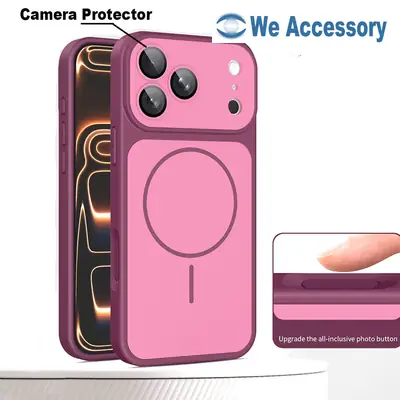
-
 iPhone Duo 360° rotating ring holder case N52 2300 Gauss strong magentic stand case
 -
 iPhone 18 Pro Clear Magsafe Case build-in camera protector transparent magnetic case
 -
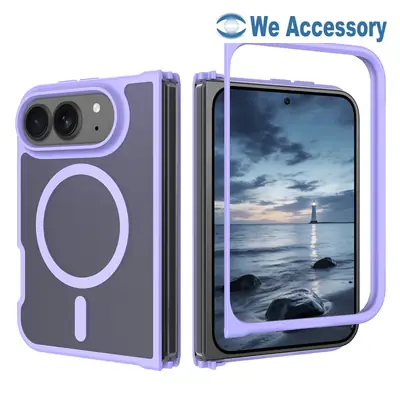 iPhone Duo Matte Magsafe Case Skin-Feeling N52 Strong Magnetic 2in1 Foldable Case
-
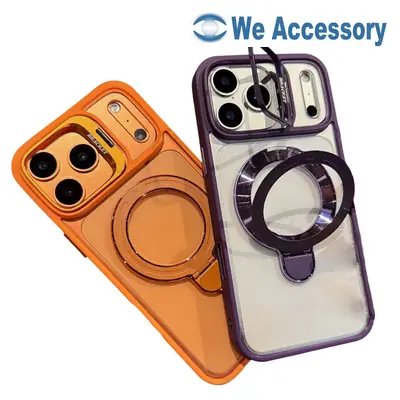 iPhone 18 accessories iPhone 18 Pro 3in1 magnetic holder case camera holder ring holder case
 -
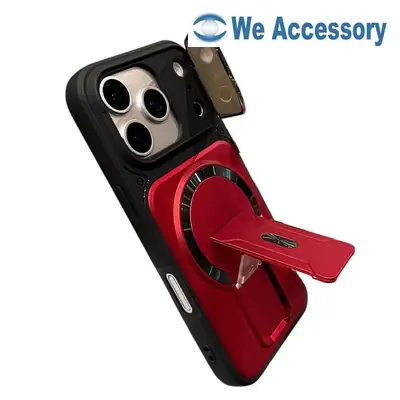 iPhone 18 Pro magsafe holder case glass camera protection and foldable holder case
 -
 New trend iPhone 18 Pro matte skin-feeling magsafe case ring holder phone holder case
 -
 Hot phone accessories iPhone 18 Pro magnetic stand phone case foldable phone holder case
-
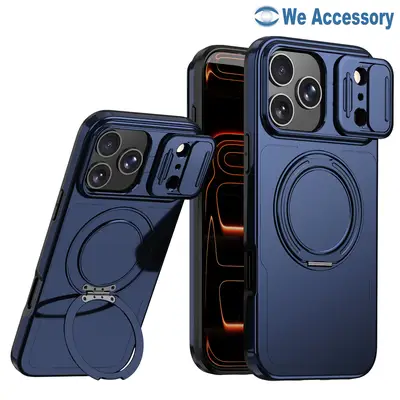 New iPhone 18 Accessories iPhone 18 Pro Ring Holder Case Camera protection Magsafe Case
 -
 iPhone 18 Pro Max Card Holder Case Magsafe Holder Case Slide Window Camera Protection
 -
 New design iPhone 18 Pro TPU+PC Hybrid Suitcase-Style MagSafe Shatterproof Case
 -
 Business demeanor iPhone 18 Pro magsafe leather case 2in1 iphone cover luxury iphone case
-
 New iPhone Accessories iPhone 18 Pro Clear Magsafe Case double color 2in1 shatterproof case
 -
 iPhone Case Distributor Newest iPhone Fold Case TPU+PC 2in1 Full Protective iPhone Case
 -
 Phone Accessories Company New iPhone 18 Pro Case Magsafe Case with Phone Holder
 -
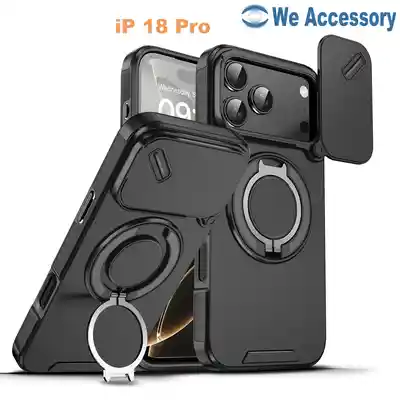 Phone Case Manufacturer New iPhone 18 Pro Max Armor Case Camera Protection and Holer
-
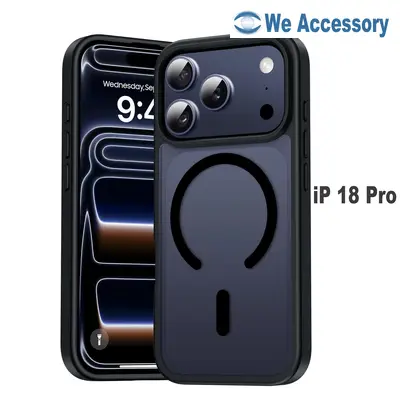 iPhone 18 Accessories Supplier Newest iPhone 18 Pro Case Wholesale Matte magsafe case
 -
 iPhone 18 Pro Case Wholesale Colorful Transparent Magsafe Case New iPhone 18 Pro Case
 -
 Wholesale iPhone 17 Jelly 2 in 1 Magsafe Case colorful silicone iphone case
 -
 Apple iPhone Case Supplier Colorful iPhone 17 electroplated case so cool case
Product Tags
Tempered Glass Wholesale, Who Buys It by the Thousand
October 08, 2026
The email landed on a Tuesday, and it looked wrong. A facilities-management company out of Copenhagen wanted 2,400 screen protectors. Not 2,400 pieces of one model — 2,400 spread across six models, delivered to eleven addresses in Denmark and southern Sweden, with an installation day pencilled in for the second week of March and a request for a spec sheet, a certificate of conformity and net-30 terms.
The distributor who forwarded it to us had been in the business for nineteen years and had never quoted anything like it. His entire order book, as he put it, was "phone shops, phone shops, and one guy who sells at the market on Saturdays." He nearly deleted the email as spam.
That email turned into a three-year account worth roughly 7,800 units, plus install days, plus a replacement run every spring when the fleet gets refreshed. It never appeared on any of his price lists. It never showed up in a single "hot models" report. And it is one of dozens of orders like it that pass through our factory every year — the quiet half of tempered glass wholesale that most dealers never go looking for because they've been told the business is retail or nothing.
So let's talk about the buyers nobody puts on a mailing list. Offices. Hotels. Schools. Gyms. Rental fleets. Companies that hand out phones and then have to live with them for three years. They buy differently, they ask differently, they pay differently, and once you learn the shape of the order, they are the most predictable volume you will ever have.
The assumption that costs distributors money
Walk into most accessory wholesalers and you'll find the same mental model. Retail is the market. Shops buy 50 or 100 pieces, they reorder monthly if you're lucky, they haggle over 4 cents, and they disappear when a cheaper supplier appears in their inbox. Institutional buyers get filed under "not our customer" — too much paperwork, too slow, too demanding.
Here's the part that model misses. A single mid-sized company with 400 staff spends more on screen protection in a year than a medium-sized phone shop — not because the per-unit price is higher, but because nobody in that company has the time or the interest to shop around. They buy once, they buy enough, and they reorder when someone in procurement gets a complaint.
There's a second thing. Retail demand is emotional and seasonal. Institutional demand is administrative and scheduled. You can plan a factory around administrative demand. You cannot plan around a Saturday rush or a viral TikTok.
None of this means abandoning retail. It means adding a channel that most of your competitors haven't noticed, and understanding that winning it is a process question, not a price question.
Who these buyers actually are (and what they order)
There isn't one institution-shaped buyer. There are five or six recognisable types, and once you can separate them you can build a short list instead of a vague ambition.
Independent schools, training centres, language academies. Two models exist here. Either the institution owns the tablets and laptops (protected at institution level) or the school runs a parent-paid programme where every family buys the same protector and the school wants one supplier, one invoice, one model list. The second type is the interesting one: 400 to 3,000 units, predictable, and they reorder every September when the new intake arrives.Sport, leisure and field operations. Gyms, swim schools, courier depots, contractors, event companies. Their phones live in pockets with keys and chalk dust. Breakage rates are the highest of any segment we see — one gym group counted 14 percent of staff devices needing a new protector within nine months. They buy in packs of 25 and treat them like consumables.Repair shops with business contracts. Collision-repair networks, electronics chains and independent technicians who hold service contracts with local businesses. They don't buy for their counter; they buy for their van. They need small multi-model packs they can carry, and they need to reorder fast without a minimum-order conversation. This is the most under-served group in the whole channel, because the quantities look small until you add up twelve months.Rental and loaner fleets. Car rental desks, equipment-hire counters, insurance replacement services. Their devices get handed to strangers, which means two costs: damage and hygiene-driven replacement. They want rough-and-ready protection in plain packs, and they want it available as a standing monthly shipment rather than a one-off.
| Buyer type | Typical first order | Model spread | Reorder rhythm | Who signs off |
|---|---|---|---|---|
| Office / professional fleet | 200–800 units | 2–3 models | Annual, fleet refresh | Operations or IT manager |
| Hospitality (hotel, serviced apartments) | 60–150 units | 1–3 models | Every 6–9 months | Housekeeping or facilities lead |
| Education (institution-owned or parent-paid) | 400–3,000 units | 1–4 models | Yearly, August–September | Bursar or programme coordinator |
| Sport, leisure, field operations | 100–400 units | 1–2 models | Quarterly, consumable-style | Regional manager |
| Repair shops with service contracts | 25–150 units | 3–6 models | Monthly | Owner or lead technician |
| Rental and loaner fleets | 150–600 units | 2–4 models | Monthly or quarterly | Fleet or procurement officer |
Read that table again with a distributor's eye. None of these orders is huge. Together, in a mid-sized European country, they add up to a volume that would keep a warehouse busy all year, and the marginal cost of serving them is mostly process, not product.
The device-mix trap (and why your hot-model list misleads you)
Here is the first place institutional selling breaks the retail playbook. Retail customers buy protectors for the phone they own right now. Institutions protect whatever they issued two or three years ago, plus a handful of new units bought this year, plus a drawer of spares that are three generations old.
A real example: a staffing company in Malmö runs 340 staff phones. When we mapped their fleet, the shapes were a current mid-range series (140 units), a previous-generation premium model (110 units), a phone that was launched four years ago and is still issued to temps (60 units), and 30 units of a small-screen model the retail channel stopped stocking in 2024. Four families. Six actual shapes, once you separate sizes.
Your top-20 hot-model list probably covers three of them. That's not a failure of the list — it's what the list is for. Retail demand follows launches. Institutional demand follows depreciation schedules, and depreciation schedules run on finance, not on hype. A fleet is replaced when the lease ends, not when the marketing cycle turns.
The practical consequence: institutional quoting needs a "fleet tail" — the older shapes that make up 10 to 25 percent of a fleet quote. Keeping a modest tail is not dead inventory if you manage it deliberately:
Buy the tail to the order, not to stock. Ten days of lead time on a 40-piece tail is almost never a deal-breaker, as long as you say so up front. What kills deals is silence for three weeks.
Cap the tail at two generations back. Beyond that, quote a "device upgrade advisory" instead: the buyer's finance team usually prefers replacing 30 obsolete handsets to sourcing glass for them.
Use assortment packs to test the tail. A 12-model assortment box lets a warehouse hold five units of each shape without committing to fifty of anything.
Label everything by shape, not by marketing name. Institutional stores are run by people who are not phone people. "Fits the 6.1-inch model of the current series, 2024 and 2025 versions" beats a product name they have never heard of.
One more nuance worth knowing: institutional model lists are often written by the IT supplier who sold the fleet, and that supplier will happily sell them protection at a margin. If you're quoting directly, ask who maintains the fleet and expect to compete with that relationship.
The buying process has five gates, and price is the fourth
Retailers decide in an afternoon. Institutions decide in a sequence, and if you skip a gate the order dies quietly.
Why they pay without arguing (and why that matters more than a high retail markup)
Retail gives you a headline markup of 200 to 300 percent and a customer who negotiates every line. Institutional business gives you 55 to 110 percent and a customer who doesn't open the invoice for a year.
The arithmetic is not close. Take a 600-unit order of full-coverage 9H glass — the everyday workhorse, factory-direct at $0.16–0.26 depending on volume and coating. Landed cost to a European distributor lands in the region of €0.28–0.42 per unit once freight, duty, insurance and the odd damaged carton are accounted for. Institutional quotes at 300 units typically sit near €0.80–1.05 per unit; at 1,200 units, €0.62–0.78, with the curve flattening rather than collapsing. The gross margin per unit is smaller than retail. The cost of earning it is dramatically smaller too.
Put numbers on the invisible costs:
| Cost line | Retail channel | Institutional channel |
|---|---|---|
| Marketing and samples | Constant, ongoing | Small, one sample kit |
| Negotiation per order | Every order | Once, then renewal |
| Packaging | Retail-ready hang card or box | Plain bulk sleeves, labelled |
| Returns and complaints | High, consumer-driven | Low, handled by the account |
| Payment risk | Usually prepaid | Invoiced, net 30 |
| Predictability | Seasonal, spiky | Scheduled, annual or quarterly |
The bottom line: a retail customer who buys 500 units a year at a 250 percent markup may still be less profitable than an office account buying 600 units at 75 percent, because you spend an afternoon, not a year, keeping them.
Then there's the part nobody puts in a margin calculation. Institutional buyers join your product line to other institutional buyers. A facilities group recommends you to the hotel chain it also services. A school programme coordinator moves to another school and takes their supplier with them. Our own records show more institutional accounts coming from referrals inside the segment than from any campaign we've ever run.
What goes in the box when the buyer isn't a retailer
Walk a retail-ready protector through an institutional purchase and it loses value at the door. Hang cards, shelf hooks, printed blisters, gift boxes with install frames — all of that is merchandising, and an office store room has no shelf edge to hook it onto.
What institutional buyers want is unglamorous and specific:
Flat, labelled sleeves or slim envelopes, five to twenty-five units per pack, sorted by model, in a box that survives a courier van.
One install kit per pack, not per unit — and a second kit taped to the outside for the person who opens it first.
A model-matching card inside the box showing a photo of the device and the exact size, so a non-technical storekeeper can hand the right piece to the right person without calling anyone.
Branch-level labelling. If the order ships to eleven addresses, each carton needs the site name, the model list, the quantity and the internal reference number printed on the outside label. This single detail prevents more disputes than any clause in the contract.
No branded retail packaging unless requested. Institutions don't resell. Branded retail boxes are wasted money, and worse, they invite the buyer to ask why they're paying for packaging they'll throw away.
Spares at the right ratio. Suggest 12 to 15 percent above the fleet count on a first order. It looks like an upsell, and it is, but it's also the reason the account doesn't call you in six weeks asking for four pieces.
Blind-drop shipping — sending the brown carton directly to each site without your channel partner's logo — is normal in this segment. It's also your chance to appear professional without spending on branding: a printed packing slip with the reference number, a model list, and a one-line note about where to find the install instructions. That's all it takes.
Kitting math, briefly
Kitting 600 units into 24 labelled packs sounds free. It isn't. If it takes one person three hours at a loaded rate of €22 an hour, you've added €66 — eleven cents per unit — plus the cost of labels, sleeves and a bigger carton. On a 600-unit institutional order that's noise. On a 120-unit order it can eat a fifth of your margin. So price kitting explicitly: free above 500 units, €25 per 100 units below that, and say it in the quote. Buyers who see the line item stop asking for bespoke labelling as a free extra later.
The install day: your best-margin service line
Institutional buyers repeatedly ask the same question near the end of a negotiation: can someone come and put them on?
Removing a factory film and installing clean glass takes a practised person 40 to 60 seconds per device. A two-person team working an office floor can comfortably process 250 to 350 handsets in a working day, including greeting, unpacking, wiping, aligning, and logging each device by asset number.
Price it as a service, not as a favour. In European markets, on-site installation is typically billed at €2.50–4.50 per device depending on travel, volume and whether the client wants a paper log. On a 300-unit office order, that's €750–1,350 against a labour cost you already carry — and it comes attached to zero freight risk, because the product never leaves the site.
Two rules make it work. First, send a named technician with written instructions, because "someone from the warehouse" destroys the impression you spent a month building. Second, leave the client a small laminated card showing the two-step fix for a lifted corner. Ninety percent of install complaints come from a dust particle under the corner, and a card prevents a callback.
The real value of the install day isn't the €1,000. It's the renewal. A client whose staff watched your team work has a positive memory of your company, and institutional renewals are won on memory, not on spreadsheets.
The spec sheet that ends the conversation
Procurement officers are not stupid, and they are not phone enthusiasts. They need to defend the purchase to someone above them. Give them the ammunition and the deal moves; make them ask a colleague for help and the deal slows to a crawl.
A one-page spec sheet should answer the four questions that come up every single time:
1. How hard is it? 9H surface hardness, with the test method named, plus scratch-resistance data if you have it.
2. How thick, and does it fit the case? Glass thickness in millimetres (0.33 mm is the standard workhorse; 0.2 mm for slim phones; 0.4–0.5 mm in ruggedised deployments) and an edge description that mentions case compatibility.
3. Will it go on without bubbles? AB glue layer, full-surface adhesion, install kit contents, and a straight answer about curved edges.
4. What documentation comes with it? RoHS, REACH, conformity declaration, packaging registration numbers, ISO 9001, warranty period and the process for a faulty batch.
Then the physical sample. Five units per model, individually sleeved, plus one complete install kit and a printed card showing the device name and size. Send it by courier with tracking, not by post. Institutions schedule around tracking numbers.
Follow-up cadence matters more than the follow-up script. Day two after delivery: "did the samples arrive, is the fit right on the 6.1-inch model." Day four: "would a call with your stores team help." Day ten: "the quote is still valid until the 14th; after that I'll need to requote the tail models." Three touches, delivered on schedule, without nagging. Most retail buyers ignore two of those. Institutional buyers reply to all three, because being ignored by a supplier is a specific irritation they remember.
Where this channel bleeds money: eight traps
Every one of these has cost a distributor we know real money. None of them is visible until after the invoice.
The net-60 illusion. Longer terms get priced as a courtesy. Do the math instead: at a 7 percent cost of capital, 60 days of terms on a €9,000 order costs about €105. Quote terms as a line item — 2 percent discount for prepayment, or the invoice price plus terms — and let the buyer choose. Buyers respect suppliers who understand their own cost of money.Beyond-tolerance payment behaviour. Some public bodies pay at 90 days as a matter of policy. Ask for their standard terms in writing before you quote, not after delivery.Single-source demands with consignment language. "Hold 300 units of our models in your warehouse, we'll pay as we use them." Consignment inventory exists to move risk onto you. If an account insists, ring-fence it with a minimum monthly draw and a 12-month commitment, or decline politely.The five-year spare-parts clause. Institutional tenders sometimes require availability for the life of the fleet plus a year. That's five to seven years. Fine for a handful of high-volume shapes; ruinous across 20. Answer with a commitment to "reasonable commercial availability" plus a documented last-time-buy process, and put it in writing.Supplier code-of-conduct audits. Large public buyers may send a questionnaire covering labour practices, environmental policy and conflict minerals. Answer it. Refusing makes you look evasive, and the research takes an afternoon.Freight damage on bulk packs. Flat glass shipped loose in a thin carton arrives with chipped corners, and the buyer photographs every one. Rigid inserts, corner protection and a documented transit test are worth the cents. Assume the buyer will claim everything they can see.Fleet migration mid-contract. A buyer switches half their handsets to a new model in month eight. Now your committed stock list is wrong and the buyer wants the new shape at the old price. Add a clause: model changes within a 12-month term are quoted at the volume price for the new shape, with a 10-day lead time and a 15 percent handling-free allowance on the first batch.Tax and paperwork debt. Selling to institutions across a border means VAT numbers, correct invoicing, sometimes an EORI number for the importer of record, and a paper trail for every carton. A bookkeeping error on a €12,000 institutional invoice costs more to fix than the margin on the whole order. Loop your accountant in before the first quote, not after the first return.One order, in detail: how the gym group became a standing account
Back to that Copenhagen email, because the shape of it is worth studying.
The company runs 41 fitness clubs across Denmark and the Öresund region. Each club has between four and nine staff handsets plus a customer-facing check-in tablet. The phones are issued on a three-year cycle and the tablets on four. Their problem wasn't breakage in the dramatic sense — nobody was smashing screens on the gym floor. It was the slow failure: scratches and chips accumulating until a device looked second-hand in year two, which the brand team disliked because customers see those devices at the counter every day.
Their first requirement list was six shapes. We matched five from stock and quoted the sixth as a tail model with a 12-day lead time, explaining the reason. They accepted the tail, which tells you something useful: institutional buyers care about a clear plan more than about next-day everything.
The quote broke down like this, at 600 units of what became an annual order:
| Line | Detail | Value |
|---|---|---|
| Full-coverage 9H glass, current mid-range shape | 220 units | €0.86 each |
| Full-coverage 9H glass, previous-generation premium shape | 180 units | €0.92 each |
| Full-coverage 9H glass, 6.7-inch shape | 90 units | €0.98 each |
| Tail shape, four-year-old model | 60 units | €1.24 each |
| Small-screen shape, tail | 30 units | €1.18 each |
| Assorted spares pack, 12 pieces | 12 units | €1.05 each |
| Install kits, one per six units with two spares | 110 kits | €0.42 each |
| Branch labelling and split delivery, 11 sites | Flat fee | €95 |
| On-site installation, first two clubs | 118 units | €3.40 each |
| Freight, DDP Denmark | 3 cartons | €210 |
| Total | 702 pieces tracked | €1,530 |
Read the total and then read the alternative: the same account buying the same quantity from a retail-priced catalogue would have paid roughly €6.50–9.00 per unit, which is why the buyer came to a wholesaler in the first place.
Year one ran almost exactly as quoted, with one number nobody predicted. Breakage and loss came to 11 percent rather than the 15 percent the buyer had feared, so the spare pack sold out in month ten and turned into a 94-unit reorder — the kind of small, effortless order that keeps a warehouse productive. The install day at two clubs produced a third request: could we do all 41 in the next refresh? That's a €4,000+ service line on top of product, and it came from a client who, six months earlier, had been an unread email.
What went wrong, so you don't repeat it: our first carton labels were printed in English only, and two clubs returned glass for the wrong shape because the storekeeper couldn't match "6.1-inch 2025" to a device list written in Danish. We reprinted every label with the local device name, added a photo card, and had no matching complaints afterwards. Lesson, in one line: use the client's device names, not the industry's.
What the Account Looks Like Two Years Later
The first order is the qualification. The account is what happens next, and it's worth understanding its rhythm before you chase one — because the shape of a mature institutional account is what makes the channel worth the extra process.
The rhythm runs on three clocks, and the first one is the fleet cycle. Organisations don't replace phones one at a time; they replace them in waves, usually every two to three years, when a batch of devices reaches the end of its life at the same moment. That means an institutional account doesn't produce steady monthly volume. It produces a large order, then a quiet period, then a large order again — and a supplier who knows the cycle can prepare for the wave instead of being surprised by it. The practical move is to ask, at the point of the first sale, when the fleet was last refreshed. Two years on from a refresh means a renewal is coming; three years means it's overdue. That one question turns a future order from luck into a scheduled event.
The second clock is the steady attrition of normal use. Screens get scratched, protectors get chipped, new staff join and need a handset with everything the last one had. This produces a small, predictable stream of top-up orders between the big waves, usually handled by the same person who placed the first order, usually without a tender, and usually without price discussion. A distributor who keeps the specification on file can fill these in minutes — and the account that can be filled in minutes is the account that doesn't get shopped around.
The third clock is the one that decides whether the account survives: the people. Institutional buyers are individuals, and individuals leave. The IT manager who signed off on your last order gets promoted, or leaves, or goes on parental leave, and suddenly there's a new person in the chair with no memory of why the last supplier was chosen. This is where most institutional accounts are lost — not to a competitor's price, but to a competitor's phone call at the right moment. The defence is an account record that travels: what models, what quantities, what specification, what the delivery history looked like, and what was promised. When the new contact asks their suppliers for a quote, the supplier who can reply with the last three orders' details in five minutes is the supplier who looks like the incumbent — because they are.
What actually loses an institutional account is narrower than people expect. Price rarely does it; institutional buyers are not optimising for the last few percent. Delivery does it — one late shipment during a device refresh teaches the buyer that the supplier can't be relied on at the moment that matters, and that lesson sticks harder than any invoice. Specification drift does it — a supplier who ships last year's model protection against a fleet that's moved on looks careless, and the buyer notices before anyone complains. And the third, quieter failure is silence: a supplier who fulfils the order and then disappears for two years isn't a partner, they're a vending machine, and when the fleet cycle comes around, a vending machine gets compared on price.
The account that survives all three clocks is the one that stays in touch on purpose. Not marketing emails and not a newsletter — a short message six months before the expected refresh, asking whether the model mix has changed, or offering to hold stock for a quarter. It costs nothing, it takes a minute, and it converts a transaction into a relationship that produces orders for years. That's the whole trade of institutional selling: the first order takes effort, the next five take a message.
What to actually do this quarter
If you want to test this channel without rebuilding your business around it, here is a sequence that costs a few days rather than a few months.
Pick three segments, not six. For most European distributors, education, hospitality and office fleets are the easiest to reach because the buyers are identifiable and their phone numbers are public. Sport and leisure is the fastest to close but the smallest in value. Rental fleets are the slowest.Build a target list of 30 names per segment. Local, regional, medium-sized. A 41-site gym group is a better first target than a national hotel chain, for the same reason a 700-unit order beats a one-million unit tender that takes two years of compliance work to lose.Write the three-page pack. Page one: the quote template, sealed as a fillable document. Page two: the one-page spec sheet. Page three: your documentation set — RoHS, REACH, conformity declaration, packaging registrations, ISO 9001, warranty terms, plus two client references if you have permission to use them.Assemble one physical sample kit. Five units of two models, two complete install kits, printed instruction card, and your card. Keep it in a shoebox-sized rigid mailer so it arrives flat, not folded.Offer a pilot, not a contract. "Send us one site's worth of devices for 30 days. If the storekeeper says the fit is right and the install took under a minute, we'll quote the fleet." A pilot converts far more institutional buyers than a discount, because it answers their actual fear: making a decision they'll have to explain.Then do the boring part. Quote in two working days, follow up three times, answer documentation requests the same day. In this channel, speed of administrative response is a differentiator worth more than a few cents per unit. Distributors who lose institutional deals usually lose them to a slower inbox, not a lower price.About We Accessory
We Accessory is a phone accessories wholesale supplier and manufacturer working with distributors, retailers and institutional buyers worldwide. Since 2012 we've shipped phone cases, tempered glass screen protectors and mobile accessories from our facility, supporting OEM and ODM projects with in-house tooling, coating lines and packaging development.
Address: 2F, Block A2, Nanchang Industrial Area, Xixiang Town, Bao'an District, Shenzhen, ChinaTel: +86-755-36818832WhatsApp: +86-15919800304Email: [email protected]Website: https://www.weaccessory.comIf you'd like a quote built around a specific model list — institutional, retail or a mix of both — send the shapes, the quantities and the delivery country, and we'll come back with tiered pricing, packing options and a lead time you can put in front of a buyer.
— William Shaw, Head of Sales at We Accessory
Share:


Why Choose We Accessory
12+
Years Experience
2000+
Product SKUs
50+
Countries Served
OEM
& ODM Service
2-4
Day Delivery
Professional Phone Accessories Wholesale Supplier
We Accessory is a trusted phone accessories wholesale supplier since 2012. We specialize in phone case, tempered glass screen protector, USB cable, charger and more mobile accessories wholesale, serving customers in 50+ countries worldwide.
Frequently Asked Questions
Where is We Accessory located?
We are located in Shenzhen
What products do you offer?
We offer phone cases, screen protectors, USB cables, chargers and more mobile accessories for all major brands.
Do you offer OEM/ODM services?
Yes, full OEM and ODM customization with your logo, packaging and designs.
What is your shipping time?
In-stock items ship in 2-4 business days via DHL/UPS/FedEx. Custom orders 5-7 days production plus shipping.
We Accessory (WeAccessory.com)
Address:2F, Block A2, Nanchang Industrial area, Xixiang Town,Bao'an District, Shenzhen
Tel: +86-755-36818832
Mobile/Whatsapp: +86-15919800304
Email: [email protected]
Microsoft Teams: william.shaw186
Product Tags
Contact us Now!
Please send us your Email address if you'd like some products



Copyright © 2012-2026 Shenzhen Western Electronic Co., Ltd All Rights Reserved. Sitemap | Best Phone Case Wholesale, Tempered Glass Screen Protector, USB Charger, Cable, other Mobile Accessories Wholesale