English
 Français
 Deutsch
 Español
 Italiano
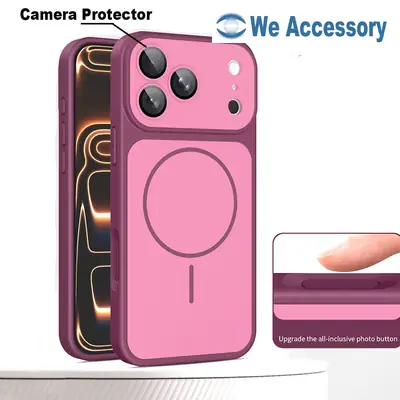
iPhone 18 Pro Max Skin-feeling magsafe case Matte case with build-in camera protection

Recommend Products
-
-
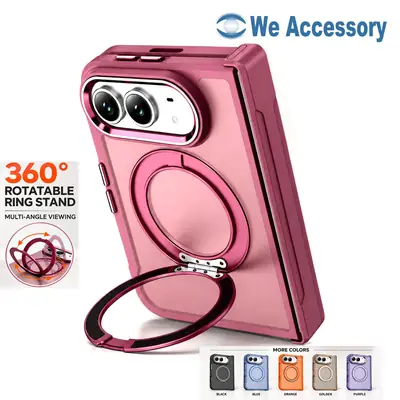 iPhone Duo 360° rotating ring holder case N52 2300 Gauss strong magentic stand case
-
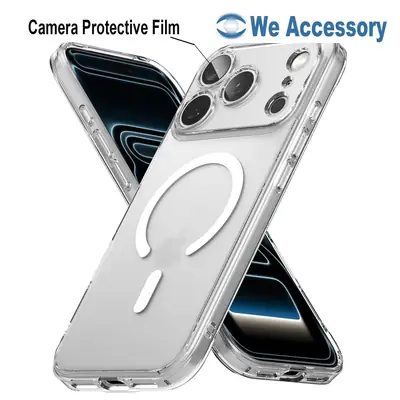 iPhone 18 Pro Clear Magsafe Case build-in camera protector transparent magnetic case
-
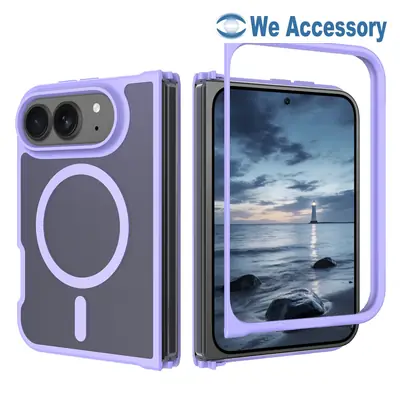 iPhone Duo Matte Magsafe Case Skin-Feeling N52 Strong Magnetic 2in1 Foldable Case
-
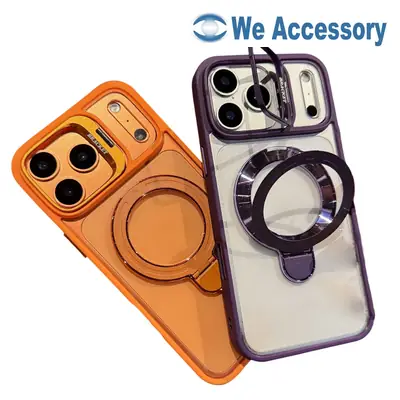 iPhone 18 accessories iPhone 18 Pro 3in1 magnetic holder case camera holder ring holder case
-
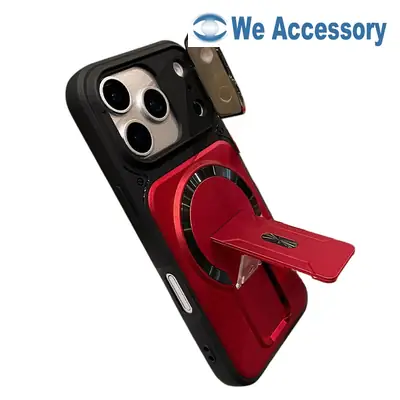 iPhone 18 Pro magsafe holder case glass camera protection and foldable holder case
-
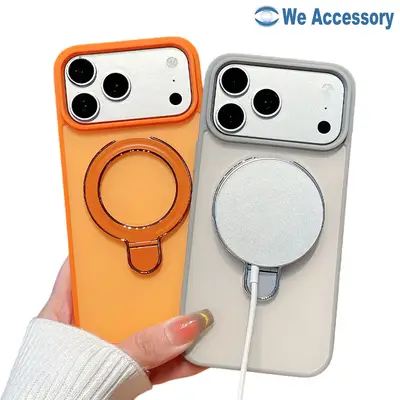 New trend iPhone 18 Pro matte skin-feeling magsafe case ring holder phone holder case
-
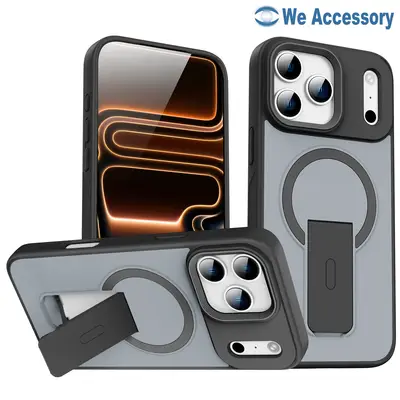 Hot phone accessories iPhone 18 Pro magnetic stand phone case foldable phone holder case
-
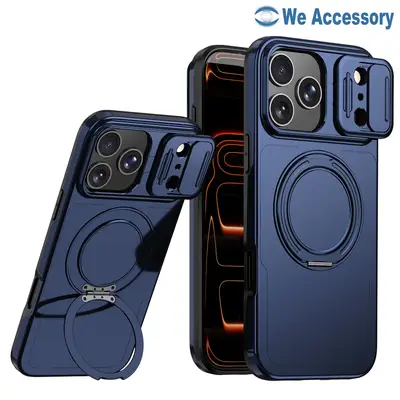 New iPhone 18 Accessories iPhone 18 Pro Ring Holder Case Camera protection Magsafe Case
-
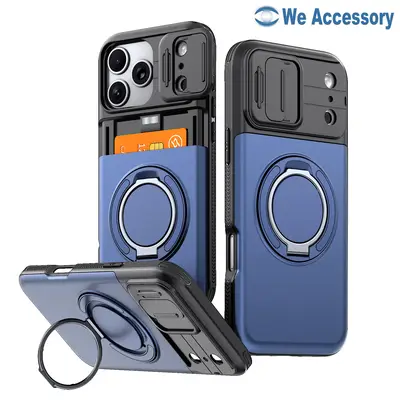 iPhone 18 Pro Max Card Holder Case Magsafe Holder Case Slide Window Camera Protection
-
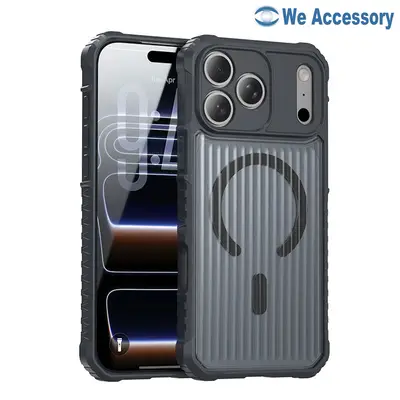 New design iPhone 18 Pro TPU+PC Hybrid Suitcase-Style MagSafe Shatterproof Case
-
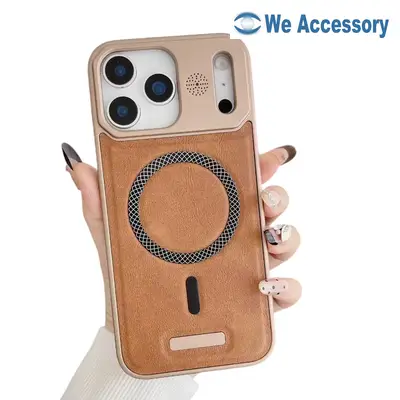 Business demeanor iPhone 18 Pro magsafe leather case 2in1 iphone cover luxury iphone case
-
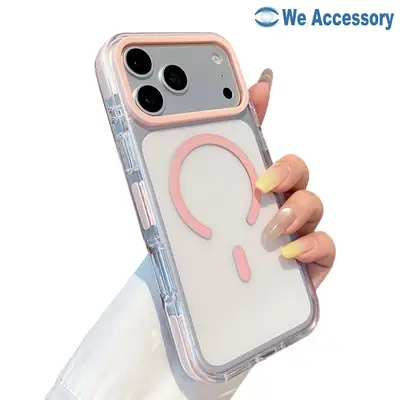 New iPhone Accessories iPhone 18 Pro Clear Magsafe Case double color 2in1 shatterproof case
-
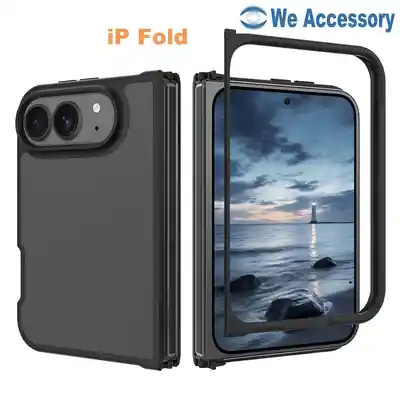 iPhone Case Distributor Newest iPhone Duo Case TPU+PC 2in1 Full Protective iPhone Case
-
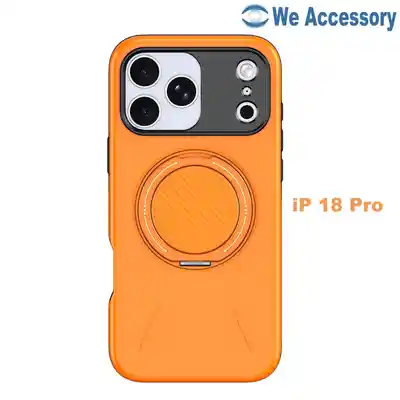 Phone Accessories Company New iPhone 18 Pro Case Magsafe Case with Phone Holder
-
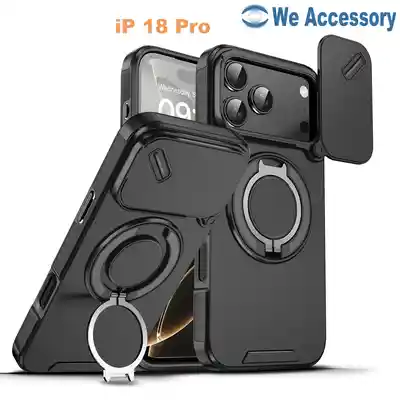 Phone Case Manufacturer New iPhone 18 Pro Max Armor Case Camera Protection and Holer
-
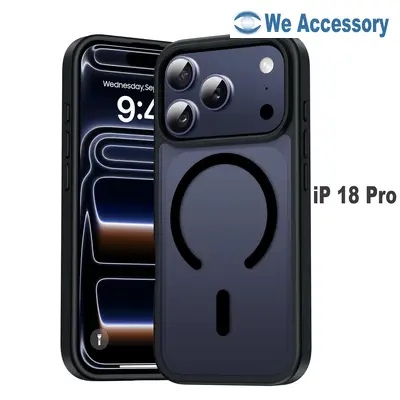 iPhone 18 Accessories Supplier Newest iPhone 18 Pro Case Wholesale Matte magsafe case
-
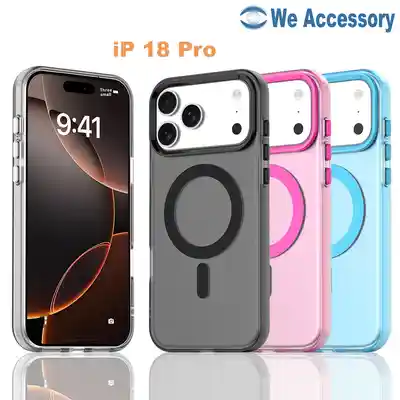 iPhone 18 Pro Case Wholesale Colorful Transparent Magsafe Case New iPhone 18 Pro Case
-
 Wholesale iPhone 17 Jelly 2 in 1 Magsafe Case colorful silicone iphone case
-
 Apple iPhone Case Supplier Colorful iPhone 17 electroplated case so cool case
Product Tags
Screen Protector Wholesale, Why Thin and Thick Glass Are Not the Same Product
November 08, 2026
Katrien buys for a phone accessory wholesaler in Ghent. Thirty-one product lines, four hundred and sixty accounts, and a glass category she has been quietly unhappy with for two years without ever being able to say why.
The unhappiness started with a quotation. Two suppliers, both quoting the same specification — 0.33 mm, 2.5D edge, 9H, full glue, same packaging — and one of them twenty-nine per cent cheaper. She asked the expensive one to explain the gap and got a paragraph about quality culture. She asked the cheap one and got a paragraph about scale and efficiency. Neither paragraph contained a number, so she did what most buyers do: she split the volume, took the cheap one for the two models she sold by the thousand, and waited.
Four months later she sent me photographs of an open carton. Forty protectors packed the way they had always been packed, and every one of them had a curl along two edges. Not a break. A curl. The kind you can see when you hold the glass at an angle against a window, and the kind that leaves a permanent white line four days after application, once the sun has done its work.
Then she bought a digital caliper for eleven euros. That is the whole story. Eleven euros and one afternoon undid two years of supplier small print.
The cheap glass measured between 0.28 and 0.29 mm in the middle of the sheet and 0.27 at the edge. The expensive glass measured 0.325 to 0.335, all over. Both cartons said 0.33 on the label, and both suppliers will tell you, truthfully from their side of the table, that they sell 0.33 mm glass.
This article is about that gap. Not the gap between two suppliers, which is a story about honesty, but the gap between 0.33 and 0.50 as engineering choices, which is a story about arithmetic that most quotations never show you. There is a real product on both sides of the question. The problem is that the specification sheet uses the same three digits for both of them, so the six-figure purchase decision gets made on price per piece, which is the one number that hides everything.

Two products behind one label
What the number on the box actually means
Float glass is sold by the square metre at a nominal thickness, and the word doing all the work in that sentence is nominal.
A soda-lime glass sheet at 0.33 mm nominal weighs 0.825 kg per square metre. At 0.50 mm it weighs 1.25. Those are not opinions, they come from density: glass sits around 2,500 kg per cubic metre, so a one-millimetre sheet weighs 2.5 kg per square metre and everything else is multiplication.
| Nominal thickness | Weight per m² | Typical use |
|---|---|---|
| 0.28 mm | 0.700 kg | the cheap end, flexible, curving badly |
| 0.33 mm | 0.825 kg | the standard wholesale line |
| 0.40 mm | 1.000 kg | the middle nobody quotes by name |
| 0.50 mm | 1.250 kg | protective, rigid, heavier in the carton |
Two things follow immediately and neither of them appears on a quotation.
First, the tolerance band and the nominal are different animals. A factory buying 0.33 mm float may receive sheets that run 0.31 to 0.34 across a pallet, and a good one will check and reject the tail. A factory buying 0.28 and printing 0.33 on the box is not selling you a tolerance, it is selling you a different product with a borrowed label. That is exactly what Katrien's caliper found, and no amount of supplier correspondence replaces a caliper and thirty seconds.
Second, the difference between 0.33 and 0.50 is not 0.17 mm of nothing. It is fifty per cent more glass in the same outline, and glass is the only input in this product that you can feel, weigh, break, and measure without asking anyone's permission.
The weight arithmetic nobody does
Here is where the numbers start to matter commercially. Take a typical 6.1-inch protector, about 145 mm by 70 mm, which is 0.0102 m² of glass.
At 0.33 mm, ten thousand pieces weigh 83.7 kg. At 0.50 mm, the same ten thousand weigh 126.9 kg. The difference is 43 kg, which sounds trivial until you multiply it by a container and then by a year.
| Thickness | 10,000 pieces | 100,000 pieces | 200 pcs carton |
|---|---|---|---|
| 0.33 mm | 83.7 kg | 837 kg | 1.67 kg |
| 0.40 mm | 101.5 kg | 1,015 kg | 2.03 kg |
| 0.50 mm | 126.9 kg | 1,269 kg | 2.54 kg |
On a full 20-foot container of roughly 390,000 pieces, the switch from 0.33 to 0.50 adds about 1.7 tonnes. Sea freight does not care, because glass in cartons is volume-limited long before it is weight-limited, and that is why almost every glass quotation in this industry is a volume calculation with a price attached.
Air freight cares enormously, and so does anything that travels by courier: samples, emergency top-ups, a customer's rush order in December. Forty-three kilos per ten thousand pieces at six dollars a kilo is 258 dollars that nobody budgeted, on a consignment where the goods themselves are worth four hundred.
And the warehouse cares in a way that never shows up in a cost sheet. Two hundred pieces per carton at 1.67 kg is a carton one person lifts all day. At 2.54 kg it is still a carton one person lifts all day, but after six hours it is a different conversation. I have watched a picker in a Polish warehouse stack the thin cartons two high and the thick cartons one high, without being told, because the thick ones are heavier and the shelf is above shoulder height. That is the sort of thing that decides whether your stock arrives at the shop with a broken corner.
Why the thin sheet is not always the cheap one
The intuition is that less glass costs less money, and at the raw material line that is true. A square metre of 0.33 is roughly seventy per cent of the material of a square metre of 0.50, so the float glass invoice follows the thickness almost exactly.
Then the glass goes into a tempering furnace, and the arithmetic stops being linear.
To temper thin glass you have to heat it fast and quench it harder, because there is less mass to hold the thermal gradient that creates the surface compression. A harder quench on a thinner sheet produces more scrap: sheets that bow beyond tolerance, sheets that shatter in the quench, sheets that come out with a warp you can see under a straightedge. In our own lines the yield difference between 0.33 and 0.50 has run somewhere between four and eight points depending on the furnace and the season, and those points are paid for by somebody.
They are paid for either in the price, or in the glass that arrives, or in the argument three months later. There is no third option, because the energy going into that furnace is not negotiable.
This is the sentence I would put on every quotation in the category if I could: the reason the cheap 0.33 is cheap is almost never that the supplier is more efficient. It is that one of four things was left out — the caliper check, the flatness check, the tempering yield, or the honesty. Three of those four are invisible until something curls.
Flatness: the bow you can measure on a table
Nobody specifies flatness. Everybody experiences it.
Take ten screen protectors from a carton, lay them on a granite or a good laminate table, and press one corner. On a flat sheet nothing happens. On a bowed sheet the opposite corner lifts, and you can push a fingernail under the gap. That gap, in millimetres, is the number that decides whether your customer's protector comes back in a week.
The glass trade calls the tolerance a bow or a warp figure, usually expressed as a percentage of the diagonal, and it tightens as the sheet gets thinner. It also tightens with the size of the outline: a sheet for a small phone can carry a bow that would be a disaster on a 6.9-inch screen, because the same percentage is a longer distance.
This is where 0.28 mm glass fails first and most visibly, and why the failure looks like a quality problem at the shop rather than a specification problem at the factory. The screen protector is flat when it leaves the carton. It is not flat two days later, because a thin sheet that has a memory of its curl will follow that memory once the adhesive has had a warm afternoon to flow.
Two practical consequences. When you inspect a new supplier, lay out twenty pieces on a table before you look at anything else, and photograph the gap with a ruler in the frame. When you write the order, ask for the bow figure in writing and ask what happens to a sheet that exceeds it, because a factory that never rejects anything for flatness is a factory that does not measure flatness.
The edge is where 0.28 loses first
The 2.5D edge is the part of this product that everyone sells as a feature and almost nobody tests.
Grinding an edge on 0.33 mm glass means removing material from a sheet that is already thin, and the chamfer has to be proportionally smaller to leave any structural margin at all. On 0.28 the margin is thinner still, and the failure shows up as chipping: a small crescent of glass missing from the edge, usually at a corner, usually discovered by the customer as a rough spot under the thumb.
Chips are not cosmetic in this category. A chip is a crack nucleus, and a crack nucleus on a glass sheet under a phone that heats up and cools down all day is a crack waiting for a Tuesday.
There is also a packaging dimension that buyers rarely connect to thickness. Edge protection in a carton comes from the fit of the tray, and a thinner sheet in the same tray has more room to move. Move is not a problem in a warehouse. Move is a problem in a lorry that brakes forty times between Antwerp and Düsseldorf, which is where a box of screen protectors becomes a box of shards with a good story attached.
Pen drop: two products, one test
If you only ever run one test on a glass supplier, run this one, because it separates the two thicknesses in about four minutes and it needs nothing you do not already own.
Put the protector on a phone or on a flat steel plate, take a ballpoint pen, hold it vertically about eight centimetres above the surface, and let it fall. A normal pen weighs about ten grams. Then do it again from twelve centimetres, and then fifteen.
On 0.50 mm glass, a clean, undamaged sheet will usually take the fifteen-centimetre drop without more than a mark. On 0.33, the same drop often produces a small star or a hairline, and on 0.28 the star appears closer to ten.
This is not a lab test and I am not going to pretend it replaces one. What it does is answer the question a buyer actually has, which is not "what is the impact rating" but "will this survive a set of keys in a bag". Keys are a point load, and point load is where thickness and surface compression do the work, not the marketing number.
The other half of the test is the reverse side. Turn the sheet over and drop the pen on the adhesive face, with the liner removed, on the same plate. The 0.50 will take it. The 0.33 will take it. The 0.28 will sometimes show a spider on the second or third hit, and once you have seen that pattern twice you stop buying the cheap screen protector for any model that a customer will carry loose in a bag.
The case lip problem nobody connects
This one costs people money in a way they never trace back to glass thickness, so it is worth spelling out.
A phone case with a raised lip holds the protector in place and protects the edges of the screen. A screen protector that is too thick does not sit under that lip; it sits on it, and the lip lifts the glass at the corners. A screen protector that is too thin sits under the lip, but it also flexes when the case is pushed on, and flexing at the edge is where the adhesive line fails.
So there is a sweet spot, and the sweet spot is not the same for every case. If you sell both categories, which most of this trade does, then the pairing matters more than either product's own specification. A 0.33 sheet with a tight lip phone case is a bundle that returns at twice the rate of the same sheet with a 0.8 mm lip.
Two numbers describe the relationship, and both are worth asking for. The lip height of the case, in millimetres above the screen, and the thickness of the glass plus adhesive. If the second number is larger than the first, the phone case will lift the glass. That is arithmetic, not opinion, and it is the reason a bundle that looks like a bargain on paper can generate a complaint per forty sales.
I have watched a distributor in the Netherlands solve this by accident. He stopped buying one thickness for everything and started buying 0.33 for the models where he also sells the slim phone cases, and 0.50 for the models where he sells the heavy protective cases. His return rate on bundles dropped by more than a third and he could not tell me why, because he thought he had done it for the price.
0.40 mm, the middle nobody quotes
There is a thickness that sits between the two and almost never appears on a price list, and it is worth knowing it exists.
At 0.40 mm you get a 1.0 kg per square metre sheet, which is twenty-one per cent more glass than 0.33 and twenty per cent less than 0.50. It removes most of the flatness problem of the thin sheet, most of the weight penalty of the thick one, and it tempers at a yield that sits close to the 0.50 number rather than the 0.33 number.
The reason it is rare is not technical. It is commercial. Float glass is bought by the pallet in widths the mills find convenient, and the mills find 0.33 and 0.50 convenient because those are the two volumes the market asks for. A factory that wants 0.40 has to buy it in a quantity that only makes sense if they are running one model family at volume.
Practically, that means 0.40 shows up in two places: factories that specialise in one or two large-format models, and factories that will run it for you if your order is big enough to justify the pallet. If you buy thirty thousand pieces a year across forty models, 0.40 is not available to you. If you buy four hundred thousand across six, it might be exactly the product you should be selling.
Knowing the middle exists also changes how you read a quotation. When a supplier offers you 0.33 and 0.50 only, they are not being lazy, they are buying float in the widths the mills sell. When a supplier offers you eleven thicknesses, ask which two they keep in stock, because the other nine are a catalogue, not an inventory.
What the caliper actually reads in three places
The single most useful habit in this category is measuring in three places on five sheets, and writing the numbers down. Not because the average matters, but because the spread does.
Take the caliper to the centre of the sheet, to a point twenty millimetres from the edge, and to a corner. On a well-made 0.33 you will read something like 0.332, 0.330, 0.328. On a sheet rolled from a cheaper float you will read 0.334 in the middle and 0.312 at the edge, and that edge number is the one that matters, because the edge is where the bow lives and where the chip starts.
A spread above 0.015 mm across a single sheet is a warning. A spread above 0.02 is a different product wearing the label.
Two rules make the measurement worth doing. First, zero the caliper and check it against a known object before you start, because a caliper dropped once reads wrong forever and eleven euros is not worth arguing with. Second, measure the sheet without the liner and without the adhesive if you can, or measure a bare sample and subtract a known adhesive thickness, because a 0.33 sheet with 0.10 mm of glue measures 0.43 and tells you nothing.
The reason this belongs in a buyer's routine rather than a quality manager's is simple: the buyer is the only person in the chain who sees the quotation and the goods, and the quotation is where the number was invented.
Foldables and curved edges: where thin actually wins
Everything above argues for thicker glass, which is not the whole truth, so here is the other side.
A foldable's inner display is a plastic stack that does not want a rigid sheet on it, and a protector for that surface has to follow a curve that changes every time the phone opens. At 0.50 mm you are asking a rigid sheet to do a job it was not made for. At 0.33, and honestly at 0.28, the sheet will conform, and the whole category of foldable protection exists because thin glass bends enough to be irrelevant.
The same logic applies to heavily curved edges on conventional phones. A 0.50 sheet with a hard 3D curve needs a forming step that costs money and yields scrap, and the edge is where it shows: lifting, a white line, a bubble that grows. A thinner sheet forms more easily and glues down more forgivingly.
So the rule is not "thicker is better". The rule is that thickness is a design variable that has to match the surface it is going onto. A flat 6.1-inch screen wants 0.33 to 0.50 and gains protection from the upper end of that range. A curved edge wants the thinner sheet and gains nothing at all from a thicker one, because a protector that has lifted is not protecting anything.
The expensive mistake is buying one thickness for a catalogue that contains both. That is where a distributor ends up with a pallet of glass that is technically correct and functionally wrong for half the models, and no supplier will take it back, because the specification was met.
What installers do differently with each
The last people to see the product are the ones whose opinion predicts returns best, and they have a vocabulary for this that no specification sheet uses.
Ask a shop technician about a thin screen protector and you get an answer about forgiveness. The 0.33 bends a little when you place it, so a slightly off first contact can be lifted and re-seated without a permanent mark. That forgiveness is worth real money in a market where the technician is paid per phone and not per hour.
Ask about the thick screen protector and you get an answer about confidence. The 0.50 sits down flat and stays flat, and the technician can press it into a case lip without worrying that the edge is going to lift at the corner next week. It takes less skill to install well, which matters when your account is a supermarket with a kiosk and a rotating cast of staff.
The complaints follow the same split. Thin glass generates complaints about bubbles and edges lifting, usually within a fortnight. Thick glass generates complaints about sensitivity, because a 0.50 sheet plus adhesive does damp the touch a little on older phones, and about price, because it costs more on the shelf.
If you sell to installers, that is your product brief in two sentences: the thin sheet is forgiving and needs supervision, the thick sheet is confident and needs a better price story. If you sell to chains, buy the thick one, because consistency beats nuance when the person fitting it changes every Tuesday.
Transit: the carton that arrives pre-broken
Glass breaks in transit in a way that is surprisingly predictable once you know what to look for, and thickness is one of the two variables that decides it. The other is tray fit.
A carton of two hundred screen protectors travelling by sea is a stack of two hundred rigid sheets separated by foam or a moulded tray. Vibration makes them move relative to each other. If the tray has a little room, that relative movement is small and harmless. If it has too much, the sheets chatter, and chatter produces micro-chips on the edges, and micro-chips are what you find three weeks later when a customer opens the box and finds a hairline that was not there on the day it was packed.
Thinner glass chatters more, because the same vibration bends a 0.33 sheet further than a 0.50 sheet before it touches its neighbour. That is why a supplier who sells both thicknesses in the same tray is telling you something about their attention, and why the cheapest carton engineering is the one that costs you the most in claims.
Two numbers to ask for before you place a container order: the pieces per carton, and whether the tray was designed for the thickness you are buying. A tray designed for 0.50 with a 0.33 inside is a 0.15 mm gap on each side, which does not sound like much until you multiply it by six weeks at sea.
There is a third thing worth doing, and it is cheap. Ask for one carton to be opened and photographed before the container is sealed, with a caliper in the frame. Anyone who has ever had to argue about a claim knows what that photograph is worth.
The price per square metre trap
Here is the arithmetic that makes the whole category confusing, and it is worth doing once with a calculator so that you never have to do it again in a meeting.
A buyer compares two offers. One is 0.33 at three dollars ten a square metre. The other is 0.50 at four dollars forty. The instinct is that the second is forty-two per cent more expensive, and it is, per square metre of glass.
Now convert to the thing you actually sell, which is a piece with an outline. A 6.1-inch protector is 0.0102 m². At 0.33 that is 3.2 cents of glass. At 0.50 it is 4.5 cents. The difference is 1.3 cents.
| Thickness | Price per m² | Glass cost per piece | Difference |
|---|---|---|---|
| 0.33 mm | $3.10 | $0.0315 | — |
| 0.40 mm | $3.75 | $0.0381 | +0.66 cents |
| 0.50 mm | $4.40 | $0.0447 | +1.32 cents |
One and a third cents. That is the entire raw-material argument between the two products, before anyone has talked about the tray, the yield, the freight, or the complaint.
Which means that when a quotation differs by twenty-nine per cent on the finished piece, as Katrien's did, the difference is not in the glass at all. It is in everything else: the adhesive grade, the tempering yield, the printing, the packing, the liner, the number of rejects the factory is willing to absorb, and the margin. The glass is a rounding error, and yet the glass is the number that gets argued about, because it is the only number both sides can point at.
For anyone doing screen protector wholesale at any real volume, this is the most useful recalibration available. Stop negotiating the millimetre. Negotiate the rejects, the tray, the yield and the adhesive, and accept the glass price as the smallest line in the sheet.
Five numbers for the purchase order
If you take one thing from this article into your next order, take these five, because they are the ones that decide whether the product in the carton is the product you thought you bought.
Thickness with a tolerance, not just a nominal. Write 0.33 mm ± 0.02 and say that pieces outside the band are a reject. A nominal with no band is a wish.
Weight per square metre. It is a cross-check the supplier cannot fudge without failing the caliper as well, and it takes a second to verify on a kitchen scale with a known sheet count.
The bow figure, in millimetres over the sheet diagonal. Ask what happens when a sheet exceeds it, and ask how many sheets were rejected for it last month. The second question is the real one.
Pieces per carton and the tray specification. Including whether the tray was tooled for this thickness. Carton engineering is where the transit claims live.
The adhesive grade and the liner. Thinner glass shows adhesive problems sooner, because there is less stiffness holding a bubble flat. A cheap liner on a 0.28 sheet is a return with a date stamp.
None of these are exotic. All of them are answerable in an email inside a day by any factory that actually runs its own lines, and none of them can be answered by a trading company reading from a catalogue, which is precisely why asking them is a fast way to find out who you are dealing with.
The audit that takes a week
You do not need to visit a factory to run this. You need one order and one week.
Day one, order twenty pieces from each of two suppliers at the same nominal thickness, and pay for the fast shipping, because slow shipping tells you nothing about the batch you will actually get. Day three, when both cartons arrive, open them side by side and photograph both, with a caliper in the frame and the label visible.
Day four is the caliper, five sheets per supplier, three spots per sheet, written down. Day five is flatness, on a table, with a ruler, photographed. Day six is the pen drop on both, from ten, twelve and fifteen centimetres.
Day seven you do the arithmetic I did above, and you will find that one of the two suppliers is selling you a product you did not order, or that both are honest and you have been paying for the wrong one.
For a screen protector wholesale buyer the whole exercise costs about sixty euros including the caliper, and it replaces every conversation about quality culture you will ever have. The reason it is rare is not that it is difficult. It is that the people who would benefit from it are the people with the least time to run it, which is exactly the position a buyer is paid to be in.
What a two-thickness range looks like on the shelf
Once you accept that the thickness is a design variable rather than a price lever, the catalogue question changes shape. You are no longer asking which screen protector to buy. You are asking which screen protector goes with which model, and that is a merchandising decision with an arithmetic answer.
Start with the outlines you actually sell. In most screen protector wholesale ranges, six to ten models carry eighty per cent of the volume, and the rest is tail. Put 0.50 on the six that carry the volume, because the volume is where the returns are visible and where a complaint costs you a customer rather than an order. Put 0.33 on the tail, where the model is two years old, the customer is price-sensitive, and a slightly softer sheet is the difference between a sale and a no.
Then look at the devices themselves rather than the sales history. Any screen protector going onto a curved edge should be the thin one, because a screen protector that has lifted is not protecting anything and the curve is what lifts it. Any screen protector going onto a flat 6.7-inch display should be the thick one, because the flat surface is exactly where rigidity pays and where the bow of a thin sheet shows up first.
The third pass is the account list. Chains and supermarkets get the thick one, because the person fitting it changes every Tuesday and consistency is worth more than nuance. Independent repair shops can go either way, and most of them will tell you which they prefer within a week of trying both, which is information no supplier can give you.
There is a stock-keeping cost to running two thicknesses and it is smaller than people assume. A screen protector for a given model is already one SKU per model, per finish, per packaging version. Adding a second thickness doubles the model line only if you carry both for everything, which is precisely what this article is arguing against. Six models at 0.50 and four at 0.33 is ten lines, not twenty.
The price ladder is where the mixed range earns its keep. A 0.50 screen protector can sit at the top of your range with a story: thicker glass, harder to chip, better under a protective phone case. A 0.33 screen protector sits at entry level with a different story: thin, light, forgiving to fit, right for curved edges. Two stories sell to two customers, and neither of them is a discount argument, which is the only argument that ever costs you margin.
| Range position | Thickness | Models | Story to the account |
|---|---|---|---|
| Entry | 0.33 mm | tail models, curved edges | light, forgiving, fits curves |
| Standard | 0.33 mm | mid-volume flat screens | the workhorse line |
| Protective | 0.50 mm | top six models, chain accounts | thicker, harder to chip, case friendly |
What you stop doing is the thing that got Katrien into trouble. You stop buying one screen protector specification for a catalogue that contains two different jobs, and you stop letting the cheapest line in the sheet set the price for the whole range.
None of this requires a new supplier. It requires one extra column on the buying sheet and the discipline to fill it in per model rather than per order.
What we changed on our side
Two years ago we ran one thickness for the whole range, because it simplified everything and nobody complained loudly enough to make it worth changing. That was a mistake dressed as efficiency.
Now we list the thickness next to the model on every quotation, with the tolerance band next to it, and we say plainly which models we recommend 0.50 for and which ones 0.33 will serve better. We also stopped quoting a single price for a catalogue where half the outlines are curved, because the honest answer to that question is two prices.
The change that mattered most was smaller than any of that. We started photographing one opened carton per model with a caliper in the frame, and sending it with the shipping documents. Nobody asked for it. Two customers have told me it is the reason they stopped opening every carton on arrival, and one of them, Katrien, has stopped carrying a caliper to meetings.

Cartons of tempered glass
About We Accessory
We Accessory has supplied phone cases, tempered glass and mobile accessories to wholesalers, distributors and retail chains since 2012. We run our own lines and we will send you the caliper photograph, the tolerance band, the bow figure and the tray specification for any model in our range, because the argument about glass starts when somebody measures.
If you are comparing two quotations and the gap is larger than the glass can explain, send us the numbers. We will tell you which line item is doing the work.
Address: 2F, Block A2, Nanchang Industrial Area, Xixiang Town, Bao'an District, Shenzhen, China
Tel: +86-755-36818832
WhatsApp: +86-15919800304
Email: [email protected]
Web: weaccessory.com
— William Shaw, Head of Sales at We Accessory
Share:


Why Choose We Accessory
14+
Years Experience
2000+
Product SKUs
50+
Countries Served
OEM
& ODM Service
2-4
Day Delivery
Professional Phone Accessories Wholesale Supplier
We Accessory has supplied phone cases and tempered glass screen protectors since 2012 to importers, repair chains and online sellers in 50+ countries. Stock items ship from 50 pcs in 2 to 4 working days; custom logo, colour and retail packaging start from 1,000 pcs.
Frequently Asked Questions
Where is We Accessory located?
We are located in Shenzhen.
What products do you offer?
Phone cases and tempered glass screen protectors for all major phone brands, in stock from 50 pcs per model.
Do you offer OEM and ODM service?
Yes. Custom logo, colour and retail packaging start from 1,000 pcs per model; stock items ship from 50 pcs.
What is your shipping time?
In-stock items ship in 2 to 4 working days by DHL, FedEx or UPS. Custom orders take 10 to 20 days in production, plus shipping.
We Accessory (WeAccessory.com)
Address:2F, Block A2, Nanchang Industrial area, Xixiang Town,Bao'an District, Shenzhen
Tel: +86-755-36818832
Mobile/Whatsapp: +86-15919800304
Email: [email protected]
Microsoft Teams: william.shaw186
Product Tags
Contact us Now!
Please send us your Email address if you'd like some products



Copyright © 2012-2026 Shenzhen Western Electronic Co., Ltd All Rights Reserved. Sitemap | Best Phone Case Wholesale, Tempered Glass Screen Protector, USB Charger, Cable, other Mobile Accessories Wholesale