English
 Français
 Deutsch
 Español
 Italiano
iPhone 18 Pro Max Skin-feeling magsafe case Matte case with build-in camera protection

Recommend Products
-
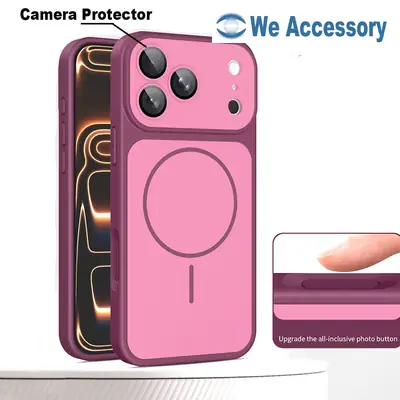
-
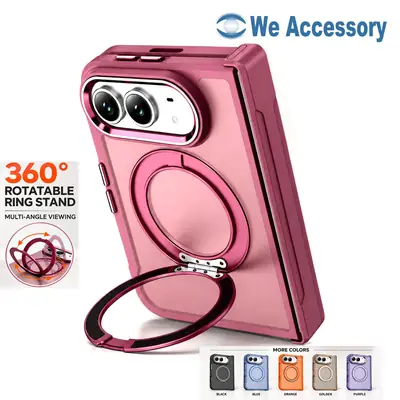 iPhone Duo 360° rotating ring holder case N52 2300 Gauss strong magentic stand case
-
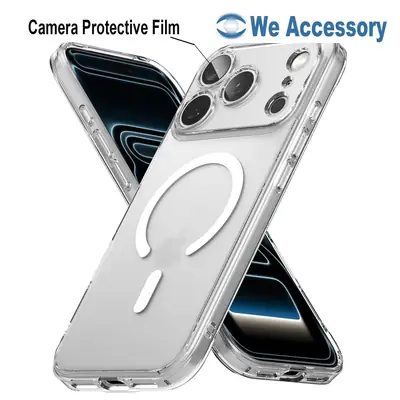 iPhone 18 Pro Clear Magsafe Case build-in camera protector transparent magnetic case
-
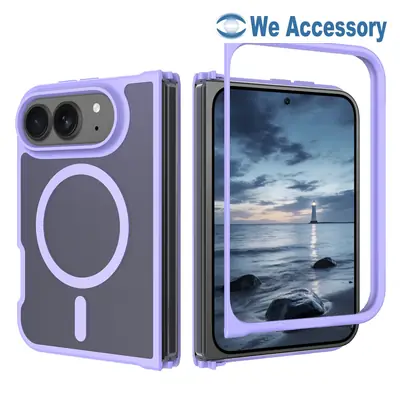 iPhone Duo Matte Magsafe Case Skin-Feeling N52 Strong Magnetic 2in1 Foldable Case
-
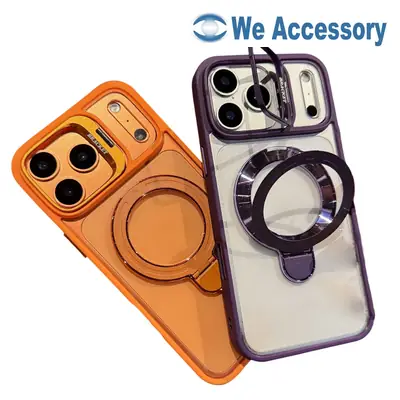 iPhone 18 accessories iPhone 18 Pro 3in1 magnetic holder case camera holder ring holder case
-
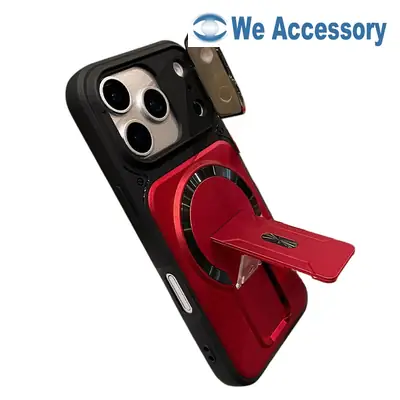 iPhone 18 Pro magsafe holder case glass camera protection and foldable holder case
-
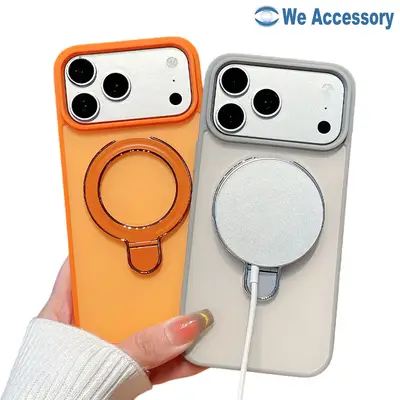 New trend iPhone 18 Pro matte skin-feeling magsafe case ring holder phone holder case
-
 Hot phone accessories iPhone 18 Pro magnetic stand phone case foldable phone holder case
-
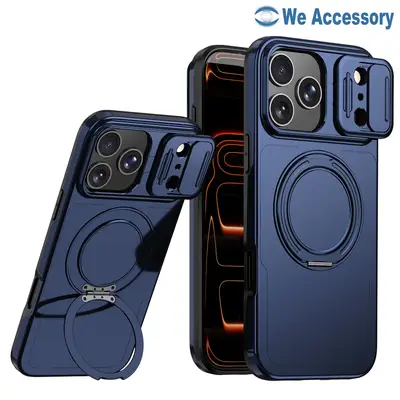 New iPhone 18 Accessories iPhone 18 Pro Ring Holder Case Camera protection Magsafe Case
-
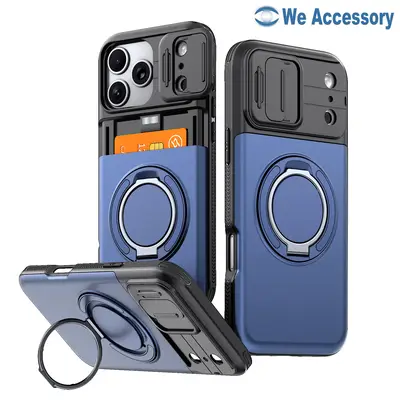 iPhone 18 Pro Max Card Holder Case Magsafe Holder Case Slide Window Camera Protection
-
 New design iPhone 18 Pro TPU+PC Hybrid Suitcase-Style MagSafe Shatterproof Case
-
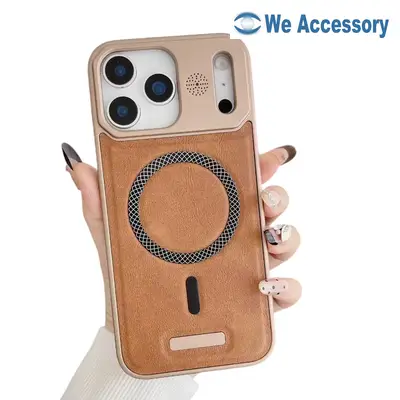 Business demeanor iPhone 18 Pro magsafe leather case 2in1 iphone cover luxury iphone case
-
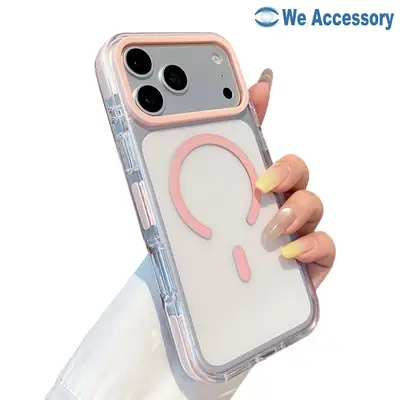 New iPhone Accessories iPhone 18 Pro Clear Magsafe Case double color 2in1 shatterproof case
-
 iPhone Case Distributor Newest iPhone Fold Case TPU+PC 2in1 Full Protective iPhone Case
-
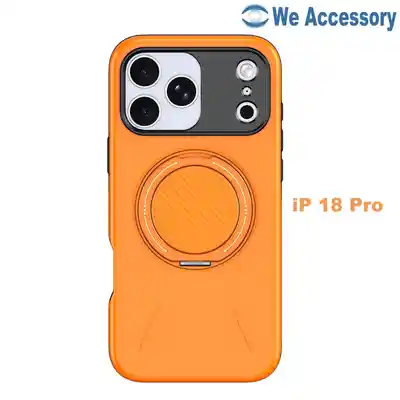 Phone Accessories Company New iPhone 18 Pro Case Magsafe Case with Phone Holder
-
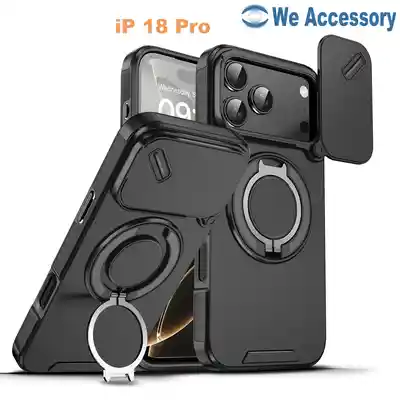 Phone Case Manufacturer New iPhone 18 Pro Max Armor Case Camera Protection and Holer
-
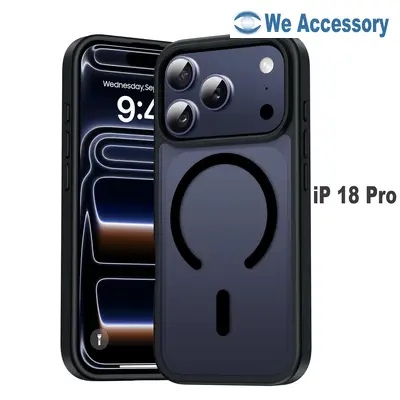 iPhone 18 Accessories Supplier Newest iPhone 18 Pro Case Wholesale Matte magsafe case
-
 iPhone 18 Pro Case Wholesale Colorful Transparent Magsafe Case New iPhone 18 Pro Case
-
 Wholesale iPhone 17 Jelly 2 in 1 Magsafe Case colorful silicone iphone case
-
 Apple iPhone Case Supplier Colorful iPhone 17 electroplated case so cool case
Product Tags
Screen Protector Supplier, Why the Last 800 Pieces Wont Stick
October 29, 2026
A distributor in Gothenburg — I'll call him Anders — sent me a photo in March that I still think about. Eight cartons of tempered glass, opened, fanned out on a laminate floor. His message was four words long: "these don't stick anymore."
The batch was ours. Two years old, still sealed, stored in the mezzanine of a phone repair shop he runs with his brother. Nothing had been opened. Nothing had been dropped. The glass was flat, clean, and completely intact.
It didn't stick because it wasn't supposed to. The adhesive under that glass had been quietly dying since the day it was packed, in a room that hit 41 °C in July and 12 °C in January, and nobody on either side of the transaction had written the date on the carton. He assumed glass. The truth is that a screen protector is a consumable with a clock in it, and the clock starts in our factory, not in his shop.
That single misunderstanding — glass versus adhesive, stock versus shelf life — costs wholesale buyers more money than any quality argument we have with them.

Tempered glass screen protectors in bulk — the adhesive under the glass is what ages
It also gets blamed on the screen protector supplier far more often than it should. So this is the article I've been meaning to write for two years: what actually expires, how fast, how to measure it on a bench with no lab, and how many pieces you should be holding in the first place.
The part that never expires is the part everyone worries about
Start with what tempered glass actually is. A float glass sheet, 0.33 mm or 0.4 mm thick, cut to outline, edges ground, chemically tempered in a potassium salt bath at roughly 400–420 °C, then laminated to an AB glue layer and a PET release liner, printed, packed.
Of those steps, everything except the adhesive is stable for a decade. Tempered glass does not go off. The compressive stress layer doesn't relax at room temperature. The oleophobic coating on the top surface degrades with finger oil and pocket abrasion, not with time in a box. The print doesn't fade in the dark.
The adhesive is a different animal. It's a soft silicone gel, formulated to wet out against a glass surface, flow into micro-scratches, and hold by van der Waals contact rather than by chemical cure. That's exactly why it works without bubbles and peels off without residue. It's also why it ages: a gel that flows is a gel that can dry, oxidise, or absorb whatever is in the air around it.
Anders had a mental model of "sealed carton, therefore shelf-stable". Replace it with this one: the carton is not a time capsule, it is a slow chemical reaction in a cardboard box. The glass inside is a rock. The 0.1–0.25 mm of silicone under it is doing all the work, and it has a working life measured in months, not years.
Three things that eat a carton, and only one of them is temperature
Every conversation I have about stale stock starts with heat and ends somewhere more interesting. Heat matters — but it's rarely alone.
Heat. Above roughly 35 °C the silicone gel softens and starts to migrate into the PET liner. The liner is a release surface; when adhesive creeps into it, the surface energy changes and the peel strength drifts. A warehouse roof space in southern Europe in July is not 25 °C. I've measured 47 °C at head height under an uninsulated metal roof at 4 pm, and 58 °C in a container parked on tarmac. The cartons don't need to be opened for that to do its work.
Humidity. Silicone adhesive is not water-soluble, but the liner and the print layer are not the only surfaces in the pack. Above about 65% relative humidity for months, moisture works its way between the liner and the adhesive at the edges of each sheet, and the first thing you lose is edge tack — which is exactly the tack that keeps a protector from lifting at the corners. Coastal warehouses without dehumidification are the worst offenders, and they are far more common than people expect. A shop two streets from the sea in Naples will age stock twice as fast as one in Madrid, at the same temperature.
Pressure. This one surprises people. Cartons stacked six high for a year put a steady load on the bottom sheets. Silicone creeps under load — slowly, but it creeps, and what you get at the bottom of the stack is a batch with a permanently deformed adhesive layer: thicker at the edges, thin in the middle, which reads as "won't stay down in the centre" once installed. Twelve cartons high in a small stockroom is a real thing I've seen. The bottom row was useless. The top row in the same shipment was perfect.
There's a fourth factor nobody puts on the list: sunlight through a window. UV degrades the print and the liner faster than heat alone. A pallet parked next to a south-facing shop window for a summer is not the same as the same pallet in a dark back room. I've stopped being surprised by which cartons fail.
What "not sticking" actually measures
Here's where I want to get concrete, because "doesn't stick" is a feeling, and feelings don't survive a purchase order negotiation.
Adhesion is measured as peel force: grams per 25 mm of width, pulled at 180°, at a fixed speed. Fresh production for a standard 0.33 mm protector with a mid-grade silicone runs around 250–280 g/25 mm on a clean glass plate. That's the number where the glass grabs, wets out in a few seconds, and resists a fingernail at the edge.
For the table below I'm using our own reference batches and a fairly standard accelerated-aging setup — 40 °C at 75% RH, sampled at intervals and converted back to equivalent room-temperature months. Treat the exact figures as indicative of the shape of the curve, not as a specification for anybody else's product:
| Equivalent age at 25 °C / 60% RH | Peel force (g/25 mm) | What the user experiences |
|---|---|---|
| Fresh (0–3 months) | 250–280 | Grabs immediately, no edge lift, clean re-lift if misaligned |
| 12 months | 220–245 | Still fine; a slightly slower wet-out, occasional bubble that presses out |
| 18 months | 180–210 | Noticeable. Corners lift if the phone is warm; dust finds the edge |
| 24 months | 140–175 | Half the batch works, half comes back. This is where complaints start |
| 30 months | 100–130 | Corners lift within a day on a warm phone; re-press doesn't hold |
| 36 months and beyond | 60–95 | Doesn't wet out at all. Looks like a bad batch. It isn't |
The important line is 24 months. Above it, most technicians won't notice — they install a couple of pieces, they hold, they move on. Below it, the failure is visible within a week, and it almost always appears as a corner lifting rather than a full peel, which is why it gets misdiagnosed as "cheap glass" or "the customer's phone case is pushing it up."
Two smaller things happen in the same window. The liner gets harder to separate — technicians start peeling two sheets at once and cracking them. And the print layer can begin to show micro-crazing at the edge, which looks like a manufacturing defect but is just the print's carrier film losing plasticiser. Neither is dangerous. Both generate returns.
The arithmetic that decides whether you have a stock problem or a buying problem
This is the part I'd put on the wall of every distributor I visit. You don't have a stock level. You have months of cover, and that number — not the piece count — is what determines whether the last third of your stock can still be sold.
Months of cover = pieces in stock ÷ average pieces sold per month.
Anders, before that March photo, was running 3,200 pieces of mixed 0.33 mm stock against roughly 370 pieces a month across his shop and two wholesale accounts. That's 8.6 months of cover on paper. But his mix wasn't even: the flagship models turned at 500 a month, and a tail of older models — 12, 13, 14, some Samsung A-series — moved at 20–30 pieces a month while occupying 40% of his shelf.
Let's put money on it, using placeholder unit costs so you can substitute your own. Say landed cost is $0.42 per piece for the mainstream models and $0.48 for the long tail.
| Group | Pieces | Monthly sell | Cover | Verdict |
|---|---|---|---|---|
| Current flagship | 1,400 | 500 | 2.8 months | Healthy |
| One generation back | 1,000 | 210 | 4.8 months | Acceptable |
| Two generations back | 500 | 45 | 11.1 months | Watch it |
| Long tail (12/13/A-series) | 300 | 18 | 16.7 months | Problem |
Sixteen months of cover on the tail doesn't sound catastrophic — until you add the time the goods already spent in transit and in our warehouse before it reached him, which for a sea shipment plus a month of storage can easily be three to four months. His tail stock was, in real terms, at 20+ months of adhesive age on arrival. The 800 pieces he was complaining about in March were exactly that tail, ordered in a well-intentioned "let's not run out of the old models" moment two years earlier.
Now the cost of the mistake, again with placeholder numbers:
- 800 pieces at $0.48 landed = $384 of cash sitting still
- Discounted to clear at $0.28 = $160 recovered, i.e. $224 written off
- Plus the labour of sorting, re-packing, and the two customer complaints that came in before he realised it was the whole batch
Two hundred and twenty-four dollars is not a business-threatening number. Do it across four model families, twice a year, with three branch shops, and it becomes a five-figure annual leak that never appears in any report, because it's spread across discount lines and "stock adjustment" entries.
Where over-ordering actually comes from
Nobody orders 17 months of a slow model on purpose. It comes from three places, and all three are fixable without changing supplier.
Minimum order quantities that force rounding up. If the per-model MOQ is 100 pieces and your tail sells 18 a month, one order is five and a half months of cover — before freight time. The fix is to order the tail by family rather than by model: one long-tail run every quarter, all the old models in one PO, so the MOQ applies to the group instead of to each line.
Price breaks that reward bulk. A 20% discount at 5,000 pieces is real money, and it's rational to chase it. It's only irrational if the extra 3,000 pieces outlive their adhesive. The honest way to decide: take the discount saving, subtract the expected write-off of the piece volume you can't sell inside 12 months, and see which number is bigger. For fast movers the discount usually wins. For the tail it usually loses.
The fear of running out during a launch. This one is legitimate and it's the reason I never argue with a launch buffer — just with a launch buffer applied to models that aren't launching. A new iPhone gets 8–12 weeks of cover and nobody blinks. iPhone 12 does not.
A warehouse audit you can finish before lunch
When a distributor tells me his stock "went bad", I ask for five numbers and a photo. Not a lab report. Five numbers.
One: the temperature under your roof at 3 pm in the hottest week of last summer. Not the average, not the thermostat in the office. A $12 logging thermometer left on top of the racking for a week tells you more than a year of intuition. If it reads above 35 °C for more than a few hours a day, everything on that rack ages roughly twice as fast as the label claims.
Two: relative humidity in the same spot. Above 65% sustained, edge tack is going first and you won't know until February.
Three: how many cartons high the stack goes. If the answer is more than four or five, the bottom row is under load it wasn't designed for. Rotate the stack when you rotate the stock.
Four: the oldest production date still on your shelf. Not the oldest model — the oldest date. If you can't answer this because the cartons don't carry one, that's the finding. Everything else is secondary.
Five: monthly sell-through per model family for the last quarter. Not the annual total. The last 90 days. Tail models die quietly, and the average hides it.
Then one photo: the racking itself. Nine times out of ten the photo explains the numbers. Cartons on the floor against a wall that gets afternoon sun. Cartons under a skylight. Cartons next to the roller door that opens onto a loading bay all day in August. Cartons stacked against the compressor of the shop's air conditioning.
None of these are negligence. They're just what happens when the warehouse is also the repair bench and the packing table and the place where the courier drops off at 6 pm. The point of the audit isn't blame. It's that adhesive ageing is a slow, invisible process and you cannot manage what you haven't measured once.
The four bench tests that separate "bad glass" from "old stock"
You don't need a tensile machine. You need a kitchen scale, a stopwatch, a clean phone, and 20 minutes.

A protector that grabs in the first 60 seconds is fresh stock; one that keeps sliding is not
The peel test with a luggage scale. Take a fresh protector and a suspect one. Apply both to two clean, identical glass plates or dead phone screens. Wait 60 seconds. Hook a digital luggage scale to a corner of the release tab and pull steadily at roughly 45° while watching the peak reading. Fresh stock will peak somewhere in the 200–300 g range on a 25 mm-wide strip; a strip cut to 10 mm will read proportionally lower, so keep the width constant between the two samples or the comparison means nothing. It's crude. It's also repeatable enough to tell 18-month stock from 30-month stock every time.
The 60-second tack check. Press a protector down, start a timer, and try to slide it sideways with a thumb at 10, 30 and 60 seconds. Fresh material stops moving almost immediately. Aged material keeps sliding — the gel has stopped flowing, so it never fully wets out. This is the single test I trust most, and it takes under two minutes.
The cold-phone check. Apply to a phone that has been in a cold room (a fridge is fine, 5–8 °C) for 20 minutes. Cold reduces the gel's ability to conform, and marginal adhesive fails there first. If it holds on a cold phone for a day, it will hold on a warm one.
The 24-hour lift measurement. Install, leave at room temperature for 24 hours, then look at the corners with a torch at a shallow angle. Any corner lift under 0.2 mm shows as a light line. Photograph it. Two photos — one at install, one at 24 hours — end an argument faster than any email.
One more, if you're testing a batch you already suspect: the liner pull. Peel the backing sheet off five protectors in a row and count how often you take a second sheet with it. Fresh liner releases cleanly. Aged liner, or liner that has absorbed adhesive, grabs. Three out of five is a batch that will slow your technicians down and generate broken pieces at the counter, even before the tack question.
How many pieces you should actually hold
There's no universal number, but there is a defensible method, and it's the same one we use when a buyer asks us to plan his year.
Sort your catalogue into three tiers by sell-through, not by how interesting the model is.
Tier one — the model that launched in the last 12 months. Hold 8–12 weeks. This is where stockouts hurt most and where the price of being wrong is highest. Over-ordering here is a much smaller sin than under-ordering.
Tier two — one generation back. Hold 12–16 weeks. Demand is predictable, the price is stable, and the models don't change shape any more.
Tier three — everything older. Hold 4–8 weeks, ordered as a family run rather than per model. The whole point of this tier is to have the part on hand for the repair that walks in, not to be a warehouse for phones nobody sells any more.
Then apply the shelf-life ceiling: no tier should exceed 12 months of cover net of transit and factory age, and tier three should stay under 9. If your supplier ships from stock that's already three months old and the sea freight is four weeks, your real ceiling is roughly seven months of selling time on the tail, not twelve.
That number sounds uncomfortably tight the first time you apply it. It's the number that stops you writing off 800 pieces two years later.
The family-run trick deserves its own paragraph, because it's the single most useful ordering habit I've seen a distributor adopt. Instead of ordering 100 pieces of each of eleven old models — which is eleven MOQ events and eleven ageing clocks — you pool them: one quarterly order of 1,100 pieces spread across the eleven models in whatever ratio last quarter's sell-through suggests. The price per piece lands close to the eleven-model aggregate tier, the MOQ problem disappears, and the whole pool ages together with one date on the carton instead of eleven dates.
What a screen protector supplier owes you on paper
This is the section I'd most like buyers to take to their next negotiation, because almost nobody asks for it and it costs nothing to give.
A production date. Not a best-before date, not a batch number that only the factory can decode — a printed date on the outer carton, legible without opening it. If a screen protector supplier can't tell you the month a carton was made, you cannot run FIFO, and you will eventually ship two-year-old stock to a customer who installs it in a warm car and calls you a week later.
A lot code that ties to the adhesive batch. If you're buying 5,000 pieces a quarter, you want the option to say "the March lot is failing, hold the June one" rather than quarantining everything with the model number on it.
The adhesive grade, named. Silicone is not one thing: there are soft high-tack grades that flow fast and age quicker, and firmer grades that need more pressure at install and hold their tack for longer. Neither is "better" — they answer different questions. What's not acceptable is a supplier who can't tell you which one is in the box.
A storage clause in the PO. One line: store below 25 °C, below 60% RH, flat, maximum four cartons high, and consume within 18 months of production. Putting it in the document doesn't make it happen, but it makes it discussable when something goes wrong.
And, if you buy in volume, a shelf-life declaration on the invoice. It's the difference between a commercial relationship and a series of surprises.
Where "bad quality" is really "bad storage" — and how to tell
I want to be fair to both sides here, because in my experience the split runs roughly two-thirds storage and one-third genuine supply problems, and the two look identical from the counter.
Genuine manufacturing defects tend to be consistent within a lot and random across models: every piece from one production run fails the same way, the neighbouring lot in the same shipment is fine, and the failure is visible under a light — bubbles, contamination specks, a visible glue line, print misregistration. Those are our problem and we replace the lot.
Ageing looks different in three ways. It spans lots — stock from three different shipments all behaves the same way, because they've all been sitting in the same warm room. It correlates with storage position — the bottom cartons or the ones near the window are worse than the ones in the middle. And it fails gradually — technicians report that it "used to be fine" a few months ago, which is exactly what a tack curve looks like.
If you can show me those three patterns, I'll still replace what's clearly our fault, but the honest conversation is about the room, not the furnace. And that conversation is worth having: a $300 dehumidifier and a $40 rack reorganisation fix a problem that no supplier can fix from 8,000 km away.
The reverse also happens, and I've been on the wrong side of it. We shipped a lot where the liner had been stored near a loading door during a humid week before packing. It passed our own bench test at the time and failed six weeks later in a customer's warehouse. That one was ours, we replaced it, and it's why we now date cartons at packing rather than at shipping.
The claims worth being suspicious of
Two things get said to buyers in this category that don't survive contact with a test bench.
"Three-year shelf life." For bare glass, sure. For a laminated protector with a silicone adhesive layer, three years is a marketing number unless it's been demonstrated with an accelerated-ageing protocol and a peel curve — and if a supplier quotes three years, the fair follow-up is "at what temperature and humidity, and can I see the curve." Most can't produce one. Ours says 18 months at 25 °C and 60% RH in the original carton, and I'd rather lose the line in a comparison table than win it and lose the customer.
"Our glue never dries out." Everything dries out. The question is how fast, and under what conditions. A screen protector supplier promising permanence is describing chemistry that doesn't exist — silicone holds by contact, not by cure, and contact is a function of how soft the gel still is.
A third, more subtle one: "it's the same material as the brand-name protector." It might genuinely be the same float glass and the same AB glue grade. What is almost never the same is the age at which you receive it. A premium brand turning stock every six weeks and a wholesaler turning it every eighteen months can sell you identical chemistry at identical prices and deliver completely different experiences at the counter.
What happens at the counter, which is where all of this lands
The technician is the last person in this chain and the first to see the failure. He's got a customer's phone in a clamp, a queue of three more, and a protector that won't sit down at the corner. He does what anyone would do: presses harder, tries a second piece, then a third, and by the fourth he's telling the customer the batch is bad.
He's right about the batch and wrong about the cause, and the message that travels back up the chain is "supplier quality dropped." Three weeks later the distributor is asking me for a root cause and I'm asking for a warehouse temperature, and neither of us has the number, so we settle on a credit and repeat the cycle next season.
The fix is almost boring. Date the cartons. Rotate the stock. Keep the room under 25 °C and the stack under four high. Buy the tail by family and keep it to single-digit months of cover. Test one protector with a luggage scale before you commit a batch to a technician's queue.
None of that is a technology problem. It's a records problem, and records are cheap.
A short note on what we changed on our side
Two things, both small, both after Anders.
Every carton that leaves our packing line now carries a printed production month on the outer label, alongside the model and quantity. It costs us a print run and a few seconds a carton. It has ended more arguments in a year than any specification sheet we've ever written.
And we stopped quoting "wholesale stock" as one thing. When a buyer orders a tail-model run, we tell him the production date of what we have, and if it's over six months old we say so before the invoice, not after the complaint. Sometimes that means he waits two weeks for a fresh run instead of taking what's on the shelf. Sometimes he takes the older stock at a lower price with his eyes open, which is a completely different transaction from being surprised in March.
That's the whole thesis, really. A protector that doesn't stick isn't a quality failure, it's an unmeasured one. Measure the age, measure the room, measure the sell-through, and the failure stops being mysterious — and stops being anybody's fault in particular.
If you're sitting on stock you're not sure about, the fastest thing you can do is the 60-second tack check on five pieces from three different cartons. If they slide at a minute, they're old; if they grab, the problem is somewhere else and worth chasing properly. Either way you'll know by lunchtime, which is more than Anders knew for two years.
Stale stock versus a stockout: which mistake is cheaper
Buyers defend over-ordering with a reasonable argument: a stockout costs a sale, while old stock only costs a discount. That's half the arithmetic. Let me do the other half with numbers you can argue with.
A stockout on a tier-one model, in a repair shop doing 40 installs a week, means the customer gets an apology and the shop loses the protector margin — call it $6–9 of gross profit on that visit — plus a small risk that he buys the next one somewhere else. Say four lost installs a month on a hot model: roughly $30 of margin.
Now the stale batch. 800 pieces, $0.48 landed, cleared at $0.28: $160 recovered, $224 lost, spread over the two months you spend admitting it. Add the technician time on failed installs — four attempts where one should do, across maybe 60 visits — and the goodwill cost of three customers who now think your shop sells cheap glass.
The two are not symmetrical, and they don't have to be. The reason buyers treat them as symmetrical is that a stockout is loud and immediate while a write-off is quiet and delayed by eighteen months. The decision rule that resolves it: protect tier one with generous cover, and starve tier three. Almost every distributor I meet has the opposite habit — a deep tail catalogue because it feels professional, and thin flagship cover because flagships are expensive per piece.
There's a second-order effect worth naming. A tail model that sells 18 a month rarely comes back as a lost sale when it's out of stock; the customer accepts "we'd have to order that one." A flagship model that's out of stock loses the visit. The sell-through data tells you which is which, and it's the same data you need to fix the ageing problem. One report, two decisions.
The carton nobody audits: the one open at the bench
Every conversation about shelf life is about the warehouse. The bigger loss is usually twenty steps away, on the technician's bench.
A carton of 200 protectors gets opened on a Monday, four are used, and the rest sit there — open, unsealed, under a bench lamp, in a room that is warmer than the stockroom because there's a heat gun and two people in it. Over three months that carton experiences more heat cycles and more humidity swings than the sealed cartons in the back will see in a year, and nobody counts it as stock because it's "in use."
Two habits fix most of it. Keep bench stock to a week's use — a small tray, refilled from the sealed carton, not the whole 200 on the shelf. And re-seal or zip the carton after each pull; the liner edge is where moisture gets in first, and an open carton in a humid shop is a slow leak.
The third habit is a rule about dates rather than storage: when a technician opens a new carton, the production month goes on the tray with a marker. It takes four seconds. It means that when a corner starts lifting three weeks later, you can check whether the tray is old before you blame the screen protector supplier, the phone, or the customer's case.
I've seen shops solve this with a labelled tub and a whiteboard. I've also seen shops solve it by buying smaller packs more often, which costs a little more per piece and a lot less per complaint. Both work. Ignoring it doesn't.
If you already have a suspect batch
You've run the tack check, the pieces slide at a minute, and the carton is dated 26 months ago. Nobody is going to refund you eighteen months late, and arguing about it won't move the 800 pieces. Triage it instead, in this order.
Use it where the phone is cold and the customer won't inspect. Not a joke and not a recommendation to deceive anyone — some installations are low-risk by nature: a loaner phone, a trade-in refurb, a device going straight into a case. If the piece holds for 24 hours in that use, it's still a working protector. Test five first.
Convert it to a promotional giveaway. A free protector on a screen repair costs you $0.48 of already-sunk cost and buys goodwill that a discount wouldn't. Frame it as a limited offer and don't hide the fact that it's older stock — the honesty costs nothing and protects the brand.
Repack for a channel with faster turnover. A market stall or an online seller moving 500 pieces a month will consume the batch inside its remaining life. Sell at a discount to a channel that will actually turn it, not to a shop that will put it on a shelf for a year.
Write it off properly. If none of the above fits, take the hit in one line of the accounts and move on. The expensive version of a stale batch isn't the write-off — it's three more months of trying to sell it, during which it generates returns that damage a relationship worth more than 800 protectors.
The one thing not to do is quietly ship it into a bulk order and hope. That's the shortest path from a stock problem to a reputation problem, and it's the specific behaviour that makes buyers cynical about every screen protector supplier they deal with afterwards.
A small table I keep coming back to
Six variables decide whether a carton of glass is still good when it reaches a customer, and only one of them is the factory's.
| Variable | Who controls it | What it costs to fix |
|---|---|---|
| Adhesive grade and initial tack | Supplier | Nothing — ask which grade is in the box |
| Age at shipping | Supplier | Nothing — ask for the production month |
| Transit time and container heat | Freight choice | Air vs sea, a few cents per piece |
| Storage temperature and humidity | Distributor | A dehumidifier, an insulated roof, a rack move |
| Stack height and sun exposure | Distributor | An hour of reorganisation |
| Months of cover on the tail | Buying habit | A quarterly family run instead of per-model orders |
Five of the six are free or nearly free. That's the part I wish someone had told Anders in 2024, and the part I now put in the first email to any new buyer who orders a mixed-model run.
— William Shaw, Head of Sales at We Accessory
We Accessory has been supplying phone cases and tempered glass screen protectors to wholesalers, repair chains and private-label brands since 2012. If you want the production date on a carton of glass before you commit to it, ask us — we'll tell you what we have and when it was made. WhatsApp +86-15919800304 · [email protected] · weaccessory.com
Share:


Why Choose We Accessory
12+
Years Experience
2000+
Product SKUs
50+
Countries Served
OEM
& ODM Service
2-4
Day Delivery
Professional Phone Accessories Wholesale Supplier
We Accessory is a trusted phone accessories wholesale supplier since 2012. We specialize in phone case, tempered glass screen protector, USB cable, charger and more mobile accessories wholesale, serving customers in 50+ countries worldwide.
Frequently Asked Questions
Where is We Accessory located?
We are located in Shenzhen
What products do you offer?
We offer phone cases, screen protectors, USB cables, chargers and more mobile accessories for all major brands.
Do you offer OEM/ODM services?
Yes, full OEM and ODM customization with your logo, packaging and designs.
What is your shipping time?
In-stock items ship in 2-4 business days via DHL/UPS/FedEx. Custom orders 5-7 days production plus shipping.
We Accessory (WeAccessory.com)
Address:2F, Block A2, Nanchang Industrial area, Xixiang Town,Bao'an District, Shenzhen
Tel: +86-755-36818832
Mobile/Whatsapp: +86-15919800304
Email: [email protected]
Microsoft Teams: william.shaw186
Product Tags
Contact us Now!
Please send us your Email address if you'd like some products



Copyright © 2012-2026 Shenzhen Western Electronic Co., Ltd All Rights Reserved. Sitemap | Best Phone Case Wholesale, Tempered Glass Screen Protector, USB Charger, Cable, other Mobile Accessories Wholesale