English
 Français
 Deutsch
 Español
 Italiano
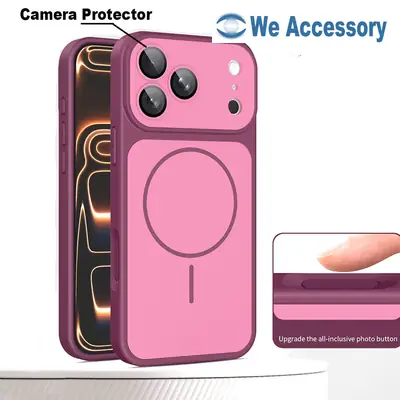
iPhone 18 Pro Max Skin-feeling magsafe case Matte case with build-in camera protection

Recommend Products
-
-
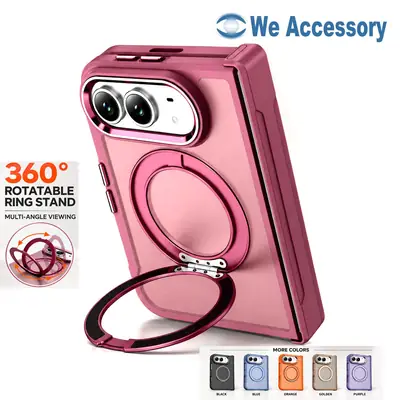 iPhone Duo 360° rotating ring holder case N52 2300 Gauss strong magentic stand case
 -
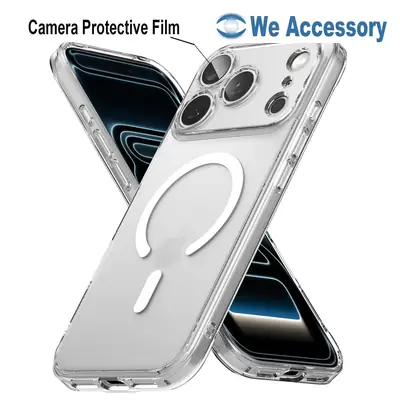 iPhone 18 Pro Clear Magsafe Case build-in camera protector transparent magnetic case
 -
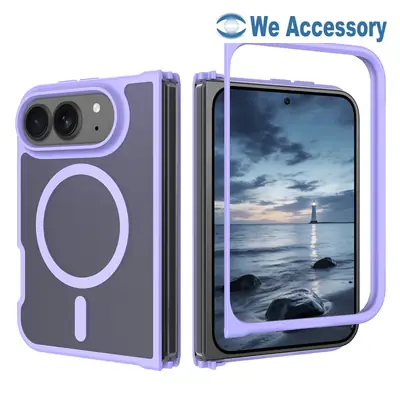 iPhone Duo Matte Magsafe Case Skin-Feeling N52 Strong Magnetic 2in1 Foldable Case
-
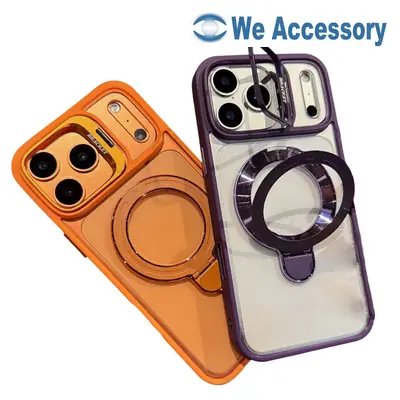 iPhone 18 accessories iPhone 18 Pro 3in1 magnetic holder case camera holder ring holder case
 -
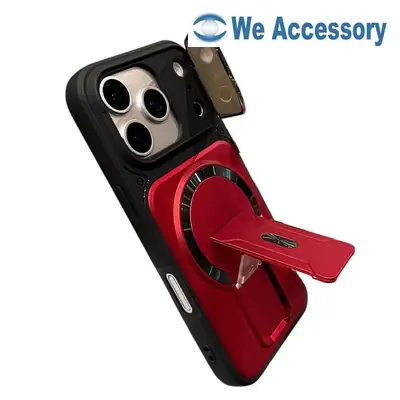 iPhone 18 Pro magsafe holder case glass camera protection and foldable holder case
 -
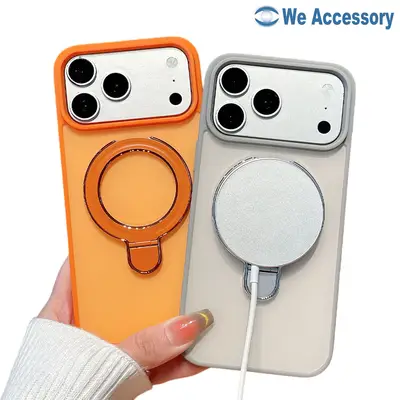 New trend iPhone 18 Pro matte skin-feeling magsafe case ring holder phone holder case
 -
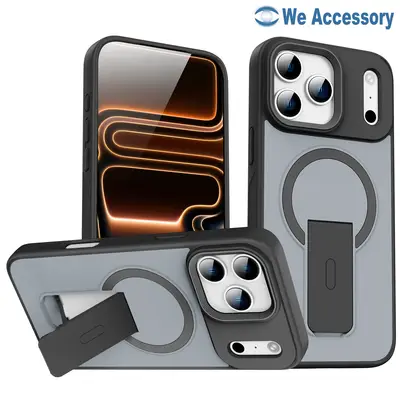 Hot phone accessories iPhone 18 Pro magnetic stand phone case foldable phone holder case
-
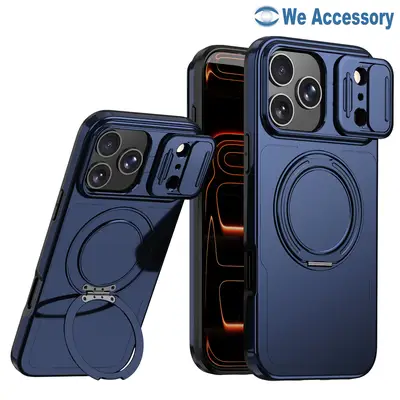 New iPhone 18 Accessories iPhone 18 Pro Ring Holder Case Camera protection Magsafe Case
 -
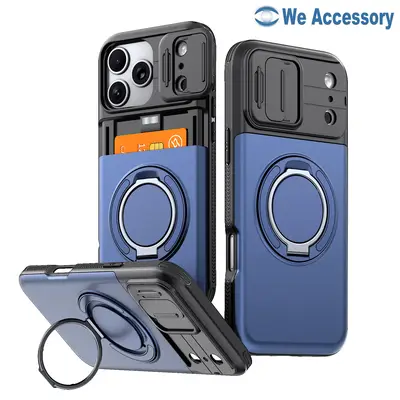 iPhone 18 Pro Max Card Holder Case Magsafe Holder Case Slide Window Camera Protection
 -
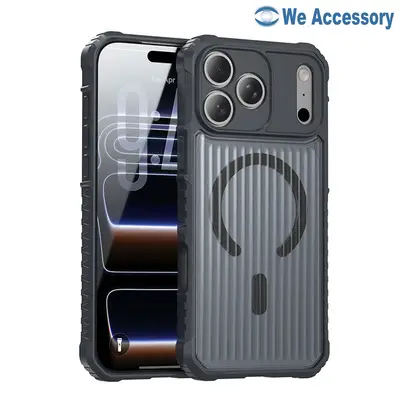 New design iPhone 18 Pro TPU+PC Hybrid Suitcase-Style MagSafe Shatterproof Case
 -
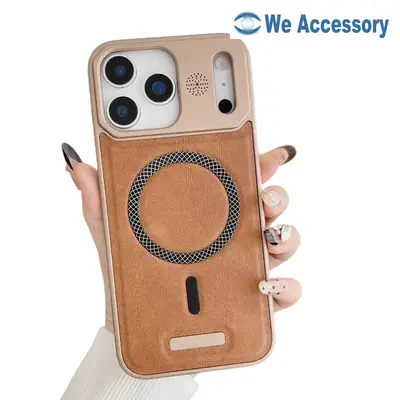 Business demeanor iPhone 18 Pro magsafe leather case 2in1 iphone cover luxury iphone case
-
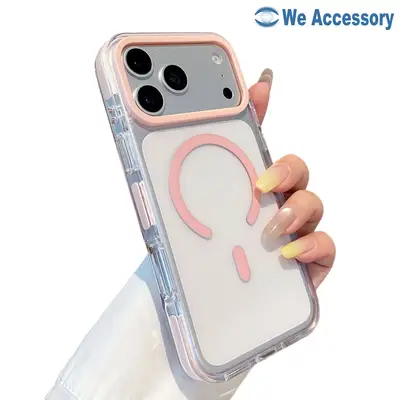 New iPhone Accessories iPhone 18 Pro Clear Magsafe Case double color 2in1 shatterproof case
 -
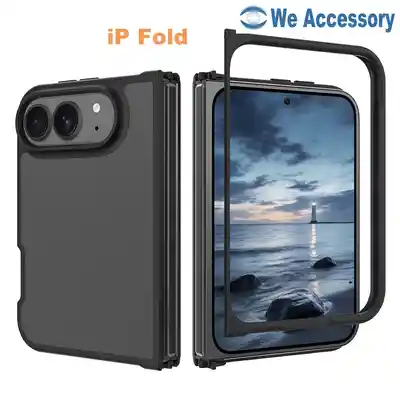 iPhone Case Distributor Newest iPhone Fold Case TPU+PC 2in1 Full Protective iPhone Case
 -
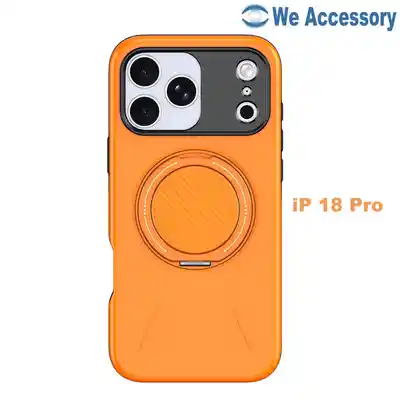 Phone Accessories Company New iPhone 18 Pro Case Magsafe Case with Phone Holder
 -
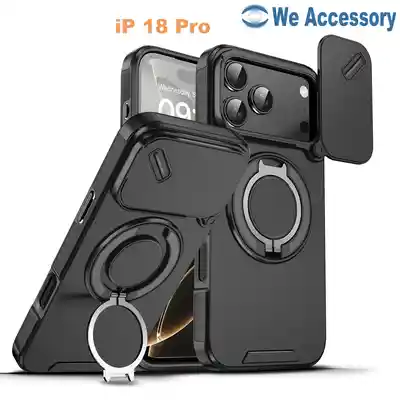 Phone Case Manufacturer New iPhone 18 Pro Max Armor Case Camera Protection and Holer
-
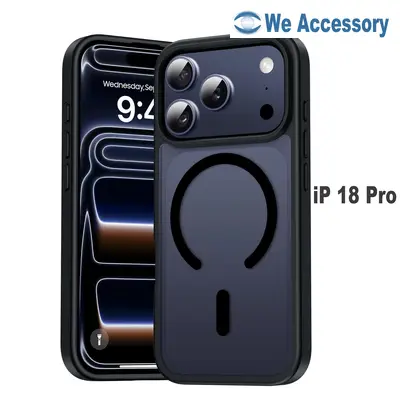 iPhone 18 Accessories Supplier Newest iPhone 18 Pro Case Wholesale Matte magsafe case
 -
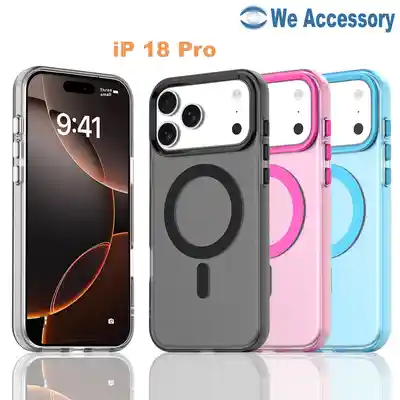 iPhone 18 Pro Case Wholesale Colorful Transparent Magsafe Case New iPhone 18 Pro Case
 -
 Wholesale iPhone 17 Jelly 2 in 1 Magsafe Case colorful silicone iphone case
 -
 Apple iPhone Case Supplier Colorful iPhone 17 electroplated case so cool case
Product Tags
Screen Protector Installation, The 90 Seconds That Decide Whether Your Customers Come Back
August 20, 2026
I got a call from a guy in Manchester last spring. Chris runs a repair kiosk in a shopping arcade — six meters of counter, tools on the wall, the usual setup. He'd been selling tempered glass protectors for years and his revenue was fine. But something was eating at him: his return rate. Roughly one in eight protectors came back. Not because the glass was bad. Because the customer had tried to install it themselves and butchered it.
The pattern was always the same. Someone buys a protector at five in the afternoon, takes it home, follows the card that came in the box, and ends up with a dust speck trapped under the glass. Or a bubble the size of a pea. Or the whole thing three millimeters off-center. The next day they're back at the kiosk, embarrassed and slightly annoyed, asking for a replacement. Chris hands over a new one. Sometimes he installs it for them, sometimes he doesn't. Either way he's lost the wholesale cost of the unit, spent five minutes at the counter, and taught the customer a lesson: screen protectors are fiddly, and this brand is rubbish.
Nobody in that transaction was angry about the glass. The glass was fine — it had passed six QC checks before it shipped. The install was the problem. And the install is the product.
That's the argument of this article, and it's not a cute one. In the wholesale world we spend all our time talking about glass thickness, hardness ratings, coating quality, price per unit. All of it matters. But the moment of truth for your customer's customer is the ninety seconds between peeling the liner and pressing the glass down. Get that right and the protector disappears into the phone and nobody ever thinks about it again. Get it wrong and you've manufactured a return, a refund, and a bad review out of a perfectly good piece of glass.
I've spent twelve years in this industry, and I keep watching distributors lose real money on a problem they don't think they have. They blame the product when the numbers say otherwise. This guide is about what actually goes wrong during installation, what a failed install costs every layer of the chain, and the fixes — alignment frames, better kits, trained hands — that turn a 10% return problem into a rounding error.
The glass is never the problem. The ninety seconds are.
Here's a number that should make every distributor sit up: in markets where customers install protectors at home, return rates of eight to twelve percent are normal. Not for budget glass — for all glass. Walk into any phone shop in the UK or Germany and ask how many protectors come back "because it didn't fit" or "there's a bubble." They'll shrug and say it's just how it is.
Now ask a shop that installs at the counter, the way they do across Southeast Asia and Latin America, and you get a different number: under two percent. Same glass. Same phone models. Same price points. The only variable is who does the installing.
Let that sink in, because it reframes the entire screen protector business. The product that leaves your warehouse is a piece of glass with adhesive on one side. The product your customer actually experiences is an install that either worked or didn't. Between those two things sits a gap that costs the industry millions in refunds, replacements, and lost repeat business every year — and almost nobody prices it into their margins or fixes it at the source.
The good news is that this gap is fixable. It's not a materials problem, it's a process problem. And process problems have mechanical solutions: better packaging, better tools in the box, better instructions, better training. Every one of those is cheap. Every one of them compounds.
What actually goes wrong, and why
Before you can fix install failures you have to understand the mechanics of them. There are five failure modes, and once you know what they are you'll start seeing them in every complaint email you've ever received.
Dust under the glass. This is the big one — probably half of all failed installs come down to a single speck. Here's the physics: a human hair is about seventy microns thick. A dust particle you can't even see with the naked eye is fifty microns or more. The adhesive layer on a standard protector is roughly twenty-five to forty microns. So a particle smaller than the width of a hair is physically bigger than the glue gap — the glass simply cannot seat flat over it. Result: a raised bump, a visible halo around it, and an air pocket that refuses to go away no matter how hard you press. This is why the "just clean it first" advice fails people: by the time you can see the dust, the damage is done, and wiping a screen with a dry cloth in a dusty room can actively attract new particles through static. Phone screens are electrostatic. They pull dust out of the air like a magnet.Off-center alignment. The protector is a hair smaller than the display area, and that hair of tolerance is where everything goes wrong. People try to eyeball the position, they hesitate, they adjust — and with every lift and re-press, they risk pulling up the edge and trapping a new speck of dust. The result is a protector that's visibly crooked: the cutout for the earpiece doesn't line up, the bottom edge overhangs the curve, and the phone looks broken even though it isn't.Bubbles that won't squeeze out. Two different things get called bubbles. The first is trapped air at the edge, which happens when the glass doesn't fully contact the curved edge of the screen — that's a geometry issue, more common on phones with curved glass. The second is a pocket in the middle that looks like a small blister. That one is usually dust or a fingerprint on the adhesive. A fingerprint is eight microns of oil — invisible when you're rushing, catastrophic when you press the glass down. No amount of squeegeeing fixes a fingerprint.White edges. The protector adheres fine in the middle but the edges never seat, leaving a frosted white rim around the perimeter. This is the adhesive being too thin for the screen's curve, or the glass being cut to the wrong radius. It looks like a manufacturing defect, and customers treat it as one. Often it's actually an install problem — the edges need sustained, firm pressure after the center seats, and most people stop pressing too early.Cracked during install. The protector snaps while being applied, usually because it got flexed. Tempered glass is strong against direct impact and catastrophically weak against bending — it's a compressive layer on a brittle core, bend it and it's done. People who hold the protector by the corners and bow it while peeling the liner are asking for a crack. This is the failure mode that produces the angriest customers, because to them the glass "broke while I was being careful."Here's the thing about all five: they're predictable, they're mechanical, and they're almost entirely preventable with the right tools and the right process. Which is exactly why the fix doesn't come from better glass. It comes from better everything else.
What a failed install actually costs you
Let's put real money on this, because "returns are annoying" isn't a business case. I'm going to use numbers a small shop can recognize, then scale them up.
A standard 9H protector costs a shop roughly one to two dollars wholesale. The shop sells it at ten to fifteen. If a customer fails the install at home and comes back for a swap, the shop has now spent:
| Cost item | Amount |
|---|---|
| Replacement unit given free | $1.00 – 2.00 |
| Staff time at the counter (5–10 min) | $1.50 – 3.00 |
| The old unit is trash (can't resell a peeled protector) | $0 |
| Refund, if the customer insists (and some will) | $10 – 15 |
| Direct cost of one failed install | $3 – 5 minimum, up to $15+ with a refund |
That's the direct cost, and it's bad enough. But the indirect cost is where it gets ugly. A customer who burns a protector at home doesn't just cost you a replacement. They cost you the next sale. Data from shops I work with suggests a customer who fails an install is roughly half as likely to buy another protector from the same place within a year — they've decided protectors "don't work" and they'll run their phone naked rather than try again. And if they're the type to leave a review, you're not just losing one customer, you're renting a megaphone to tell everyone in your city that your product is rubbish.
Now scale it. A distributor supplies two hundred shops. Each shop sells thirty protectors a month. That's six thousand units a month, and at a ten percent DIY failure rate, six hundred failed installs. Even at the conservative end — say the shop swallows three dollars per failure, no refunds — that's eighteen hundred dollars a month of pure, invisible waste across the network. Annually, over twenty thousand dollars. That's not a rounding error. That's a second employee's salary.
And remember: not one of those failures was the glass's fault. Every one of them was preventable.
The alignment frame changed everything
If I had to name the single most underrated invention in this industry in the last decade, it's the alignment frame. It's a piece of injection-molded plastic that costs pennies. And it quietly deleted the hardest part of the install.
Here's the problem the frame solves: humans are terrible at centering things. Give someone a protector and ask them to line it up by eye and their hands will drift, they'll correct, they'll drift again, and every correction risks pulling up the adhesive and inviting dust. The frame removes the decision entirely. It clips onto the phone — usually hooking over the top edge and the sides — and the protector drops into a guide slot. You can't misalign it, because the geometry won't let you. Center, every time, in one motion.
I've seen the numbers from enough distributors to trust them: switching from a naked protector in a box to a protector with an alignment frame cuts installation complaints by fifty to sixty percent on average. On the models where the frame fits well — current iPhones and Samsung flagships — the effect is even bigger, because those are exactly the phones where customers are most nervous about messing it up.
There are two main designs, and you should know the difference because not all frames are created equal:
Clip-style frames hook onto the front of the phone and hold the protector in a fixed position while you press. They're simple, they're cheap, and they work well on flat screens. The weak point is that they don't help with the actual pressing — you still have to seat the glass from the center outward, and a frame doesn't stop dust.Tray-style frames are more elaborate — the phone sits in a base, and the protector rides in a lid that you lower into place like a book closing. They slow the process down a little, but they control the descent of the glass, which means less chance of trapping air, and they're noticeably better on curved screens. This is the design that made "bubble-free installation" a marketing claim you can actually trust.A bad frame is worse than no frame, and this is worth saying because the market is full of them. If the plastic is flimsy, it flexes while you press and the alignment drifts anyway. If the tolerance is wrong — frame cut slightly too large, or molded for a different screen revision — the protector sits crooked inside the guide and you've automated a mistake. Test your frames at the sample stage, on the actual phone model, before you commit to thousands of units. Hold the frame in your hand and flex it. If it bends under thumb pressure, it's not a frame, it's a suggestion.
The box is a system, not packaging
Here's where I get slightly evangelical, because this is the fix that costs almost nothing and pays for itself immediately. The box your protector ships in is not packaging. It's the installation system your customer is about to use. Every component in it either helps the install succeed or forces the customer to improvise.
A complete installation kit is six things, and they each do a specific job:
| Kit component | What it's for | Rough cost |
|---|---|---|
| Alcohol wipe | Breaks down fingerprints and oils that would show up as bubbles | $0.004 |
| Dry microfiber cloth | Lifts the residue the wipe loosens, without leaving lint | $0.008 |
| Dust removal sticker | Picks up the invisible specks that are bigger than the glue gap | $0.003 |
| Alignment frame | Removes the centering decision entirely | $0.01 – 0.02 |
| Instruction card | Step-by-step, with pictures, in the local language | $0.005 |
| QR code (on the card) | Links to a 60-second installation video | $0 |
Add it up: three to five cents per unit, roughly, to kit a protector properly. In our experience, distributors who add a QR-linked video to their kits see support inquiries drop by around forty percent, because the customer's first instinct when something goes wrong is no longer "call the shop," it's "watch the video again." Three cents to cut your after-sales load by forty percent. That's the best ROI in the entire accessories industry, and almost nobody does it.
The instruction card deserves a special mention, because it's where so many brands quietly sabotage themselves. A card that lists steps in four languages, each sentence twelve words long, with no pictures, might as well be a court summons. The cards that actually work show one action per image, keep captions under eight words, and put the QR code at the top, not the bottom. And if you sell into Germany or France, the card must be in German or French — not English with a shrug. I have watched a distributor's complaint rate halve on the same product purely by translating and redesigning the instruction card.
The sixty-second install, the way it's actually done
For the section of this article that shops will print and tape to the counter, here's the process that professionals use, in order, with the reasons why each step exists.
Step one — wash your hands. Not optional. The oils on your fingers are the same fingerprints that bubble under glass. Soap and water, dry on a clean towel, don't touch the screen after.Step two — clean the screen with the alcohol wipe. One firm pass, corner to corner. The alcohol breaks down oils and evaporates fast, so you're not leaving residue behind.Step three — dry with the microfiber cloth. This is about lifting what the wipe loosened, and microfiber grabs it without shedding lint. Wipe until the screen is spotless under angled light.Step four — the light trick. Hold the phone at an angle to the light before you start. You will see dust you couldn't see face-on. If you can see a speck, the dust sticker — not your finger, not your breath — picks it up. The sticker is blue and slightly tacky, and it's the only thing that reliably lifts particles without leaving more behind.Step five — the hinge method. Peel the liner off the protector only halfway, then use the two stickers (or the frame, if you have one) to tape the protector to the phone along the top edge. It now hangs like a book cover. Lift the glass like opening a book, peel the rest of the liner, and close it slowly, letting the glass meet the screen from the top down. The hinge keeps your alignment locked while you work — you never have to hold the glass with fingers that can contaminate the adhesive.Step six — press from the center. Once the glass touches, press firmly in the middle and push outward toward the edges, like you're ironing wrinkles out of a sheet. The adhesive does the work; your thumb just guides the air out. If a bubble appears, push it to the nearest edge with steady pressure — it's air, and it'll move.Step seven — the edges. Run your thumb around all four edges, firmly, for a few seconds. This is the step everyone skips, and it's the step that prevents white edges appearing three days later. Sustained pressure seats the edge adhesive properly.Total: about ninety seconds. No skill involved beyond following the order. That's the whole secret, and it's why the counter-install shops have two percent returns instead of ten.
Shops that install at the counter win twice
There's a reason I keep coming back to the counter-install shops: they're not just avoiding returns, they're building a relationship. When a customer hands their phone over and watches a professional do the install in ninety seconds, three things happen. The protector goes on perfectly. The customer is mildly impressed. And the shop has just created a reason for that customer to come back — next phone, next protector, next screen crack.
Compare that to the DIY model, where the customer leaves with a box, fails the install, and comes back annoyed. One model compounds trust. The other compounds irritation. Same product, same wholesale price, completely different business.
For the shops you supply, the practical advice is simple: install it for them. If you're a shop, charge five euros for the service or fold it into the price — either way, do the install yourself. The fee discussion has been done to death, so let me just say the part that matters here: every install you control is a return you don't process and a customer you don't lose. Even if you never charge a cent for installation, controlling it is cheaper than refunding the alternative.
What to demand from your supplier
Distributors reading this are probably wondering what they should ask for when they place their next order. Here's the checklist. Treat it as a spec, not a wish list.
Kits must be complete. Alcohol wipe, microfiber cloth, dust sticker, frame, card, QR video — all six, in every box. If a supplier offers "kit optional," that's a supplier who doesn't understand what they're selling.Spare kits, not spare glass. The single cheapest insurance you can buy is a small stack of loose dust stickers and cloths. When a customer fails an install and comes back with a dust speck, the shop can lift the glass, clean it with the spare sticker, and re-seat it — salvaging the protector that was about to be replaced. A few cents of spare kit saves a dollar of replacement glass. Ask your supplier for a few hundred loose kits with every bulk order; every serious factory has them sitting around anyway.The QR video should exist. Not "we'll make one eventually" — exist. Ask for the link before you order. If the supplier can't produce a sixty-second install video, that tells you something about how much thought they've put into the product after it left the factory.Training material for your shops. The best distributors I know don't just sell glass, they teach their retailers how to sell and install it. One page of pictures, one video, laminated and sent with the first order. It costs nothing and it makes your shops look professional.An honest defect policy. Glass will occasionally arrive cracked or with a bubble in the glue — that's manufacturing reality. What matters is the policy around it. A supplier who pre-inspects and backs the product with a reasonable defect allowance (we do three percent, with free replacement beyond that) lets you promise your shops a clean swap without eating the cost yourself.QC on the glue, not just the glass. The adhesive layer is where most "defective" protectors actually fail. Ask how the factory checks glue coverage — whether they inspect for adhesive-free spots, uneven coating, and edge coverage before packing. Most factories check hardness and breakage and call it a day. The ones that check adhesion are the ones whose protectors install cleanly.Markets install differently — and that changes your kitting
One of the quieter lessons of this industry is that the same product needs different boxes in different countries, because different markets install differently.
| Market | Who does the install | What that means for you |
|---|---|---|
| Southeast Asia | The shop, almost always | Returns stay low; kitting matters less, price and speed matter more |
| Latin America | The shop | Same as above — counter installs are the norm, and the service is expected |
| Middle East | The shop | Strong service culture; privacy glass sells well and installs at the counter |
| United States | The customer, at home | Kits and frames are everything; a bad install becomes a one-star review |
| UK & Germany | The customer, at home | Same — this is where the alignment frame earns its keep |
| Nordics | Mixed | Anti-blue light sells; installs split between counter and home |
For a distributor selling across Europe, the practical takeaway is that you're shipping into DIY markets, so your product's entire reputation rests on what's in the box. This is why We Accessory puts a full kit in every protector we ship and prints the QR install video on the card — in a DIY market, the box is the brand. If you're a distributor and your supplier's boxes contain a protector and a sad little slip of paper, you are currently renting your reputation to the cheapest printer in the supply chain.
Ten facts about screen protector installation worth knowing
Quick-reference time. These are the facts I find myself repeating to distributors and shop owners, so here they are in one place.
1. A dust particle you can't see (50 microns) is bigger than the glue gap (25–40 microns). Invisible dust is the #1 cause of failed installs.
2. Phone screens carry static charge that actively attracts dust. Clean right before installing, not ten minutes earlier.
3. A fingerprint is about 8 microns of oil. It can't be squeezed out — once it's on the adhesive, the protector is done.
4. Tempered glass is strong against impact and weak against bending. Never flex it. Ever.
5. Alignment frames cut install complaints by 50–60% on average, and more on flagship models.
6. A complete install kit costs the factory roughly 3–5 cents. A failed install costs the shop $3–15. Spend the 5 cents.
7. Shops that install at the counter see return rates under 2%. DIY markets run 8–12%.
8. A QR-linked 60-second video cuts install support inquiries by about 40%.
9. White edges usually mean the edge adhesive never seated — sustained thumb pressure around the perimeter fixes most of them.
10. Customers who fail an install are about half as likely to buy another protector from the same shop. The install is the product.
Case study: how a Rotterdam distributor cut returns from eleven percent to two
Let me show you what all of this looks like in practice, because theory is cheap and the pattern is repeatable. I'm going to describe a distributor I've worked with closely — let's call him Daan — who runs an accessories wholesale business in Rotterdam. He supplies about four hundred shops across the Netherlands and Belgium, and screen protectors were his most reliable line: steady volume, decent margin, boring in the good way.
Boring, except for the returns.
Daan's numbers were actually better than the market average. His shops reported a return rate of around eleven percent on protectors, and he'd long since written it off as "the cost of doing business." When we first talked about it, his exact words were: "It's the customers, they're clumsy. Nothing to do with us." I hear that sentence in every country I visit, and it's almost never true.
So we ran a small experiment. We took his two best-selling iPhone models and split the next shipment: one batch kept the old packaging — protector, a wipe, a folded instruction sheet with no pictures — and one batch got the full treatment: alcohol wipe, microfiber cloth, dust sticker, a proper alignment frame, and a redesigned card in Dutch with the QR video on the front. Same glass, same price to him, same price to the shops. The only change was the box.
The first month, the difference was small enough to be noise. The second month, it wasn't. By the third month the full-kit batch was coming back at under three percent, while the old packaging was still hovering around ten. Same product. Same customers. Same shops. The only variable was what was in the box.
We also changed how Daan's team communicated with the shops. Instead of "send the returns back, we'll swap them," they sent each new shop a one-page laminated card with the install steps in Dutch, plus a WhatsApp link to a sixty-second video. The shops that used the card and the video — and Daan made sure they did, by asking about it on the reorder call — dropped to about two percent returns.
The money, because this is a business article: at his volume, roughly thirty-five thousand protectors a year, an eleven percent return rate meant about 3,800 free replacements a year. At an average of a dollar seventy per unit, that's over six thousand dollars in glass he was giving away, plus the freight and the handling time and the annoyed shop owners. Getting to two percent cut that to about seven hundred units a year. The saving was somewhere north of five thousand dollars annually, before you count the time his team stopped spending on return paperwork.
But the number that made Daan a believer wasn't the money. It was the reorders. The shops on the new kit ordered deeper and reordered faster, because their customers stopped complaining. A shop that isn't processing refunds has more time to sell, and a shop that sells protectors without drama orders more of them. By the end of the year, Daan's protector volume was up a third, mostly on the strength of the same four hundred shops buying more from him instead of splitting orders with his competitors.
The kicker — and this is the part I always tell distributors — is that the whole fix cost Daan essentially nothing. The upgraded kit added a few cents per unit at the factory. The cards cost a few hundred euros to design once. The video took an afternoon to shoot. The ROI wasn't measured in percentage points, it was measured in multiples. This is not a case study about spending money. It's a case study about refusing to waste it.
That's the thing about the installation problem: it's the rare business problem where the fix is cheaper than the problem. Most of the time you have to spend money to save money. Here, the glass was always fine. The system around it was the defect. Fix the system, and the eleven percent that everyone had learned to live with quietly evaporates.
The questions distributors and shops actually ask
I've collected the questions that come up most often when we walk distributors through this, along with straight answers.
Q: Why do bubbles appear a week after the install, when it looked perfect at the time?That's almost always an edge-seating problem, not a bubble problem. The center of the protector adhered, but the perimeter never fully seated — either the installer stopped pressing too early, or the edge adhesive is thin and the phone's curve is fighting it. It can also be a protector that's slightly too large for the screen, so the edges are lifting off the curve. The fix at the counter is firm, sustained pressure around all four edges for a few seconds. The fix at the buying level is to check that the protector's edge coverage is matched to the actual screen curve — this is a spec you can and should ask your supplier for.
Q: Can you lift the protector and re-seat it if there's a dust speck?Once, yes, if you're careful and quick. Lift the nearest corner with the dust sticker or a fingernail, use the sticker to grab the speck off the adhesive, and press back down. This works only if the adhesive hasn't picked up other dust while it was exposed, and only once — a protector that's been peeled, cleaned, and re-seated twice is done. This is exactly why spare dust stickers are worth their weight in gold at the counter: they salvage protectors that would otherwise be replaced.
Q: Why did my glass crack during installation? I was being gentle.Because you flexed it. Tempered glass is a compressive layer on the surface and a brittle core underneath; it shrugs off direct impacts and dies instantly under bending stress. The most common culprit is holding the protector by the corners and bowing it while peeling the liner, or pressing too hard on an unsupported edge. The rule for staff and customers alike: handle the glass flat, never bend it, and let the alignment frame do the positioning.
Q: Are thicker protectors easier to install?Not really. Thickness affects durability, not install ease. What actually makes installation easier is the adhesive — thicker glue (the 180AB and 280AB grades, if you want the technical names) tolerates a slightly less perfect press, which is why full-coverage protectors with thicker glue feel more forgiving. A thick glass with thin glue is the worst of both worlds. If your shops complain that a particular model is hard to install, check the glue spec before you blame the glass.
Q: Do premium protectors install better than budget ones?Same glass, same result. The install experience is decided by the kit and the frame, not the price of the glass. This is why two shops can sell the same protector at different price points and get completely different complaint rates — and why a budget protector with a great frame beats a premium protector with a bare box. If you're a distributor, this is genuinely good news: you don't have to upgrade the glass to fix the install problem, you have to upgrade the box.
Q: What's the best way to train shop staff on installation?Show, don't tell. Give each shop a video link, a laminated card, and a few loose protectors to practice on — protectors are cheap, practice is free. The shops that do this well appoint one person as "the installer" who does every install at the counter. In our experience, a single trained pair of hands at the counter beats ten people who sort of know how.
Q: Should we include a second protector in the box as a freebie?Tempting, but no. A second protector in the box tells the customer you expect the first install to fail, and it doubles your cost of goods for a problem you should fix with a frame and a video instead. The only version of this that makes sense is the "spare kit" model — extra wipes and stickers, not extra glass — because that's what actually salvages a failed first install.
Q: What should I look for when I sample a supplier's kit?Install it. Not on a desk — on a phone, with a timer, using exactly what's in the box. If you can't complete a clean install in ninety seconds with the provided kit, your customers won't either. Check the frame flexes without bending, the wipe doesn't dry out in the pouch, the card is in your market's language, and the QR code actually works. Then drop the phone on the carpet, just to see how the glass holds up. Sample the install, not the brochure.
Q: How do I handle a customer who failed at home and wants a refund?Replace the glass, keep the customer. The product cost is a dollar; the customer is worth hundreds. Swap it without an argument, install the new one yourself at the counter, and hand them the spare kit with the video link. Every dollar you spend on that moment buys back the trust the failed install cost you. The shops that argue about a dollar-fifty replacement are the ones whose customers tell their friends the product is bad — and it was never the product.
Q: Is installation really the difference, or is this just a sales pitch?It's the difference, and I'll prove it the same way I prove it to every distributor: take your current best-selling protector, keep it exactly as it is, and just change what's in the box and the training behind it. Run it for three months and compare return rates with the previous three. If the numbers don't move, I'll buy the next round. In twelve years, nobody has taken me up on the free round.
The boring summary that happens to be true
Here's the whole argument in four sentences. The screen protector business sells a product that is almost always fine and an experience that is almost always the problem. That experience is the installation, it happens in ninety seconds, and it fails often enough to cost the industry real money at every layer. The fix isn't better glass — it's better boxes, better frames, better instructions, and better-trained hands, all of which are cheap. Distributors who treat the install as part of the product don't just cut their returns, they become the supplier whose shops reorder first.
It's the rare fix in this industry that makes everyone in the chain happier. The factory ships a product that doesn't come back. The distributor processes fewer returns and grows volume on reputation. The shop stops being the bad guy in the refund conversation. And the customer gets the experience they paid for: a phone that looks brand new and a protector they forget is there.
That last part is the one I'd ask you to sit with. Nobody ever came back to thank a shop for a protector that installed itself. But thousands of people quietly never come back after one that didn't. The ninety seconds are the product. Make them good, and everything else — the glass, the margins, the volume — takes care of itself.
If you're a distributor or shop owner who wants to check your kit quality, compare install failure rates, or see what a properly kitted protector looks like, get in touch. We'll send samples, the install video, and the one-page training card, and we'll talk through what your market actually needs in the box.
— William Shaw, Head of Sales at We AccessoryAbout We AccessoryWe Accessory is a professional phone accessories wholesale supplier based in Shenzhen, specializing in phone cases and tempered glass screen protectors since 2012. We serve wholesalers, distributors, and retailers across Europe and beyond with factory-direct pricing, OEM and ODM services, and reliable quality control. Every protector we ship includes a complete installation kit — alcohol wipe, microfiber cloth, dust sticker, alignment frame, and a QR-linked install video — because we've seen the numbers on what a good box does to a return rate.
Address: 2F, Block A2, Nanchang Industrial Area, Xixiang Town, Bao'an District, Shenzhen, China
Tel: +86-755-36818832
WhatsApp: +86-15919800304
Email: [email protected]
Website: weaccessory.com
Share:


Why Choose We Accessory
12+
Years Experience
2000+
Product SKUs
50+
Countries Served
OEM
& ODM Service
2-4
Day Delivery
Professional Phone Accessories Wholesale Supplier
We Accessory is a trusted phone accessories wholesale supplier since 2012. We specialize in phone case, tempered glass screen protector, USB cable, charger and more mobile accessories wholesale, serving customers in 50+ countries worldwide.
Frequently Asked Questions
Where is We Accessory located?
We are located in Shenzhen
What products do you offer?
We offer phone cases, screen protectors, USB cables, chargers and more mobile accessories for all major brands.
Do you offer OEM/ODM services?
Yes, full OEM and ODM customization with your logo, packaging and designs.
What is your shipping time?
In-stock items ship in 2-4 business days via DHL/UPS/FedEx. Custom orders 5-7 days production plus shipping.
We Accessory (WeAccessory.com)
Address:2F, Block A2, Nanchang Industrial area, Xixiang Town,Bao'an District, Shenzhen
Tel: +86-755-36818832
Mobile/Whatsapp: +86-15919800304
Email: [email protected]
Microsoft Teams: william.shaw186
Product Tags
Contact us Now!
Please send us your Email address if you'd like some products



Copyright © 2012-2026 Shenzhen Western Electronic Co., Ltd All Rights Reserved. Sitemap | Best Phone Case Wholesale, Tempered Glass Screen Protector, USB Charger, Cable, other Mobile Accessories Wholesale