English
 Français
 Deutsch
 Español
 Italiano
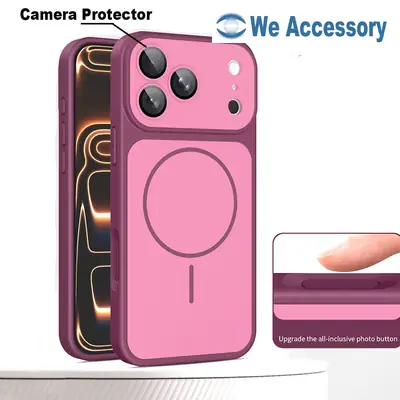
iPhone 18 Pro Max Skin-feeling magsafe case Matte case with build-in camera protection

Recommend Products
-
-
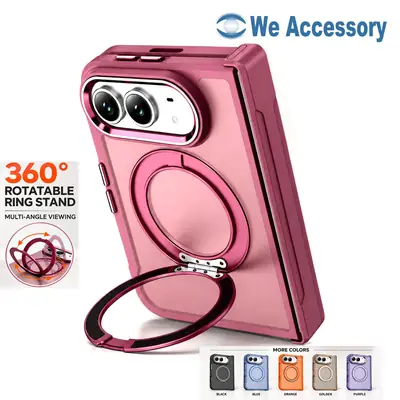 iPhone Duo 360° rotating ring holder case N52 2300 Gauss strong magentic stand case
-
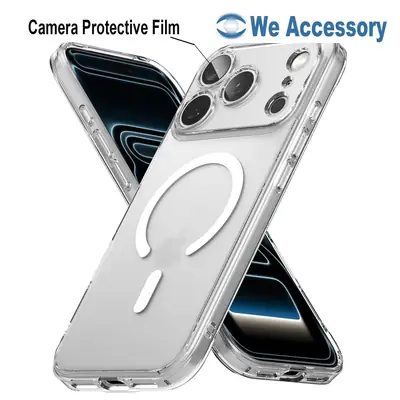 iPhone 18 Pro Clear Magsafe Case build-in camera protector transparent magnetic case
-
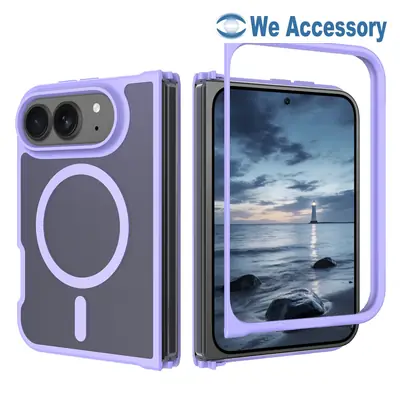 iPhone Duo Matte Magsafe Case Skin-Feeling N52 Strong Magnetic 2in1 Foldable Case
-
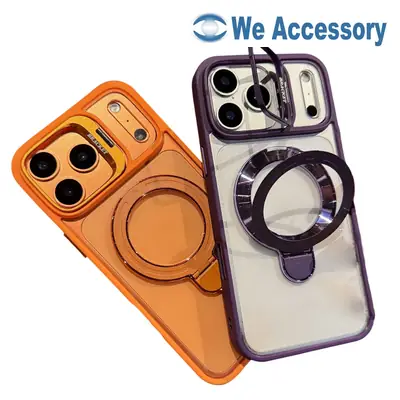 iPhone 18 accessories iPhone 18 Pro 3in1 magnetic holder case camera holder ring holder case
-
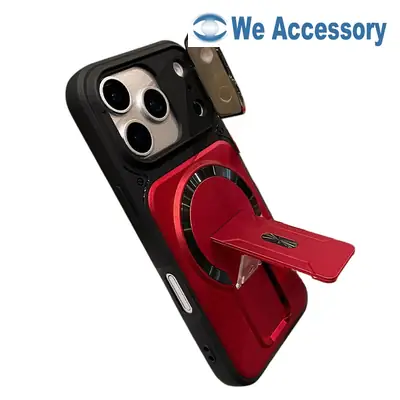 iPhone 18 Pro magsafe holder case glass camera protection and foldable holder case
-
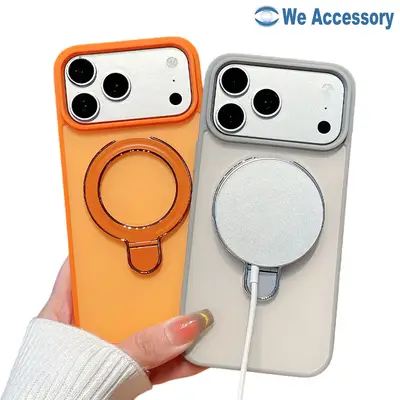 New trend iPhone 18 Pro matte skin-feeling magsafe case ring holder phone holder case
-
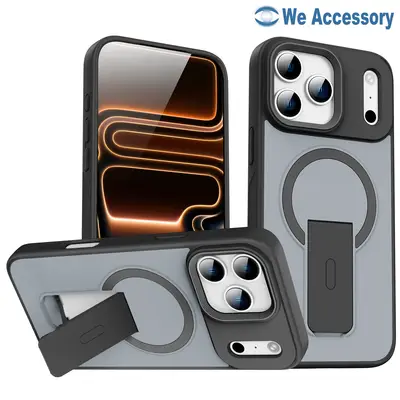 Hot phone accessories iPhone 18 Pro magnetic stand phone case foldable phone holder case
-
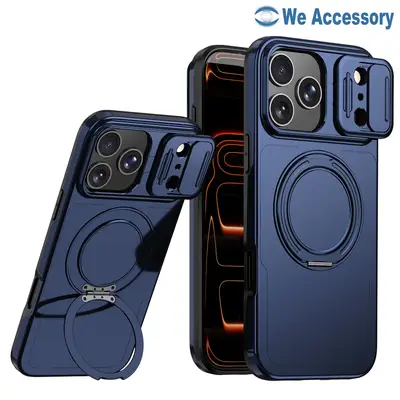 New iPhone 18 Accessories iPhone 18 Pro Ring Holder Case Camera protection Magsafe Case
-
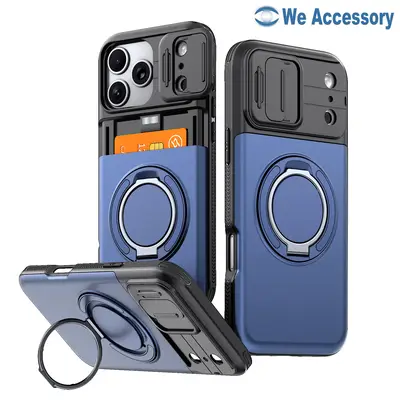 iPhone 18 Pro Max Card Holder Case Magsafe Holder Case Slide Window Camera Protection
-
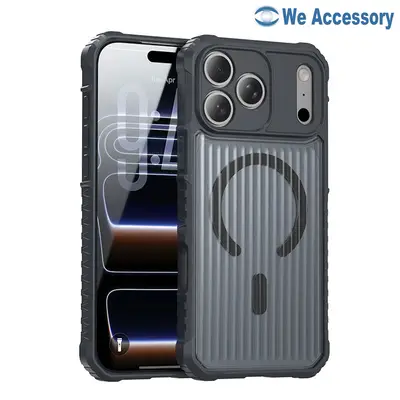 New design iPhone 18 Pro TPU+PC Hybrid Suitcase-Style MagSafe Shatterproof Case
-
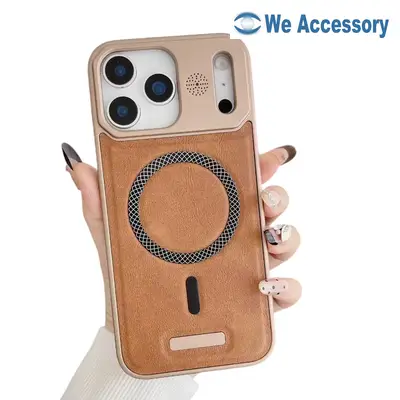 Business demeanor iPhone 18 Pro magsafe leather case 2in1 iphone cover luxury iphone case
-
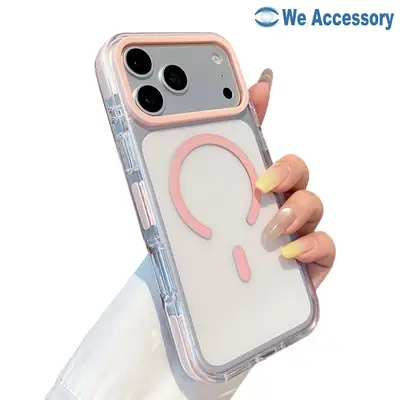 New iPhone Accessories iPhone 18 Pro Clear Magsafe Case double color 2in1 shatterproof case
-
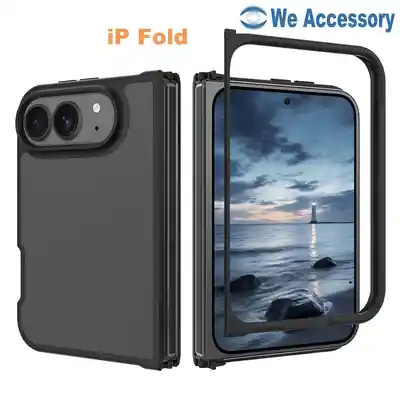 iPhone Case Distributor Newest iPhone Duo Case TPU+PC 2in1 Full Protective iPhone Case
-
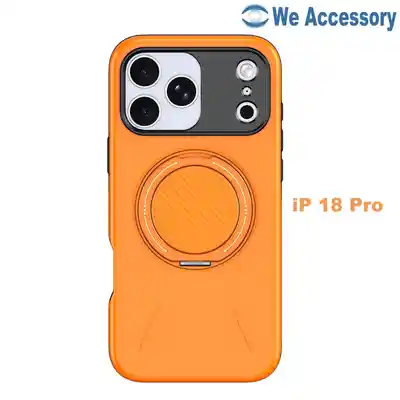 Phone Accessories Company New iPhone 18 Pro Case Magsafe Case with Phone Holder
-
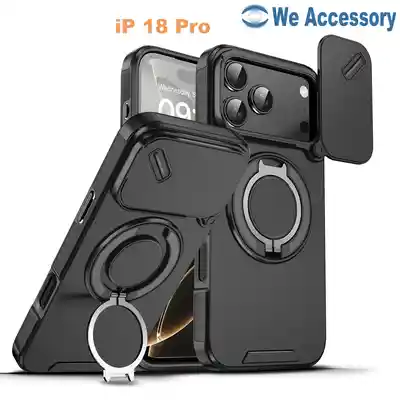 Phone Case Manufacturer New iPhone 18 Pro Max Armor Case Camera Protection and Holer
-
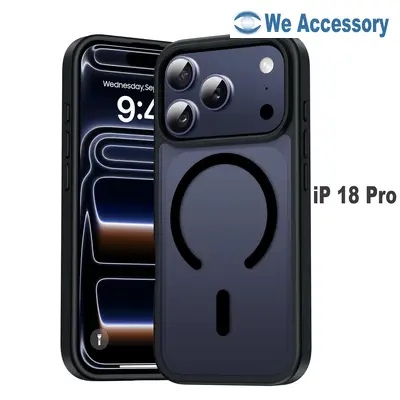 iPhone 18 Accessories Supplier Newest iPhone 18 Pro Case Wholesale Matte magsafe case
-
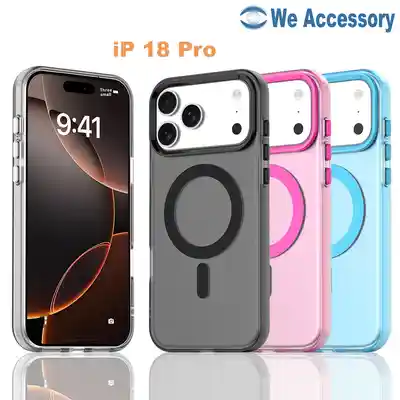 iPhone 18 Pro Case Wholesale Colorful Transparent Magsafe Case New iPhone 18 Pro Case
-
 Wholesale iPhone 17 Jelly 2 in 1 Magsafe Case colorful silicone iphone case
-
 Apple iPhone Case Supplier Colorful iPhone 17 electroplated case so cool case
Product Tags
Privacy Screen Protector Wholesale, you need to know 180 and the 360 anti spy Are Not the Same Product
November 22, 2026
A buyer in Warsaw asked me last month for a price on five hundred privacy protectors, and then added a line that told me the whole conversation was going to be difficult: he wanted the 360 degree version, because it is better.
He was not wrong that it is different. He was wrong that it is better, or rather he was wrong that it is better in the way he thought, which is that a product protecting four sides is twice as private as one protecting two. It is not. It is one optical trade made twice, and the second trade costs you a third of the light and a visible pattern on white backgrounds.
The confusion is not his fault. The category has been sold on a number that sounds like a measurement and is not one. A protector marketed as 180 degrees is not restricting anything to 180 degrees; it blocks side views and leaves the top and bottom clear. A protector marketed as 360 degrees is not a circle; it blocks four directions by stacking two louvre layers at right angles. Neither number is an angle you can verify with a protractor, and both are printed on the box as if they were.
In privacy screen protector wholesale, this article is about what those two products actually are, the two numbers that really do set how private a protector is, and why the glass, the tempering and the adhesive layer all change the answer. If you buy privacy screen protectors in volume, the difference between a good one and a bad one is not the packaging, it is whether the louvre geometry matches the way your customers hold their phones.
What is actually inside a privacy protector
Start with the mechanism, because almost every complaint in this category comes from not knowing it.
A privacy protector is a set of microscopic slats embedded in a transparent layer. They are called louvres, they are arranged like the blinds on a window, and they work exactly the way blinds work: you can see straight through the gaps, and as you move the viewing position away from the straight-through direction, the slats get in the way, until at some angle the view is blocked entirely. Nothing about it is electronic, nothing about it dims the screen deliberately, and there is no film that "detects" a viewer.
The layers in a typical protector, from the screen outward:
| Layer | Typical thickness | What it does |
|---|---|---|
| Silicone adhesive (the A glue) | 0.05 to 0.15 mm | Conforms to the glass, allows rework, absorbs dust |
| OCA or second adhesive (the B glue) | 0.05 to 0.10 mm | Bonds the stack, adds optical coupling |
| Tempered glass carrier | 0.33 to 0.50 mm | Scratch and impact resistance, flatness |
| Louvre layer | 0.05 to 0.15 mm | The privacy itself |
| Hard coat | 2 to 10 µm | Anti-scratch, sometimes anti-glare, sometimes anti-fingerprint |
The order matters, and I will come back to it, because it is the reason a factory can sell you "tempered glass privacy" that was never tempered.
The two numbers that set the angle
The viewing angle of a louvre film is fixed by geometry, and the geometry has three parameters: the pitch between slats, the depth of the slats, and the thickness of each slat.
The cut-off angle, meaning the half-angle from straight-on at which the line of sight is blocked, follows a single relationship:
The tangent of that half-angle equals the clear gap between two slats, divided by the depth of the slat.
Put numbers on it and the whole category becomes legible.
| Pitch between slats | Slat thickness | Slat depth | Half-angle | Full cone | Geometric transmission |
|---|---|---|---|---|---|
| 60 µm | 20 µm | 120 µm | 18.4° | 37° | 66.7 % |
| 75 µm | 20 µm | 120 µm | 24.6° | 49° | 73.3 % |
| 60 µm | 20 µm | 150 µm | 14.9° | 30° | 66.7 % |
| 80 µm | 20 µm | 100 µm | 31.0° | 62° | 75.0 % |
| 50 µm | 15 µm | 100 µm | 19.3° | 39° | 70.0 % |
Read the first and third rows against each other. Same pitch, same slats, and the only change is that the louvre got 25 percent deeper, which took the cone from 37 degrees to 30. Deeper is more private. Deeper is also darker, because a slat that is deeper blocks more of the light that would otherwise reach the screen at an angle.
Read the first and second rows. Widen the pitch by a quarter and the cone goes from 37 to 49 degrees, which is the difference between "the person next to you cannot read it" and "the person next to you can read it if they lean". A factory that changes its louvre film supplier without telling you has changed this number, and nothing on the box will say so.
The transmission column is the geometric one, the fraction of the surface that is not slat. It is not the full optical transmission, because there are reflections and absorption on top, but it is the ceiling, and it is the ceiling that decides how dim the screen can get.
Why the 360 is not twice the privacy
Now the part that the marketing gets wrong, and it is worth being precise.
A two-way protector blocks left and right. Its louvres are vertical slats, and if you look at the screen from above or below, you are looking along the gaps and you see the image perfectly.
A four-way protector blocks all four directions. To do that with louvres, you need a second layer rotated ninety degrees, so that the vertical slats of the first layer are crossed by horizontal slats of the second. Physically it is two louvre films laminated together, or one film with a cross-hatched structure.
That stacking has a consequence you can calculate exactly. The transmission of two crossed louvre layers is the product of the two transmissions, because the clear areas have to line up.
| Geometric transmission per layer | Two-way (one layer) | Four-way (two crossed layers) |
|---|---|---|
| 60 % | 60.0 % | 36.0 % |
| 66.7 % | 66.7 % | 44.5 % |
| 70 % | 70.0 % | 49.0 % |
| 75 % | 75.0 % | 56.3 % |
So a four-way protector at 44.5 percent transmission is not "twice as private as the two-way". It is exactly as private in each of two axes, and it hands you a third of your light.
Which produces the complaint I hear most often about this product, and it is not about privacy at all: the screen looks dim and the colours look washed out. The customer turns the brightness up, which drains the battery, which becomes a review about the protector.
There is a second cost, and it is more visible than the brightness. Two crossed louvre layers produce a coarse interference pattern with the screen's own pixel grid. I will come to that in a moment, because it is the single most common reason a customer takes a privacy protector off and asks for a refund.
The transmission you should be told, and the brightness it costs
Manufacturers quote transmission in different ways, and the difference between the geometric figure and the measured figure is often ten points, which is enough to make two products incomparable.
Whatever number you get, it translates into a brightness penalty, and the penalty is not linear.
| Transmission | Extra screen brightness needed for the same perceived brightness |
|---|---|
| 67 % | about 50 % more |
| 60 % | about 67 % more |
| 45 % | about 125 % more |
| 30 % | about 233 % more |
The 45 percent row is the four-way case from the table above, and it says something a buyer should internalise: a four-way privacy protector forces the phone to run its backlight roughly twice as hard for the same perceived image. That is why the product has a reputation for "eating battery", and the reputation is deserved.
None of this makes four-way wrong. It makes it a different product for a different customer, and it should be priced and positioned as such rather than sold as an upgrade to the two-way.
Where the pattern on a white screen comes from
The moiré complaint is the one that gets a product returned even when it is doing its job.
A phone screen is a grid of pixels at a fixed pitch. A 6.1 inch panel at 460 pixels per inch has a pixel pitch of about 55 micrometres. A privacy louvre at a 60 micrometre pitch is therefore nearly the same period as the pixel grid, and two regular patterns at nearly the same period produce a beat: a much coarser pattern whose period is the product of the two pitches divided by their difference.
| Screen | Pixel pitch | Louvre pitch | Beat period | What it looks like |
|---|---|---|---|---|
| 460 ppi | 55.2 µm | 60 µm | 0.69 mm | Coarse bands, clearly visible |
| 401 ppi | 63.3 µm | 60 µm | 1.14 mm | Very coarse, worst case |
| 460 ppi | 55.2 µm | 75 µm | 0.21 mm | Fine texture, usually acceptable |
| 326 ppi | 77.9 µm | 75 µm | 2.01 mm | Coarse rainbowing |
The practical rule that comes out of this table is counter-intuitive: a louvre pitch that is close to the pixel pitch is worse than one that is further away. Matching the screen is the failure mode, not the goal. Which is why the same privacy protector can look clean on one model and striped on another, and why a distributor who tests on a single demo phone will ship a product that a third of customers reject.
The fix at the factory is to choose a louvre pitch that is either clearly smaller than the pixel pitch or clearly larger, and to test on the highest density panel in your range rather than the lowest. The fix at the shop is simpler: test the protector on the phone it will go on, with a white screen, before you commit to a volume.
Glass thickness, and why it matters more here than on a normal protector
On a plain protector, thickness is mostly a strength and feel question. On a privacy protector it is an optical question, because the glass is the carrier for a second optical element and any deviation in that carrier shows up in the image.
Two things go wrong when the carrier is too thin for the stack it is carrying.
The first is flatness. A louvre layer sits in optical contact with the glass, and if the glass is not flat, the gap between them varies across the sheet. A varying gap scatters differently across the surface, which reads as patches of haze, or as a slight purple bloom in one corner. On a 0.33 mm carrier under a 0.15 mm louvre, the stack's stiffness is dominated by the louvre, and it curls at the edges in a warm car. On a 0.50 mm carrier the glass dominates and the stack stays flat.
The second is edge behaviour. A privacy stack is thicker than a plain protector, and the thicker it is, the more the edge has to be shaped to sit down. A 0.33 mm glass with a 0.15 mm louvre and 0.15 mm of adhesive is a 0.63 mm part with a hard edge, and a hard edge on a curved screen is where the halo starts.
| Stack | Total thickness | Where it belongs |
|---|---|---|
| 0.33 mm glass + louvre + thin glue | about 0.52 mm | Flat screens, narrow cases, cost-led ranges |
| 0.50 mm glass + louvre + thin glue | about 0.70 mm | Curved edges, rugged ranges, premium tiers |
| 0.33 mm glass + double louvre + glue | about 0.68 mm | Four-way product, and it is why four-way feels bulky |
Note the third row. A four-way protector is not only darker, it is also thicker, because it carries two louvre layers. That extra thickness is the second half of the "it feels heavy and it does not sit down at the edges" complaint, and it is the reason four-way protectors are usually sold with an alignment frame that positions them more precisely than a two-way needs.
Tempering time, and the step that most suppliers get wrong
Here is the part of the conversation that separates factories which understand the product from factories which assemble it.
Chemically strengthened glass gets its strength from an ion exchange bath, typically four to four and a half hours at around 410 to 420 degrees Celsius, where potassium ions swap into the surface and put it into compression. That process is what makes a 0.33 mm sheet survive a drop.
A privacy louvre layer is a polymer. Polyethylene terephthalate, or a similar optical polymer, at somewhere between fifty and a hundred and fifty micrometres. It does not survive 410 degrees. It softens, it warps, and the slats lose the geometry that defines the viewing angle.
Which means the sequence is not negotiable. Glass is cut, edge-ground, ion-exchanged at temperature, and only then laminated to the louvre. Any factory that describes the whole stack going through the furnace is describing something that cannot happen.
This matters to a buyer for three reasons.
The first is that the tempering has to be done on the carrier alone, so the carrier's strength is independent of the privacy layer. If a supplier quotes you a price that looks impossibly low for "tempered privacy glass", the likely explanation is that the carrier was not ion-exchanged at all, and you are buying annealed glass with a louvre film on it. It will scratch and it will break in a pocket, and it will pass every visual inspection.
The second is that the lamination has to be a cold process. Pressure-sensitive adhesive, room temperature, controlled pressure. If a factory heat-laminates to speed up the line, the louvre deforms slightly and the cut-off angle moves. You will not see it on a sample. You will see it as a batch where customers say "this one is not as private as the last one", and when you measure the angle you will find it has drifted by three or four degrees.
The third is flatness again. Ion exchange at 410 degrees relaxes the glass, and a sheet that was flat before the bath can come out with a slight bow. On a plain protector that is invisible. Under a louvre layer it becomes a haze gradient, because the gap between the carrier and the louvre is now a few micrometres thicker on one side.
The A and B adhesive, where the haze comes from
The adhesive in a screen protector is usually sold as AB glue, meaning two layers with different jobs.
The A layer is a soft silicone. It is the one that touches the screen, it wets out around dust particles, it allows the protector to be lifted and repositioned, and it is what makes a protector feel like it has "grabbed" the phone. The B layer is a harder optical adhesive, an OCA or a modified acrylic, which bonds the glass to the louvre and holds the stack together. Typical thicknesses are 0.05 to 0.15 mm for A and 0.05 to 0.10 mm for B.
On a plain protector, both layers are almost invisible in the final image, because the optical path is short and the indices are close to the glass. On a privacy protector they are not invisible, for two reasons.
The first is distance. The louvre layer has to be positioned relative to the screen, and every tenth of a millimetre of adhesive between the two adds separation. A louvre that sits 0.25 mm above the pixel grid produces a slight double image at the edges of the visible cone, because the light from a pixel arrives at the louvre from a slightly different angle than the light from its neighbour. The effect is small and it is cumulative, and it is what people describe as "the text is not as sharp on this one".
The second is scattering at the glue edges. The A layer is soft and it cannot be polished, so at the perimeter the adhesive meniscus scatters light. On a 0.15 mm A layer the meniscus is a visible band about a millimetre wide, which is the halo everybody blames on the glass.
The rule that comes out of both: keep the total adhesive under about 0.2 mm on a privacy stack, and if you need conformability on a curved edge, get it from a thinner louvre rather than a thicker glue. Two tenths of a millimetre is roughly where the haze stops being a measurement and starts being a complaint.
There is a third effect that only shows up in the field. Thicker adhesive holds more air at the perimeter for longer, so a protector installed on a slightly dusty screen develops a slow-growing bubble ring rather than an immediate bubble. Customers read that as "the glue is failing", and by the time they complain the cause is three weeks in the past.
What the customer actually experiences
Every technical point above turns into a sentence in a review, and it is worth mapping them, because the mapping is what lets a shop assistant answer a question instead of shrugging.
| The complaint | What it usually is | What to say |
|---|---|---|
| "It is not private, my colleague can still see" | They are holding the phone at 30 to 40 degrees, outside the cone | Show them the cone, on a white screen, at arm's length |
| "The screen is too dim" | 45 to 67 percent transmission and no brightness compensation | Normal for the category; four-way is dimmer than two-way |
| "There is a pattern on white pages" | Moiré between louvre pitch and pixel pitch | Test on their model before selling, and pick pitch deliberately |
| "It is blurry" | Adhesive stack over 0.2 mm, or a warped carrier | Check total stack thickness and flatness |
| "The edges are rainbow" | Halo at the adhesive meniscus, worse on curved glass | Thinner louvre, thinner A layer, or a 0.50 mm carrier |
The first row is the one that causes the most returns and it is not a defect. A privacy protector protects a cone, and a cone has an edge. A customer who holds the phone at forty degrees and expects privacy has bought the wrong product, and the shop that sold it without demonstrating the cone is the one that will process the refund.
Measuring the cone in the warehouse
You do not need a goniometer. You need a table, a metre stick, a phone, and two minutes per sample, because the cone is a geometric property and geometry is measurable with a ruler.
The setup: put the phone flat on the table, screen on and bright, showing a white page with a word in the middle large enough to read. Stand at a fixed distance, say forty centimetres, measured with the stick. Look at the word. Now walk sideways, keeping the same distance from the phone, and watch for the moment the word disappears. Measure how far you moved sideways.
The half-angle is the arctangent of your sideways movement divided by the distance. Forty centimetres of distance and twenty-six centimetres of movement is about thirty-three degrees, which is a normal two-way cone. Forty centimetres and fourteen centimetres is about nineteen degrees, which is a tight cone and a much darker product.
Repeat the walk toward and away from the phone, along the other axis. This is the test that tells you whether you have been sold a 2-way or a 4-way, and it takes ten seconds: on a two-way product the word stays readable as you move toward and away, and on a four-way product it fades at the same angle in both axes.
| Test | What you measure | What good looks like |
|---|---|---|
| Sideways walk | Half-angle, left and right | 25 to 35° for a standard two-way cone |
| Toward and away | Whether the word fades on the second axis | Fades on a four-way, stays readable on a two-way |
| White screen check | Any moiré pattern | No coarse bands at normal reading distance |
| Lux comparison | Brightness with and without | Consistent with the quoted transmission, within 5 points |
| Edge inspection | Halo width at the perimeter | Under 1 mm on a flat screen |
Run it on five units of each SKU, and run it on your highest-density demo phone, not the cheapest one in the drawer. The five-unit part matters because louvre film varies within a roll, and a single sample will let you conclude something confident and wrong.
What to write in the purchase order
Eight lines, and the first three are the ones that decide whether the product does what the box says; they are also the three that privacy screen protector wholesale buyers most often leave to the factory.
The louvre geometry, stated as pitch, slat thickness and depth in micrometres, not as a degree figure and certainly not as "180" or "360". The degree figure is a derived number and the geometry is the thing you can measure on a cross-section.
Which axes are blocked, written as left and right, or all four. This is the specification that stops a 2-way product being shipped into a 4-way carton.
The transmission, with the method. Geometric clear fraction and measured transmission are different numbers, and a supplier should be able to give you both.
The glass carrier thickness and the ion-exchange parameters, with the sequence stated: tempered before lamination. If the supplier cannot describe the sequence, ask for the bath record.
The total adhesive thickness, A and B separately, with a ceiling of 0.2 mm for the sum on a privacy product.
The louvre pitch relative to the target screen, with a note on which models were checked for moiré.
A flatness requirement on the finished part, expressed the way you can test it: no visible gap or haze variation when the part is laid on a flat reference.
And a sample retention clause. Keep three approved units per SKU, because in six months the only way to prove that the angle moved is to have a piece from the first approval.
Buying decision: when four-way is the right product and when it is a return
In privacy screen protector wholesale the commercial question is not which product is better. It is which customer is holding the phone.
Two-way is right for the commuter, the open-plan office, the train, the café. The threat is somebody beside you, the phone is held at a natural angle, and the extra brightness that two-way keeps is worth more than protection from a threat that does not exist above the phone.
Four-way is right where the threat really is on all sides: a counter with people on both sides, a hospital or clinic reception, a finance desk, a classroom, anywhere a phone lies flat on a surface while its owner talks to somebody. In those settings the phone is often flat on a desk with people standing around it, which is precisely the case a two-way product does not cover.
Which produces a clear rule for a range: stock two-way as the volume product and four-way as the counter product, and do not present four-way as an upgrade in the commuter-facing part of the catalogue. The commuter who buys four-way gets a dim screen, a heavier part and a pattern on white pages, and returns it.
On price, four-way carries two louvre layers, two lamination passes and a lower yield, and it costs meaningfully more to make. If a supplier quotes you four-way at two-way money, one of the layers is missing.
There is a seasonal pattern worth knowing if you are planning stock. Two-way demand tracks commuting, so it peaks in the months when people are back in offices and on trains, and it is fairly flat through the summer. Four-way demand tracks places rather than journeys: clinics, counters, front desks, classrooms. It moves with procurement cycles rather than with the calendar, which means it is the easier of the two to forecast and the harder one to sell as an impulse purchase. Buying both on the same reorder cycle, in the same ratio all year, is how a distributor ends up long on the wrong one in June.
Where the extra cost of a four-way actually goes
Distributors ask for the price difference and get a number, and nobody ever breaks the number down. On a privacy screen protector wholesale order the gap between a two-way and a four-way is usually thirty to sixty percent, and it sits in four places.
The louvre film is the first and the largest. Two layers instead of one, and the second layer is not free: it is another roll of an optical film that costs more per square metre than the glass it sits on.
The lamination is the second. Two passes instead of one, with a yield loss at each pass. If each lamination runs at 96 percent yield, two passes is 92 percent, and the four percent that disappears is a real cost that lands in the price.
The alignment is the third. Two louvre layers have to be crossed at exactly ninety degrees, and a two-degree error is visible: the cone becomes asymmetric, one diagonal is more private than the other, and the moiré pattern changes orientation. That alignment is a jig and a check, and it is where a cheap four-way is cheap.
| Cost line | Two-way | Four-way |
|---|---|---|
| Louvre film, per square metre | one layer | two layers |
| Lamination passes | 1 | 2 |
| Typical cumulative yield | 96 % | 92 % |
| Alignment jig and check | not required | required, ±2° |
| Relative material cost | 1.0 | 1.45 to 1.6 |
Read the last row against the transmission table earlier in this article. You are paying forty-five to sixty percent more for a product that transmits about a third less light. That is not a reason to avoid it, it is a reason to sell it to the customer who needs it and not to the one who does not.
How to tell a real four-way from a relabelled two-way
The category has a quiet problem: some of what is sold as four-way is a two-way with a different box.
The first check is the second axis. Stand the phone on a table, screen on, and look at it from above and from below, at the angle the cone should cut off. On a real four-way the image fades at both. On a relabelled two-way it stays readable at both, because vertical louvres do not block light coming from above.
The second check is the cross-section. A real four-way has two distinct louvre layers, and under a loupe at the cut edge you can see two sets of slats at right angles. Ask for a photograph of the edge under magnification before you order; a supplier who cannot produce one is either assembling something else or does not know.
The third check is the brightness. A four-way at 44 percent transmission is visibly darker than a two-way at 67, side by side on the same phone at the same brightness. If the sample is not darker, one of the layers is not there.
The fourth check is the price against the cost table above. A four-way quoted at two-way money is not a bargain, it is a specification you did not receive.
I would run all four on the first order and the second check alone on every reorder, because the failure mode is not a bad batch, it is a substitution that is invisible from the front.
One range decision, worked all the way through
Put the whole argument into a single buying decision, because that is the form it actually arrives in.
A distributor is building a two-channel range for one model: a commuter channel through a station kiosk, and a counter channel through an office-supply shop. Two SKUs, one for each, or one SKU of four-way for both?
Option A: one four-way SKU for both channels. Simpler catalogue, one tooling, one approval. Retail 19.90. Returns in the commuter channel run at about one in six, on "too dark" and "pattern on white pages". Counter channel returns are low.
Option B: two SKUs, two-way for commuters and four-way for counters. Two approvals, two louvre specifications, two sets of packaging. Retail 14.90 for the two-way, 19.90 for the four-way.
| Line | One SKU, four-way | Two SKUs |
|---|---|---|
| Units, commuter channel | 2,000 | 2,000 of two-way |
| Units, counter channel | 500 | 500 of four-way |
| Return rate, commuter | 16 % | 4 % |
| Return rate, counter | 5 % | 5 % |
| Returns, commuter | 320 | 80 |
| Cost per return, at retail 19.90 | 8.60 | 8.60 |
| Return cost, commuter | 2,752 | 688 |
| Return cost, counter | 215 | 215 |
| Extra approvals and packaging | 0 | about 400 |
| Total | 2,967 | 1,303 |
The two-SKU option costs about four hundred euros more in approvals and packaging and saves about sixteen hundred in returns. It also has a second effect that the table does not price: the commuter channel sees a bright screen instead of a dim one, which is the difference between a product that gets reordered and a product that gets a complaint.
The mistake in Option A is not that four-way is bad. It is that four-way was chosen for catalogue simplicity rather than for the customer, and the customer who suffers is the one holding the phone at arm's length on a train.
The general rule that comes out of this: choose the number of blocked axes from where the phone lies, not from how many lines you want in the catalogue. A phone lying flat on a counter has a different threat model from a phone held in one hand on a platform, and a single SKU cannot serve both without costing somebody money.
Two things we got wrong
We treated four-way as the premium tier of the same product for two seasons, which is the single most expensive mistake I have made in this category. The range looked logical, the price ladder was clean, and the returns were concentrated exactly where the product was sold to commuters. Roughly one in six came back, and the complaints were not about privacy, they were about the screen being dark. We had sold a counter product to a train audience.
The second mistake was quieter and took longer to find. We approved a louvre film on a 326 ppi demo phone, where the moiré period was about two millimetres and looked like a subtle texture. On the 460 ppi models it moved to 0.69 millimetres, which reads as coarse banding on a white page, and we found out from a review rather than from a test. The fix was a different pitch, and the lesson was that a privacy protector has to be approved on the highest-density panel in the range, not the one that happens to be on the desk.
Both mistakes share a shape: we tested the product in the configuration that was convenient rather than the configuration it would be used in.
Six questions before the next privacy order
What is the louvre pitch, slat thickness and depth, in micrometres. If the answer is a degree figure, ask again: the degrees are derived and the geometry is not.
Which axes are blocked, and can you send a sample so I can verify on both axes before the order.
What is the measured transmission, and the geometric clear fraction. Two numbers, not one.
Was the carrier ion-exchanged before the louvre was laminated, and can I see the bath record for the lot. This one question sorts the factories from the assemblers.
What is the total adhesive thickness, A plus B, and what is the flatness specification on the finished part.
Which screen densities was this louvre pitch checked against for moiré, and will you send a white-screen photograph on a 460 ppi model.
Keep reading
The commercial picture for privacy as a sub-category, alongside 3D curved and matte, is here: 3D Curved, Privacy & Matte Screen Protectors. The question of why 0.33 mm and 0.50 mm are different products in a plain protector is here: Screen Protector Wholesale, Why 0.33 mm and 0.50 mm Are Not the Same Product.
The privacy ranges themselves, with the louvre geometry and the blocked axes listed per model rather than the numbers 180 and 360, sit on the iPhone screen protector wholesale page and the tempered glass wholesale page.
About We Accessory
We Accessory has supplied tempered glass screen protectors, including privacy and anti-glare variants, to wholesalers and chains since 2012. Our privacy products are specified by louvre geometry and blocked axis rather than by a marketing angle, the carrier is ion-exchanged before lamination, and we will send you the white-screen moiré photographs on the highest-density model in your range before you commit to a volume.
If you have a privacy protector that customers say is not private, or one they say is too dark, send us two pieces and the model list. We will measure the cone on both axes and tell you whether the problem is the geometry, the pitch against the panel, or an expectation that the product was never designed to meet.
Address: 2F, Block A2, Nanchang Industrial Area, Xixiang Town, Bao'an District, Shenzhen, China Tel: +86-755-36818832 WhatsApp: +86-15919800304 Email: [email protected] Web: weaccessory.com
— William Shaw, Head of Sales at We Accessory
Share:


Why Choose We Accessory
14+
Years Experience
2000+
Product SKUs
50+
Countries Served
OEM
& ODM Service
2-4
Day Delivery
Professional Phone Accessories Wholesale Supplier
We Accessory has supplied phone cases and tempered glass screen protectors since 2012 to importers, repair chains and online sellers in 50+ countries. Stock items ship from 50 pcs in 2 to 4 working days; custom logo, colour and retail packaging start from 1,000 pcs.
Frequently Asked Questions
Where is We Accessory located?
We are located in Shenzhen.
What products do you offer?
Phone cases and tempered glass screen protectors for all major phone brands, in stock from 50 pcs per model.
Do you offer OEM and ODM service?
Yes. Custom logo, colour and retail packaging start from 1,000 pcs per model; stock items ship from 50 pcs.
What is your shipping time?
In-stock items ship in 2 to 4 working days by DHL, FedEx or UPS. Custom orders take 10 to 20 days in production, plus shipping.
We Accessory (WeAccessory.com)
Address:2F, Block A2, Nanchang Industrial area, Xixiang Town,Bao'an District, Shenzhen
Tel: +86-755-36818832
Mobile/Whatsapp: +86-15919800304
Email: [email protected]
Microsoft Teams: william.shaw186
Product Tags
Contact us Now!
Please send us your Email address if you'd like some products



Copyright © 2012-2026 Shenzhen Western Electronic Co., Ltd All Rights Reserved. Sitemap | Best Phone Case Wholesale, Tempered Glass Screen Protector, USB Charger, Cable, other Mobile Accessories Wholesale