English
 Français
 Deutsch
 Español
 Italiano
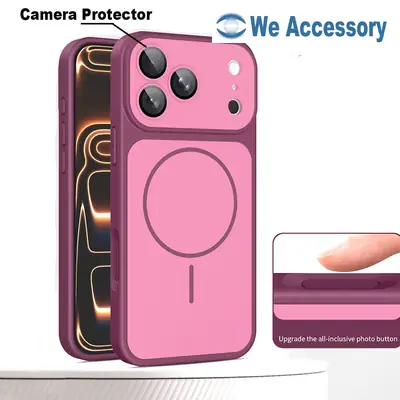
iPhone 18 Pro Max Skin-feeling magsafe case Matte case with build-in camera protection

Recommend Products
-
-
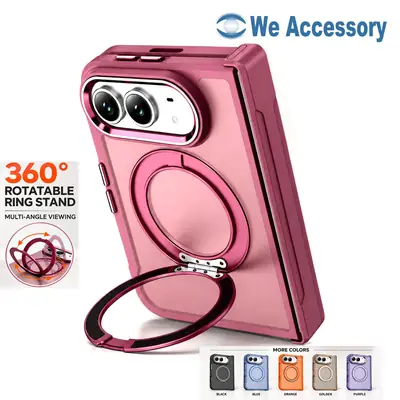 iPhone Duo 360° rotating ring holder case N52 2300 Gauss strong magentic stand case
-
 iPhone 18 Pro Clear Magsafe Case build-in camera protector transparent magnetic case
-
 iPhone Duo Matte Magsafe Case Skin-Feeling N52 Strong Magnetic 2in1 Foldable Case
-
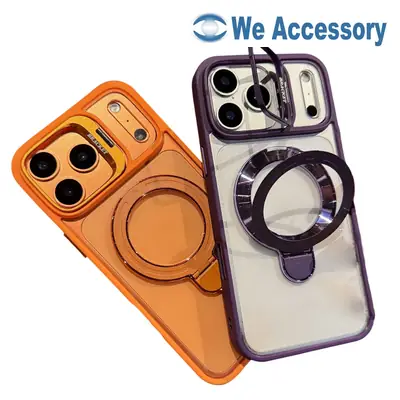 iPhone 18 accessories iPhone 18 Pro 3in1 magnetic holder case camera holder ring holder case
-
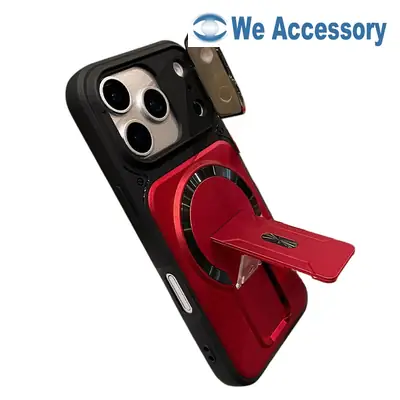 iPhone 18 Pro magsafe holder case glass camera protection and foldable holder case
-
 New trend iPhone 18 Pro matte skin-feeling magsafe case ring holder phone holder case
-
 Hot phone accessories iPhone 18 Pro magnetic stand phone case foldable phone holder case
-
 New iPhone 18 Accessories iPhone 18 Pro Ring Holder Case Camera protection Magsafe Case
-
 iPhone 18 Pro Max Card Holder Case Magsafe Holder Case Slide Window Camera Protection
-
 New design iPhone 18 Pro TPU+PC Hybrid Suitcase-Style MagSafe Shatterproof Case
-
 Business demeanor iPhone 18 Pro magsafe leather case 2in1 iphone cover luxury iphone case
-
 New iPhone Accessories iPhone 18 Pro Clear Magsafe Case double color 2in1 shatterproof case
-
 iPhone Case Distributor Newest iPhone Fold Case TPU+PC 2in1 Full Protective iPhone Case
-
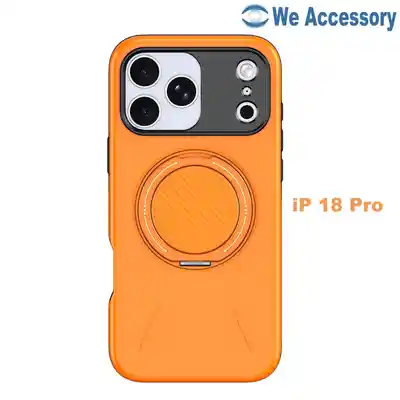 Phone Accessories Company New iPhone 18 Pro Case Magsafe Case with Phone Holder
-
 Phone Case Manufacturer New iPhone 18 Pro Max Armor Case Camera Protection and Holer
-
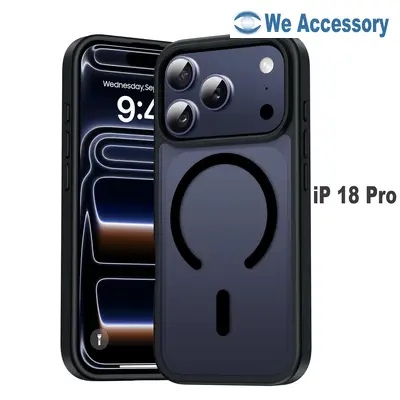 iPhone 18 Accessories Supplier Newest iPhone 18 Pro Case Wholesale Matte magsafe case
-
 iPhone 18 Pro Case Wholesale Colorful Transparent Magsafe Case New iPhone 18 Pro Case
-
 Wholesale iPhone 17 Jelly 2 in 1 Magsafe Case colorful silicone iphone case
-
 Apple iPhone Case Supplier Colorful iPhone 17 electroplated case so cool case
Product Tags
Phone Case Wholesale, Why the Cheapest Case Fails the Lab
October 20, 2026
Sanne's listing went dark on a Tuesday
The message in her inbox was four sentences long, and none of them were about the product. The marketplace had pulled forty-six of her listings — every case, every colour, both models — pending "product safety documentation and confirmation of an EU-based responsible person". Her stock, eighteen hundred pieces, was sitting in a fulfilment centre in Venlo, paid for, photographed, ranked, and suddenly unlistable.
She called us because she assumed we had done something wrong. We hadn't, not exactly. The cases were fine. The problem was the paragraph that was supposed to be printed on the back of the bag and wasn't there.
I've been selling cases out of Shenzhen since 2012, and I have watched the trade argue about price, colour, packaging and delivery for fourteen years. Nobody in those fourteen years ever asked me, in the first email, what legal entity stands behind the box. Then December 2024 happened, and now it's the second or third question, right after the MOQ.
This is not a scare piece, and I'm not going to pretend the rules are harder than they are. Most of what Sanne needed already existed as an obligation before the new regulation; what changed is who is expected to prove it, where the proof has to live, and how quickly a marketplace can switch you off if it isn't there. For anyone buying iphone case wholesale in Europe right now, that shift is more consequential than a five-cent difference in unit price, and it's the part of the business almost nobody writes about.
One more thing before the regulation, because it's the part that surprises people: the case that fails a lab test is almost never the expensive one. It's the cheapest black SKU in the range, and the reason has nothing to do with how well it protects the phone. Keep that in mind while the next two sections explain what a case is actually tested for.
So let me write about it, from the side of the table that has to produce the paperwork.

The back of the bag is where a listing stays up or goes dark.
What actually changed on 13 December 2024
The General Product Safety Regulation — Regulation (EU) 2023/988, GPSR for short — entered into force in June 2023 and became applicable to businesses and market surveillance authorities on 13 December 2024. It replaced a directive that had been patched so many times people had stopped reading it.
For a phone case, four things in it matter.
First, every consumer product covered by the regulation needs an economic operator established in the EU who is responsible for it: an EU manufacturer, an importer, an authorised representative, or a fulfilment service provider. Not "we have a distributor in Germany". A named entity with an address, tied to that specific product, that an authority can write to.
Second, the product and the packaging have to identify the manufacturer, the responsible operator, and the product itself — including a type, batch or serial number that lets anyone trace which production run a particular case came from.
Third, and this is the one buyers underestimate: online marketplaces have their own obligations under the same regulation. They are expected to check that products offered on their platform comply, and to act when they don't. That is what happened to Sanne. A marketplace does not need a court order to delist forty-six SKUs on a Tuesday morning; it needs a compliance checkbox that hasn't been ticked.
Fourth, the regulation covers new, used, repaired and reconditioned products. If your business model is cases for refurbished handsets — a channel we have written about before — you are not outside the tent.
One number worth carrying around: in 2022, 67% of the notifications in the EU's Safety Gate rapid alert system concerned products coming from outside the single market. That statistic is the reason the responsible-operator rule exists. The EU's position, bluntly, is that if you sell into the single market from outside it, someone inside it must be answerable.
Penalties are set nationally, so they range from a fine you can absorb to one you can't. Enforcement is uneven. Marketplace enforcement, on the other hand, is immediate, automated, and indifferent to how long you have been trading. That asymmetry — slow law, instant platform — is what makes this an operational problem rather than a legal one.
The bit most case sellers skip: a case is a skin-contact article
Here is the sentence that reframes the whole category. A phone case is not decorative plastic. It is an article held in a warm hand for hours a day, against skin, repeatedly, for years. In chemical regulation terms, that is prolonged and repeated skin contact, and it puts a case in the same conversation as watch straps and handlebar grips.
That matters because of entry 50 of Annex XVII to REACH, amended by Regulation (EU) No 1272/2013. It restricts eight polycyclic aromatic hydrocarbons in the rubber or plastic parts of articles supplied to the general public that come into direct, prolonged, or short-term repetitive contact with skin. The limit is 1 mg/kg for each of the eight in consumer articles. Toys and childcare articles get the tighter limit of 0.5 mg/kg.
The eight, for anyone who has to read a test report and doesn't want to guess: benzo[a]pyrene, benzo[e]pyrene, benzo[a]anthracene, chrysene, benzo[b]fluoranthene, benzo[j]fluoranthene, benzo[k]fluoranthene, and dibenzo[a,h]anthracene. They are not ingredients anyone adds on purpose. They arrive as impurities in carbon black and in the extender oils used in rubber and soft plastics.
Now think about what the market asks for. Black. Soft-touch. Matte. Cheap. Every one of those four words pushes the product towards a heavier carbon black load in a soft compound, which is precisely the combination the restriction was written for. The dark soft-touch case is not automatically non-compliant — most are fine — but it is the SKU in a twelve-colour range that fails first when a compound has been changed to shave a few cents.
The cost pressure and the compliance risk sit on the same axis. That is uncomfortable to say as a supplier, but it's true, and buyers who understand it buy better.
The other four numbers a case has to survive
PAHs get the attention, but a case is checked against more than eight substances. These are the ones that come up in real test reports for our category.
Phthalates. Several are restricted at 0.1% by weight in plasticised material — DEHP, DBP, BBP, DIBP, DPHP, and the DINP, DIDP, DNOP group. In a case they show up in printed plastisol, in soft PVC decorative parts, in some faux-leather wraps, and in cheap softeners. Injection-moulded TPU and PC, done properly, don't need them. Which is why a case that is "TPU+PC" on the quote but has a glued-on soft decorative ring deserves a second look.
Nickel release. Entry 27, and the limit is 0.5 micrograms per square centimetre per week, measured by EN 1811 with wear simulation under EN 12472. This applies to the metal parts a customer touches for a long time — the ring on a MagSafe case, the kickstand arm, the rivet on the camera surround. Nickel release is not the same question as "is the metal nickel-free". Plated zinc alloy with a nickel underlayer and a poor top coat will fail; the fix is a barrier layer and a thicker top plate, and it costs money per piece. The magnetic ring is, in our experience, the single most common compliance failure in an otherwise well-made case.
Lead and cadmium. Lead at 0.05% by weight in articles, cadmium at 0.01% in plastics. Cadmium hides in pigments — the bright yellows, oranges and reds that look wonderful on a colour card and are the reason one cheap yellow in a range can poison the paperwork for the rest. Lead turns up in stabilisers and in some recycled feedstock.
Azo dyes. Entry 43, 30 mg/kg of any listed aromatic amine. Relevant to textile linings, printed inks, and the fabric pulls on folio cases.
And the standing obligation behind all of it: the SVHC candidate list, which has passed 250 substances and is updated twice a year, in January and June. A declaration of "no SVHC above 0.1%" is only worth the date on it. If the date predates the last update, it is a historical document, not a compliance document.

By the time the carton closes, the paperwork is either there or it never will be.
Where contamination actually enters a case factory
Buyers picture a compliance problem as something added at the end — a label, a certificate, a fee. In reality it is decided in the first ten minutes of a production run, by what goes into the hopper.
The four doors contamination walks through:
Regrind. Every moulding floor generates sprues and rejects, and every floor is tempted to grind them back in. Regrind from your own known black sprues at 10–15% is normal practice and usually harmless. Bought-in regrind is a different animal, because nobody can tell you which pigments, which carbon black, or which flame retardant came with it. When we quote a lower price on a black case, this is often what we are being asked to match.
Masterbatch. Colour comes from a masterbatch blended into the resin. A different masterbatch supplier means different carrier resin, different pigment chemistry, and different impurity profile — including PAH levels. Switching masterbatch to hit a shade is common and defensible; switching it without re-testing is where a colour family's paperwork quietly stops being true.
Recycled and reclaimed pellets. Increasingly offered as a sustainability story, and legitimately so, but with variable feedstock. Ask which feedstock, and whether the compounder's declaration names it.
Metal finishing. Nickel, as above; also cadmium in cheap plating baths and lead in solder on magnetic assemblies. A magnet ring is a small part with a large compliance surface.
Inks and adhesives. Plastisol prints, PU leather lamination adhesive, and the glue behind a decorative plate. This is where phthalates and azo dyes live, and it is why a case that is clean in moulded form can fail as a decorated product.
None of this is a reason to distrust suppliers generally. It's a reason to ask a specific question — which compound, which masterbatch, which plating spec — and to notice when the answer is a brochure instead of a document.
What a test report is supposed to say, and how one goes wrong
A usable report names the sample, not the category. Concretely: article type (phone case), model compatibility, colour name and colour code, material of each tested component, the test method, the laboratory, the date, the accreditation, and a per-substance result against the limit. PAH screening on polymers is normally run by GC-MS under EN 16181. Nickel release runs under EN 1811 with EN 12472 wear simulation. The lab should hold ISO/IEC 17025 accreditation for the methods it reports; if it doesn't, the document is a courtesy, not evidence.
I have seen four failure modes, repeatedly, and none of them involve outright forgery.
The sample swap. The report is genuine and the numbers are beautiful, because the sample tested was a lab-grade compound rather than the production compound. It is hard to catch from the document alone; it is easy to catch by insisting the report names the compound and the compound matches the resin lot register.
The colour substitution. One report for "black" is used to cover nine colours. Black is not a proxy for yellow. Carbon black load and pigment chemistry vary enough that the honest approach is a colour-family matrix, tested at the extremes.
The expired declaration. A "REACH compliant" letter dated three years ago, presented as current, when the candidate list has been updated six times since.
The wrong instrument. A supplier sends an SVHC declaration — a statement about substances of very high concern present above 0.1% — and it gets filed as if it were a PAH test. Those are two different questions with two different documents.
There is also lab shopping, which is its own quiet problem: a lab that always returns "pass" is a lab whose reports a serious buyer learns to distrust.
The arithmetic nobody puts in the quotation
Let's do the sum that decides whether compliance is a rounding error or a decision.
Take a twelve-colour range across two model sizes — a normal iphone case wholesale range for a distributor who sells colour as much as protection. A per-colour, per-material PAH plus phthalate panel from an accredited lab runs somewhere in the range of €120 to €180 per combination, depending on the panel and the lab. Twelve colours tested individually: roughly €1,440 to €2,160. On a 20,000-piece order that is between seven and eleven cents per case — real money at our price points, but not fatal.
The colour-family approach is what most sensible suppliers actually do. Test the extremes rather than everything: black (highest carbon black load), white or the palest colour (lowest, but different pigment chemistry), the brightest warm colour in the range (where cadmium and certain organics would hide), any colour with metal or pearlescent effect, and one transparent if the range includes clear. That's five panels rather than twelve — call it €600 to €900 — and on the same 20,000 pieces it lands at three to four and a half cents.
For that grouping to be defensible it has to be honest: same polymer family, same compound source, same pigment chemistry, comparable carbon black load. If a colour is made on a different compound, it goes in a different group and gets its own panel. Grouping is an engineering judgement, not a discount coupon.
Now the other side of the ledger. Sanne's eighteen hundred pieces: landed cost around €1.10 each, so roughly €1,980 of stock immobilised. The fulfilment centre bill continued while the listings were dark. Relabelling eighteen hundred bags with a sticker carrying an EU address and a batch code cost her around €0.16 a piece once a temp was paid to do it — about €290, and ten days. The listing downtime is the number nobody can put on an invoice, and it was, by a wide margin, the largest item.
Nine cents a case to avoid a five-figure fortnight is not a hard trade. The reason buyers skip it is not the money. It's that nobody asks for it until the day somebody does.
Two quotes for the same twelve colours
Three quotations land on the same Monday for the same range: twelve colours, two model sizes, twenty thousand pieces. One comes in at €0.86, one at €1.02, one at €1.19. On the face of it the decision is obvious, and that is exactly the trap.
The spread is not one thing. In our experience of quoting against both ends of this market, roughly a third of that €0.33 gap is compound and plating quality — the difference between bought-in regrind and virgin compound, and between a nickel barrier and none. Around a fifth is the label, the sticker and the batch code, because labels and labour cost what they cost regardless of the price of the case. Three to five cents is the test panel spread across the order. The rest is packaging grade, tooling maintenance, and the plain fact that a factory paying for accredited tests every season doesn't buy the cheapest carbon black on the market.
So when you compare quotes, don't compare the unit price. Ask all three the same four questions and compare the answers:
Which tests are included, per colour family, and can I see a report for a colour in this range from this year? Who prints the responsible-operator block, on what, and at what cost per unit? How is the batch coded, and where does the code sit? And what happens if a batch fails a test — who pays for the panel, who pays for the hold, and who pays for the scrap?
That last question is the one that separates a supplier from a sales office. A quote that includes the label at €0.12 a unit looks expensive until you price the alternative: €0.16 a piece to relabel in a warehouse, plus ten days of a listing that isn't live. Cheap is a unit price. Expensive is a fortnight.
The label paragraph, item by item
This is the part that fails in practice, because it collides with how packaging is actually bought.
What has to be on or with the product: the name, registered trade name or trademark of the manufacturer; the postal address and an email or website where they can be reached; the same for the EU responsible operator if that is a different entity; product identification — model, and a batch or serial number; and any warnings and instructions in a language consumers in the destination market understand easily.
Where it goes: on the product, on the packaging, or in an accompanying document if it physically can't fit on the first two. For a phone case sold in a printed bag, the back panel is the natural home.
Now the friction. Printed retail bags are ordered in the tens of thousands per design, because the unit price collapses with volume. If every customer wants their own EU address, their own batch series, and their own warnings block printed on the bag, you have just turned a bag order into a small-label print run and destroyed the economics.
The two workable answers, both of which we run:
Neutral bag plus a variable label. The bag carries the design and the brand; a printed sticker carries the responsible operator, the batch number, the model, and the warnings. Cost, roughly six to ten cents for a decent 40×60 mm label with the right adhesive, plus the labour to apply it. The reason to use a properly specified label and not the cheapest one available is that a label which lifts off in a warm warehouse takes the traceability with it.
Variable block in the artwork. For customers who order enough to justify dedicated bags, the address block becomes a variable field in the artwork file, so each PO gets a bag printed with its own entity details. Cleaner on the shelf; slower and more expensive to set up; requires the buyer to send the exact legal wording, not a screenshot of their website footer.
Two mistakes I watch for. First, printing the buyer's own shop address in the manufacturer field — a distributor is not the manufacturer, and the responsible operator block is a separate, differently worded statement. Second, no batch code anywhere. Without a batch code, a test report, a complaint and a production run cannot be joined together, and the whole file becomes an argument instead of a record.
Warnings that actually belong on a case
Warnings are not marketing copy and they should not be improvised. For our category, four earn their space.
Magnets. A MagSafe-style case has permanent magnets in the back. For wearers of pacemakers, ICDs or insulin pumps, the honest warning is that the case should be kept away from the implanted device, and that the phone's own magnet behaviour applies whether or not the case is fitted. Same paragraph should mention magnetic stripe cards and mechanical watches, because customers do ask, and the answer is boring but true: keep them apart.
Wireless charging heat. A thick case reduces charging efficiency, and reduced efficiency means heat in the phone, in the case and in the charger. A short line about charging on a hard, ventilated surface rather than under a pillow is worth more than a page of claims.
Protection claims. If the case is described as waterproof or water-resistant, that is a testable claim and it should have a test behind it. Our standard position is not to make it at all unless a specific model has been tested, because the returns conversation after a beach holiday is unwinnable.
Straps, charms and small parts. Anything with a neck strap or a detachable charm sits in the child-appealing zone whether or not it was designed for children, and strangulation and small-part warnings stop being optional the moment a marketplace reviewer looks at your photos.
None of this makes a case sell. It makes a case defensible, which is a different and longer-lived quality.
Who signs, in practice
Somebody in the EU has to be the answerable party, and the choice has three shapes.
The buyer imports. If you buy from us and bring the goods into the EU, you are, in the regulation's terms, the importer, and you take on the responsible-operator role. This is the most common arrangement for small and mid-sized distributors, and it is why the label block has your address on it, not ours. It also means the file lives with you — the reports, the declarations, the batch records — and that an authority writes to you first.
An authorised representative. A company established in the EU, mandated in writing, can carry the role for a manufacturer outside it. Some suppliers in our part of the world now offer this as a service, sometimes through their EU warehouse operation. It costs money per year and it does not transfer the obligation to keep records.
A fulfilment service provider. If a 3PL stores, packs and ships on your behalf, it can be the responsible operator — but not by default, and only if the arrangement is written down. Sanne's 3PL was happy to hold boxes and uninterested in holding liabilities. That distinction is worth settling in writing before the first pallet arrives.
Whoever it is, the job behind the label is the same: keep the technical documentation for ten years, cooperate with market surveillance, and be able to trigger corrective action or a recall if a batch turns out to be dangerous. That last duty is why the file has to be able to answer the question "which cartons contained batch B-2409" within an afternoon rather than a fortnight.
Six documents to ask for before you pay a deposit
If you take one operational thing from this piece, take this list. Ask for it once, keep it in a folder per supplier, and re-ask on a schedule rather than during a crisis.
The current PAH and phthalate test report, naming the exact colour code and compound, from an accredited lab, dated within the last twenty-four months. Not a certificate of the category; a report of the sample.
The nickel release report for every metal component a customer touches — the magnetic ring, the kickstand, the camera surround — under EN 1811 with EN 12472 wear simulation.
The SVHC declaration, dated after the most recent candidate list update, and listing the substances checked rather than asserting a feeling.
The GPSR statement: who the responsible operator is for the goods being shipped, with the exact wording that will appear on the label or the bag.
The artwork proof, showing the label or back-panel block as it will actually print, with the model, the batch convention, and the warnings in the destination language.
The batch coding convention in writing, so that a carton in your warehouse can be tied to a moulder, a lot, and a test report six months later.
A supplier who can produce all six in a day is a supplier who has done this before. A supplier who produces two and promises the rest is telling you something useful about how the next three years will go.
Six documents, one folder, re-asked on a schedule rather than in a crisis.
The country-specific extras nobody quotes for
The GPSR is EU-wide, and it is not the only thing waiting at the border. If your buyers sell in several European markets, they will meet packaging rules that have nothing to do with the case and everything to do with the bag it arrives in. This is the part of a wholesale relationship where a good supplier saves a customer a fortnight of registration work, so it's worth naming.
Germany runs the Verpackungsgesetz, and marketplaces ask sellers for a packaging register registration number before they will list. France requires the Triman marking on packaging sold to French consumers, inside an extended producer responsibility scheme with its own registration. Italy has required environmental labelling on packaging since 2023 — the material codes and disposal instructions. Spain's packaging regime, updated in 2022, has its own register and its own reporting. Four countries, four registers, and in each case the obligation typically sits with whoever puts the packaging on that national market, which in a small distribution business is usually the distributor and not us.
The practical consequence for a case order is that the bag is the most cross-border-sensitive component of the product. The case itself is the same in Zwolle and in Kraków. The bag is not. Printed bags with a fixed address block and no room for a Triman mark become a liability the moment a buyer adds France to their shipping list.
Which is, incidentally, the strongest argument for the neutral bag plus a variable label that we described above. Print the design once. Put the market-specific compliance layer on the sticker, where it is a six-cent decision rather than a ten-thousand-bag commitment.
One related trap: language. Warnings and instructions have to be understandable to consumers in the destination market, and a marketplace reviewer looking at a listing in Poland will expect Polish. A QR code on the bag linking to a translated page is a useful supplement; it is not a substitute, and buyers who have tried to argue otherwise have generally lost the argument.
None of this is our core business, and I'm not going to pretend we administer other people's EPR registrations. But we do print what our customers need printed, in the markets they tell us about, and the reason to raise it here is simple: the label block nobody wanted to print is one line in a bigger paperwork story that starts with the bag.
The uncomfortable economics: a €0.85 case rarely has a file
I'll say the quiet part from the seller's side. Compliance has a floor cost per SKU, and it does not shrink with order size in a straight line. A test panel, a label, a sticker applied by hand, a batch code, a document file kept for a decade — that is a fixed tax on every colour you decide to carry.
Anyone quoting well below the material cost of a decent TPU+PC construction is either not testing, not labelling, or forwarding a report that belongs to another supplier's compound. Sometimes all three. It is not that they are villains; it is that their cost base doesn't include the parts you will pay for later, in relabelling, in delisted SKUs, in a recall you didn't budget.
I'd also say, honestly, that a compliance file is not a quality certificate. A perfectly compliant case can crack at the corner in week three, because the regulation is about chemical safety, not about whether your drop protection claim survives a marble floor. Buyers sometimes conflate the two, and then feel cheated when a passing report doesn't prevent a return.
Last uncomfortable thing: plenty of buyers ask for documents and never read them. I have sent files to purchasing managers who filed them unopened for two years, and then discovered at the worst possible moment that the report was for a colour we had discontinued. A file is only compliance if somebody occasionally opens it.
A batch that fails, and what can be done about it
Assume the worst realistic case: a seasonal black soft-touch run comes back with a PAH result above the limit. What happens next separates the factories that understand chemistry from the ones that understand optimism.
The first thing to accept is that contamination cannot be washed out. PAHs are not a surface coating; they arrived in the carbon black and the process oil and they are now part of the polymer matrix. There is no post-treatment, no cleaning stage, no solvent pass that removes them. The batch is what it is.
The second thing is the instinct that makes it worse. Every floor's first reaction is to grind the failing lot back into the next black run, which is precisely the wrong move: the contaminants don't degrade in the barrel, so adding 15% of a failing lot to a compliant lot pushes the new lot towards the limit, and doing it twice gives you two failing lots and no idea where the problem started. If a batch fails, that batch leaves the material stream. Not the next one, that one.
Before writing off the money, though, re-test with a plan. Extrusion and moulding are not perfectly homogeneous, and a single failing piece does not always mean a failing batch. Take composite samples from three cartons, and ask the lab to isolate components — in a decorated case, the moulded body often passes while a soft decorative ring, a printed plastisol panel or a laminated faux-leather wrap fails. If the body is clean and the decoration is not, the salvage is to re-run without the offending component and to change the ink or the compound, which is a survivable outcome.
When it isn't survivable, the arithmetic is short and unpleasant. Three thousand pieces at ninety cents is €2,700 of material and machine time, against a €150 panel that would have caught it before the run. Two weeks of production, one scrap skip, and a customer relationship that has to be rebuilt with a lot of honest conversation and a fast replacement.
Two things not to do. Don't quietly ship it to a market whose enforcement is slower — if it comes back, it comes back with your name on the bag, and the market that caught it will be the one that writes the article. And don't throw the failed report away. Buyers who keep failing reports learn what their compounds actually do; we changed a masterbatch supplier once on the strength of two failing reports and a very calm phone call, and it was the best money we never spent.
When the letter does come
If a marketplace or an authority writes to you, the sequence that works is boring. Stop shipping more of the affected batch. Pull the report and check whether it actually covers the colour and the compound in question. If it doesn't, sample three pieces and test them — an urgent panel is a few hundred euros and about a week. If the batch fails, hold it, get the supplier's written corrective plan, and decide whether the honest move is relabelling, discounting to a channel that accepts the risk, or scrapping.
Then do the arithmetic that nobody enjoys: two people sorting 1,400 pieces a day, at a loaded cost of roughly €22 an hour each, is about €0.03 a piece just to open, check and re-pack — before anything is fixed. A four-day sorting week on eighteen hundred pieces is cheap. The same week on forty thousand is a month of margin.
Which is the argument for doing the label and the test at the point of production, where they cost cents, instead of at the point of discovery, where they cost weeks.
What we changed on our own floor
Fourteen years of this business taught me that the paperwork survives only if it is built into production rather than bolted on afterwards. What we run now, in plain terms:
A resin lot register. Every compound that enters the building is logged with its lot, supplier and declaration, so that a batch of finished cases can be traced back to a specific delivery of pellets.
A colour-family matrix per range, agreed with the buyer before the first production run, naming which colours are tested individually and which are covered by the family.
A written plating specification for every metal component, with a barrier layer requirement, and a nickel release test on the first production lot of any new ring or kickstand.
Batch codes engraved inside the shell on the cavity, not printed on the outside of the carton only. If the carton and the case disagree, the case wins.
An artwork library holding each customer's label block, warnings text and batch convention as separate variables, so a reorder does not regenerate them from a screenshot.
Retained samples, three years, labelled with the batch code. Cheap to keep and impossible to reconstruct later.
None of it is clever. It's just done in the same week as the moulding rather than in the week after a complaint.
Where this leaves a wholesale buyer
The reason I wrote this piece at all is that iphone case wholesale pricing conversations have become strangely lopsided. Buyers negotiate hard on a five-cent delta, then discover that the five cents was the test panel, the label and the batch code. The saving was real, and so was what it bought.
The better conversation, in my experience, is to name the destination market, the colours, the model range and the number of SKUs you intend to carry, and ask two questions: which colours will be tested as a family and which individually, and who will be printed on the box. Both answers cost nothing to give and reveal a great deal about how the supplier operates. A supplier who can answer both without checking with anybody is a supplier who has been asked before.
If you're weighing a range for a European market this season, we can send the label template we use, the colour-family matrix from a recent order, and the list of tests we run as standard on TPU+PC hybrid, clear anti-yellowing, liquid silicone and magnetic kickstand models. It's a dull set of documents and it is the difference between a range that stays listed and one that spends a fortnight in the dark.
About We Accessory
We Accessory has supplied phone accessories wholesale out of Shenzhen since 2012 — TPU+PC hybrid cases, clear anti-yellowing shells, liquid silicone, magnetic kickstand models, and tempered glass — to distributors, retail chains, repair groups and online sellers across Europe and North America. Most of our volume is OEM and private label: your logo, your packaging, your colour range, produced on tools we manage and measure, with the compliance file assembled alongside the goods rather than after them.
If you are preparing an iphone case wholesale range for a market that checks documents before it checks price, the useful first step is a short list: the models, the colours, the volumes, and the country you are selling into. Send that and we'll come back with the test matrix, the label wording, and a price that includes both.
We Accessory
2F, Block A2, Nanchang Industrial Area, Xixiang Town, Bao'an District, Shenzhen, China
Tel: +86-755-36818832 · WhatsApp: +86-15919800304
Email: [email protected] · weaccessory.com
The address on the box is not the interesting part of a phone case. It is, however, the part that decides whether the interesting part ever reaches a shelf. Get it printed before the moulding run, not after the delisting.
Share:


Why Choose We Accessory
12+
Years Experience
2000+
Product SKUs
50+
Countries Served
OEM
& ODM Service
2-4
Day Delivery
Professional Phone Accessories Wholesale Supplier
We Accessory is a trusted phone accessories wholesale supplier since 2012. We specialize in phone case, tempered glass screen protector, USB cable, charger and more mobile accessories wholesale, serving customers in 50+ countries worldwide.
Frequently Asked Questions
Where is We Accessory located?
We are located in Shenzhen
What products do you offer?
We offer phone cases, screen protectors, USB cables, chargers and more mobile accessories for all major brands.
Do you offer OEM/ODM services?
Yes, full OEM and ODM customization with your logo, packaging and designs.
What is your shipping time?
In-stock items ship in 2-4 business days via DHL/UPS/FedEx. Custom orders 5-7 days production plus shipping.
We Accessory (WeAccessory.com)
Address:2F, Block A2, Nanchang Industrial area, Xixiang Town,Bao'an District, Shenzhen
Tel: +86-755-36818832
Mobile/Whatsapp: +86-15919800304
Email: [email protected]
Microsoft Teams: william.shaw186
Product Tags
Contact us Now!
Please send us your Email address if you'd like some products



Copyright © 2012-2026 Shenzhen Western Electronic Co., Ltd All Rights Reserved. Sitemap | Best Phone Case Wholesale, Tempered Glass Screen Protector, USB Charger, Cable, other Mobile Accessories Wholesale