English
 Français
 Deutsch
 Español
 Italiano
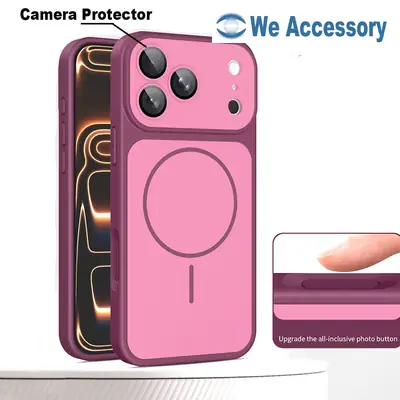
iPhone 18 Pro Max Skin-feeling magsafe case Matte case with build-in camera protection

Recommend Products
-
-
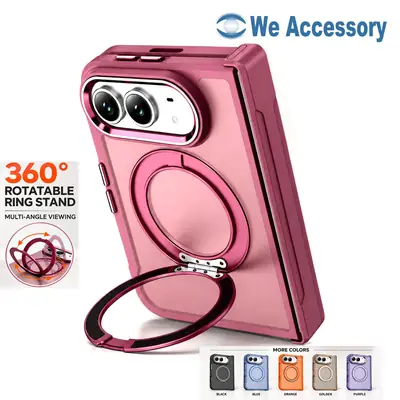 iPhone Duo 360° rotating ring holder case N52 2300 Gauss strong magentic stand case
-
 iPhone 18 Pro Clear Magsafe Case build-in camera protector transparent magnetic case
-
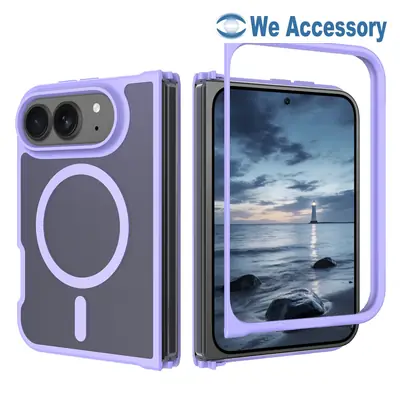 iPhone Duo Matte Magsafe Case Skin-Feeling N52 Strong Magnetic 2in1 Foldable Case
-
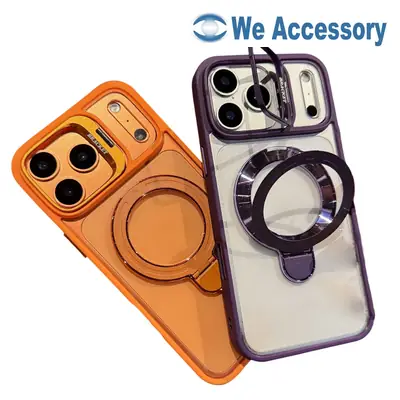 iPhone 18 accessories iPhone 18 Pro 3in1 magnetic holder case camera holder ring holder case
-
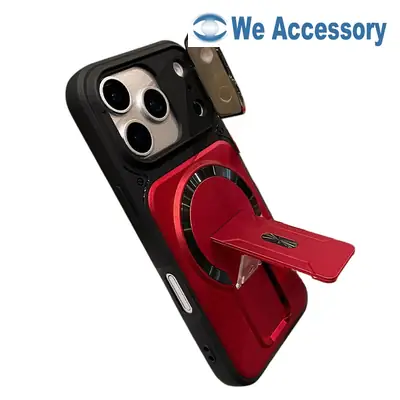 iPhone 18 Pro magsafe holder case glass camera protection and foldable holder case
-
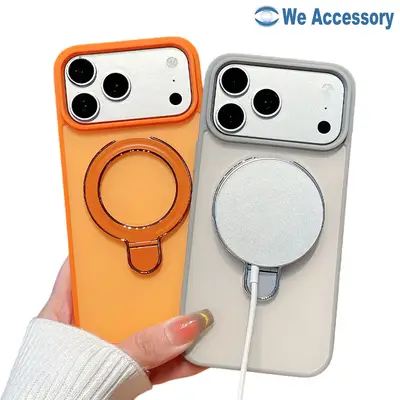 New trend iPhone 18 Pro matte skin-feeling magsafe case ring holder phone holder case
-
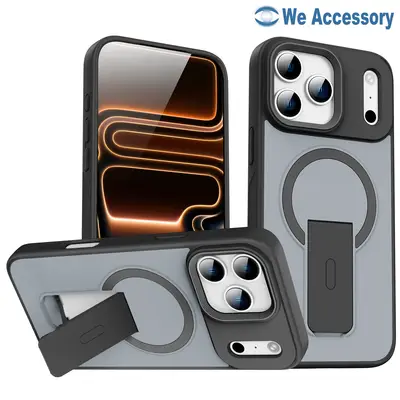 Hot phone accessories iPhone 18 Pro magnetic stand phone case foldable phone holder case
-
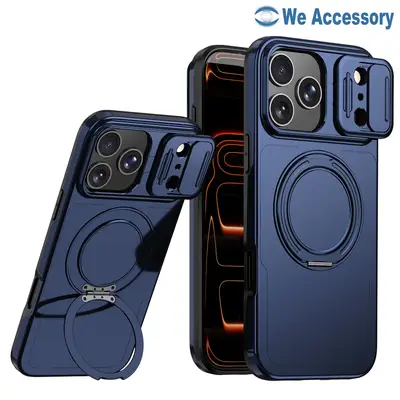 New iPhone 18 Accessories iPhone 18 Pro Ring Holder Case Camera protection Magsafe Case
-
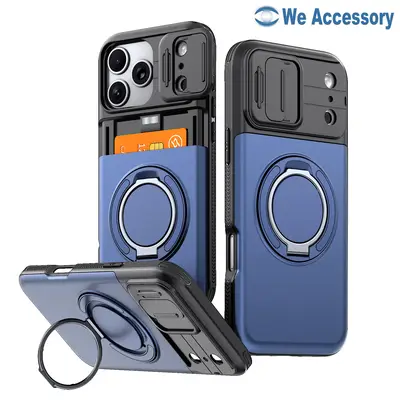 iPhone 18 Pro Max Card Holder Case Magsafe Holder Case Slide Window Camera Protection
-
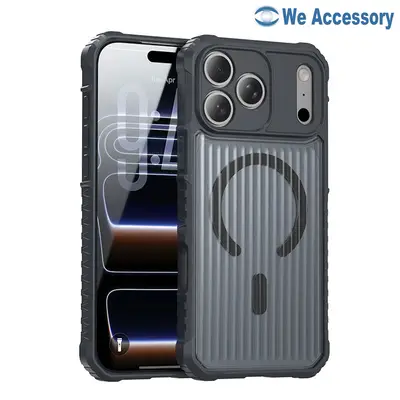 New design iPhone 18 Pro TPU+PC Hybrid Suitcase-Style MagSafe Shatterproof Case
-
 Business demeanor iPhone 18 Pro magsafe leather case 2in1 iphone cover luxury iphone case
-
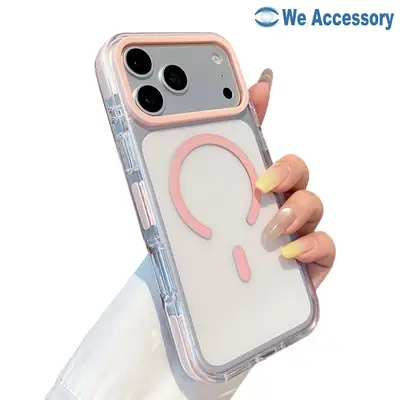 New iPhone Accessories iPhone 18 Pro Clear Magsafe Case double color 2in1 shatterproof case
-
 iPhone Case Distributor Newest iPhone Duo Case TPU+PC 2in1 Full Protective iPhone Case
-
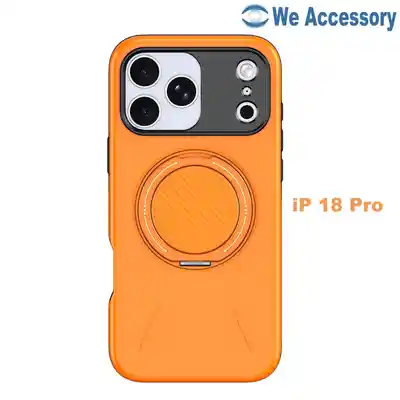 Phone Accessories Company New iPhone 18 Pro Case Magsafe Case with Phone Holder
-
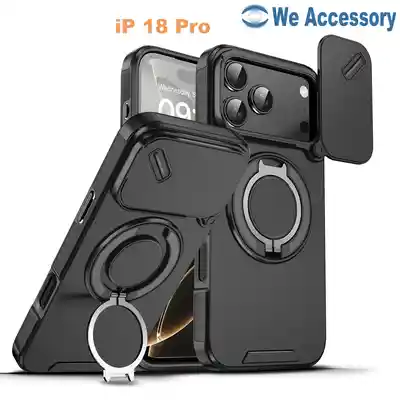 Phone Case Manufacturer New iPhone 18 Pro Max Armor Case Camera Protection and Holer
-
 iPhone 18 Accessories Supplier Newest iPhone 18 Pro Case Wholesale Matte magsafe case
-
 iPhone 18 Pro Case Wholesale Colorful Transparent Magsafe Case New iPhone 18 Pro Case
-
 Wholesale iPhone 17 Jelly 2 in 1 Magsafe Case colorful silicone iphone case
-
 Apple iPhone Case Supplier Colorful iPhone 17 electroplated case so cool case
Product Tags
Phone Case Distributor, Why Cases Crack in the Same Corner Every Time
November 07, 2026
Every month a carton arrives at our office from a four-shop chain in Poznań, and it is not the nicest thing to open. Inside are the phone cases Dorota's staff took back over the previous four weeks: cracked corners, a split at the volume button, one back panel with a star fracture that looks as if a stone hit it. She sends them for two reasons. She wants to know whose fault it is, and a carton of dead stock costs her less than an argument with a supplier.
I have been through eleven of those cartons now. The first thing that strikes you, and the thing I have never once seen mentioned in a quotation, is that the failures are not spread evenly across the box. Forty phone cases from forty different customers, and twenty-two of them broke in the same corner.
Not the same model. Not the same colour. The same corner, on average.
The second thing is that Dorota had been blaming the factory for a year and the factory had been blaming her customers, and both of them were partly right in a way that neither could prove, because neither of them had ever looked at more than three phone cases at once. Three is not a sample. Three is an anecdote with a photo attached.
This article is about what a cardboard box of broken phone cases can tell you that a spec sheet, a quotation and a lab report cannot. It is not about drop ratings, because every supplier in this industry quotes a drop rating and almost none of them mean the same thing. It is about the shapes the cracks make, where they start, and what each shape accuses.

Returned phone cases sorted on a bench by failure type, We Accessory.
A broken phone case is a record of one event
A phone case that has been in service for a year is a fairly boring object. A phone case that has failed is a small recording device. It stores four things: where the impact went in, how far the material was willing to bend, where the geometry told it to stop, and how cold it was when all of that happened.
If you think of a return that way, the argument about fault stops being personal. You are not asking whether the factory is honest or the customer is careless. You are asking which of those four things gave first, and there are only so many answers.
In practice the answers cluster into three families, and they look different enough that a person who has sorted a hundred returns can tell them apart in about two seconds per phone case:
Impact failure, which is one event, usually violent, and leaves a crack that radiates from a point of contact.
Fatigue failure, which is thousands of small events and leaves no radiating crack at all. It leaves whitened material, a softened edge, a phone case that has gone baggy at the sides and slides off in a pocket.
Mould failure, which is no event at all. It is built in at the factory and shows up on the first drop, always in the same place, always on phone cases from the same cavity.
Most of the returns we see are the first, a good number are the second, and the third is rare but the most expensive, because you usually find it after you have shipped four thousand pieces.
The reason this matters commercially is simple. Impact failure is a design conversation you can have with a factory and win, because it comes down to numbers you can put in a purchase order. Fatigue failure is partly a material grade conversation and partly a stocking conversation. Mould failure is a tooling conversation that has an expiry date on it, and the expiry date is when the container lands.
Falls are not random
Here is the part that surprises almost every buyer I have walked through this with. Falls look random and are not. Sort a hundred returns by which corner broke, and a pattern appears that has nothing to do with the phone and everything to do with the human body.
Our own cartons, eleven of them, roughly four hundred phone cases, break down like this. The numbers are ours, not a survey, and I would expect yours to look slightly different depending on whether your market skews to right hands and which pocket people use.
| Where it broke | Share of our returns |
|---|---|
| Bottom-left corner | 31% |
| Bottom-right corner | 22% |
| Top corners (either side) | 9% |
| Star fracture in the back panel | 14% |
| Camera ring or the surround around it | 11% |
| Tear at a button cutout or the port edge | 7% |
| No crack at all — baggy, whitened, loose fit | 6% |
Look at the first two lines together and you have 53% of all failures in two corners of the same end of the phone, with the left side leading by nine points. That is not a coincidence and it is not a factory problem. That is the shape of a right-handed person pulling a phone out of a right-hand trouser pocket with two fingers, watching it slip, and catching nothing.
The other end of the phone barely registers, because when a phone comes out of a pocket and falls, it pivots. The end held by the fingers goes up, the far end goes down, and the far end is the bottom. Nine times out of ten the phone leaves the hand at hip height, rotating, and the first thing that meets the floor is a bottom corner.
This has three consequences that are worth more than the observation itself.
First, a factory that tests its phone case by dropping it flat on its back has tested the part of the product that fails least often. Flat-on-back is where you find the star fractures, which are 14% of returns. It is not where you find the corner cracks that are half of them.
Second, the difference between the bottom-left and bottom-right corner share is a tell about your market. If you sell into a market where phones are carried in bags rather than pockets, the split flattens out and the total corner share drops. If you sell into a market with hard tiled floors in shops and stone pavements outside, everything goes up.
Third, and this is the one that gets forgotten, the same phone case can be fine for a year in one territory and return at 8% in another, and it will be the floor. A marble floor in a shopping centre and a carpet in an office are two different products as far as your warranty is concerned, and neither of them is in the specification.
The energy is small; the stop is not
Now the arithmetic, because this is where buyers usually discover that they have been arguing about the wrong number for years.
A modern phone with a phone case on it weighs somewhere between 180 and 240 grams. Lift it to hip height and drop it, and the energy in play is modest — it is the same order of energy as lifting a bag of sugar onto a table. The relevant figure is mass × gravity × height:
| Phone + phone case | 1.0 m | 1.2 m | 1.5 m | 1.8 m |
|---|---|---|---|---|
| 180 g | 1.77 J | 2.12 J | 2.65 J | 3.18 J |
| 200 g | 1.96 J | 2.35 J | 2.94 J | 3.53 J |
| 240 g | 2.35 J | 2.83 J | 3.53 J | 4.24 J |
Two or three joules. A phone falling off a counter is not a car crash. Nothing here explains a crack on its own.
The number that explains it is the one next to it: how far something is allowed to travel while it stops. Energy is force multiplied by distance, so the same two joules delivered over 1.6 millimetres of corner deflection is roughly half the force of the same two joules delivered over 0.9 millimetres.
| Drop from 1.5 m, phone case absorbing 60% | Stops in 0.9 mm | Stops in 1.6 mm |
|---|---|---|
| Average force at the corner | ~1,310 N | ~735 N |
That is not a subtle difference. It is the difference between a phone case that cracks and the same phone case, same material, same colour, that survives. And it is almost entirely a question of geometry: how much material sits at the corner, and whether there is somewhere for it to go when it gets squeezed.
This is the single most useful idea in this whole article. You cannot reduce the drop. You can only lengthen the stop. Every serious design decision in a protective phone case is a decision about where the phone case is allowed to deform, and by how much, and what happens to the material that gets pushed out of the way.
Which also explains why the two failure modes trade off against each other. A corner that deforms a lot is a corner that will survive a drop and will also, eventually, deform permanently. A corner that deforms very little is a corner that transfers the impact to the phone. There is no version of this that costs nothing.
Contact patch: why 2.5 mm and 6 mm are different products
The second geometric number is the corner radius, and it is the most under-specified dimension in the entire phone case industry. Ask for it in a quotation and you will usually get a picture back.
A rounded corner spreads the impact across an area that grows roughly with the square of the radius. A 2.5 mm corner meets a tiled floor across something like 20 square millimetres. A 6 mm corner meets the same floor across something like 110. Same energy, five times the area to carry it.
| Corner radius | Rough contact area | Pressure per newton |
|---|---|---|
| 2.5 mm | ~20 mm² | 0.051 N/mm² |
| 4 mm | ~50 mm² | 0.020 N/mm² |
| 6 mm | ~113 mm² | 0.009 N/mm² |
| 8 mm | ~201 mm² | 0.005 N/mm² |
I am not going to pretend that a blog post can substitute for finite element analysis, and any supplier who tells you that a radius figure alone decides survival is selling you a number rather than a product. What the table does show is the direction and rough size of the effect, and that is enough to have a useful conversation.
Two things follow. A sharp corner does not just concentrate stress inside the material, it also concentrates it on the floor, which matters when the floor is a small stone aggregate tile rather than a smooth one. And a sharp corner is the corner that chips, which is a different and cheaper failure than a crack but looks worse in a shop.
The cheapest way to make a phone case look sharper, and this is exactly what a cost-down does, is to take two millimetres off the corner radius. It photographs better. It is the reason so many phone cases in the middle of the market look expensive and return badly.
Five signatures, and what each one accuses
If you are going to sort a box, sort it by signature rather than by model, and count. Five shapes cover almost everything I have seen. They are on the next page of this article one at a time, with the cause each one points at and the thing to do about it, but here is the map first so you can see the logic.
| Signature | What it looks like | What it usually accuses |
|---|---|---|
| Corner crack | Radial crack from the corner, often with a small crater | Deflection at the corner; radius, wall thickness, no air pocket |
| Star fracture on the back | Several short cracks radiating from a single point | Point load, not a flat drop; keys in a pocket, a table edge |
| Camera ring split | Crack ring around the lens opening, often one side only | Ring height and thickness; the ring acting as a lever |
| Cutout tear | Clean split from a button or port opening to the edge | Material too thin at the cutout, or wrong grade of TPU |
| Whitening and bagginess | No crack; pale edges, loose fit, yellowing | Fatigue and plasticiser migration, not an impact |
Sort a hundred returns into those five piles and you will find that the piles are not equally distributed across your catalogue. That distribution is the most valuable thing you can send a factory, because it is specific, countable, and impossible to argue with.
The corner crack
This is the signature that fills half the carton, so it deserves the most attention. It starts at the outside of the corner, runs inward and slightly along the edge, and if you look at the break surface under a bright light you can usually see two zones: a smoother, slightly glossy region where the material was pulled apart slowly, and a rougher, duller region where it finally let go. The glossy part is where the crack grew. The dull part is where it broke.
That two-zone structure is worth knowing because it tells you how much of the impact went into the material versus into the phone. A large glossy zone means the phone case was absorbing and the crack took its time. A small glossy zone and a big dull one means the phone case took the load and failed quickly, which is usually the better outcome for the phone and the worse outcome for your return rate.
The cause is nearly always a combination of two things: not enough material at the corner, and nowhere for that material to go. A solid corner is a corner that has to compress its own wall thickness. A corner with a hollow, a pocket, or a set of internal ribs can buckle into that space and spread the load over two millimetres instead of one.
Which is why the cost-down that hurts most is not the one that removes material from the back. It is the one that quietly fills in the internal corner pocket so the tool runs cooler and the cycle is four seconds shorter. On a quotation that is invisible. On a return rate it is not.
What you can specify: a minimum corner wall thickness, a minimum external radius, and — the one almost nobody asks for — whether the corner is solid or has an internal void. Ask for a cross-section drawing of the corner. If the supplier cannot produce one, they are quoting a shape rather than a part.
The star on the back panel
Fourteen percent of our returns, and the one that gets misdiagnosed most often, because it looks violent and usually is not.
A star fracture is several short cracks radiating from a single point on the back of the phone case, often with a small dent or a whitened spot at the centre. It is not what a flat drop produces. A flat drop spreads the load across the whole back and, on a rigid polycarbonate back, usually produces either nothing or a single long crack along the weakest line.
A star is a point load. Something small and hard pressed into the back of the phone case at one place. The usual suspects are the same in every market: keys and a lighter in the same pocket, a phone resting on a bit of grit on a table, the corner of a chair, a car keys lanyard, and — this is the one buyers never believe — the edge of a shopping trolley handle.
The important thing about stars is that they are mostly a thickness-and-stiffness story rather than a drop story. A back panel with 0.8 mm of polycarbonate resists a point load noticeably worse than 1.0 mm, and the difference in material cost is fractions of a cent. Yet it is one of the first places a cost-down goes, because it is invisible in a photo and nobody weighs a phone case at the counter.
There is also a design answer that costs nothing: a slightly domed or ribbed back spreads a point load over a wider area than a flat one. A completely flat back is the cheapest thing to mould and the most likely to star.
The camera ring
Eleven percent, and rising, because the camera bump has been growing on every flagship for five years and the ring around it has become a lever.
Put a phone face-up on a table and the phone rests on the camera ring. Drop it on its back corner and the ring takes a hit at an angle that no other part of the phone case sees. A ring that is raised 1.2 mm above the lens and moulded from the same TPU as the body will fold; a ring that is raised 2 mm and is a separate, stiffer insert will transfer the load into the back panel and crack around its base instead.
Which failure you get depends on the construction, and both are legitimate designs. The mistake is having a ring that is tall enough to be a lever and thin enough to fold, which is what you get when a mould is adapted from last year's model to this year's camera layout in a hurry.
Two specifications matter. The ring's height above the lens, and the wall thickness where the ring meets the back. On the returns I have seen, the split ring is almost always asymmetric: one side of the ring is intact and the other is gone. That asymmetry is a manufacturing tell, not a user tell, because a drop does not know which side of the ring is thinner.
If you get a batch where the ring fails on the same side every time, stop looking at the customer and go and look at the tool.
The tear at the button cutout
Seven percent, and almost always a material question rather than a geometry one, though the two are hard to separate in a photo.
A tear runs from a button opening or the charging port straight out to the nearest edge. The phone case does not crack so much as unzip. It happens because the material at the edge of the cutout is doing two jobs at once: it is thin, because it has to be, and it is the part that flexes every time someone presses a volume button or pushes a cable in.
Two grades of TPU behave very differently here. A softer grade — Shore 82A to 85A — will stretch around a cutout for years and go baggy at the sides instead. A harder grade — 90A and up — holds its shape and tears. Neither is wrong, and the choice should follow how the phone case is worn rather than what the sample felt like in the showroom.
The expensive version of this failure is the one where the tear reaches the port edge and then continues into the bottom corner, because then it looks like a corner crack in the box and gets counted as one. When you sort returns, look at the very start of the crack. If the crack begins at a cutout and runs outward, it is a cutout tear that travelled.
Whitening, bagginess, and the winter crack
Six percent of the box, and the most misread six percent, because these phone cases usually have no crack at all. They come back with a story that sounds like a complaint about nothing: it stretched, it went yellow, it slips off, it feels loose.
What has happened is fatigue. Every button press, every pocket entry, every time the phone case is peeled off and pushed back on, the material at the sides is being flexed well past where it wants to be. Clear and translucent TPU whitens at those flex points — that pale, cloudy line down the side of a phone case that has been on and off a hundred times is not dirt, it is micro-crazing. Once the crazing is there, the material has lost some of its elastic memory, and the phone case that used to grip now slides.
Two things make this worse and both are decisions made before the phone case is moulded: the plasticiser package in the compound, and the amount of regrind mixed back into the pellet. A supplier running 20% regrind to hit a price will produce a phone case that survives the drop test and goes baggy in seven months, and the second failure costs the buyer far more than the first, because it happens during the summer season when nobody wants a complaint.
Then there is the winter crack, which deserves its own line because it is a different physics event. TPU gets stiffer as it gets cold, and on a January morning in a market where the phone has been in a coat pocket at -5°C and then hits a stone pavement, the same phone case that survived a 22°C lab drop can fail in a way the lab will never reproduce. If you sell into Northern Europe, the Nordics or the Baltics, ask for a cold drop. Ask at what temperature. A supplier who says "we test at room temperature" is telling you something honest and something useful.
The seam and the rib: what a mould can and cannot do
I want to make one distinction here that saves buyers a lot of arguing, because it separates two things that sound identical in a complaint email.
A mould can be wrong in a way that is designed in: the corner is too sharp, the wall is too thin, the ring is too tall, the internal pocket has been filled. Those are decisions. They have a fix, and the fix has a price, and you can negotiate about it.
A mould can also be wrong in a way that is not designed in: a short shot that leaves a corner incomplete, a weld line where two flow fronts met on the outside of the corner, flash at the parting line, or a cold slug that left a brittle patch right where the impact lands.
That second list is a process failure, and it shows up in a very specific way — the failures cluster by cavity, by shift, or by date, and not by model. Ten phone cases from the same carton, all failed in the same corner, all from the same mould cavity number: that is a process failure and the factory owes you a batch.
Ten phone cases from three different cartons across four months, all failed in the same corner: that is a design failure and the factory owes you a tooling conversation.
The tell that separates them is on the break surface. A weld line leaves a visible line on the outside of the phone case before it fails, and the crack will follow it exactly, because a weld line is the weakest plane in the part by construction. Once you know to look for a faint matte stripe running across the outside of a corner, you will start seeing them on new samples too, and that is a free early warning.
A hundred phone cases, one afternoon, one spreadsheet
Everything above is worth nothing unless you do the sorting once, properly, because a photo of one cracked phone case proves nothing and a box of forty slowly becomes an argument.
The method is boring and it works. Take every return from a quarter. Lay them out on a long table, all facing the same way, and photograph the whole table from above — that photograph is the single most useful document in this whole exercise, because patterns you cannot see in your hand show up instantly in a wide shot. Then number them with sticky notes and fill in six columns.
Model and colour. Which corner or area failed. The crack shape, in one word from a short list you invent yourself (radial, star, tear, whitening, nothing). The phone case's age in months, from the date code or the customer's account history. Whether the phone inside survived, which the customer can usually tell you. And the batch or carton number, which is on the carton and not on the phone case, so this one takes a phone call.
One afternoon gets you through a hundred phone cases with two people and a pot of coffee. The output is a count per signature, and the count is what a factory cannot wave away.
Two rules for reading it. First, express everything as a share of returns rather than a number, because your sales volume moves and returns move with it. Second, always run the same sheet on your best-selling line as a control, so you are not mistaking a popular phone case for a bad one. If your 31% corner share sits inside a line that is 40% of your turnover, it is not an outlier, it is the average.
What you do with the result is where a phone case distributor earns their margin, and it is also where most buyers waste the data. The obvious move is to send the factory an email saying "your corners are weak". The useful move is to send them the count, the two photographs, the model list, and the question: what is the wall thickness at the failing corner, and is there a void inside it.
A factory that can answer that question in a day is a factory worth keeping. A factory that answers with a picture of a different phone case is telling you something too.

A corner crack in a phone case, and the wall thickness behind it.
Telling a design fault from a bad Tuesday
The single most expensive misdiagnosis in this category is treating a design fault as a run of bad luck, or the reverse — blaming a tool for what a customer did on a stone floor.
There are three cheap discriminators and you can apply them in about ten minutes.
The first is spread. A design fault is spread evenly across time: it shows up in every carton, in roughly the same share, for as long as the mould runs. A process fault clusters: three weeks of failures, then nothing, then three weeks again when the same shift runs the same tool.
The second is position. A design fault appears in the same place on the phone case regardless of who returns it. A process fault appears in the same place at the same time, which sounds identical until you check the batch numbers and find they are all from one cavity or one day.
The third is the phone. If the phone behind the phone case survived every time, the phone case did its job and the crack is a cost of doing business — annoying, not alarming. If the phones are failing too, the phone case is not dissipating energy at all and you have a much bigger problem than returns.
There is also a fourth check that saves a lot of pointless argument, and it is the one nobody likes doing: ask what the customer was doing. Not to shift blame — to classify. A marble floor, a tiled bathroom, a car dashboard in August, a child, a bike, a ladder. Write the answer in a column. After fifty entries you will see that a share of your returns come from a floor type that no phone case in your range can survive, and that share is the floor beneath which your return rate cannot go, no matter what you buy.
Knowing that number changes the conversation with a retailer. If 2.4% of your returns are marble, and your overall return rate is 4%, then what you are actually managing is 1.6 points and the rest is geography.
The stairwell drop test
You do not need a lab to test this, and you should not let anyone tell you that you do. You need a stairwell, a dummy phone that weighs the same as a real one, six phone cases from the batch, and forty minutes.
The protocol that has worked for us, and which is honest about its own limits:
Use a phone-shaped weight, not a real phone, because the point is the phone case and the weight is the input. Drop from 1.2 metres, which is roughly the height a phone leaves a hand at, not 1.5, because 1.5 is a marketing number that makes the failure you get look worse than the one your customers get. Drop the same phone case three times on the same corner and then stop, because the fourth drop tests nothing a customer will ever do.
Six faces, three units per face, and record it as a pass or fail per face rather than inventing a score out of ten. Score of ten is what a factory gives itself.
Then do the part almost nobody does: repeat the whole thing on a hard floor and on a carpeted one, and write both numbers down. The gap between them is the single best explanation you will ever have for why one retailer complains and another does not.
And if you sell into a cold market, run the six faces once more after leaving the phone cases outside for a couple of hours in January. The failures you get there are not representative of the lab and they are entirely representative of your customers.
Two results are worth acting on immediately. A corner that fails on the first drop in two or more of the three units is a mould that needs a conversation this week. A phone case that survives six faces at room temperature and fails four of six in the cold is a material grade problem, and it will not show up in any test your supplier is currently running.
Six numbers that decide whether the next drop is a scratch or a crack
If you take nothing else from this article into your next negotiation, take this list. None of these are exotic and all of them can be settled in a single email before a mould is cut.
Wall thickness at the four corners, in millimetres, on a drawing rather than a photo. It is usually thinner than the back, because the plastic has to flow into the corner at the end of the fill, and the corners are where half your returns happen.
External corner radius, with a stated minimum. Anything under 2 mm is a design decision to look sharp, and it should be a conscious one rather than an accident of a reused tool.
Whether the corner has an internal void or rib, and how deep. This is the dimension that turns 1,310 newtons into 735, and it is almost never specified.
The camera ring height above the glass, plus the ring's wall thickness where it meets the back. Tall and thin folds; tall and thick levers the back panel. Both are honest designs, but you should know which one you bought.
The TPU hardness, in Shore A, and the regrind cap as a percentage. A 90A phone case that grips hard and tears at a port, an 85A that flexes and goes baggy at eight months — and a 20% regrind cap that quietly converts the first into the second.
A named drop protocol, with a height, a face list, a unit count and a temperature. "Drop tested" as two words on a spec sheet is worth the paper it is written on and no more.
Any supplier who can answer those six in a document inside a week is a supplier you can build a range with. Any supplier who answers with "our engineer says it is very strong" is telling you exactly what kind of relationship you are about to have, and it is cheaper to learn that now than in a carton.
What the pattern tells you to reorder, and what to drop
The last thing to do with a sorted box is let it change your assortment, because this is the payoff and it is not the one people expect.
Six months of signatures usually show one line carrying a lot of claims for a small share of sales. That line is the cheapest thing you own to fix: drop it, or replace it with a slightly thicker mould from the same family, and your return rate falls without any change to the rest of the catalogue. For a phone case distributor the arithmetic on that trade is almost always obvious once you look — a phone case with a thin corner does not lose you the price of the phone case, it loses you the phone case, the freight, the handling, the credit note and about forty minutes of somebody's time.
There is a second pattern worth acting on, and it is subtler. The failures concentrate on the models you sell deepest, because depth is what exposes a mould. A phone case you buy forty of will be judged on forty customers. A phone case you buy four thousand of will be judged on four thousand, and it will fail in a proportion of them no matter how good it is. That is not a reason to buy shallow — it is a reason to spend your specification effort where the volume is, and to accept that the thin tail will always look cleaner than the head.
And one thing to stop doing. Stop buying the same phone case in four colours from a tool you have never asked about, and then wondering why two of the colours fail more often. They do not, usually. What happens is that one colour is your volume colour and gets the exposure, while the others sit on a shelf. The failure was always there, distributed by your own buying rather than by the mould.
The box of phone cases on Dorota's desk gets sorted every quarter now, and the argument about fault has been replaced by a page of numbers she sends with the reorder. Her return rate did not fall because she changed suppliers. It fell because she stopped guessing which corner to blame.

Every carton still on the floor is a sentence about your forecast.
About We Accessory
We Accessory has supplied phone cases, tempered glass and mobile accessories to wholesalers, distributors and retail chains since 2012. We run our own tooling and share the boring engineering numbers — corner wall thickness, camera ring geometry, TPU grade, drop protocol — with buyers who ask for them, because a phone case that comes back is expensive for everyone in the chain.
If you want a second opinion on a return rate that does not add up, send us the numbers. We will tell you honestly whether the fault sits in the mould or in the floor.
Address: 2F, Block A2, Nanchang Industrial Area, Xixiang Town, Bao'an District, Shenzhen, China
Tel: +86-755-36818832
WhatsApp: +86-15919800304
Email: [email protected]
Web: weaccessory.com
— William Shaw, Head of Sales at We Accessory
For wholesale iPhone cases, the category page below lists the full range; the products underneath are the ones that move fastest. For the wider range, see phone accessories wholesale.
Products buyers order most
Share:


Why Choose We Accessory
14+
Years Experience
2000+
Product SKUs
50+
Countries Served
OEM
& ODM Service
2-4
Day Delivery
Professional Phone Accessories Wholesale Supplier
We Accessory has supplied phone cases and tempered glass screen protectors since 2012 to importers, repair chains and online sellers in 50+ countries. Stock items ship from 50 pcs in 2 to 4 working days; custom logo, colour and retail packaging start from 1,000 pcs.
Frequently Asked Questions
Where is We Accessory located?
We are located in Shenzhen.
What products do you offer?
Phone cases and tempered glass screen protectors for all major phone brands, in stock from 50 pcs per model.
Do you offer OEM and ODM service?
Yes. Custom logo, colour and retail packaging start from 1,000 pcs per model; stock items ship from 50 pcs.
What is your shipping time?
In-stock items ship in 2 to 4 working days by DHL, FedEx or UPS. Custom orders take 10 to 20 days in production, plus shipping.
We Accessory (WeAccessory.com)
Address:2F, Block A2, Nanchang Industrial area, Xixiang Town,Bao'an District, Shenzhen
Tel: +86-755-36818832
Mobile/Whatsapp: +86-15919800304
Email: [email protected]
Microsoft Teams: william.shaw186
Product Tags
Contact us Now!
Please send us your Email address if you'd like some products



Copyright © 2012-2026 Shenzhen Western Electronic Co., Ltd All Rights Reserved. Sitemap | Best Phone Case Wholesale, Tempered Glass Screen Protector, USB Charger, Cable, other Mobile Accessories Wholesale