 English
 Français
 Deutsch
 Español
 Italiano
Address:2F, Block A2, Nanchang Industrial area, Xixiang Town,Bao'an District, Shenzhen
Tel: +86-755-36818832
Mobile/Whatsapp: +86-15919800304
Email: [email protected]




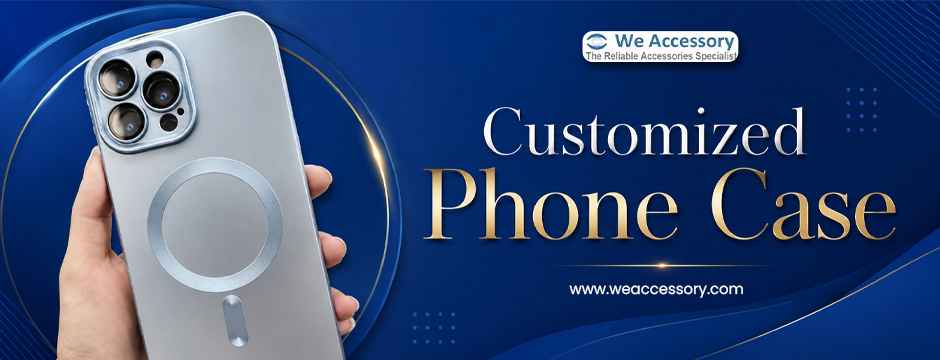
A wholesaler in Germany once made a costly mistake during the iPhone 15 launch in 2023. He ordered 10,000 standard phone cases — slim polycarbonate shells that had always sold well. But he paid little attention to one detail that would soon cost him dearly: MagSafe compatibility.
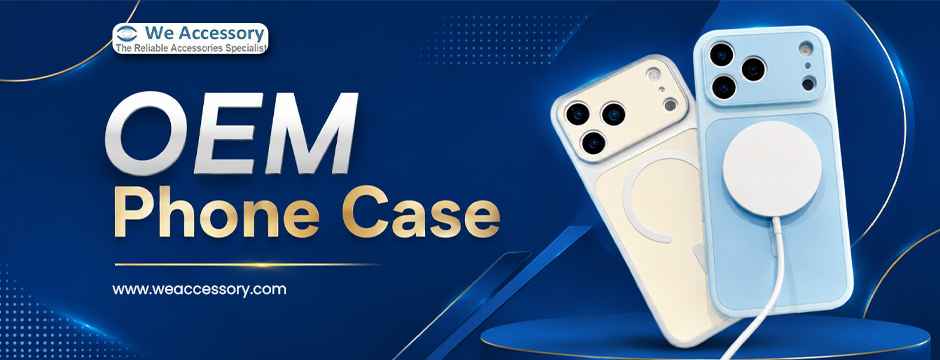
Within the first month of sales, his retail clients started calling. Customers were returning cases because their MagSafe chargers wouldn’t attach properly. The magnetic ring was either missing entirely or too weak to hold a connection. The wholesaler lost nearly €40,000 in returned inventory and missed an additional €60,000 in potential sales — a nearly €100,000 swing caused by one overlooked feature.
Fast forward to 2026, and MagSafe compatibility is no longer a “nice to have” feature. It is the standard. According to market data from Amazon’s 2026 best-seller rankings, over 70% of the top-selling phone cases now feature MagSafe magnet integration. Retailers who neglect this segment are leaving significant revenue on the table.
This guide is written for wholesale buyers, distributors, importers, and retailers who want to understand the MagSafe phone case market in 2026. Whether you are a mobile phone accessories wholesale distributor planning your next inventory order, a phone case wholesale buyer researching suppliers, or a retailer looking to expand your MagSafe product line, the insights in this article will help you make informed, profitable decisions.
When Apple first introduced MagSafe with the iPhone 12 in 2020, it was primarily a wireless charging feature. A ring of magnets embedded in the back of the phone aligned perfectly with MagSafe chargers, enabling faster wireless charging at up to 15W.
Six years later, MagSafe has evolved into a full-fledged ecosystem. In 2026, MagSafe encompasses:
The common thread across all these accessories is a strong, precisely positioned magnetic ring inside the phone case. Without it, the entire ecosystem breaks down.
The global phone case market was valued at approximately $25 billion in 2025, with MagSafe-compatible cases accounting for an estimated 45% of that total and growing. Industry projections suggest that by 2028, over 80% of all phone cases sold will be MagSafe-compatible.
For wholesale buyers, this trend creates both an opportunity and a risk. The opportunity lies in capturing the growing demand for MagSafe products. The risk lies in being left with inventory that customers no longer want.
A phone case wholesale supplier who cannot provide quality MagSafe cases is effectively locked out of the fastest-growing segment of the accessories market.
Today’s smartphone customers — particularly those purchasing premium devices like the iPhone 18 Pro and Pro Max — have clear expectations:
For wholesale buyers, understanding these expectations is the first step toward selecting the right MagSafe phone case manufacturer and product line.
Not all MagSafe cases are created equal. A high-quality MagSafe case requires precise engineering, quality materials, and rigorous testing. Here is what wholesale buyers should look for.
The heart of any MagSafe case is its magnet array. The key specifications to evaluate are:
| Specification | Low Quality | Acceptable | Premium |
|---|---|---|---|
| Magnet grade | N35 or unspecified | N52 | N52H (high-temperature) |
| Magnet count | 15-20 magnets | 36-48 magnets | 48+ magnets |
| Holding force | Under 800g | 800-1200g | 1200-1800g+ |
| Alignment tolerance | ±1.0mm or more | ±0.5mm | ±0.3mm or better |
| Magnet coating | Uncoated | Nickel-plated | Nickel + epoxy coating |
Why magnet grade matters:
N52 neodymium magnets are the industry standard for quality MagSafe cases. They provide the strongest magnetic field in a compact form factor. Some budget phone case manufacturers use N35 or unlabeled magnets that may hold a charger in place while the phone is stationary, but will fail under vibration (car mounts) or when slight pressure is applied.
Why magnet count matters:
A full MagSafe magnet array contains 36-48 individual magnets arranged in a circular pattern. Cheaper cases may use fewer magnets or a continuous magnetic strip, both of which result in weaker and less uniform magnetic fields.
Why coating matters:
Uncoated neodymium magnets are susceptible to corrosion over time, especially in humid environments. Nickel plating provides basic protection, but premium MagSafe phone case manufacturers apply an additional epoxy coating that prevents corrosion even under extreme conditions.
The magnet array in a MagSafe case must align with the iPhone’s internal MagSafe ring within ±0.5mm. Misalignment causes:
A reliable phone case manufacturer uses precision tooling and quality control processes to ensure consistent alignment across every case produced.
MagSafe cases come in various materials, each with its own advantages and considerations for magnetic compatibility:
TPU (Thermoplastic Polyurethane)
Polycarbonate (PC)
Silicone
Leather (PU / Genuine)
Aramid Fiber (Kevlar)
One often-overlooked aspect of MagSafe case design is heat management. Wireless charging generates significant heat, particularly at 25W speeds. A poorly designed case can trap heat, leading to:
Quality MagSafe phone case manufacturers address this through:
MagSafe cases must balance magnetic functionality with drop protection. A case that holds a charger perfectly but fails to protect the phone from a waist-height drop is not a quality product.
For wholesale buyers, the key certifications to look for are:
“A MagSafe case that provides excellent magnetic performance but fails during a standard drop test is a liability for retailers. Returns, refunds, and negative reviews cost far more than the savings from using cheaper materials. Quality phone case manufacturers understand that a MagSafe case must excel in both areas.”
Clear MagSafe cases are consistently among the highest-volume SKUs in the phone case wholesale market. They allow customers to show off their phone’s original color while benefiting from MagSafe functionality.
Key features for wholesale buyers:
Market trends in 2026:
As smartphones become thinner (despite the iPhone 18 Pro Max’s 9mm thickness), demand for ultra-slim cases continues to grow. These cases offer basic scratch protection while maintaining the phone’s original profile.
Key features for wholesale buyers:
Market trends in 2026:
Rugged cases remain essential for customers in construction, logistics, outdoor recreation, and other physically demanding environments. The challenge for phone case manufacturers is combining military-grade drop protection with strong MagSafe functionality.
Key features for wholesale buyers:
Market trends in 2026:
Wallet cases that combine phone protection with card storage continue to be popular across markets. MagSafe compatibility adds the ability to use the case with MagSafe chargers and car mounts — a feature that standard wallet cases lack.
Key features for wholesale buyers:
Market trends in 2026:
The premium segment of the phone case market continues to grow, with customers willing to pay $40-$80 or more for design-forward cases. For phone case manufacturers, this segment offers the highest margins.
Key features for wholesale buyers:
Market trends in 2026:
One of the most profitable strategies in the phone accessories wholesale market is creating exclusive, branded MagSafe cases through OEM manufacturing.
For wholesale buyers who serve retail clients directly, or for retailers building their own brand, OEM MagSafe cases offer several advantages over generic products:
Brand Recognition
Higher Margins
Quality Control
Market Differentiation
Working with a phone case manufacturer for OEM MagSafe cases typically involves these steps:
Step 1: Design and Specification
Provide your design concept, target specifications, and desired materials. A quality phone case manufacturer will also offer design suggestions based on their manufacturing expertise.
Step 2: Mold Development
The manufacturer creates precision molds for your case design. For MagSafe cases, this includes the exact positioning of the magnet array. Mold development typically takes 15-30 days.
Step 3: Sample Production
The manufacturer produces sample units for your approval. This is the critical stage where MagSafe alignment, magnet strength, and overall quality are verified.
Step 4: Testing and Refinement
Samples undergo drop testing, MagSafe charging testing, and material quality testing. Any issues are addressed before mass production begins.
Step 5: Mass Production
Approved designs go into mass production. A reliable phone case wholesale supplier will provide regular quality checks throughout production.
Step 6: Packaging and Shipping
Cases are packaged according to your specifications and shipped to your warehouse or directly to your customers.
When working with a phone case manufacturer for OEM MagSafe cases, wholesale buyers should pay special attention to:
Magnet Sourcing
Alignment Verification
Material Specification
Minimum Order Quantities (MOQ)
At We Accessory, we offer comprehensive OEM phone case manufacturing services for MagSafe cases. Our production lines use N52-grade neodymium magnets with precision alignment tooling, ensuring every case delivers consistent magnetic performance. We work with wholesale buyers at various scales, from 500-unit trial orders to full container shipments.

When sourcing MagSafe cases, not all suppliers are equal. Here is a systematic evaluation framework:
1. Request Samples — Always
Before placing a wholesale order, request 3-5 sample units from the manufacturer. Test them with:
2. Verify Magnet Specifications
Ask the manufacturer for:
3. Check Production Capability
4. Compare Total Cost, Not Unit Price
The cheapest MagSafe case often has:
Calculate the total cost including expected return rates, customer service overhead, and lost future sales from dissatisfied customers.
Managing MagSafe case inventory requires thoughtful SKU planning. Here is a recommended strategy:
Core SKUs (50% of inventory):
Premium SKUs (30% of inventory):
Niche SKUs (20% of inventory):
MagSafe case demand follows predictable patterns aligned with iPhone launch cycles:
| Period | Demand Characteristics | Recommended Action |
|---|---|---|
| Pre-Launch (Aug) | Speculative demand | Place initial orders for core SKUs |
| Launch Month (Sep) | Spike in premium case demand | Ramp up inventory; expedite shipments |
| Post-Launch (Oct-Nov) | Sustained high demand | Reorder fast-moving SKUs; introduce premium SKUs |
| Holiday Season (Dec) | Peak volume, gift purchases | Maximize inventory of all SKUs |
| Q1 (Jan-Mar) | Stabilized demand | Evaluate results; plan for next cycle |
| Q2-Q3 (Apr-Aug) | Replacement and upgrade purchases | Maintain core SKUs; clear slow-moving inventory |
A phone case wholesale supplier with stable production capacity and flexible order fulfillment can help wholesale buyers navigate these demand cycles without overstocking or running out of inventory.
Even experienced wholesale buyers can encounter quality problems with MagSafe cases. Here are the most common issues and how to prevent them.
Symptoms: MagSafe charger detaches when phone is picked up; car mount loses grip on bumpy roads; wallet falls off in pocket.
Cause: Low-grade magnets (N35 or below), insufficient magnet count, or incorrect magnet placement.
Prevention:
Symptoms: Phone charges slowly or heats up excessively during MagSafe charging; charging stops and starts intermittently.
Cause:
Prevention:
Symptoms: After weeks or months of use, the magnets shift position, causing misalignment and weak hold.
Cause: Magnets were not properly secured within the case material. In lower-quality cases, magnets are simply placed in a pocket within the case rather than being bonded or encapsulated.
Prevention:
Symptoms: Cracks appear on the back of clear or hard cases around the magnet ring area.
Cause: Thermal expansion differences between the magnets and case material, combined with stress from repeated attachment and detachment of MagSafe accessories.
Prevention:
Symptoms: Crystal-clear case turns yellow or amber within weeks or months.
Cause: UV exposure and heat from wireless charging accelerating the degradation of lower-quality TPU and polycarbonate materials.
Prevention:
“Cheap MagSafe cases create expensive problems. A case that fails due to weak magnets, poor alignment, or material degradation doesn’t just generate a return — it erodes customer trust. For wholesale buyers, investing in quality MagSafe cases from a reliable phone case manufacturer is not an expense; it is a strategy for sustainable business growth.”
The iPhone 18 Pro and iPhone 18 Pro Max, expected to launch in September 2026, will continue and expand the MagSafe ecosystem. Based on current information available in mid-2026:
Continued MagSafe Compatibility
MagSafe remains a core feature of the iPhone 18 series. The magnet array design is expected to remain consistent with the iPhone 17 Pro series, meaning MagSafe cases designed for the iPhone 17 Pro should be compatible with the iPhone 18 Pro in terms of magnet alignment.
However, the iPhone 18 Pro’s redesigned camera module with its variable aperture main camera means case cutouts must be updated. Phone case manufacturers must create new molds for the iPhone 18 series to accommodate the different camera bump dimensions.
Increased Wireless Charging Speed
Reports suggest the iPhone 18 Pro may support up to 30W MagSafe charging, up from the 25W maximum on current models. This places greater demands on case heat dissipation. Cases with poor thermal management may throttle charging speed or cause overheating.
Implications for Wholesale Buyers
1. MagSafe remains essential — Every phone case SKU you stock for the iPhone 18 series should be MagSafe-compatible. Non-MagSafe cases will be increasingly difficult to sell.
2. Heat management is more important — With higher charging speeds, cases with poor heat dissipation will generate more customer complaints.
3. Camera cutouts must be precise — The variable aperture camera requires accurate cutouts. Generic or mismatched cases will not fit properly.
4. OEM opportunity — The iPhone 18 launch is an ideal time for retailers and brands to introduce exclusive MagSafe case lines.
A MagSafe-compatible case contains the exact magnet ring pattern (36-48 individual magnets in a circular array) that aligns with Apple’s MagSafe specification. A “magnetic” case may contain magnets in a different pattern or configuration. MagSafe-compatible cases ensure full functionality with Apple MagSafe chargers and accessories. Generic magnetic cases may work with chargers but often provide weaker hold and slower charging speeds. Always verify MagSafe certification or explicit MagSafe-compatible labeling.
Yes. If the case material between the magnet ring and the phone is too thick, wireless charging efficiency decreases. Most quality MagSafe cases keep the total thickness in the charging area under 3mm. Ultra-slim cases (under 1mm) provide excellent charging performance but less drop protection. Rugged cases (over 3mm) require stronger magnets to maintain a reliable connection. The sweet spot for most wholesale buyers is a case in the 1.5-2.5mm thickness range.
Request samples and test them. Use a MagSafe charger to verify attachment strength and charging speed. Use a MagSafe car mount on a rough road to test vibration resistance. Use a MagSafe wallet to test secure attachment. A reputable phone case wholesale supplier will welcome these tests and may provide test data upfront. We Accessory encourages all wholesale buyers to request samples and verify quality before placing bulk orders.
MOQ varies by manufacturer and case complexity. At We Accessory, our OEM MagSafe case MOQ typically starts at 500 units per design for standard materials (TPU, polycarbonate). Premium materials (aramid fiber, genuine leather) and complex designs may have higher MOQ requirements. Contact our sales team to discuss your specific requirements.
Yes. MagSafe cases are fully compatible with standard Qi wireless chargers. The magnet ring does not interfere with Qi charging. In fact, many MagSafe cases improve Qi charging by providing accurate alignment guidance to the user (the magnets help center the phone on the charger pad). The reverse is not always true — standard Qi chargers do not provide the alignment benefit of MagSafe chargers.
The magnet alignment should be compatible since Apple has not changed the MagSafe magnet position. However, the camera module design is different on the iPhone 18 Pro (variable aperture, different bump dimensions). Cases designed for iPhone 17 Pro will NOT have the correct camera cutouts for iPhone 18 Pro. Wholesale buyers must ensure their phone case manufacturer updates case molds for the iPhone 18 series.
While there is no official “Apple-certified MagSafe” program for cases (Apple reserves MagSafe certification for active electronic accessories), wholesale buyers should look for:
Yes. Custom packaging is an important part of OEM phone case services. We Accessory offers:
Since 2012, We Accessory has been a trusted phone accessories wholesale supplier for retailers, distributors, and brands worldwide. Our MagSafe phone case production combines precision engineering with quality materials to deliver products that perform reliably in real-world use.
Our MagSafe Case Features:
Our Products:
Contact We Accessory:
Understanding pricing and margins is essential for wholesale buyers evaluating MagSafe case investments. Here is a typical breakdown:
| Case Type | Typical Wholesale Price (USD) | Typical Retail Price | Gross Margin |
|---|---|---|---|
| Basic TPU MagSafe case | $1.50 – $3.00 | $9.99 – $19.99 | 50-70% |
| Clear transparent MagSafe case | $2.00 – $4.00 | $12.99 – $24.99 | 50-65% |
| Ultra-slim aramid fiber MagSafe | $5.00 – $12.00 | $29.99 – $59.99 | 55-75% |
| Leather MagSafe wallet case | $4.00 – $8.00 | $24.99 – $44.99 | 55-70% |
| Rugged MagSafe case | $3.50 – $7.00 | $19.99 – $39.99 | 55-70% |
| OEM custom MagSafe case | $3.00 – $10.00+ | $19.99 – $79.99 | 60-80% |
Materials: Premium materials (aramid fiber, genuine leather) command higher prices but also enable higher retail margins.
Magnet Quality: N52 magnets cost 20-40% more than lower-grade alternatives but dramatically reduce return rates.
Production Volume: Larger orders typically achieve 15-30% lower per-unit costs.
Packaging: Custom retail packaging adds $0.30-$1.00 per unit but increases perceived value and enables premium pricing.
Certifications: ISO, CE, FCC, and drop-test certifications add credibility and allow access to higher-end retail channels.
A wholesaler recently compared two suppliers of clear MagSafe cases:
Supplier A (Budget): $1.80/unit, N35 magnets, basic TPU material, no UV protection
Supplier B (Quality): $3.20/unit, N52 magnets, UV-resistant polycarbonate + TPU, precision tooling
At first glance, Supplier A saves $1.40 per unit. But after considering:
…the actual cost difference becomes negligible, and Supplier B offers significantly better total value.
For wholesale distributors and retailers, the recommended pricing strategy is:
The most profitable wholesalers typically carry all four tiers, allowing retail customers to choose based on their target market and budget.
The MagSafe phone case market is not just growing — it is becoming the standard. By 2028, non-MagSafe cases will likely be a niche product. Wholesale buyers who invest in quality MagSafe cases now will capture market share that latecomers will struggle to reclaim.
Here is your action plan:
1. Evaluate your current MagSafe case inventory — Do your cases use quality N52 magnets? Is the alignment precise? Are materials durable?
2. Diversify your MagSafe product range — Cover the key segments: clear, ultra-slim, rugged, wallet, and premium designer.
3. Consider OEM manufacturing — Exclusive MagSafe case designs create brand value and protect margins from price competition.
4. Partner with a reliable manufacturer — Quality, capacity, and consistency matter more than unit price, especially for MagSafe products where poor quality creates expensive returns.
5. Prepare for iPhone 18 — The September 2026 launch is a prime opportunity to introduce or expand your MagSafe case line.
The market is moving toward MagSafe. The question is not whether to invest in MagSafe phone cases, but how quickly you can build a quality MagSafe product line that serves your customers and grows your business.
We Accessory — The Reliable Phone Accessories Wholesale Specialist Since 2012
Phone cases | Tempered glass screen protectors | MagSafe accessories | OEM manufacturing | Wholesale supply
Address:2F, Block A2, Nanchang Industrial area, Xixiang Town,Bao'an District, Shenzhen
Tel: +86-755-36818832
Mobile/Whatsapp: +86-15919800304
Email: [email protected]


