 English
 Français
 Deutsch
 Español
 Italiano
Address:2F, Block A2, Nanchang Industrial area, Xixiang Town,Bao'an District, Shenzhen
Tel: +86-755-36818832
Mobile/Whatsapp: +86-15919800304
Email: [email protected]



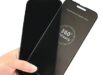

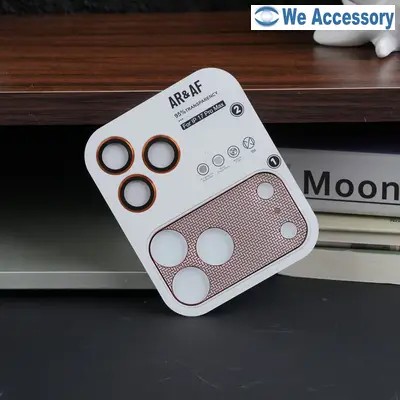
A buyer in Malmö wrote to me in February with a one-line request. She wanted the strongest camera lens protector we make, for a range of eleven iPhone models, and she wanted it before the end of March. Strongest, in her vocabulary, meant the metal one with the aluminium ring around it. She had already seen it on a competitor’s shelf and had decided that was the product her customers were missing.
She ordered it. She came back in June with a different problem. Her accounts were telling her the case no longer fitted. Two of them had cracked the ring itself, at the top left corner, on the same model, on two separate drops. One had a customer who could not use a clamp-style car mount any more because the phone had grown two millimetres at the back.
None of that is a defect. It is what that product is. The metal armour does exactly what it promises and then charges for it in height, in tolerance, and in the fact that a rigid aluminium ring transfers impact into the only thing behind it rather than absorbing it. She had bought the strongest lens protector. What she needed was the right one, which is a different question and, in my experience, the question that camera lens protector wholesale buyers get wrong more often than any other in this category.
This article is about that. Not whether lens protectors are worth selling, which they are, but that the four products sold under that one name are answers to four different failures, and that each one belongs to a different buyer: the repair bench, the retail shelf, the online listing and the prepaid counter. How to choose between them is a matter of looking at what your customers actually drop, scratch and complain about. I will go through the material the things are made of, the transmission figures that are quoted at you and what they mean, the strength claims and where a lens disc really breaks, and then the four types one at a time.
The category has no agreed vocabulary, which is the root of most of the confusion. Walk into a factory showroom and you will see flat tempered discs, curved discs that follow the edge of the camera plateau, aluminium frames with a glass window set inside, and rings with a wide polished bevel that sit around the lens like a spectacle frame. Buyers call all of them camera lens film, lens protector, lens glass, or in the trade shorthand, just “the lens piece”.
The four types, in the order most people encounter them:
Each of those has a different cost, a different failure mode, and a different customer. The mistake, and it is the standard mistake, is to treat them as four grades of the same thing, in which the metal one is the best because it is the heaviest and the most expensive. That is how a buyer ends up with a pallet of a product that is right for maybe one account in twenty.
The word glass covers a range of substrates that behave very differently, and the difference shows up in the only test that matters, which is what happens to the disc when something hits the corner of the camera plateau.
Almost all lens protectors are made from a soda-lime float glass, the same family used for ordinary screen protectors, at 0.33 mm, 0.4 mm or 0.5 mm. It is cheap, it cuts cleanly, and it takes a chemical strengthening treatment well. A smaller share is made from an aluminosilicate glass, which costs somewhere between two and four times as much per square metre depending on the grade and the source, and which holds a deeper compressive layer after strengthening. Sapphire is quoted on some metal armour products. Real sapphire windows exist and are expensive. A great many “sapphire” lens protectors are aluminosilicate with a hard coating, and the honest suppliers will tell you which one you are buying if you ask directly.
The strengthening step is where most of the marketing language lives. Two processes get called tempering. Thermal tempering heats the glass close to softening and quenches it, which builds a thick compressive layer but distorts thin glass badly, and distortion is fatal in an optical part. Chemical strengthening soaks the glass in a molten potassium nitrate bath somewhere around 400 degrees Celsius, and potassium ions swap places with sodium ions in the surface, which is how a 0.33 mm disc gets a compressive layer of perhaps ten to twenty microns without changing shape. That layer is what stops a scratch from propagating into a crack. It does not make the disc unbreakable, and it does not survive a bad edge.
Which brings up the part nobody quotes. On a disc this small, the edge is the whole story. A cut edge with micro-chipping will crack under an impact that a polished edge shrugs off, because the chip is already a crack tip, and stress concentrates there. This is why two factories can sell you the same 0.33 mm chemically strengthened glass at a fifteen percent price difference and both be telling the truth. One runs the discs through a CNC edge grind and a polish, the other stamps them and packs them. Under a lamp you can see it. Under a fingernail you can definitely feel it.
Then the coating. An anti-reflective stack is not a single layer. It is typically three to six alternating layers of silicon dioxide and titanium dioxide, each a quarter-wavelength thick at the design wavelength, applied by vacuum sputtering or evaporation. Each layer costs money and time, and each layer is a chance for the process to drift. That is why the AR question “how many layers” is a better question than “what percentage”, and why a supplier who cannot answer the first one is quoting you a number from a brochure.
Adhesive is the last material decision and the one that generates the most returns. A full-glue disc uses an OCA or a silicone-based adhesive across the entire back. A frame-glue disc, common on the metal armour and some eagle-eye designs, has adhesive only around the perimeter of the window. Frame glue is cheaper, handles curvature better, and traps air and dust in the middle, which on a lens window you will see as a haze ring in low light. On a flat disc there is no reason to accept frame glue. On a curved window there often is, and the good factories solve it with a hybrid layup rather than by pretending it does not matter.
Every lens protector conversation arrives at a percentage. Ours is 94 percent. Theirs is 99. Yours needs to be higher. Buyers negotiate over that number as if it were a specification the way thickness is a specification, and in most of the category it is not a measurement at all, it is a claim with no test behind it.
Here is the arithmetic that lets you tell the difference.
Every air-to-glass surface reflects roughly four percent of the light hitting it, at normal incidence, for a glass with a refractive index around 1.5. A lens protector has two surfaces. An uncoated disc therefore loses around eight percent before you consider absorption or haze, which is where the figure in our earlier article on flat sheets came from, and which is very close to what a bench measurement shows. An AR stack is designed to cancel that reflection at each surface through destructive interference. Three well-built layers get a surface down to around one percent. Five or six get it to half a percent, at a cost that on a lens disc you will feel in the quotation.
So the honest headline figures for a lens protector run from about 92 percent for a plain strengthened disc with an AF coating, through 94 to 96 percent for a decent three-to-five layer AR stack, to perhaps 97 or 98 percent at the top of what is commercially made. Anything printed on a box as 99.9 percent is either quoting a single-surface measurement, quoting a wavelength, or quoting nothing.
Which of those it is matters to you, because the number on the box decides what your customer photographs. A four to six percent loss is a visible shift in a night shot at the same exposure settings, and it is the difference between an autofocus system that snaps and one that hunts in a dim restaurant. Two percent is not visible to anyone. This is the real reason the coating line on the specification is worth arguing about and the printed percentage is not.
There is a second transmission question that almost never gets asked, and it is the question I would ask if I were buying. Where in the frame does the loss happen? A disc that transmits 95 percent in the centre and 88 percent at the edge is worse than one that transmits 93 percent evenly across the window, because the uneven one puts a brightness gradient across the corner of every wide shot, and once a customer has noticed it, they cannot stop noticing it. Ask for a transmission map across the window, not a single figure. If the supplier cannot produce one, they have not measured it.
Haze is the other half of the optical story and it gets confused with transmission constantly. Haze is light that should have gone straight and got scattered, and it comes from the adhesive layer, from surface roughness, or from coating defects. A protector can transmit 96 percent and still look milky under a streetlight because three percent of what it passes has been scattered into a veil. A haze meter costs about as much as a decent phone, and any factory that takes optical parts seriously has one. Ours reads below 0.3 percent on the coated ranges, which is where you want to be.
I wrote about the optical path of a flat sheet at length in an earlier piece, including why a plate in front of a lens shifts focus by an amount you can calculate from its thickness and refractive index: Camera Lens Protector Wholesale, Why a Flat Sheet Costs You 8% of the Light. What matters here is the purchasing consequence, which is that the transmission figure and the coating stack are not decoration. They are the product.
“9H” is the most quoted and least understood number in this trade. It comes from the pencil hardness scale, which runs from 9B soft to 9H hard, and it describes resistance to a pencil point dragged across the surface at a fixed load. It is a scratch test. It says nothing useful about impact, and it has no relationship to the Mohs mineral scale where the phone’s own camera cover glass sits around eight to nine. A customer who reads 9H and assumes it means diamond-hard has been misled by an industry that chose the letter H because it looks like a grade.
What actually breaks a lens protector, in the order we see it in returned samples:
An impact on the raised corner of the camera plateau. This is the dominant failure, and it is a bending and point-load event, not a scratch. The disc flexes, the compressive layer on the impact face is overcome in tension on the opposite face, and the crack starts at the edge.
A pre-existing edge chip, from handling in the factory, from the die-cut, or from the customer’s own installation when they pry the old protector off with a fingernail. A polished edge buys you real margin here.
Adhesive failure under thermal cycling, which does not break the glass but does let grit under it, and grit under a glass disc is a slow grinding paste. Cold-climate markets see this first, and it is worth asking what adhesive your supplier uses if a meaningful part of your volume ships to places with real winters.
A drop onto the aluminium ring of a metal armour product, where the frame transmits the load straight into the bonded window instead of spreading it. This is why a metal armour unit can protect the module and still arrive back at your counter with a cracked window.
Testing, if you want numbers rather than adjectives, is not complicated. A 32 gram steel ball dropped from 1.2 metres onto the centre of a mounted sample, five times, then the same on the edge at a 45 degree contact angle, will separate the good discs from the cheap ones quickly. We specify the polished edge and the ball drop on incoming inspection, and we reject for edge chipping at a level that most buyers would not look for. It costs a little and it saves a container.
There is one more thing worth saying about strength, and it is an argument against the whole premise of the category that I would rather make myself than have a customer make it after the fact. Your customer’s phone already has a hardened window over the lens, bonded to a module. The protector is not protecting an unprotected lens. It is protecting a cover glass that will cost a camera replacement rather than a glass replacement if it cracks, on a module that is not serviceable in the field. That is a narrower and more honest claim than “your lens is naked”, and it is the one that survives a knowledgeable customer.
The flat disc is the product I would defend hardest in the low and middle of any range, and the one I would talk a buyer out of at the top.
It is cheap. In the volumes we run, the glass, the strengthening, the coating and the adhesive together are a small fraction of what a retail pack costs to print, which tells you where the money in this category actually is. It applies in seconds, it comes off cleanly, and because there is no frame and no ring it adds nothing to the height of the module, so it never interferes with a case, a mount, or a wireless charger.
Optically it is the compromise the earlier article is about, and it is a real one on phones with a deeply recessed lens. On a module where the lens elements sit a millimetre or so below the cover, a flat plate adds to the air gap and shifts focus slightly. The autofocus absorbs it in good light. In poor light, on the wide camera, on a phone whose autofocus is already hunting, it turns a difficult shot into a missed one.
Where the flat disc is the right answer: prepaid and SIM-lock channels where the whole transaction is under ten euros; repair shops that fit a protector as a courtesy on a screen replacement; mid-range Android models where the module is flush or nearly flush; and any account that sells the protector as an add-on rather than as a product in its own right. In those places, a curved or armoured product is money spent on a benefit the customer will not notice and a fitting step they will not thank you for.
Where it is the wrong answer: a flagship account, an account selling to photographers, and any account that has a returns policy it actually honours.
Curved lens film exists because phones stopped having flat backs. Once the camera plateau became a raised island with a radius where it meets the shell, a flat disc either floated on the high point or bridged the radius and left a ring of air under the edge. Both look wrong, and the second one collects dust in a visible crescent within a week.
Bending the edge of a 0.33 mm disc to follow that radius is a hot-forming operation, and it is where the price difference in this type comes from. Done well, the disc sits down flush, the air gap closes, and the protector looks like part of the phone. Done badly, the bend is not the same radius as the phone, and you get the crescent anyway plus a stress line where the bend meets the flat, which is a crack waiting for a corner impact.
The “3D” label on this type is used loosely and you should treat it as a description of shape, not of quality. A 2.5D edge is a polished chamfer on a flat disc. A 3D edge follows the device radius. A hollow, or open-centre, version goes further and covers the ring of the plateau while leaving the actual lens window clear.
The hollow design deserves its own paragraph because it splits buyers cleanly. Its advantage is optical: if the glass is not over the lens window, the protector cannot degrade the image, and no coating stack can ghost a light source. Its disadvantage is that the clear window is a trap. Dust and pocket lint collect in the well, and because the well is not sealed, it collects on the phone’s own cover glass, and the customer eventually notices a grey haze they cannot wipe off without removing the protector. In a dry climate and a clean pocket, this is nothing. In a market where people keep a phone in a jacket pocket with keys, it is a complaint you will hear about.
My rule for this type is simple. Hollow designs go to markets and accounts where the phone is treated as an object, and full-cover curved designs go everywhere else. Both are good products. They are not interchangeable, and no datasheet will tell you which one your customer is.
The metal armour is the product that made camera lens protector wholesale interesting commercially, and it is the type that generates the most expensive mistakes.
Structurally it is a machined or die-cast aluminium alloy ring, usually 6063 or a comparable grade, anodised for colour and corrosion resistance, with a window of strengthened glass or, on the expensive end, an aluminosilicate or sapphire disc bonded into a rebate inside the frame. The frame stands proud of the camera plateau by a millimetre and a half to two and a half millimetres depending on the design, and that proud edge is the product. It takes the impact that would have hit the corner of the module.
At the counter, that is a very easy thing to demonstrate. Put the phone face down on a table with the module unprotected and it rocks on the lens ring. Put it down with the armour on and it sits flat and the glass is off the table. Every customer understands that in three seconds, and every salesperson can repeat it. That is why the type sells, and honestly, why I like it in the right channel.
Now the bill for that benefit, itemised, because it is the bill that comes back to you rather than to the customer.
Height. The phone grows by up to two and a half millimetres at the back. Slim cases that were designed with a tolerance of a few tenths of a millimetre over the camera bump no longer fit, or fit but lift at the corner. This is the single most common complaint we hear about the type and it is not a defect, it is geometry. If your accounts sell tight, thin, hard-shell cases, the metal armour and the case are in conflict, and no amount of fitting advice fixes it.
Tolerance stack. The frame has an inner dimension that has to clear the module and an outer dimension that has to sit inside the customer’s expectation of the phone’s silhouette. Two tenths of a millimetre of variance in the machining shows up as an edge that catches light unevenly, and three tenths shows up as a frame that does not seat. Buying this type on price alone is how you discover that the cheap ones are cheap because the rebate depth varies.
Load transfer. A rigid ring does not absorb energy. It redirects it. On a corner drop the frame takes the hit and passes it into the bonded window and into the module beneath, and on our returned samples this is the crack pattern we see most: window intact at the centre, fractured at the point where the frame meets the glass. A thicker window and a compliant adhesive layer inside the rebate reduce it. Nothing eliminates it.
Adhesive behaviour in the cold. Frame-glue assemblies with a semi-structural adhesive do not like thermal cycling below freezing, and if a meaningful part of your volume goes to Nordic or Baltic accounts, this is not a theoretical concern. Ask what the adhesive is, ask for the thermal cycling data, and if the answer is a shrug, buy a small quantity and test it in a freezer before you commit to a season.
Inside those constraints, this is the type I would put in front of repair shops, premium accessory boutiques, and any account whose customers buy cases and protectors together, because it upgrades the whole transaction and it demos itself. It is the wrong product for high-volume prepaid, for thin-case specialists, and for any account shipping to a market where a phone is a work tool rather than an object.
The eagle-eye is the type that gets dismissed by technical buyers and sells better than the technical buyers expect, so it is worth understanding rather than sneering at.
The construction is a ring per lens, or a single plate carrying one ring per lens, with a wide polished bevel around each optical window. The bevel is the point. It catches light, it makes the module look like a camera rather than a bump, and on a phone whose back is otherwise flat it gives the eye something to land on. Colours match the phone’s finish, which is why this type moves in the first eight weeks of a model’s life and slows afterwards.
Optically, the bevel is not decoration either. A chamfered, AR-coated face around the window changes where the flash’s own light goes. On the plain disc, the flash fires and a fraction of it hits the inside of the window edge, bounces, and lands on the lens as a veil or a ghost. On a ring with a properly angled bevel and a matte inner wall, that path is broken. The cheap ones skip the matte inner wall and you get the ghost back, which is why two eagle-eye products that look identical on a shelf photograph differently at night.
The failure modes are specific to the type and worth knowing. Dust under the bevel, in the gap between the ring and the phone’s own cover, which is visible because the ring is raised and the light gets in. Adhesive residue on the polished face when the protector is removed, which is a complaint about the product even when it is a complaint about the removal. And a bevel that is too wide overlapping the flash diffuser on some module layouts, which softens flash photos in a way that is hard to diagnose and easy to blame on the phone.
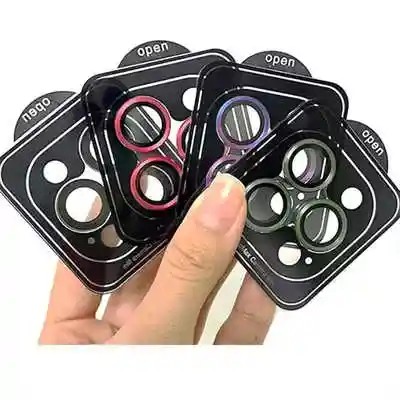
Where it wins: retail chains that sell on appearance, online sellers whose listing photographs do the selling, and any account where the customer is buying a look as much as a layer. Where it loses: accounts with a technical customer base, and any market where the ring’s colour will not match the phone’s finish because the finish changed mid-season.
If I could change one thing about how this category is bought, it would be that every incoming shipment got ten minutes of night photography before it got a purchase order signed off. In camera lens protector wholesale, nobody tests the flash, and the flash is what the customer sees.
Flash spill is the mechanism behind most of the “the photos are worse with the protector on” complaints, and it is almost never a glass quality problem. The flash sits a few millimetres from the lens, inside the same module. It fires at a wide angle. Some of that light hits the protector’s surface, the chamfer, the inside of the ring, or the adhesive edge, and reflects into the lens. On a good product the reflection is small and lands outside the frame. On a bad one it lands as a bright veil across the bottom of the picture, and the customer sees it as a camera fault.
The variables that decide it: the inner diameter of the window relative to the flash position, the angle and finish of any bevel, whether the inner wall is matte, whether the AR stack covers the whole surface or stops short of the edge, and whether the adhesive line is visible through the glass. None of those appear on a quotation. All of them appear in a photograph of a white wall in a dark room, taken with the flash on.
The test takes two minutes and needs no equipment beyond the phone. Tape a sheet of white paper to a wall, turn the lights off, stand a metre away, and photograph it with the flash on, once with the protector and once without. Compare the frames at the same exposure. A veil, a hot spot, or a bright arc near one edge tells you the geometry is wrong. Do it on the highest-magnification module in the range as well, because a defect that does not show on the wide camera can be obvious on the telephoto.
I would run that test on every new model, on every new supplier, and on every change of adhesive or coating, because those are the three moments when a product that measured fine stops being fine.
Buyers ask me for a cost breakdown and are usually disappointed by the answer, because the interesting part is not the glass.
In the flat disc, the glass substrate, the chemical strengthening and the coating together sit in a band that is small relative to the pack. The pick-and-place labour, the dust-free packing, the retail backing card, the model label and the outer carton carry more of the price than the optics do. Which is why a two-cent difference in glass price moves the quotation by almost nothing and why a change from a printed backing card to a plain one moves it a lot.
In the curved type, forming is the added cost, and yield is what sets the price. A hot-formed disc that has to hold a radius within tolerance rejects more units at the bend, and that rejection is priced into every piece you buy whether you can see it or not.
In the metal armour, the aluminium is not the expense. The machining, the anodising, the secondary operation to bond the window without contaminating the rebate, and the inspection of the assembled frame are the expense. This is why the type has a high floor price and why a suspiciously cheap quote usually means a stamped frame rather than a machined one, or an adhesive that will fail in the cold.
In the eagle-eye, the polishing of the bevel and the colour matching are the expense, and colour matching is where the Chinese supply base is genuinely strong and where a factory with one anodising line will disappoint you across a season.
The commercial consequence is simple. In camera lens protector wholesale, margin per unit is highest in the two types where the customer is buying a look or an experience, and thinnest in the flat disc where the customer is buying a consumable. If your range is all flat discs, you are running a commodity business and you will be negotiated against a factory in a different province every quarter. If your range is all armour, you are running a boutique and you will lose the volume accounts. The answer, as usual, is a range.
Here is the exercise I run with buyers, using a distributor with roughly six hundred active accounts, a mix of repair shops, independents and two small chains, shipping in a market where the flagship share is high.
In camera lens protector wholesale, the range decides more than the price does. Three lines per model, no more:
The flat coated disc as the entry line, priced to sit under the shop’s impulse threshold and packed on a backing card that can hang. This line exists to be added to a screen protector sale and to win the accounts that will not stock anything above it.
The curved full-cover disc as the core line. This is where the volume and the repeat orders live, because it looks right, applies clean, and does not cost the shop a conversation with the customer.
The metal armour as the premium line, in the two colours that match the phone’s finishes, with the demonstration story attached to it in the pack copy and in the sales sheet.
Three lines per model, four to six models live at a time, is eighteen SKUs. That is a manageable, sellable catalogue. The attachment rate is the number to watch: if the flat disc is five percent of a shop’s phone-case volume and the armour is half a percent, you have a normal mix and you should not disturb it. If the armour is two percent, the shop has a salesperson who understands the demo, and you should be shipping them more colours rather than more models.
What I would not do is stock the eagle-eye and the armour in the same colourway at the same price point for the same account. They compete for the same shelf space and the same customer, and the shop will buy whichever one the salesperson finds easier to explain, which means the other one dies in the drawer.
None of these needs a lab, and all five together take about forty minutes on a sample set.
Transmission, side by side. Put a white card under a bright lamp, lay the sample on it, and photograph through the protector with the phone held at a fixed distance and manual exposure locked. Compare pixel brightness in the centre and in the corner of the window against a frame taken with no protector. A two percent difference is invisible. A six percent difference is obvious once you look at them side by side. Look for a gradient as well as a loss.
The laser at forty-five degrees. A cheap laser pointer held at a shallow angle shows you the AR stack and the surface quality at the same time. A good coated disc shows a faint line. A poor one scatters, and a scratched or badly polished surface scatters visibly.
Edge, under a lamp, with a fingernail. This is the test that predicts breakage, and it takes ten seconds. Run a fingernail along the edge of the disc. A polished, rounded edge is smooth. A stamped edge catches. Then look at it under a lamp at a low angle and count the chips. More than a couple on a sample of ten and you have bought a product with a shelf life measured in months.
Tape, for the coating. Press a piece of ordinary adhesive tape onto the optical face, press firmly, and pull it off. A coating that comes away with the tape was never properly deposited. This test is crude and it has caught more than one supplier for us.
The night photograph. As above, with the flash, on white paper in a dark room, protector on and off, on every module in the range. This is the test that prevents the returns you would otherwise have discovered three months later, in a carton, with a note that says the photos are bad.
Before you sign a camera lens protector wholesale order, add one more test if you have the patience: mount a sample on a dummy phone, put it in a bag with a handful of grit, and shake it for a minute. Then look at the module. This is not a standard test, it is just what a pocket does, and it will tell you more about real-world durability than any drop rating printed on a box.
Complaints map to causes more reliably than most buyers expect, and the mapping is worth learning because it turns a return into a specification change.
“The photos are hazy at night” is flash spill or adhesive haze, and it is a geometry and coating problem, not a glass problem. Ask for the night test.
“There is dust under it” is either a hollow design doing what hollow designs do, or frame glue with a gap, or a customer who installed it in a kitchen. Check which before you accept a claim.
“It cracked on its own” is nearly always an edge chip that was there from the factory, or an impact on the raised corner that the customer did not register as a drop. Compare the crack origin against the frame contact point. The pattern tells you which.
“The case does not fit any more” is the metal armour’s height, and the right answer is not a refund, it is a note on the product page and a line in the sales sheet before the order ships.
“It will not come off” is adhesive that was specified for a different climate, and it is the one complaint that damages the shop’s relationship with its customer rather than yours, which makes it the most expensive one on this list.
We shipped a large armour order in a matte black finish that photographed beautifully and showed every fingerprint within a day, because we had changed the anodising sealer to hit a price and had not tested handling. Two hundred and forty pieces came back. The fix was a different sealer and a two-week re-test. The lesson was that the finishing step on a visible metal part is a specification, not a detail.
We also, for about a year, quoted transmission on the centre of the window only, because that was what our meter measured most easily. A customer in the Netherlands eventually sent back photographs of a corner gradient in wide shots and asked us what our number meant. He was right. We now measure a map across the window and quote a range, and I would rather have that conversation before an order than after one.
Neither of those is a story about a bad product. They are stories about the two places where this category hides its problems: the surface finish and the edge of the specification, literally and figuratively.
Every one of those can be answered in a single email by a factory that knows its product. A factory that answers three of them and deflects the rest is telling you something useful about how the next twelve months will go.
On why the optical path through a flat plate costs you light and focus, and how to read a coating line: Camera Lens Protector Wholesale, Why a Flat Sheet Costs You 8% of the Light. On the thickness question that this type shares with ordinary screen protectors: Screen Protector Wholesale, Why 0.33 mm and 0.50 mm Are Not the Same Product. On the coating that decides how a protector feels after three months: The Coating Nobody Sees. On what an hour and a half on a factory floor will tell you about a supplier: Tempered Glass Supplier, What 90 Minutes in the Factory Actually Tells You.
We Accessory has supplied tempered glass, including lens protectors, to wholesalers and chains since 2012. Our lens range covers all four types, specified by substrate, edge treatment, coating stack and adhesive rather than by the words on the box, and every sample we quote ships with the night-flash photograph on the model you asked about.
If you have a lens line that is generating returns, send us two pieces and the model list. We will measure the transmission across the window, look at the edge under a lamp, and tell you whether the problem is the coating, the geometry or an expectation the product was never built to meet.
Address: 2F, Block A2, Nanchang Industrial Area, Xixiang Town, Bao’an District, Shenzhen, China Tel: +86-755-36818832 WhatsApp: +86-15919800304 Email: [email protected] Web: weaccessory.com
— William Shaw, Head of Sales at We Accessory
For the wider screen protector and phone case ranges, the category pages list every model with its coating, edge and height specification.
Camera lens protectors buyers order most
Address:2F, Block A2, Nanchang Industrial area, Xixiang Town,Bao'an District, Shenzhen
Tel: +86-755-36818832
Mobile/Whatsapp: +86-15919800304
Email: [email protected]


