 English
 Français
 Deutsch
 Español
 Italiano
Address:2F, Block A2, Nanchang Industrial area, Xixiang Town,Bao'an District, Shenzhen
Tel: +86-755-36818832
Mobile/Whatsapp: +86-15919800304
Email: [email protected]

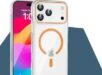

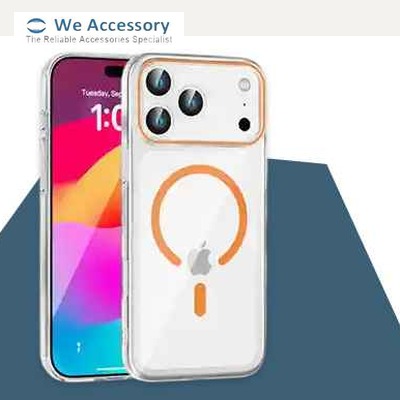
Jonas runs purchasing for a consumer-electronics distributor outside Utrecht. He forwarded me a two-line email from one of his retail accounts last month, and I have read it about ten times since.
“Your MagSafe case makes my phone charge slower than without a case. Customer says it gets hot. What is going on.”
Two sentences. No model number. No photo. Just the certainty of a person who has already decided what he thinks, which is that the case is too thick, that plastic is the problem, and that a thinner case will fix it.
He is wrong about the cause, and so is nearly everyone in MagSafe phone case wholesale I have ever met. I want to walk you through why, with numbers rather than opinions, because the answer changes what you should be buying, what you should be paying for, and what you should be telling your own customers.
Here is the claim I will spend the next five thousand words defending. The gap between a 1 mm case and a 3 mm case costs you somewhere between five and fifteen percent of the magnetic coupling in a wireless charging system. That is real, but it is not what breaks the sale. What breaks the sale is a magnet ring glued three millimetres off centre, a steel plate hidden under the lining, or a cheap neodymium grade that half the industry buys without asking. Those cost you anywhere from twenty-five percent to everything. Thickness is the thing everybody argues about because it is the thing everybody can measure with a ruler. The ring is the thing that actually decides whether the phone charges at fifteen watts or whether it heats up and backs off.
If you take one thing from this article, take the purchase order. Buy on the magnet array and the absence of ferrous metal in the charging window, not on the millimetre figure on the spec sheet.
A Qi charger is an air-core transformer that has been cut in half and then taped back together with a phone in the gap. You have a transmitting coil in the pad, a receiving coil in the phone, ferrite behind each of them to steer the flux instead of letting it leak into the battery, and a control loop that negotiates power. The standard operates somewhere between 87 and 205 kHz. Nothing about it is mysterious, but almost nothing about it is intuitive either, because the two halves are not wired together. They are talking through plastic, air, glass, a battery, and whatever else your case has in it.
The single number that governs the whole transaction is the coupling coefficient, usually written k. It measures how much of the field the transmitter generates actually reaches the receiver in useful form. At k close to one you have a transformer. At k near zero you have two coils waving at each other. A Qi system lives in the awkward middle, with k typically somewhere in the 0.3 to 0.6 range for a well-aligned pad, and the whole design of a charger is really an exercise in tolerating a bad k without melting anything.
Three things push k down, and you can hold them in your head as a list: distance between the coils, lateral offset between the coils, and anything conductive sitting in the field path.
Now look at your case. It sits in the gap, so it contributes to distance. It may be moulded so that the phone sits slightly off-centre, so it contributes to offset. And a surprising number of cases on the market put metal in the field path, which I will get to, because that one is where the money is.
Let me do the arithmetic in the open, because I would rather you check it than take my word for it.
Model the two coils as circular loops of equal radius, roughly 21.5 mm, which is about right for the outer diameter of a 15 W receiver coil. For two coaxial loops the mutual inductance falls off approximately as the on-axis field does, proportional to one over the three-halves power of (radius squared plus distance squared). That is a first-order model. Real coils are spirals, they have ferrite behind them, and the ferrite changes the numbers. But the shape of the curve is right, and the shape is the point.
Take the baseline gap between the two coils, phone in no case, as 3 mm. That is the thickness of a phone’s back glass, the coil’s own encapsulation and a millimetre of charger housing, near enough.
| Air gap between coils | Relative coupling | Loss vs no case |
|---|---|---|
| 3 mm (no case) | 100% | — |
| 4 mm (roughly a 1 mm case) | 97.8% | 2.2% |
| 5 mm (roughly a 2 mm case) | 95.1% | 4.9% |
| 6 mm (roughly a 3 mm case) | 92.0% | 8.0% |
| 8 mm (a thick rugged case plus a card holder) | 84.7% | 15.3% |
| 10 mm | 76.7% | 23.3% |
Read the first four rows again. Going from a bare phone to a 3 mm case costs eight percent of the coupling. Going from nothing to a card-holder wallet case costs fifteen. That is the entire range that most of your customers are arguing about, and it is a single-digit-to-low-double-digit percentage.
It is also not the same thing as eight percent less power in the battery. The control loop on both ends is not passive. When coupling drops, the receiver asks for more, the transmitter pushes harder, and the delivered wattage recovers most of the way back toward the negotiated target. What does not recover is the loss. The missing energy has to go somewhere, and the somewhere is heat, generated in the coils and in the shield layers, right against the back of the phone.
So the honest version of the thickness story is this. A thick phone case does not really stop power from getting through. It makes the system work harder to push the same power through, and the work turns into heat, and the heat is what the phone reacts to.
Which means the ruler is measuring the wrong thing. Eight percent of coupling is a rounding error next to what a misplaced magnet ring does. Hold that thought, because the table for that one is worse.
Before I get to the ring, let me close off the thickness question properly, because a thick case does hurt, just not for the reason people think.
A phone case is a piece of polymer between a heat source and the room. TPU and polycarbonate both sit around 0.2 watts per metre-kelvin, which is to say they are thermal insulators that happen to be shaped like a phone. The coil area on a 15 W receiver is roughly 14.5 square centimetres. Treat the case as a flat slab over that area, ignore spreading, and you get a thermal resistance you can calculate directly: thickness divided by conductivity times area.
At 2.5 watts of dissipated loss in the charging area, which is a reasonable mid-estimate for a 15 W link running at around 80 percent efficiency with the loss split toward the phone side:
| Case thickness | Thermal resistance | Temperature rise across the case |
|---|---|---|
| 1 mm | 3.4 K/W | 8.6 K |
| 2 mm | 6.9 K/W | 17.2 K |
| 3 mm | 10.3 K/W | 25.8 K |
A 2 mm phone case adds about seventeen kelvin between the coil and the room. A 3 mm case adds twenty-six. And here is why that matters more than the coupling table: iOS and most Android implementations back off the charge current once the cell passes roughly 35 degrees Celsius, and they back off hard. A phone sitting in a 22 degree room at 30 degrees internal temperature has five degrees of headroom. A 3 mm phone case can eat twenty-six.
That is the mechanism behind the “charges fast then slows down” complaint, and it is not the coil at all. It is the battery protection circuit doing its job. The phone case did not block the field. It wrapped the heat source.
So thickness matters, but it matters thermally, and the fix is not necessarily “make it thinner”. It is “do not build a thermos”. A 2 mm phone case with a graphite or copper spreader, or with a vented camera deck, will run cooler than a 1 mm solid shell with no spreading at all, because the problem is heat escaping the 14.5 square centimetres under the coil, and a spreader moves that heat to a much larger surface before it has to cross the plastic.
Now the part that should change your spec sheet.
At 100 kHz, the frequency band Qi uses, metals do not let magnetic fields pass through them. The field penetrates only a thin surface layer, the skin depth, and everything below it is a short circuit for the field. The depth depends on the metal’s conductivity and its magnetic permeability.
Run the numbers with me. For mild steel, taking a relative permeability of 200 and a conductivity of about ten million siemens per metre, the skin depth at 100 kHz comes out at roughly 36 micrometres. A 0.5 mm steel plate is therefore about fourteen skin depths thick. It does not attenuate the field politely. It looks like a wall, absorbs the energy as eddy currents, and reradiates a fraction of it as heat.
Aluminium is worse in a subtler way. With a relative permeability of one, the skin depth is 269 micrometres, so the same half-millimetre plate is only about two skin depths. That sounds forgiving, and it is not: two skin depths is still around 86 percent attenuation. Copper comes in at 209 micrometres, again roughly two and a half depths at half a millimetre.
Which brings me to the cases. Somewhere along the way, the market decided that a “magnetic” phone case should have a steel plate in it. It is cheap, it sticks to a car mount, it holds a magnetic ring in place, and it makes the case feel substantial in the hand. It also sits directly in the charging window, and it is fourteen skin depths of the thing the charger is trying to push energy through.
The same applies to the aluminium kickstand you were probably about to add to next season’s range. A 0.5 mm aluminium plate across the charging window costs you about the same as a 10 mm air gap, and a 10 mm air gap is not 8 percent. It is 23 percent on the coupling table, before you count the heat.
There is one important exception, and it is the reason this subject confuses people. Ferrite is also a metal oxide, but it is magnetic rather than conductive. It is deliberately included behind every Qi coil to shape the field and stop it leaking into the battery. A ferrite sheet in your phone case is not a defect, it is the opposite, and the good factories will tell you exactly how thick theirs is and what grade it is. Steel and aluminium are the ones to worry about. Ferrite is the one to ask for by name.
So the practical rule is short. No ferrous metal in the 43 mm circle behind the camera bump. No aluminium kickstand that crosses it. No foil lining, and please, no “anti-radiation” mesh, which is a marketing feature that happens to be a Faraday cage sitting over the coil.
Here is the arithmetic that makes the whole argument.
The ring’s job is to put the phone’s coil where the pad’s coil expects it. Any positional error shows up as lateral offset, and lateral offset eats coupling faster than distance does. Using the same first-order model, with the gap held at 3 mm:
| Magnet offset from centre | Relative coupling | Loss |
|---|---|---|
| 0 mm | 100% | — |
| 2 mm | 98.7% | 1.3% |
| 5 mm | 92.5% | 7.5% |
| 8 mm | 82.6% | 17.4% |
| 10 mm | 74.9% | 25.1% |
| 15 mm | 55.7% | 44.3% |
Put the two tables next to each other. Four millimetres of extra case thickness costs you 4.9 percent. Five millimetres of lateral misalignment costs you 7.5 percent. Ten millimetres of misalignment costs you a quarter of the coupling, which is more than a card-holder wallet case (15.3 percent) and roughly the same as welding an aluminium plate across the coil.
A magnet ring that is glued three millimetres off centre is not a cosmetic defect. It is a bigger performance defect than the thickness difference between your slim range and your rugged range. And unlike thickness, nobody photographs it.
The reference numbers we work to, and the ones I would put in a specification, are these. Magnet grade N35 or unspecified is the bottom of the market; N52 is the working standard; N52H is what you specify when the case will sit in a hot car. Count matters less than people think, but the pattern is 15 to 20 magnets for a cheap ring, 36 to 48 for a decent array, 48 and up for a premium one. Holding force under 800 grams is a phone case that will slide off a car mount; 800 to 1,200 grams is normal; 1,200 to 1,800 grams and above is where the MagSafe accessories actually stay put. And the alignment tolerance, which is the number almost nobody asks for, should be plus or minus 0.5 mm at acceptable grade and plus or minus 0.3 mm at the top.
N52 costs 20 to 40 percent more than the unspecified grade. On a phone case that sells to you at sixty cents, that is somewhere between six and twelve cents. Which is the entire economics of this article, and I will get to it in a moment.
There is a second failure mode inside the ring that does not show up in any table. Polarity. A ring assembled with alternating poles is what makes the array self-centring; a ring assembled with random orientation still holds, still feels magnetic, still sticks to the fridge, and does a noticeably worse job of pulling the coils into alignment. You cannot see it. You can only test it, by putting the case on a pad off-centre and feeling whether the magnets pull the phone into place or just hold it where you put it.
Uncoated magnets are the third. Neodymium corrodes, and a nickel-plated magnet in a humid warehouse will outlast an unplated one by years. Add epoxy over the nickel if the case will see sunscreen, hand cream, or a coastal climate.
By now the diagnosis should be getting easier, so let me make it explicit. These are the four sentences we hear from retailers, and what each one actually accuses.
| What the customer says | What it usually is | How to confirm it |
|---|---|---|
| Charges slowly, case never warms up | Low coupling: misaligned ring, wrong ring diameter for the model, or ferrous metal in the window | Compare bare vs cased wattage with a USB power meter; if cased wattage is below 60 percent, it is coupling |
| Charges fast for ten minutes, then crawls | Thermal throttling: the case is holding heat against the battery | Point an IR thermometer at the coil area; if it passes about 40 degrees surface, it is heat |
| One hot spot, sometimes a mark on the case lining | Eddy currents in metal near the coil | Feel the case immediately after a 15-minute charge; heat is localised, not spread |
| Magnet feels weak, phone slides on the mount | Magnet grade or holding force, not the charging system | Luggage scale, pull the phone off the mount, compare with a known-good case |
Notice that only one of the four rows is about thickness, and that row is about heat, not about the field. The other three are ring geometry, metal, and magnet grade, which is to say the three things MagSafe phone case wholesale actually competes on. Those are the three things worth specifying, and they are the three things a cheap quotation quietly removes.

None of the above requires a laboratory. It requires a power meter, a thermometer and the discipline to hold everything else constant.
The meter is the easy part. A USB-C inline power meter with power delivery passthrough costs about twenty euros, and it will tell you volts, amps and watts at the wall side of the charger. You are not measuring what reaches the battery, you are measuring what the system draws, which is exactly what you want, because a system fighting bad coupling draws more for the same delivered power.
The thermometer is a ten euro infrared gun, the kind sold for checking oven temperature. Point it at the centre of the phone’s back, through the case if the case is under test, and hold the same distance every time.
Then the protocol, which matters more than the tools. Start each run with the phone at the same battery percentage, ideally 20 percent, because the charge curve is steep at the bottom and everyone’s numbers are comparable there. Start each run with the phone at room temperature; if you run five cases back to back without letting the phone cool, you are measuring the previous case. Use the same charger and the same cable for every run, and write down the ambient temperature, because a bench in a warehouse in July is not a bench in an office in November.
Record three numbers per run: wattage at five minutes, wattage at thirty minutes, and surface temperature at thirty minutes. Then a fourth, which is the only one your customer actually feels: minutes to fifty percent.
| Case under test | W at 5 min | W at 30 min | Surface °C | Min to 50% |
|---|---|---|---|---|
| No case | ||||
| Slim 1 mm, N52 ring | ||||
| Standard 2 mm, N52 ring | ||||
| Rugged 3 mm, N52 ring | ||||
| Cheap 2 mm, unspecified magnets, steel plate |
Fill that in for five units of each SKU, not one. The spread within a batch is often bigger than the difference between two SKUs, and if you test a single unit you will conclude something confident and wrong.
The thresholds I would use to accept a lot: cased charging no worse than 85 percent of bare charging in wattage, minutes-to-fifty no more than 15 percent longer than bare, and surface temperature under 40 degrees. A phone case that fails the wattage test has a coupling problem. A case that passes wattage but fails temperature has a thermal problem. A case that passes both and still gets complaints probably has a magnet that lets the phone slide, and that is the luggage scale test, not this one.
I quoted a MagSafe phone case at sixty-two cents recently, and the buyer asked me, reasonably, what could possibly be inside a phone case that costs sixty-two cents. So here is the whole thing, opened up, for a simple one-piece TPU-frame and PC-back case with a magnet array, at a hundred thousand pieces.
| Line | Cost (USD/pc) |
|---|---|
| PC back panel, 0.8 mm | 0.09 |
| TPU frame, moulded | 0.07 |
| Magnet array, 20 pcs, N52, nickel plated | 0.16 |
| Ferrite sheet, 0.10 mm | 0.04 |
| Ring carrier and adhesive | 0.03 |
| Two-colour print | 0.05 |
| Assembly and in-line QC | 0.08 |
| Poly bag, insert card, carton share | 0.05 |
| Total | 0.57 |
Add a few cents of margin and freight allocation and you are at sixty-two. That is the honest anatomy. Nothing in that table is padding, and nothing in it has much room to move except the two lines in the middle.
Now watch what happens when someone quotes you forty-five cents for “the same case”.
The magnets go from N52 to an unspecified grade, saving six to nine cents. The coating goes, saving a cent and a half. The ferrite sheet goes, saving four. The array drops from twenty magnets to twelve, saving another three or four. The ring is now positioned by eye against a printed outline instead of in a jig, which saves nothing at all to make and costs the customer a quarter of the coupling. And the carton packs a thousand pieces loose instead of five hundred in dividers, which saves two cents and adds scratches.
Add that up and you have a case that is seventeen cents cheaper to make, indistinguishable on a table, and measurably worse on a charging pad. That is the whole trick. It is not a conspiracy, it is just that every one of those decisions is invisible in a photograph and only the last one is invisible in a test.
I want to be fair to the other side of this. If you are quoting two and a half times our number for the same specification, that is not physics, that is margin, and you should ask what the extra buys. The arithmetic above explains a sixteen cent spread. It does not explain a dollar.
Specifications that live in a WhatsApp conversation do not survive a change of production manager. Put them in the PO, in this shape.
Magnet grade, written as a grade and not an adjective: N52, nickel-copper-nickel plated, with a grade certificate from the magnet supplier rather than a sentence in an email.
Magnet count and pattern, with the ring drawing attached, including which pole faces which way.
Alignment tolerance, plus or minus 0.5 mm on ring centre to case centre, measured on the assembled part, not on the mould.
Holding force, stated as a minimum in grams measured by luggage scale on a defined phone model, because holding force without a reference device is a number without meaning.
An explicit prohibition: no ferrous metal and no aluminium within the 43 mm charging window, with the exception of the specified ferrite sheet. Write the exception in, or a factory will read the prohibition as a request to remove the ferrite too.
Ferrite sheet thickness and grade, if it is in the design.
A thermal requirement, expressed the way you actually test it: surface temperature at the coil area no more than a stated figure after thirty minutes on a stated charger at a stated ambient.
A charging performance requirement: cased charging wattage no lower than a stated percentage of bare, measured on a stated phone model with a stated meter.
A batch traceability line: lot code on the carton, matching the magnet lot, because when one carton comes back hot you will want to know whether the magnets changed.
Nine lines. It reads like a lot, and it is the difference between a spec sheet and a purchase.
Qi2 is the Wireless Power Consortium’s second-generation standard, and the part of it that matters here is the magnetic power profile: a defined magnet array, a defined coil position, fifteen watts, and an alignment guarantee between pad and phone. The magnetic profile is the reason a Qi2 pad and a Qi2 phone snap together instead of being placed together, and it is the reason the offset table above is a design brief rather than a warning.
Here is the distinction that gets blurred in supplier conversations. A case can be described as “Qi2 compatible” by anyone, because compatibility is a property of the assembly, not a certificate. Certification is a different thing: a specific product, tested at an authorised lab, registered, with a logo licence attached. The two are not the same, and the gap between them is exactly where a distributor gets caught out by a marketplace compliance check.
So when a factory says Qi2 ready, ask three questions in order. Is the magnet array to the WPC pattern, with the drawing? Is there a test report from the case assembly, or only for the charger you paired it with? And if you intend to print the logo, is there a registration you can point to, because printing a consortium mark without one is a conversation you do not want to have with a retail buyer.
I will be straight about the limits of my own answer here. We test what we can test: coupling, temperature, holding force, drop. We do not run a certification lab, and a phone case is not a charger, so most of the certification burden sits upstream with the pad and the phone. What a case has to do is not break the alignment the standard guarantees. That is a testable claim, and it is the one worth writing into the contract.
A distributor asked us in September to quote a family of twelve MagSafe phone case models off a single magnet ring, six iPhone and six Samsung, because twelve ring variants meant twelve minimums, twelve drawings and twelve chances for the factory to set one of them wrong.
I understood the appeal. I ran the arithmetic before answering.
The ring’s position is measured from the camera cutout, because that is the datum every phone case in a family shares. The trouble is that the coil does not sit at the same distance from that datum on every brand. On the iPhone models the coil centre is close to the phone case centre and a shared ring lands within a millimetre. On the Samsung A-series the coil sits lower, and a shared ring puts it three or four millimetres off. On the S-series it is five or six.
| Family in the shared-ring range | Offset with a shared ring datum | Coupling loss |
|---|---|---|
| iPhone, six models | 0 to 1 mm | under 1% |
| Samsung A-series, three models | 3 to 4 mm | 3 to 5% |
| Samsung S-series, two models | 5 to 6 mm | 7 to 8% |
| Foldable, one model | around 9 mm | roughly 20% |
Read the bottom two rows. Three of the twelve models would have shipped with a charging penalty larger than the entire thickness difference between a slim phone case and a rugged phone case, and one of them would have been close to unusable on a pad. Nobody would have found out until the returns came back, because a shared ring looks identical on every SKU.
The answer was not twelve rings. It was one ring and two positions: a single magnet array, carried on two different carriers, one for the iPhone datum and one for the Samsung datum, with the foldable on its own because the hinge changes the geometry anyway. The second carrier cost one extra jig, a few hundred dollars, and no extra magnet cost at all, because it is the same array in a different place.
That is what I mean by buying the ring instead of the thickness. The specification is not the part. It is where the part sits.
If the thickness argument is mostly wrong, then a good deal of retail merchandising in this category is also mostly wrong. Walk into any accessory shop and count how many MagSafe cases are sold on the millimetre figure. “Ultra slim 0.8 mm.” “Only 1.2 mm.”
Slim is a real benefit. It is a feel benefit, a pocket benefit, and a weight benefit, and I sell slim cases all day. But it is not the reason a phone charges slowly, and selling it as though it were sets up the return.
The alternative is not complicated. Sell the charge.
A shelf talker that says “charges at full speed on a 15 W pad, tested at 30 minutes” is a claim a shop assistant can demonstrate with a power meter on the counter, which is a better sales tool than a photograph of a caliper. We have started shipping a small card with our MagSafe ranges that lists the tested wattage and the tested surface temperature, and the retailers who use it report fewer returns on the range, not more sales on the day, which is the trade we want.
The other merchandising consequence is range architecture. If the ring is the specification, then the ring should be the way the range is split, not the colour. One ring, one coil position, one alignment tolerance, across every colourway in a family. Then the buyer knows that a phone case in this family behaves the same way on a pad as every other case in the family, and the only variable left is the one the customer is actually choosing on, which is how it looks.
In MagSafe phone case wholesale a family that behaves consistently is worth more than a new colour, though it is less exciting than a new colour drop. It is also how you stop the “your case charges slowly” email.
A returned phone case is not a returned phone case. It is a refund, two shipping legs, a warehouse inspection, a restocking decision, and a customer who now has an opinion about your range.
Take a distributor selling a MagSafe phone case at a retail price of 24.90 euros, buying at 3.20, in a market with 19 percent VAT. The gross margin per unit is 17.50 euros before VAT treatment and before returns. Now a return at a 6 percent rate: one in seventeen units comes back.
| Item | Cost per return |
|---|---|
| Refund of retail price | 24.90 |
| Outbound shipping already spent | 3.80 |
| Return shipping | 4.20 |
| Inspection and repack labour | 1.10 |
| Unit now unsaleable as new | 3.20 |
| Total cost per return | 37.20 |
Thirty-seven euros, on a product that earned seventeen. Which means a single return erases the margin on roughly two sales, before you count the customer.
Now compare the two fixes. Upgrading from an unspecified magnet grade to N52, with a proper ferrite sheet and a jig-positioned ring, costs somewhere between twelve and twenty cents per unit at the volumes in the table above. On a 1,000 piece order that is 120 to 200 euros, which is between three and five returns.
If the upgrade removes even a third of a 6 percent return rate on 1,000 units, it saves twenty returns, and twenty returns is 744 euros. Against a 200 euro cost. That is the argument, and it is not a close one.
The catch is that the saving lands in a different budget line from the cost. The person approving the twenty cents is buying, and the person absorbing the returns is in customer service, and in a lot of companies those two people do not have the same conversation. If you take one practical thing from this article, make it that conversation.
I have been selling phone cases since 2012, and we were wrong about this category twice, in opposite directions.
The first mistake was ours, and it flattered us. For a couple of years we sold thickness as a proxy for quality, on the theory that a heavier, thicker case felt more protective and justified a higher price. It does feel more protective. It also runs hotter, and we spent a stretch of 2024 explaining to a Scandinavian retail chain why their MagSafe returns were concentrated in our premium range. The range was not badly made. It was well made and thermally stupid, and the fix was a ferrite sheet and a thinner back, not a thicker one. That is an uncomfortable thing to write in an article about your own catalogue, and it is true.
The second mistake was the industry’s, and we believed it too. We assumed that a magnet was a magnet. The word “magnetic” appears on packaging as if it were binary, when the difference between an N35 ring and an N52H ring is the difference between a case that holds a phone on a motorway mount and a case that drops it, and the difference between an array glued by eye and one set in a jig is a quarter of your charging performance. We now ask for the magnet grade certificate before we quote a MagSafe product, and we have lost two tenders because we would not quote without it.
Both of those mistakes have the same shape: we were confident about the thing we could see and careless about the thing we could not.
If you are buying MagSafe phone cases this quarter, these are the six I would ask, in this order, and the answers should take less than ten minutes.
What grade are the magnets, and can I have the certificate. If the answer is “high quality”, you have your answer.
What is the alignment tolerance on the ring, and do you measure it on the assembled case or on the mould. On the mould is not an answer to the question.
Is there any metal in the charging window apart from the ferrite sheet. Ask it as a yes or no and wait.
What is the ferrite thickness and grade, if it is in the design. A supplier who does not know has not specified it.
Can you send me the cased charging result on a named phone model, with the meter and the charger you used. This is the single most diagnostic question on the list, because a supplier who cannot produce it has never measured it.
What happens if a batch comes back hot. Not the warranty wording, the actual process, the lot code and the time to a decision.
Six questions. None of them are about thickness, and all six are the ones I would want answered before putting my name to a MagSafe phone case wholesale order.
Three earlier pieces go at the neighbouring parts of this subject without repeating it. If you want the market and product picture rather than the physics, the MagSafe phone cases buyer’s guide covers the range and the OEM process. If the question is why one case costs sixty cents and another a dollar eighty, the teardown of the price ladder goes through it line by line. And if what comes back is a cracked corner rather than a slow charge, the forensics of a broken case is the one to read.
The ranges themselves, with the magnet grade listed per model instead of hidden behind the word “magnetic”, sit on the phone case wholesale page and the iPhone case wholesale page.
We Accessory has been supplying phone cases, tempered glass screen protectors and phone accessories wholesale since 2012, from Shenzhen to distributors, chains and online sellers across Europe and beyond. Our MagSafe phone case wholesale range is built to the specification above as standard: N52 magnet arrays, jig-set rings, ferrite sheets in the charging window, and a tested charging figure we will send you with the sample.
If you are sourcing MagSafe phone cases for the coming season and you want a supplier who can answer the six questions, send us the model list and the volumes. We will quote the specification, not just the price.
Address: 2F, Block A2, Nanchang Industrial Area, Xixiang Town, Bao’an District, Shenzhen, China
Tel: +86-755-36818832
WhatsApp: +86-15919800304
Email: [email protected]
Web: weaccessory.com
— William Shaw, Head of Sales at We Accessory
For wholesale iPhone cases, the category page lists the full range; the products underneath are the ones that move fastest. For the wider range, see phone accessories wholesale.
MagSafe products buyers order most
Address:2F, Block A2, Nanchang Industrial area, Xixiang Town,Bao'an District, Shenzhen
Tel: +86-755-36818832
Mobile/Whatsapp: +86-15919800304
Email: [email protected]


